
History of the American Academy of Family Physicians

What began as a standard-setting body has grown into a driving force in U.S. primary care.
Founding and mission
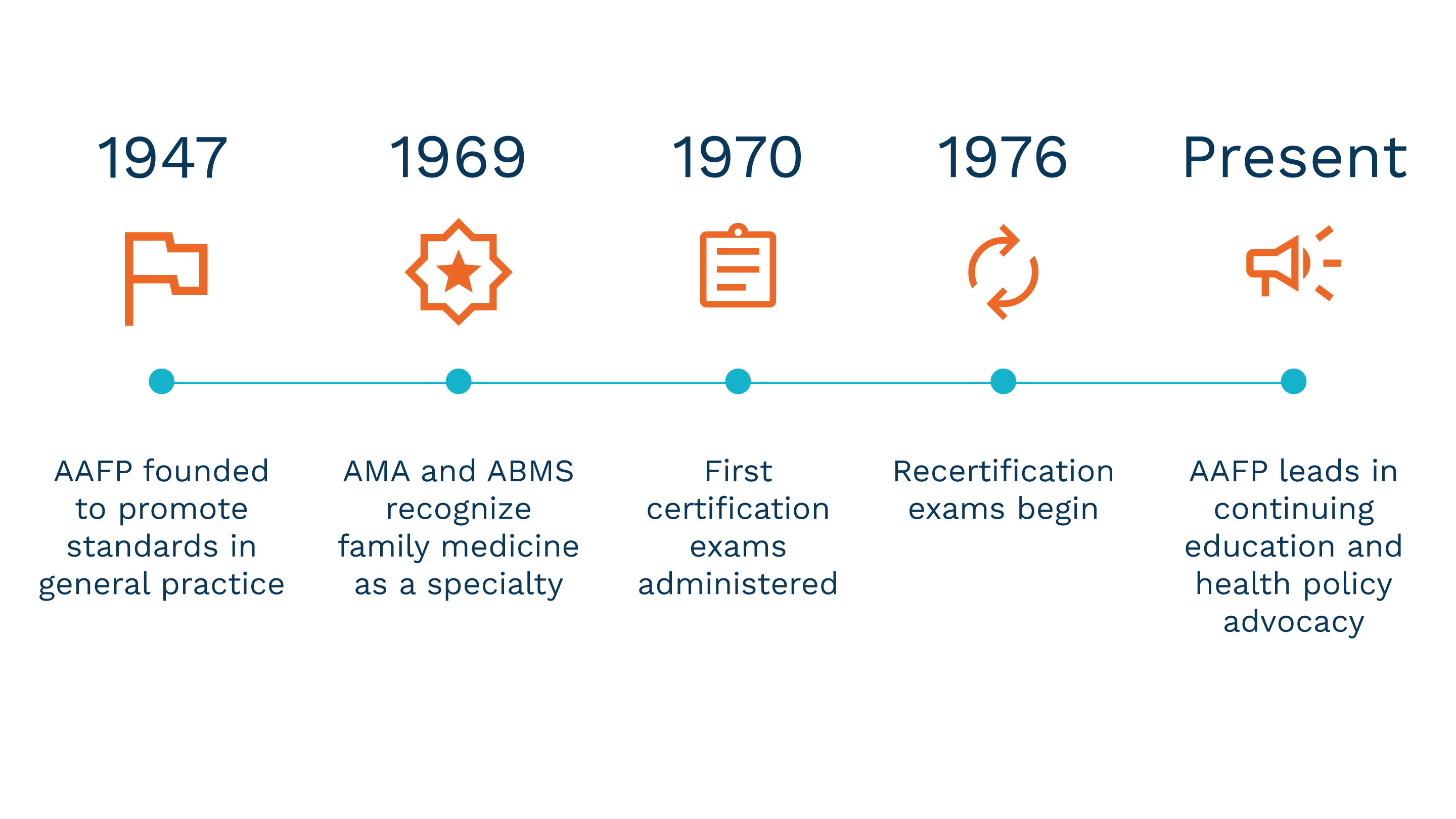
The American Academy of Family Physicians (AAFP) was founded in 1947 as the American Academy of General Practice. Our mission is to improve the health of patients, families and communities by serving your needs with professionalism and creativity. To advance the specialty of family medicine, strengthen physicians’ collective voice and provide solutions to enhance the patient care you provide, we strive to:
- Support and sustain family medicine practices that ensure the value of your comprehensive services
- Reduce administrative complexity that detracts from patient care
- Equip you with clinical expertise to provide high-quality, evidence-based care and address health disparities
- Grow a family physician workforce that fully represents our country’s diversity
Name change and evolution
On October 3, 1971, we officially became the American Academy of Family Physicians to reflect the evolving role of primary care and the growing recognition of family medicine as a specialty. The new name reinforced the Academy’s position as the professional home for physicians committed to comprehensive, patient-centered care.
Core objectives
Since our founding, the AAFP has pursued a set of core objectives:
- Providing advocacy and education for patients and the public in health-related matters
- Preserving and promoting quality, cost-effective health care
- Advancing the science and art of family medicine and ensuring an adequate supply of well-trained family physicians
- Supporting physicians’ right to practice the full scope of care they are trained for
- Representing and leading the specialty of family medicine at every level
Establishment of family medicine as a specialty
The AAFP was instrumental in securing recognition of family medicine as medicine’s 20th primary specialty. On February 8, 1969, the American Medical Association (AMA) Council on Medical Education and the American Board of Medical Specialties (ABMS) approved the creation of a certifying board in family medicine. The first certification examinations were administered in 1970, followed by recertification exams beginning in 1976. These milestones marked the Academy’s central role in shaping family medicine into a primary specialty distinct from classical general practice.
Continuing education requirements
Recognizing that physicians’ effectiveness depends on lifelong learning, the AAFP’s founders wrote CME directly into the bylaws. Active members are required to complete 150 hours of CME every three years to maintain membership. At its inception, this standard was unique, but it has since become a model for other medical organizations. The AAFP continues to lead in CME today, offering one of the largest education portfolios in medicine.
From general practice to primary specialty
Founded in 1947 as the American Academy of General Practice, the organization changed its name in 1971 to better reflect the evolving scope of primary care.
Today’s AAFP
Governance structure
The Academy is governed by the AAFP Congress of Delegates, composed of representatives from all 55 constituent chapters and delegates from student, resident, new physician and constituency groups. The congress meets annually, immediately before the AAFP Family Medicine Experience (FMX), and holds sole authority to establish policy. These policies are carried out between annual meetings by the board of directors, commissions and committees. Delegates to the congress elect the board, which in turn appoints members to commissions and committees, ensuring family physicians are represented at every level of decision-making.
National presence and publications
Today, the AAFP is the voice of more than 128,300 family physicians and medical students across every state, the District of Columbia, Puerto Rico, the Virgin Islands and Guam. From our national headquarters in Leawood, Kansas, we work with members to solidify family medicine as central to a functioning health care system. The AAFP’s influence extends through government advocacy, payer negotiations, employer partnerships and public education.
The Academy also produces several leading publications for members and the profession and holds annual events supporting education, connection and advocacy.
Key publications and events

American Family Physician

FPM (Family Practice Management)


Center for the History of Family Medicine (CHFM)
Want to learn more?
The Center for the History of Family Medicine (CHFM) serves as the leading repository of resources chronicling the development of general practice, family practice and family medicine as a specialty in the United States. The CHFM preserves documents, artifacts and stories that capture the AAFP’s pivotal role in shaping the discipline and ensuring its continued impact on American health care.