
Why the Whole Health Summit is the CME I’m prioritizing this year
The AAFP offers a wealth of CME to help you take better care of your patients. The CME event I’m making my top learning priority this year, though, is one that teaches you how to better care for yourself: the Academy’s Whole Health Summit (WHS).
As Margot Savoy, MD, MPH, FAAFP, recently told you, WHS is designed by us to be just for us.
From well-being to whole health
I’m excited to attend WHS because I am still reaping dividends from last year’s Physician Health and Well-Being Conference, from which this new event evolved thanks to your feedback. That experience helped me rediscover the kind of physician I set out to be.
I attended that conference just as I was in the middle of a career pivot, moving from full-spectrum practice to a preventive medicine fellowship and finishing my master’s of public health degree. The 2025 agenda was exactly right for me at that moment. I found the topics, from lifestyle medicine down to the cooking demonstration, timely and impactful.
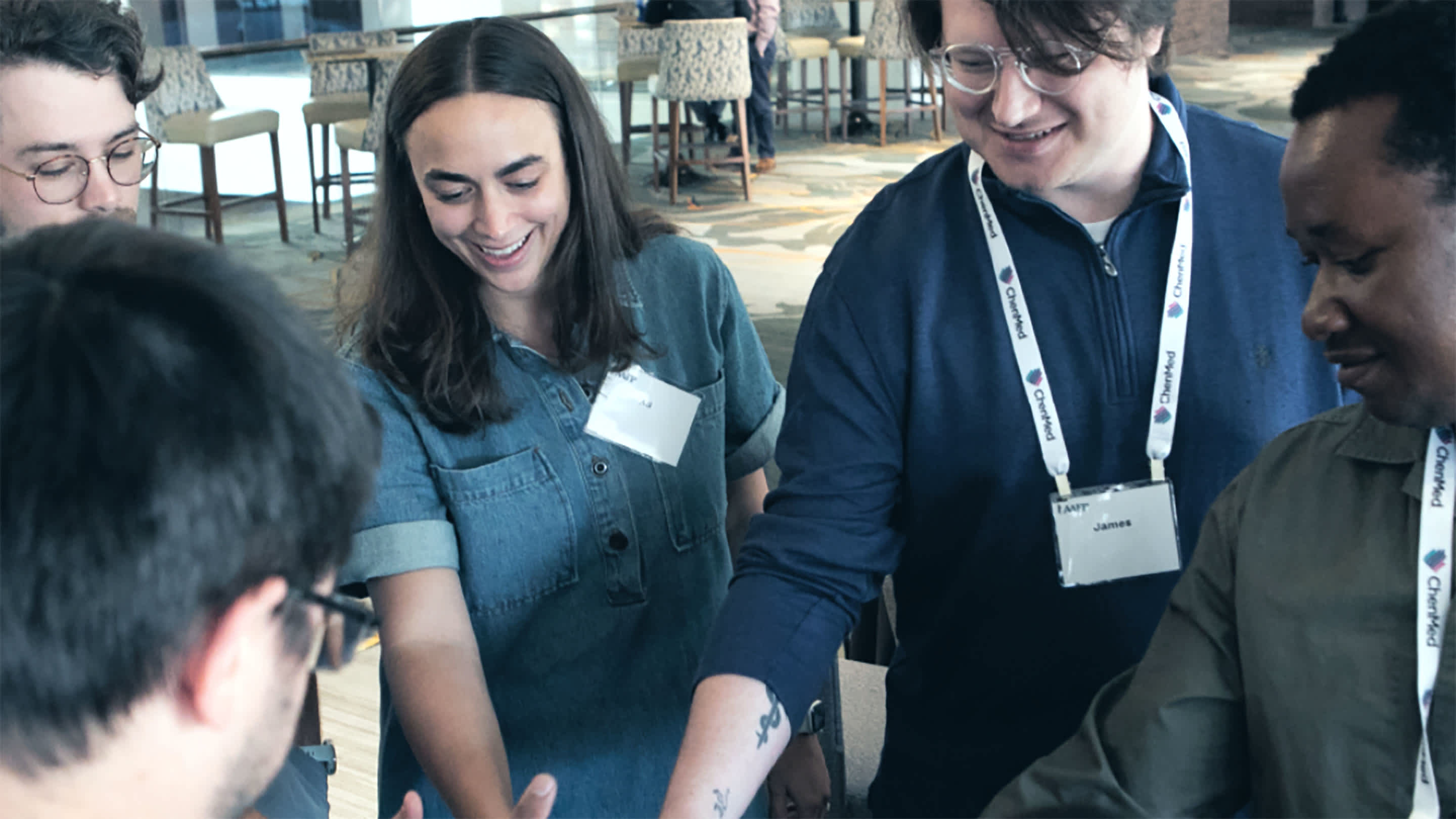
It was a deeply rejuvenating space, where I added to my support network. Unusually for such a conference, and powerfully for me, several of us have stayed in touch. I know plenty of doctors aren’t as extroverted as I am, but something about this event pulled people out of their shells. We could be vulnerable, and that freedom bonded us. Even the speakers showed vulnerability, and that made a difference, too.
I met people more than a decade into their careers who were ready to attend to themselves for the first time. I met people who were leaving practices to open direct primary care (DPC) practices. Some physicians were only one or two years out of residency and already thinking about making a significant change. Many were in programs led by Jason Marker, MD, MPA, FAAFP. (Marker helped establish the AAFP Foundation’s Family Medicine Leads Emerging Leader Institute and the Academy’s Leading Physician Well-being Certificate Program.)
The connections have lasted: Our group chat still checks in occasionally. And I expect we’ll expand our circle this year in North Carolina.
WHS aims for better health and well-being
For me, it’s really this simple: Every other conference I attend is about my patients. WHS is where I’m going to get new tools that will let me work on my own well-being.
Well-being can exist only if there are supports in place to help physicians resolve larger issues of system and culture. We can’t fix big problems alone, but there are ways we can make progress. That’s what WHS is about for me.
From near burnout to renewed satisfaction
It’s hard to acknowledge how many of us are burned out or dangerously close to it. Before I had that rejuvenating experience last year, I knew I’d lost sight of how much control I truly had over my career. I couldn’t see my autonomy.
I have a strong mission to advance access to preventive care, but my practice was not aligned with my purpose. At last year’s event, I was able to connect with other people working to become unstuck. We can get so bogged down in day-to-day tasks that it’s easy to forget: You can make changes. You can pivot or walk toward something new.
Here’s what that looked like for me: I pursued a fellowship and an advanced degree to close the skill gaps I needed to work in preventive care and population health. Today, I am getting closer to having the dynamic career I envisioned.
What I know now is that, even in situations over which I don’t have control, I can remind myself: I am a physician. I went to medical school. I am board-certified. I have the training and expertise to contribute to medicine in many different ways.
That’s one reason why WHS is so important. This is a chance to learn from people who know how to turn around and move toward a positive future.
Physician burnout can’t be dismissed. You see the consequences every day in clinical practice. Patients tell you their primary care doctor left and they’re trying to find another one. Or they’ve already had three different physicians in a short span of time. The turnover in primary care is real, and it has consequences for patient care.
If we don’t help physicians create sustainable ways to practice medicine, ways that preserve autonomy and allow for efficient clinical workflows, we’re going to face serious problems. There simply won’t be enough healthy physicians left to care for patients.
The skills on offer at WHS are part of how we create sustainability where we are.
Deeper conversations and specific learning
You cannot pour from an empty cup. I’m going to WHS to refill mine. Physician well-being is inseparable from the health of our patients and the sustainability of our profession.
So if you’re on the fence about attending WHS, my advice is simple: Go.
I’ve attended plenty of meetings over the years, but I don’t typically walk away from those conferences with the kind of personal connections I mentioned earlier. When the point is physician health and well-being, the conversation can be deeper. I loved the dinner discussions, the hallway chats, the follow-ups long after the sessions ended.
Now, having seen physician well-being presented as a legitimate, measurable priority rather than an afterthought, I’m ready for more. I’m ready to come together with my fellow doctors again to work on where that priority leads: answering how we can remain whole while practicing medicine.
Jay-Sheree Allen Akambase, MD, MPH, FAAFP is a preventive medicine physician at the Mayo Clinic, in Rochester, Minnesota, and a member of the Minnesota AFP. She is also an assistant professor of family medicine at the Mayo Clinic’s College of Medicine and past president of the AAFP Foundation.
Whole Health Summit
It’s a conference focused on whole-person health for physicians, offering education and support on what you need to care for yourself, your team and your patients.
Disclaimer
The opinions and views expressed here are those of the authors and do not necessarily represent or reflect the opinions and views of the American Academy of Family Physicians. This blog is not intended to provide medical, financial, or legal advice.