
CME | A crash course in thyroid confusion
Show notes
In this episode of CME On the GO, the hosts discuss a practical approach to hypothyroidism, using a case of a 50-year-old woman with nonspecific symptoms of weight gain, fatigue, edema and constipation.
They emphasize thorough history and physical exam, then outline key thyroid testing: TSH as the initial screening test (often with reflex free T4), free T4 for confirmation and special situations (including pregnancy), and limited uses for T3 tests. They review antibody testing (TPO for Hashimoto’s, thyroglobulin antibodies in select cases) and note tests for Graves disease outside this episode.
They cover sick thyroid considerations, subclinical hypothyroidism controversy, pregnancy management with tighter TSH goals and dose increases, and treatment preferences favoring standardized levothyroxine over desiccated thyroid, with limited/controversial use of combination T4/T3 therapy.
Learning objectives
Interpret key thyroid laboratory tests—including TSH, T4, fT4, T3, fT3, and thyroid antibodies—within the framework of thyroid physiology and the hypothalamic-pituitary-thyroid axis.
Compare the efficacy, safety, and clinical indications of thyroid hormone replacement options such as levothyroxine, liothyronine (Cytomel), and desiccated thyroid extract.
Explain the clinical significance of subclinical hypothyroidism and apply evidence-based reasoning to common patient scenarios with borderline thyroid function.
Credit statement
The AAFP has reviewed A Crash Course in Hypothyroid Confusion and deemed it acceptable for up to 0.50 Enduring Materials, Self-Study AAFP Prescribed credits. Term of Approval is from 04/20/2026 to 6/4/2027. Physicians should claim only the credit commensurate with the extent of their participation in the activity.
The AAFP is accredited by the Accreditation Council for Continuing Medical Education (ACCME) to provide continuing medical education for physicians.
The American Academy of Family Physicians designates this Enduring Materials for a maximum of 0.50 AMA PRA Category 1 credits™. Physicians should claim only the credit commensurate with the extent of their participation in the activity.
CME activities approved for AAFP credit are recognized by the AOA as equivalent to AOA Category 2 credit.
Claim CME credit
Episode hosts

Jason E. Marker, MD, MPA, FAAFP
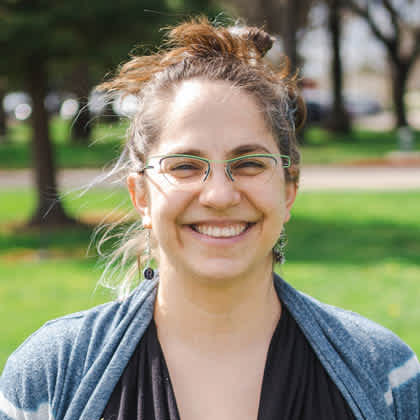
Lauren Brown-Berchtold, MD FAAFP
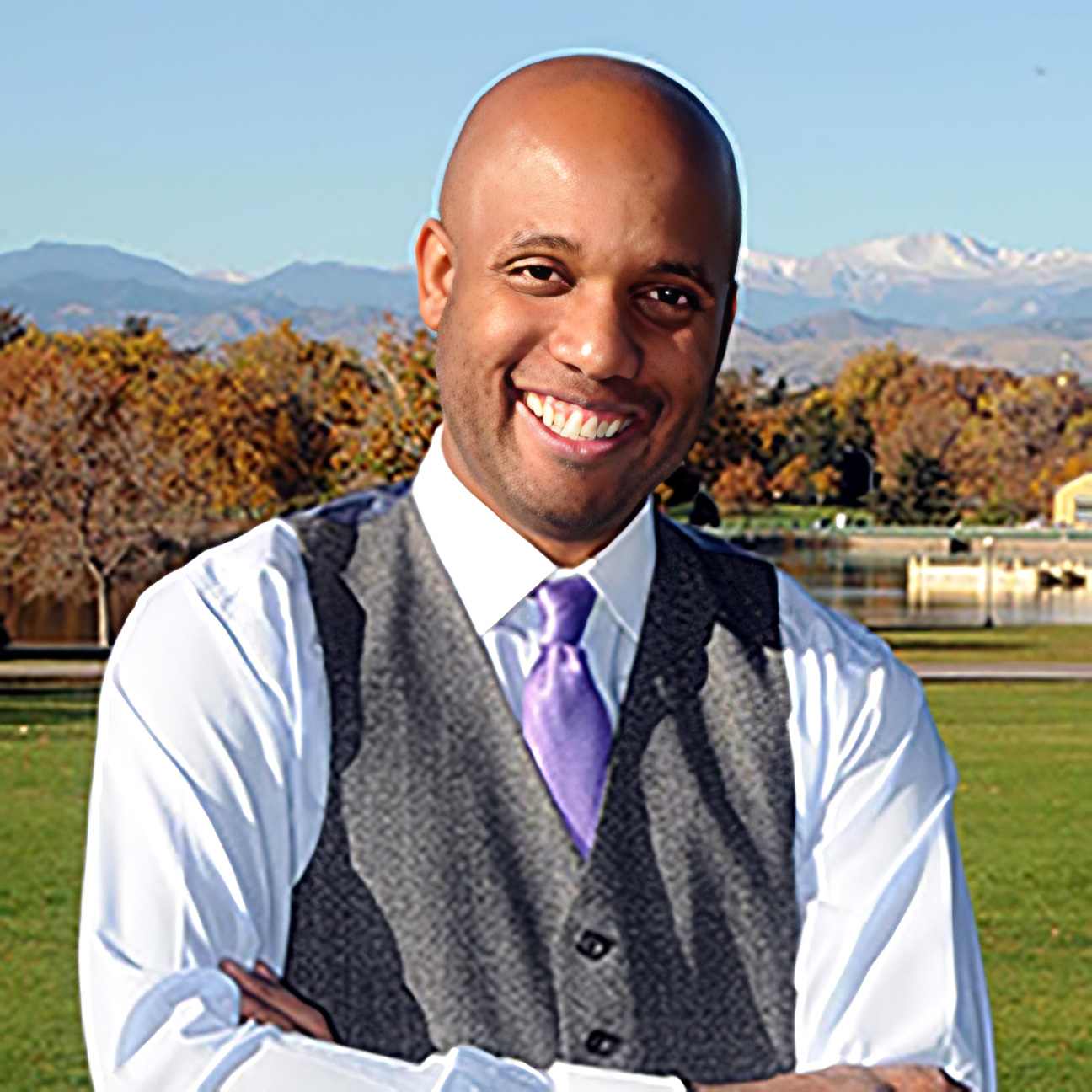
Tamaan K. Osbourne-Roberts, MD, MBA, FAAFP, DiplABLM, DABOM
Transcript
Welcome to CME on the go. The podcast crafted specifically for family physicians by family physicians. Whether you're seeking clinical insights, professional development, or simply a sense of comradery, you'll find those all here. Plus you can earn CME credit with every listen. So you grab a hydrating glass of water.
Hit play and let's embark on this journey together. My name's Dr. Jason Marker, and I'm an associate director at the Memorial Hospital Family Medicine Residency Program in South Bend, Indiana. I'm Lauren Brown, Birch Told, and I'm the program director for the VCME Family Medicine Residency in Modesto, California.
And I Amman Osborne Roberts, a family medicine, lifestyle medicine and obesity medicine physician here in Denver, Colorado. Are you stopping there?
Hey friends. We're all discombobulated here. We're glad that you're with us for this podcast. We're not gonna edit that part out because we're doing this on video and on audio. It's a new deal for us. I'm ing one of my grandfather's ties for the 1960s. I shaved down to a mini FU man, chew and sideburns just for this episode.
I assume you're just listening. Listening and not actually watching, and that's okay, but that's, that's the visual. You want a late motorized man pretending that he's still 30 and it's 1962. Anybody else wanna enlighten the listener, only listeners about your wardrobe today? I would like to. Say nothing about my wardrobe, but about how we started this episode while Toman was still chewing.
It was just a really great visual. Now that we have visuals attached to this man, tell us about that t-shirt ears, buddy. I, I, I, I kind of figured that was the way it was gonna go. I was trying to figure out a joke around obesity medicine in that, but I, I didn't quite get there. So I'll, I'll say for the viewers who can't see you, you should see my T-shirt, which, you know, quite simply expresses, you know, the difference between a physician and a family medicine physician.
Physician is just a physician, family medicine physician. He's a dabbing unicorn. And it's, you know, very, very, very, very, you know, emblematic, I would say. And I'm, I'm just putting on a little hat here. Oh, just seeing me on the go hat. So nice. No, no. It's this, this is the other one actually. Yeah. Yeah. I am wearing my A BFM shirt to match you.
Okay. We should actually teach something because people are getting CME for this time. They're listening to us kibitz about, okay, fine. We're talking about, we're talking about hypothyroidism today. And for those of you who wonder whether we're gonna dabble with hyperthyroidism. We are not, we're saving that for a future episode.
We're gonna get just into the basics of something that is so common. Sometimes we talk about fairly rare things. We're talking about something pretty common today. And so I'm gonna give a quick case presentation because it doesn't take much of a case presentation. We're gonna get into some discussion about this.
So a 50-year-old woman presents to your office with the following complaint, doc. I think my thyroid is off. What do you do next? You go to lunch? No,
this is one of those kind of questions that patients come in with or assertions that patients come in with that I, I can feel just the, the hackles going up for some of our listeners, just because this can be either a very short conversation or very long conversation, depending. Yeah. You know, so my first question's always why?
Like, what about what's going on with you? Makes you feel like your thyroid is going off? And then, you know, you listen to those symptoms and, and you go, okay, I've, I've heard what you have to say. And then you explore an additional set of symptoms. History's really important here. You'll want to see if they've been experiencing any fatigue, any temperature, intolerance.
And he changes to skin, hair, nails, gastrointestinal symptoms, palpitations, a range of other sorts of things that go head to toe essentially, that could potentially be part of a, a thyroid issue. The the symptoms are really, really broad with thyroid, since it is a general energy regulator for the entire body.
You want to see if they've ever had any history of thyroid disease, because sometimes they'll be, I feel like my thyroid's off. Why? Oh, I have stopped taking my medicine. Okay, well that's an important detail. What to think. They think about whether or not there's any family history of, uh, thyroid disease, whether they felt bad since yesterday or if this is kind of weeks and months, and again, potentially chronic worse things.
There's been any change in the pattern. If they had one set of symptoms to start and another set of symptoms later, that can be really important. Determining exact types of hypothyroidism, if hypothyroidism is present. The main thing is that this is one of those where you'll be like, okay, oh, my golf buddies.
I won't make that to the tea time. Oh wait, I'm sorry. We're family docs that I was thinking I was an orthopedist for a second, but no. Oh my gosh. My friends, if they ever hear that are gonna come from me in regards to that. No, it's, it's one of those things that does take a little bit of time. That it's, it's important to really get a, a good history of what's going on because that can really help.
Yeah, I feel like this is one of the last few things where I do the whole review of systems, like mm-hmm. That seems like it sometimes has gone away in 2026, but this is a great one to get the review systems and dusted off and worked your way through that. Okay, so that's great. Thank you for that. You ask all of those questions and the patient says that she's gained a little weight recently, feels like a little more tired than she used to, and sometimes experiences a little bit of edema and some constipation.
Lauren, what do you do next? So I'm, I'm gonna go do my exam. Touch the patient. It's super shocking sometimes today, like, like sometimes I'm in the clinic and saying, Hey, residents, where's your stethoscope? We still do have to actually touch people. It's a great reminder for, for all of us and so like to man.
Talked about, there's about a million symptoms that you might potentially have that relate to hypothyroidism. And so many of those are vague, right? They're potentially just like living life or other issues. And so I'm gonna be doing my, my exam and I might see various insundry things that really are, are pretty broad.
I might see this idea of coarse faces. I might see a goiter, I might pick up on some genuine. Hoarseness in the voice that the patient may or may not be talking about. I might see some edema. I might see macroglossia. Other things that I might pick up as I'm listening to them or getting some vital signs might be bradycardia.
I might see this low voltage EKG if I am. Looking at their heart and lungs, I might see on imaging, a pleural effusion or pericardial effusion after I get my exam, what I am gonna be offering this patient, even if I'm not convinced that this. Is hypothyroidism or another condition is I'm gonna be offering some labs, and that's gonna be looking for various and sundry things.
What we know is that with hypothyroidism, we might, outside of thyroid specific labs, see some changes like we might see elevated LDL and triglycerides could be related to hypothyroidism. Or not, we might see some normalcy, anemia, an elevated CRP hyponatremia and various insundry, other things. And so that's gonna be the next part of what I'm doing.
And then I'm gonna be making an assessment, but I have to get labs to be making a decision about if this is hypothyroidism or not. So we have to do a good history and also a good exam. I know you're shocked, shocked. All. Well, we can do those things. We're not doing a scan to start. Are you sure? No, no, we're not gonna, we're using a scan with our eyes and our hands.
We're family. We're gonna use a scan with our eyes and our hands. Okay, so you do your exam and it's all normal. Now let's just pause a moment and ask the question, do you think this woman has a thyroid problem? For me, the answer is a resounding and absolutely definitive, maybe.
What about you, Lauren? What do you think? I am? I'm gonna go with, I'm gonna play the odds. I've only gone to Vegas three times in my life. I'm gonna play the odds and say no. I'm gonna say this is so non-specific that if I had to guess right now, the answer's no. There's it's life. It's something else. I don't know.
We all find ourselves in exactly this position. What do we have to do next? Labs. That's right. We gotta do some labs. So here's what we're gonna do. There's a lot of labs for thyroid disease, not just the ones that Lauren was talking about, anemia and CRP and things like that, but. The labs that actually helps you sort out what's going on with thyroid diseases.
So what I've decided we're gonna do, I hope you two will roll with me. We're gonna play a little game. I'm gonna, I'm gonna throw out, I'm gonna throw out one of the thyroid tests and one of you is gonna tell me what that test does and what it's used for, but you only are allowed one breath to tell me the answer to that question.
Oh wow. Okay. What if I've trained as a deep sea diver? Well, I guess we're gonna find out here in just a second. You, you, you laugh, Lauren, but I actually do free dive, so, so you'll give me a few minutes and give me a chance to immer my face in some cold water. I'll really, really be able to. Okay, so here's what we're gonna do.
The first test I want us to talk about. One of you decide who's gonna tell me what the usefulness of the TSH blood tested. Okay, go for it. Tam Man.
A test of choice for initial screening with the highest sensitivity and specificity of the avail test. You'll also use it for monitoring, obviously, response to treatment, and to assess for newborn hypothyroidism, but not for testing patients during acute illnesses or who on glucocorticoids or lithium.
One breath. Sound like you just age like 500 years. Yes. This is the test of choice for initial screening. We're gonna come back to some things about these patterns in just a little bit. That's That's the first one. Okay. Total T four. Not a screening test. Only use it if you don't trust your free T four only.
Don't trust your free T four if you're like, my patient has known issues with protein binding, so we're not gonna do with test very often, are we? No. Okay. Free T four. We'll actually use this one often as a good confirmatory test. After the initial TSH. It can be more reliable than the TSH specifically in pregnant patients, and it has an important role in sorting out subclinical hypothyroidism and in monitoring.
Can I break the game? Sure. What you got? Do you guys order TS, h and free T four because it's cheaper in your labs? When you have a patient, you strongly suspect is going to come up with abnormalities, or do you actually do sequential testing? So, uh, we split a difference. We have reflex testing. Yeah, that's what we do too.
We can order TSH with reflex, the free T four if abnormal. And it works. It works good. And occasionally I do need the free T four, and so I just order them directly. But, uh, yeah, that's why I ordered you, man. Okay. Thanks for letting me break the game. I'll now stop breathing again. All right. How about the total T three?
Who's using that and when? I only use it when I am thinking maybe T three toxicosis, which I'm only thinking if the TSH is low in a normal free T four. Also, potentially, if I'm thinking about taking care of thyroid cancer patients or remission and Graves disease. Rare. Rare, rarely used. I, you know, I'm trying to think.
I don't know that I've ever ordered a total T three, rarely used. What about the free T three? Same place as you use a total T three. Again, it's a little better for similar reasons to a total T three. Summary to the total T four being better than, excuse me, the free T four being better than the total T four.
I'm also happy that we're now using more than one breath. Breaking the game in your own way. Okay. TPO antibodies, Hashimoto's, that's all you have to remember in one breath. Elevated TSH plus positive TPO antibodies equals autoimmune thyroiditis. A k, a Hashimoto's. And if I'm gonna break the game, you could predict like patients who are at risk for developing hypothyroidism if you have normal TSH and positive TPO.
But I've never seen that done outside of studies. Yeah. Okay. I've got three more that I'm really unfamiliar with, so I hope you two are not the same, but I am thyroid globulin antibodies. You use these if you're an endocrinologist, but if you're going to use family doc, basically it can help you start out Hashimoto's.
If you really think based on the clinical history and symptoms, this is what's going on, but the person has a negative TPO antibodies. You can see these independently elevated. It's also used in the management of thyroid cancer, but it's probably beyond spot. All right. I got two more on my list to get more obscure by the moment.
TSH receptor antibodies, graves Disease hyperthyroidism outside of this episode. Done. All right, and the last one, thyroid Stimulating Immunoglobulin Graves Disease outside of this episode. Done. Wait, I wanna hear you say immunoglobulin again, Jason. That was fun. Immunoglobulin. Okay. Okay. That was beautiful.
So there's, that's a lot of tests. People I think I use probably. Two or three of these with some amount of regularity, and the rest not so much. But many of us live in communities with a paucity of endocrinologists, and I think it's fair to be familiar with those along the way. I was really looking along a long time before a good table that had all of these in it and kind of what their usefulness was.
Didn't really find it so much, but we're gonna link to something in the show notes. It's a pretty nice little table. About the pattern of sort of the commonest abnormalities that you might see that has some conversation about some of these more obscure tests in it. So that'll be down there, but these are the tests that we need to do.
So thank you. Good job team. Appreciate that very much. It sounds like we're pretty much gonna do A TSH and everybody. And in a small handful of cases, we're also gonna get a free T four and then all the rest of the labs are used item on a need to know basis. So can one or the other of you maybe both.
Tell us of a time when you really needed to use some of those other tests. Alright, Lauren, you go first. Okay. I had a really fun time in the hospital. I was taking care of our resident team on inpatient medicine and taking care of a pregnant patient who was hospitalized for COVID. Was requiring oxygen.
And my very zealous resident for no reason, ordered A TSH that was really decently elevated, like somewhere between 10 and 15 definitely wasn't a hundred. And then we dug in and we're like, oh, her thyroid's a little bit enlarged. And so we had a really fun conversation in the hospital of talking about, is this sick thyroid?
Sick thyroid. AKA, someone who has no thyroid disease, who has an abnormal TSH because of their acute illness in the hospital. Is this related to pregnancy somehow? Is this some, some thyroiditis? And so we had no idea really what was going on and what the true answer was in the context of that hospitalization.
We ordered all of our labs, particularly our TPO antibodies, but we also ordered our thyroglobulin antibodies and. In monitoring after her discharge, the diagnosis ended up being Hashimoto's. That that was probably triggered by COVID, which was pretty interesting in a pregnant patient as we're navigating all of these complications of, of her various and sundry clinical conditions.
And so that was a fun time. We worked with our endocrinologist to really try to untangle and unsnarl that diagnostic dilemma, but it was, it was good. Yeah, no, I, I'm trying to think of a specific case that hadn't gone through an endocrinological colleague. It's a little hard for me just because thankfully, where I happen to live, we actually tend to have a, a fair amount of coverage for, for a lot of these sorts of things.
But I will say the cases I've seen that have gone through endocrinology, we've really actually been around trying to sort out, oftentimes Hashimoto, as you know, with the natural history of Hashimoto's, you oftentimes have an initial hyperthyroidism followed by burnout and hypothyroidism. And trying to figure out what that looks like, where that is.
If you actually have that a concept of somebody comes in, hyperthyroid is a, I think a place I've seen, seen it used primarily. All right. Those are situations where we're gonna do more than the TSH and the pre T four for sure. So we need to keep that in the back up mind that. If we're getting, uh, if we're getting a pattern that just doesn't seem to fit with the clinical picture in front of us, then you start to expand your net pretty widely on these other tests.
Okay. Well, before we switch gears and talk about the treatment for hypothyroidism, there are two specific carve-outs I want us to talk about subclinical hypothyroidism and hyperthyroidism. I know we're gonna do another episode on hyperthyroidism another time, but. Lauren, tell us just what do we need to know for today about hyperthyroidism?
I'm gonna give myself like three short breaths. You can think of it super from a reductionist standpoint as the inverse of hypothyroidism, right? You're going to have low TSH as opposed to elevated. You are going to be thinking about weight loss or heat intolerance as opposed to cold intolerance and weight gain.
You are going to be thinking about some of those abnormal or less used tests that we talked about earlier, and you are going to be seeing this. Potentially as a risk with atrial fibrillation, which is a really common association that we see. That's what I'm gonna give us today. That's a good start.
That's a great start today. Thank you for that. Ian, how about subclinical hypothyroidism? Well, the most important thing to know about subclinical hypothyroidism is that from a clinical management and evidence-based perspective, it sucks. Uh, it. It's, this is a place where there's actually a lot of debate and controversy amongst many in the, the medical community about exactly what to do about this.
This is when you essentially get back a TSH that is abnormal, but your free T four comes back in normal range and the question is, well, what's really going on here and what does the body really need? Is it getting enough hormone to, to. Asymptomatically conducted affairs or not, and the answer to what does symptomatic change, quality of life, those sorts of things.
Uh, so there's a lot of debate around that. There's a few places people agree that maybe you really should treat it. Do have somebody with symptomatology, probably a good idea. High risk in pregnancy, obviously for neonatal effects with hap, with thyroidism. So yeah, go ahead and treat that, that instance, but.
Aside from that, go read a bunch of our articles and formulate your treatment opinion because there's a lot. Yeah, well, we'll know more in a decade I think about that, but we, we don't know there's been an event for il. What a promise. Thank you, Jason.
Alright. Well let's just say that we've decided that our 50-year-old patient has simple, traditional, common hypothyroidism and we want to treat it.
Before we talk about medications for that Mann, are there any lifestyle medicine approaches that we need to talk about here that's your area of expertise? I think we're gonna talk about lifestyle medicine approaches that we don't want to take, you know, really overall, so one of the things that, that I'm certain all of us have seen is somebody coming and saying, well, doc, I, I don't really love this levothyroxine stuff.
I, I don't put unnatural things in my body. I use desiccated thyroid. And, you know, that is a, an approach that. Is not entirely non-therapeutic, but is not optimal therapy. There's a lot of risk with desiccated thyroid. It's not a fully standardized product. It's easy to have substantial variations in the total amount of Levi Thyroxine in in that particular product.
It can be hard to dose and use for those particular reasons. A standardized levothyroxine is just such a wonderful drug. It's one of those things where you know you can. Titrated, you can dose it. You get a particular response course monitoring the titration two to three months afterward. It just makes a lot of sense.
And given that there are times I have been unable to move a patient from wanting to utilize Desiccated Animal Tite, but. I haven't yet had a patient who wanted desiccated human thyroid, so that's a whole nother thing. But the long, the long and the short there, there are very different risks to that one.
But in regards to a desiccated animal, I believe poor thyroid, if I, I recall correctly, if, if a patient exists on using it, close monitoring is incredibly important. I would argue in that case you may want to do red knee or two to three. Monitoring as a whole, just ensure that, uh, continuing to get a reasonable dose over time, you don't need to make any adjustments and to move in that direction.
I can't believe you said desiccated human thyroid. I'm just trying to cover all the bases here, Lord. Amazing. The other non levothyroxine medication that we sometimes get asked about, honestly pretty rarely for me is Cytomel, which is Levothyroxine plus. T three and I can't even pronounce this name correctly.
It's ine. Good job. Oh, thank you. It's, it is T three. And so some people will come in and say like, Hey, I need to continue my cyt ml and, and this is a pretty controversial. Medication still. The argument for using this is that maybe that addition of T three helps the five to 10% of people who you put on Levo thyroxine and titrate to a normal TSH and they're still having persistent symptoms.
However, so, so that's the justification for, for using this medication. Here's the problem with that. Multiple randomized trials and systematic reviews over the years have failed to show a benefit to using combo therapy. And also a lot of those persistent symptoms are so vague that they're not.
Necessarily related to the diagnosis of hypothyroidism. With that said, on the flip side, there have been some small studies that don't show an increase in significant risk with use of cytomel. So people are sort of settling out again with some like reluctance and potentially wailing and gnashing of teeth that says, sure, if you genuinely have someone who clearly and unequivocally has not benefited from levothyroxine treatment, try it.
It's probably not gonna hurt, but it doesn't really appear to have a widespread indication. Jason, I know you said you've had a lot of patients come to you asking about Cytomel over the years I have and sated thyroid, it just seems like I inherited a practice after I finished residency where I spent some time at least every month talking to somebody.
About these two medications and trying to make the transition over to Levothyroxine. And mostly I was successful at that and I feel like my patient panel was safer because of it. But it is a conversation that I think you're still gonna have out there and maybe less and less over time as as Levothyroxine, really, I.
Fills its role as the standard of care over time, and it may be less and less of that. We'll just have to see. Yeah, I, I, I kind of feel like I'm gonna see more and more of that, at least with the desiccated thyroid. I should point out that there are some studies showing increased symptomatic efficacy for, for desiccated thyroid over levothyroxine.
But from my standpoint, I, I tend to think the risks out outweigh the benefits potentially. I should also mention that while I know this is factually untrue, and to me sounds like Desiccated Lion thyroid, but you know, I, I, I, I dunno who would use that. Probably, probably even less likely than human thyroid.
I'm gonna have nightmares tonight. I, I don't know. I think it's a good placebo effect with that Lion Thyroid. Okay, people, we gotta push towards the end here just a little bit. I would love to have a 30 minute conversation about the initiation up titration and lab monitoring and frequency of testing for levothyroxine, management of hypothyroidism.
But you know what? I don't have to. Because there was an amazing article in a FP 2021 by Doctors Wilson, stem and Broman, and they're out in Boston and they wrote the article in 2021 for the a FP about the management of hypothyroidism. We've got it in our show notes. I'm gonna just grab a couple of highlights out of there, and if you've, if.
We can just pause a moment, let you go grab your old journals from 2021 and come back to the episode and there is a figure two, which is the figure that we all remember from medical school being taught how to manage hyen for hypothyroid. It's, it walks you through how old is the patient? Do they have heart disease?
Are they pregnant? Do they have hypothermia and stupor? Is this an acute hypothyroid crisis of some sort? It's gonna walk you right through there. It's got all the dosing start at 12 and a half to 50 micrograms per day. If they're over age 60, it's gonna have all the other adjusted dosing in there when you might need an endocrinology referral when you start with a little bit higher dose.
I think for those of us who've done this for a long time, you're probably gonna start 'em on. 75 micrograms. If they're old and frail, maybe a hundred or 125, if they're in the prime of their late middle age, like there's, there's gonna be a, a few decisions to make there. If it seems like you're not sure where to start, go to one of these tables.
But if you've done this for a while, you're gonna know that you're gonna start somewhere in that 75 to 1 25 range. You are gonna recheck that TSH every six or eight weeks until you get it sort of in the normal range and you're good to go and you just may be doing an annual TSH after that. If they've got some symptoms that are still percolating around despite a normal TSH, you might occasionally throw a free T four in there, as we've talked about, to make sure you're not missing some other thyroid condition.
This actually is not too hard to manage once you've sort of settled in that you've got the right diagnosis. So that's what that table tells you. I just encourage you to go see that. I like it. I like a good table. I like printing it out. I like putting it on my wall. But I agree. Once you get in the flow of this, you don't need to, you don't need to print it out and put it on your wall.
You just, you've just got it. Yep.
Alright, very good. Now have we missed anything critical you two, any parts of the hypothyroidism world that we just have to touch on before we're done? I'm gonna love to bring in pregnancy conversations just because this is an area where we are going to have different thresholds for our TSH goal.
And in general, we're increasing our dosing every trimester. If we wanna be just super generic about it, we're probably increasing our. Thyroxine dosing every trimester, which can generally look like saying, Hey, instead of taking your normal dose seven days a week, take an extra two doses per week. And then again, making sure that we're titrating to those appropriate TSH guidelines and, and that's within family medicines wheelhouse.
We don't need OB to manage that. I will take Wonder, refer to Endo. I think that is kind of an important piece, and the answer is the opposite for voting. It's not early and often it's, you know, late and infrequently. Most of this is in our wheelhouse. This is bread and butter for us. This is something that Family Doc should be able to manage.
There's the occasional situation. Let's say somebody has an acute oxic ossis. Even if you begin treatment for that at the family medicine level, that's gonna be good to, to get to endo because your hashi motors can have a variable course and you don't necessarily always know how long the hyperthyroid portion of it will be.
If you've identified it and, and really kind of working through those sorts of details. We'll be important, even if it eventually will be hyperthyroidism and, and will, and you've all have heard me utilize this expression previously, but if you have insomnia signs. If you're gonna be up at midnight, if your treatment plan makes sense.
And then what I would say is 20 minutes sign. If you've spent a course 20 minutes or or more attempting to do point of care research on this while the patient is in your office. These are indications that maybe referral is, is, is not a terrible idea. But most of this we can do. Yeah. All right. I'm gonna wrap up our case.
So your patient's TSH was 12.0 or free. T four was 0.5. I started her on Levothyroxine 100 micrograms. I rechecked her TSH in six weeks and it was normal. She felt no different and was very frustrated by that. End of story that, that unfortunately has been how most of my thyroid cases have gone on. Can either of you share a better ending from your experiences?
Yeah. You know, I've actually had a, a range of patients that have had symptomatic change with appropriate TSHs and in free t fours that, you know, I, I don't know why, but that's been the majority of my cases. I think it's because a lot of my patients come to me already with diagnoses with hypothyroidism, and it just becomes about tweaking their treatment and getting them into a range that's gonna work for them.
And I've been lucky enough to see that work in a, a number of cases. I think the other difficulty sometimes and, and as I'm thinking about the cases where. You know, that hasn't happened and maybe because the symptoms are apart from hypothyroidism, apart from something else. As you've been listening, I'm certain some of you have been thinking that these symptoms mimic men menopause and perimenopause and, and, and, and those symptoms as well.
So as important as we treat hypothyroidism to kind of go well, is that the only thing going on? Or are there other hormonal or other conditions at play that we really need to treat? And, and taking a look at those, I think can sometimes be really helpful in making sure patients get the symptomatic treatment that, or symptomatic relief that they're looking to.
Mm-hmm. Mm-hmm. You know, some of these symptoms also mimic life, right? Like, like I went back and read the case just now and was like, yeah, I could picture that being like a really tough winter for me, right? That I gained some weight, I'm feeling bloated, and so we. I certainly fall into wanting the medication to fix all the things, but these can be vague symptoms and so we might have some frustration and dissatisfaction and that's okay.
It doesn't mean it's the end of the conversation, it just means we continue having various versions of the conversation. Yeah.
Alright, thanks gang. We're gonna wrap up with our usual moment of gratitude. I'm gonna say I'm grateful for an area of medicine like this that actually has a lot of science and mostly pretty clear treatment directions.
Even if it is, sometimes it doesn't really create the outcome that's fully satisfying. I'm grateful for the almost daily reminder in my clinic that no. My, my dear Pgy one resident like this referral to endocrine is, is not going to be necessary. We got a lot more bandwidth and room to to run before.
That's going to be the thing that I'm going to ask you to be doing and I am grateful for currently being on a brief break between clinical jobs so that if I develop symptoms that match hypothyroidism, they're likely due to too much nap. Alright, well that's all the time we have for today. Thank you for joining us for another episode.
We appreciate you being on this journey with us to elevate family medicine. Stay tuned for new content brought to you twice a month with CME on the go. And visit the show notes for instructions on how to claim CME credit and find additional resources for today's episode. Until next time, serve from your values, pursue your vision, and follow the science.
See you next time on CME on the go, A production of inside family medicine.
References and resources
Disclosure
It is the policy of the AAFP that all individuals in a position to control content disclose any relationships with commercial interests upon nomination/invitation of participation. Disclosure documents are reviewed for potential conflicts of interest and, if identified, conflicts are resolved prior to confirmation of participation. Only those participants who had no conflict of interest or who agreed to an identified resolution process prior to their participation were involved in this CME activity. All individuals in a position to control content for this session have indicated they have no relevant financial relationships to disclose.
Disclaimer
Copyright 2026. AAFP. The views presented in this broadcast are the speakers own and do not represent those of AAFP. The information presented is for general, educational or entertainment purposes and should not be considered legal, health, financial or other advice. AAFP makes no representation as to the accuracy or completeness of the information and is not responsible for results that may arise from its use. Consult an appropriate professional concerning your specific situation and respective governing bodies for applicable laws. Reference to any specific product or entity does not constitute an endorsement or recommendation by AAFP unless specifically stated otherwise. AAFP and the AAFP logo are registered trademarks of American Academy of Family Physicians.