
CME | Brave new world: AI & family medicine
Show notes
In this episode of CME On the Go, host Tamaan Osbourne-Roberts, MD, talks with family physician Jennifer Bryan, MD, FAAFP, about the rapidly expanding role of artificial intelligence in medicine and what family physicians need to know to use these tools safely, effectively and responsibly.
Jennifer begins by breaking down the different forms of AI physicians may encounter, from large language models and predictive tools to generative and agentic AI. The discussion then turns to the risks that come with greater AI adoption along with discussing bias in training data, clinically significant omissions and inaccuracies, the limitations of proprietary “black box” models and the importance of knowing how an AI tool was validated before relying on its output. She also stresses that physician access to an AI tool is not the same as informed authorization for that tool to act on the physician’s behalf.
Jennifer outlines several principles that can help physicians and health systems approach AI more safely and discusses the AAFP’s EASIER framework, which evaluates AI tools according to ethics, accuracy, safety, intended use, explainability and transparency, and regulation. She also explains why AI governance should involve more than simply creating a committee or policy; organizations need ongoing systems for monitoring performance, identifying exceptions and supporting clinicians who remain accountable for patient care.
Finally, the episode offers practical guidance for physicians using AI in day-to-day practice. Jennifer describes obtaining patient consent when using an ambient scribe, reviewing and editing every AI-generated note, scrutinizing suggested diagnoses and HCC codes, and carefully reviewing automated orders. While she is optimistic about AI’s potential to reduce administrative burden, improve workflows, and ultimately improve patient care, her central message is that physicians must remain in charge. AI should augment clinical expertise, not replace critical thinking or informed physician judgment.
Learning objectives
Differentiate the most common types of artificial intelligence used in clinical practice and their potential applications in patient care.
Evaluate the limitations, biases, and potential risks associated with AI tools used in clinical practice.
Apply clinician-centered strategies for addressing the limitations of AI models and supporting their responsible use in clinical decision-making.
The AAFP has reviewed CME On the Go, Season 3 and deemed it acceptable for AAFP credit(s). Term of Approval is from 10/12/2026 to 10/12/2027. Physicians should claim only the credit commensurate with the extent of their participation in the activity.
This session, “CME | Brave new world AI & family medicine” is approved for 0.50 credits Enduring Materials, Self-Study, AAFP Prescribed credit(s).
The AAFP is accredited by the Accreditation Council for Continuing Medical Education (ACCME) to provide continuing medical education for physicians.
The American Academy of Family Physicians designates this Enduring Materials activity for a maximum of 1.00 AMA PRA Category 1 Credit(s)™. Physicians should claim only the credit commensurate with the extent of their participation in the activity.
Claim CME credit
Episode hosts
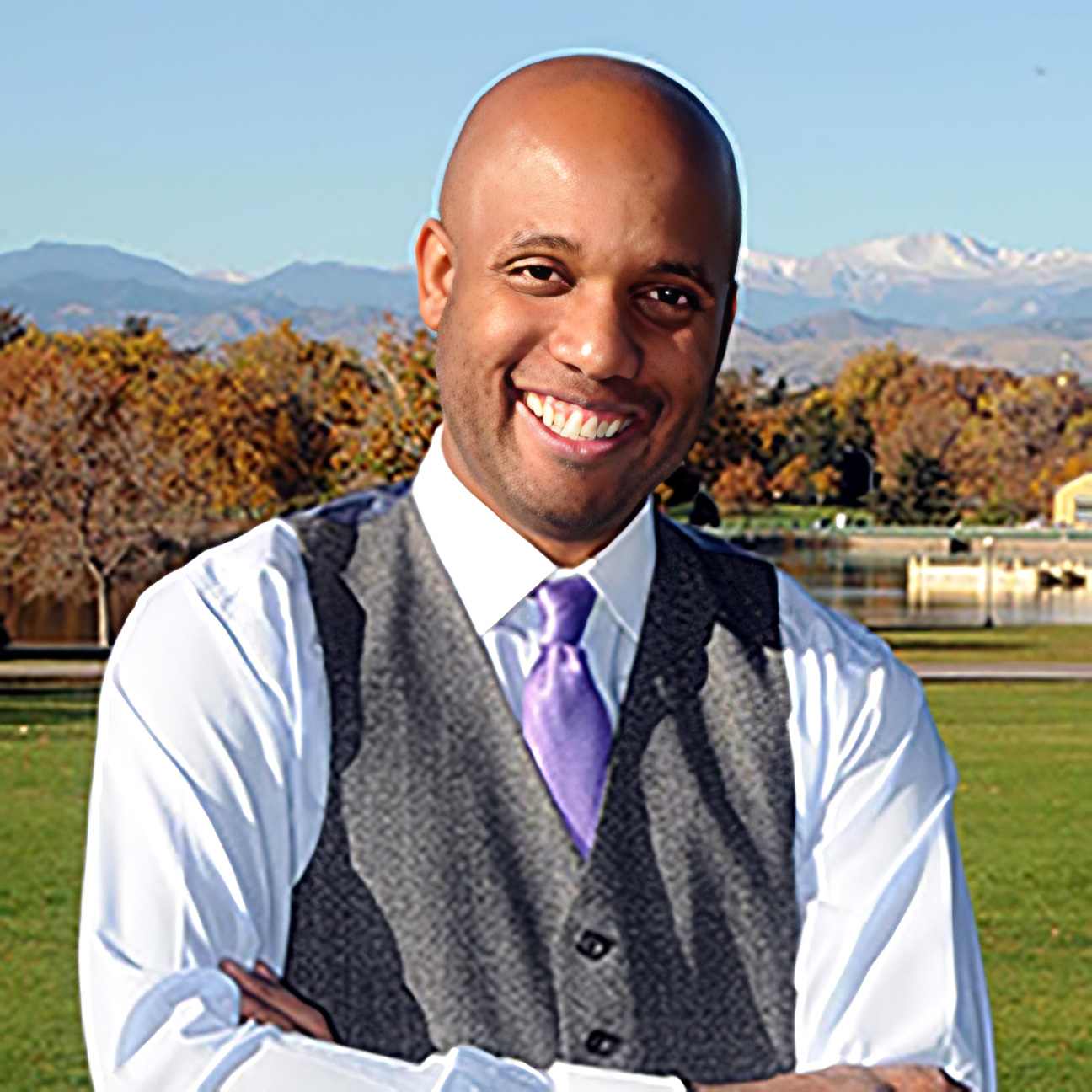
Tamaan Osbourne-Roberts, MD, MBA, FAAFP
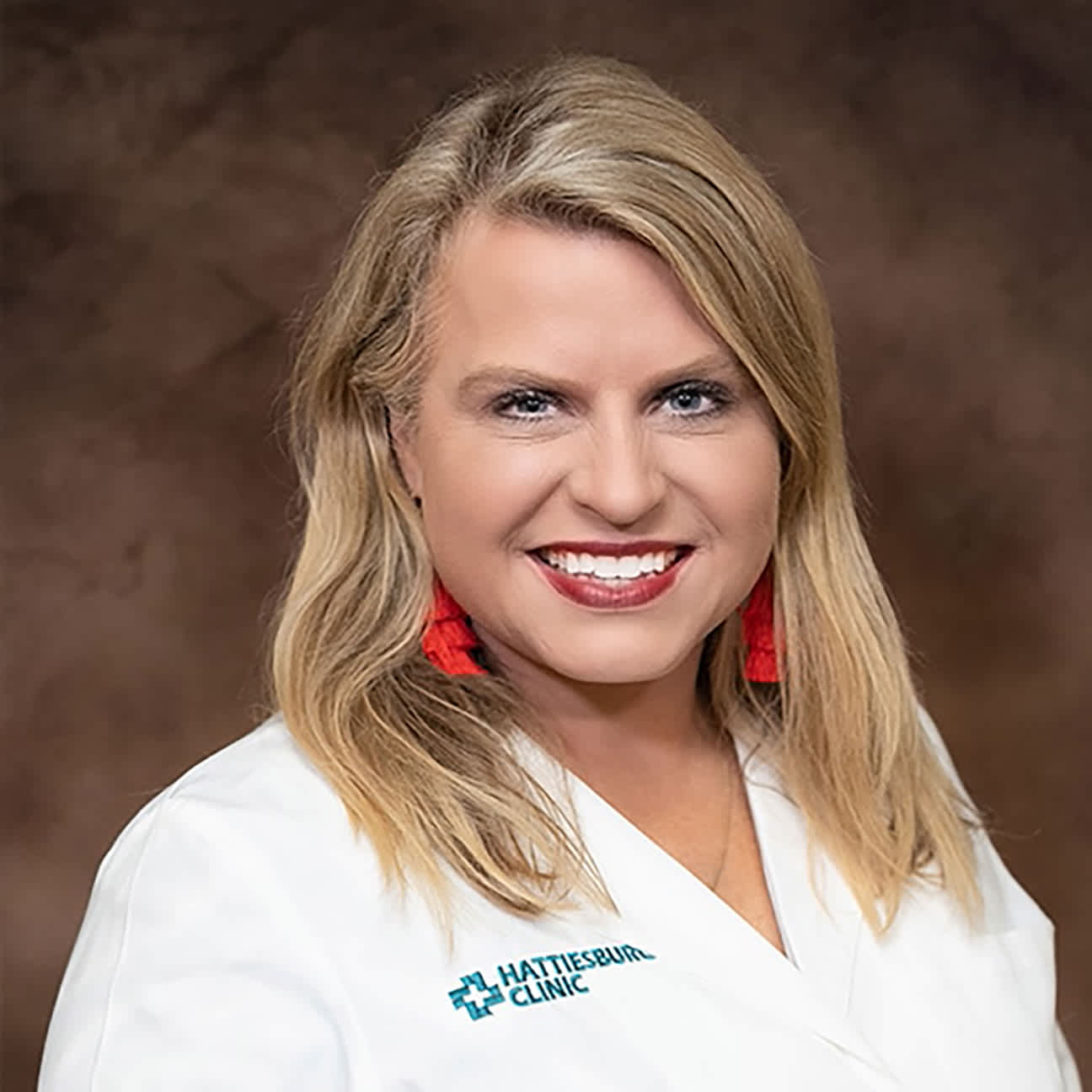
Jennifer Bryan, MD, FAAFP
Transcript
Welcome to CME on the Go, the podcast crafted specifically for family physicians by family physicians. Whether you're seeking clinical insights, professional development, or simply a sense of camaraderie, you'll find it all here. Plus, you can earn CME credit with every listen. So, grab a warm beverage of your choice, hit play, and let's embark on this journey together.
I'm Taman Osborne Roberts, a family medicine, lifestyle medicine, and obesity medicine physician for the underserved from Denver, Colorado. I'm also an occasional medical executive and policymaker, a scholar of happiness studies, a professional medical communicator, and sometimes a stand-up comedian.
I'm joined today by Dr. Jennifer Bryan, MD, FAAFP, is an AAFP member and fellow, and is a practicing family physician with Hattiesburg Clinic in Flowood, Mississippi, with more than twenty years of physician leadership within organized medicine. She's a past president of the Mississippi State Medical Association and past chair of the Board of Trustees, serving during the height of the COVID-19 pandemic.
She served as chair of Mississippi's delegation to the AMA for many years and is currently vice chair and a member of the AMA's Council on Science and Public Health, where she contributes on many topics, including AI and medicine. She's a national policy author on the subject, contributes to national standards work on the subject, and is a frequent public speaker and media contributor.
A former academic family medicine faculty member, Dr. Bryan also works where medicine, technology, and policy overlap, owning a company where she has developed a platform for governance and accountability as artificial intelligence becomes increasingly integrated into healthcare, supported by a robust patient portfolio.
She loves speaking about empowering physicians to become a part of the solution as we navigate this frontier of medicine where AI is a part of our daily conversations regarding patient care. She is also the wife of Tim and mother of twin fifteen-year-old daughters and a thirteen-year-old son. Dr.
Bryan, it's great to be on the go here with you today.
Good morning. Thank you so much for having me.
So Dr. Bryan, one of the things that is common for us to do here on CME On The Go is as we kind of move forward, we know we're dealing with an incredibly educated and very intellectually astute listenership here on CME On The Go, but we tend to do a definition level set because there are occasional times we think we know the subject and we think we know what we're talking about, and it can be a good thing to just ensure that we're all on the same page.
So, to that end, I'm wondering if you could tell us a little bit about AI. Really, what is AI? How would you define it? Are there different types of AI that family docs should really think about? Really broad categories. So, take it away.
Thank you for that. For our audience purposes, I would describe AI as having basically three different functions: to predict, to recognize, and to generate.
And then we've got the fourth concept that's kind of on the side where it's acting as an agent through connected tools. All of these overlap in ways and don't exclude each other necessarily but work together. And of course, I know we are familiar with the term large language model. There are many different types depending on how technical you get, and neural networks is one that does more independent reasoning.
But large language models simply are predicting what comes next, so to speak. And there's been a lot of years and work put into this, but as the types of AI expand for our practice purposes, it's about the tools that we're using and what can they do for us, and so it's predicting what we may say or order next, recognizing an abnormality or an exception, and then generating materials on your behalf or even actions on your behalf.
These are things like our ambient scribe in the exam room.
Got it. So, it sounds like one of the more common AI models that you're saying family docs will run into is the large language model, and that really what it does is to take a series of words that you say to it, look at those words, and then predict connections between those words and other words and other concepts. Am I, am I hearing you right?
That's right. And then also based on patterns in the data. So predictive AI can say, based on patterns that are present here, how likely is this outcome? An example might be sepsis or so on. So that can help with triaging the urgency of patients. But still, in the background, what inquiring physician minds want to know is- Okay, but what outcome was this model trained to predict, and which patients was it tested on?
And then what are we supposed to do with the results? And that's part of what we're discussing here and that everyone is grappling with. Prediction and clinical meaning do not have to be the same thing. A lot of times they are, and you hope that they are, but the importance of the physician in this conversation cannot be overstated.
Okay. No, got it.
So are there other particular AI models that our listeners might run into as they run through the world of AI?
So, with generative AI, we see this on the web a lot, and people use it to generate all kinds of things, from apps to pictures to videos. In the exam room and in the hospital setting, it’s producing new content, and large language models are focused on language, but there are many multimodal models that can generate images, audio, or combine these things together with different inputs.
So, some of our uses in medicine are summarizing records, drafting patient-facing communication, or our clinical notes. We can provide supporting education. But I think one of the most widely used around the country right now by doctors is the ambient documentation, which has, I believe, alleviated some burnout and some time spent typing, but that's probably the most likely AI tool that most doctors are seeing right now at this phase of this era.
Okay. Got it. Sort of the electronic scribe concept, if you will.
That's right. That's right.
No, got it. So, it sounds like two of the more common ones that folks will run into are the large language model and, on the more generative side, AI scribes and what that looks like.
Correct. And I'll say too that our audience is mainly physicians like us, but there is a lot of AI being used in remote patient monitoring, inpatient monitoring, and even surgical devices that have spent years training on how a surgeon usually does this.
So, there are a lot of uses of AI. But in our practices, what we see are algorithmic things inside of the electronic health record. It may be interesting to some to know that AI has been in these electronic medical records for years when you see suggestions within the chart. And so, there are many different AIs converging on the record.
You may have a tab to open up a reference, and you're asking that AI a question that you incorporate into your note. And currently, many people are teeing up order sets. So, the examples are endless of where this is right now and where it will probably go.
Okay. No, that's a really good point, and I think something we don't always appreciate.
I feel like our radiology colleagues and our pathology colleagues have maybe been grappling with this very obviously for a little while, but it's finally come into our forefront and is in our lap, so to speak. So, okay. Well, thank you for that. I think that gives us kind of an idea of how extensive this is.
I think it's also fair to say that if any of our listeners were hoping to avoid AI, good luck. Doesn't seem like it. But I think the answer is you've already been using it if you're on an electronic health record and on a simplistic scale at home when you've turned on a movie app that is predicting what movie you'll love.
This has been a part of our lives for some time now, but it is definitely entering mainstream medicine and has been for some time. And we have a responsibility to make sure that we are practicing safely and taking the best possible care of our patients, which is why I appreciate this conversation so much.
Yeah.
Well, to that end, let's talk a little bit about that because one of the things that comes up with any new clinical tool we have, whether that's a particular medication, whether that's a new procedure, whether that's the tools of such a procedure itself, even if that's just new information that comes from a particular study, new evidence we have for particular practices, is, as we all know, with any tool, it's about the tool, but more importantly, it's about how you use the tool.
A hammer is great for putting nails into a wall. It's also great for dropping on your foot and breaking your toe.
That's right.
So that being the case, can you talk to our listeners a little bit about initially, before we maybe get into some frameworks of how to deal with it, but initially, some of the more common pitfalls that you see when clinicians start using different types of AI?
Absolutely. Well, I think everybody's been seeing the headlines this week, and there's a lot of angst right now about what the future holds for all of us when it comes to the use of AI. And that's because, largely, most physicians still are not actively using AI. It may be passively functioning in the background, but more and more use it every year, and even less of the general public.
And so, there's a disconnect between what people who are in tech circles are doing and know is coming versus what the average person who's raising their family and going to work and coming home in the evening is using AI for. And so, this conversation is about, okay, it's great. We've all been talking about the bells and whistles and what this new tool can do, and there was a time when everybody was very excited and rolling out AI tools in medicine right and left, and systems were eager with a burned-out workforce to implement them.
And we largely relied on vendor logs during that time. So, if an AI vendor told a health system, "We've got logs, and we are this percent accurate, and we've caught this many exceptions, and we tee up order sets 98% of the time correctly," there really was no outside way to verify that. So, there's a lot of trust there.
And of course, you have health systems that are doing their best to monitor these things. But at the end of the day, it comes down to the licensed person who is using it, which is us, the physicians. And so, you cannot trust any of this as 100% accurate. And I think early on, and even now some, there is a tendency of people to think, "Well, this is-- this must be better than what my gut reaction was," because we know that there's baked-in human error.
And so, you use it to augment, but not to replace, and understand that it will never be perfect. It's trained on historical human data, and from a medical perspective, there's bias built in. What patient populations studies were done on affects what the AI gives back to you. Also, I think there's a misconception that this was trained on the highest quality studies out there that we all know how to interpret what is, what is good and what is not so good.
But we don't know what's inside that black box, and that's been a big part of the policy work that we've done is “Because I said so” is not going to be enough for physicians. We need sources. We need to be able to audit where this came from. So, when you're deciding at your health system, I'm going to use a tool, my recommendation is you need external verification, and we're seeing that in the standards coming out about, yes, they probably are telling you right but knowing that your tool is as effective as it can be and stays that way is really important.
Also, access to a tool is not the same as authorizing that tool to work on your behalf, and that is a huge thing to distinguish, that just because you log into your EHR does not mean that that physician accepted the 10% risk or 2% error rate that any given tool provides. So, transparency about how useful a tool really is and how accurate, and that's where governance comes in.
It's very important to have something other than just a committee and a policy but really put feet to this to keep our patients safe, and to protect our physicians who are practicing with tools. You need to understand what kind of tool you have because there are better tools, and there are tools that are not as good.
And so, in your health system, if you are a practicing doctor and you're not in leadership, and your health system has a finite budget and buys a tool, did they get you the safest tool, or did they get you the tool that is a little bit more error-prone because it fit into the budget better?
These are things that users need to know. Now, there are wonderful tools that are very cost-effective out there, and I'm very pro-AI because It helps us in so many ways, but we've got to go eyes wide open into this situation about what we are using, what we authorized, and not just let things be turned on for us.
We need to know what we are using because at the end of the day, if there's a problem, at this point, it's coming back on us.
So, what I hear you saying is actually there's -- you said a lot there, and I think it would make sense for us to spend a little more time unpacking some of it. So, one of the things I think I heard you say was, and I think this is a really great point and one that we don't always think about explicitly in family medicine, even though we often operate this way, is that the foundation of proper use of AI is kind of the same ethical framework and foundation that we use for any other tools within family medicine.
Did I hear you correctly?
A hundred percent. Nothing has changed that the physician is still responsible for doing no harm to the patient, and that we are leading this medical care team of the patient. And while we have wonderful tools, we must remember, and not become complacent, that we are responsible for watching what we are using.
Fluency is not the same thing as accuracy. So, these models can sound really confident, but you need to be checking the underlying evidence. There are many studies that talk about how many hours of work are saved from our data. But we've got surveys where physicians report these clinically significant inaccuracies, omissions, and different things, but we don't see a lot of studies on that, and we need to stop and critically think about why.
There are errors, but you have to review your notes. You've got to look for the tiny omission that can really affect the patient, because that's, we've got to keep them safe as we learn this new era. And I'll say that the AMA had some data, I think, last year. About 88% of health systems across the country are largely ungoverned, and I don't know if it's a lot better this year.
And it's not do you have a policy, like we just said, and not do you have a committee, but how are you actively supporting physicians at the health system or the clinic level to make sure that they are able to practice safely and the patients are receiving safe care? The first piece of that is reviewing your own output and every suggestion, but there should be health system protections in place to help as well.
Got it. And another thing I heard implied in, I think, what you said is that even outside of the ethical frameworks, that from a legal standpoint, at the end of the day, ultimately it comes back to the physician that it's, it's kind of hard to take a large language model and put it in a chair in a courtroom and say, "Well, large language model, how are you practicing?"
Absolutely. And I do know that there's a lot of advocacy around that point about trying to get some skin in the game from the vendors, but currently, and we don't know if it will ever change. There are people who want it to change, but it is still 100% liability. So, when you get dazzled by the new tool, please understand that if there is a bad outcome, the accountability and liability are on us, which is why it really is imperative that physicians begin to talk about the need for governance on your leadership committees.
If you're in charge of your medical staff, not that you have a policy in a drawer or on a computer file, but how are we actively governing this to keep people safe and to decrease our liability? And that's just tying back to the third-party verification, because trusting a company that is licensing or selling a product to you've got a great relationship with them, everything looks good, but understand there's, there is an inherent bias there.
And so how we are proving to ourselves that these tools are as effective and as safe as we can be, that gets into the governance place, and you don't have to wait until there's a law or a regulation. You can do it because of your ethics and because this is-- it's going to surface first in medicine, the problems, because this is where patient lives are at stake.
It's a really important thing that we're dealing with right now.
Gotcha.
But it's, it's interesting that distinction that you bring up because it's, it's one of those sorts of things that when we consider traditionally choosing what to do in our practices, whether we're in solo practice, small group practice, medium or, or large, or even kind of corporate and employed practice, traditionally there's been, I feel, at least amongst the practices I've been involved with, if there's going to be a new thing that we do, whether that's based on new evidence, whether that's based on a new tool we're going to be using, a physical tool, those various sorts of things, there's usually this clinical conversation that happens between the various docs in the practice.
And whether it's the, "We're going to get together for our partners meeting and have that conversation," or whether this new tool has to be vetted through the large practices or hospitals or others, clinical evidence committee before we adopt it and there's this large rollout and discussion.
Traditionally, it seems like when we start using new tools, there's kind of been this deep physician involvement. And so, what I'm hearing you say is that either via people kind of going, "Well, I guess it works," Right... which can happen at individual practice levels, or whether it's kind of through the, "Well, we," your large corporate government and body, "have determined that as part of your EMR, you're using this," without consultation.
There appears to be this new process with AI where you may end up using something that hasn't actually been vetted by individual physicians at the practice or potentially really anywhere.
Correct. And that's why I say logging in is not the same as authorization to execute. And to those who do lead health systems listening, I think that's very important because there must be transparency by the credentialed physician into the pros and cons of what they are using, and signing on for, say, hundreds of physicians, "This looks good," the individual physician should be asking for transparency and should be able to opt in or opt out if they think that something is risking harm.
I will also say that the AAFP is looking at this, and I've seen a lot of articles and frameworks that are putting out about these very things with ethics, accuracy, safety, intended use, explainability, transparency, and regulation about how we look at these things. And so, I think it's called the EASIER framework.
But there are resources, and I would encourage those listening to look to the AAFP and other organized medicine bodies about how to deal with these conversations because they can be difficult And I want to say though, remember we hear about how much better physician lives are, right, with AI and we are not spending as much time dictating or typing.
We're going to tee up order sets, that's going to help, and we needed it. I mean, we're a burned-out profession, but we must keep the patient centered. What is best for the patient? Are the outcomes better? Are we able to spend more direct time interacting with them? Are our outcomes, our patient outcomes better because we have this level of support?
Because that's the data worth measuring and why we're in medicine in the first place. And a caveat to all of this is why I got into the tech space in the first place, because I'm a family doctor policy wonk from Mississippi with three teenagers, as you said. But I'm wired for liability and risk, and I'm an overextended mama that wanted to use AI early.
And as I did that, I began to see things like, we can make you more money. We can help you scan your data and find the codes that you've missed. That's wonderful. We all need that, especially on the heels of the COVID pandemic. But how accurate is it? And who's looking at that? Because what I want people to understand is, I cannot be the only physician at the bedside who practices full-time that sees suggestions many times that don't make sense.
And turns out there's a lot of people, as we've gone around the country and gotten feedback, and pretty much okay or really good but not there yet. The risk at the end of the day billing for care that we may not have provided is on our license. That is what I want people to understand. That, yes, AI. Let's go.
But please look at the pitfalls, and please build up your system so that you are protected and that your patients receive the safest care.
Got it. And I think that's an incredible kind of place to start thinking about some on the ground kind of practical things we can do. But before we get to that, I want to go back to something that you said.
You have talked a lot about transparency in this process, but you just mentioned another word which I think is a critical one in the AI universe, and that's explainability. And I think that oftentimes people view transparency and explainability as the same thing, but I think there's a subtle difference between the two.
Can you lead us a little into what that difference might be and just explain it, so our listeners have a good understanding of what you mean by explainability?
absolutely. So, transparency is just what we spent some time talking about. You know, what do you know about this tool, and did you authorize it, and what pitfalls should I be aware of?
Explainability is where did you get this recommendation from? Because the black box situation is a proprietary algorithmic way that an AI tool has delivered what it, its best answer is for a query or a situation. And you want to know, where did you get this from? Did you get it from the AAFP? Did you get it from the NIH guidelines or the American College of Cardiology, or did you scrape this off of a Reddit thread?
Because believe it or not, all of this is training off of all kinds of data. Was it a study filled with bias? Was it a wonderfully done study, or was it a loosely done study? Who did it? The industry or a physician body, a medical body. So, it's really important that whatever output is not because I said so, and that you're able to check, just like you would check a recommendation that you got from a person that maybe you thought, "Mm, I'm not sure that aligns with what I'm feeling.
I'm going to go back and check it. So, on higher risk things particularly, you need to be checking. And neural networks are more complex because I'm told they are harder to explain because they work a lot like a human brain with reasoning, and maybe they can't point you directly to the guidelines that they pulled something from.
And we are saying, "Well, that's not good enough. We need to know how you reasoned." Because the answer that you're getting from AI can sound exceedingly confident. We see this in our legal colleagues now with their briefings, and we've got to have a way to know that what we are reading is based on sound evidence.
And so that's the call for explainability that you're hearing. And then auditability is after the visit. After everything is done, the AI decisions can be audited even further, either in an ongoing real-time manner or post-talk about what happened. And that's, that's going to be really increasingly important because it's not just magic that appears out of thin air, clearly.
Physicians are critically minded folks, and we want to know, thank you for the tool, but how safe is it? And where did you get your information from, and how good is that information?
Got it. So that's an interesting kind of three-part framework, transparency, explainability, and auditability.
You know, transparency may be initially do you understand what's going in and out of the model and, and how it's, it's being trained and what source of inputs it's using to come up with things? Explainability, do you understand how the model works? Is it even possible to understand how the model works?
Like you said, large language models, well, yeah, you can probably figure out the mechanics. Self-teaching neural nets, maybe not because they're writing their own internal code and occasionally coming up with ways of doing things that a human wouldn't. And then not to say that they can't be useful, but that is a limitation.
And then auditability, either right there at the bedside, can you change the output like you might edit what a scribe has to say, or is it possible to go back later and, and to do the same sorts of, if you will, peer review and, and QI and, and ensuring patient safety activities that we would do?
Am I hearing that as kind of a basic framework for family docs to think about?
You nailed it. You really did. And I'll say too, with agentic AI, when we look at the headlines, I mean, I have used agentic AI, I use it. It's incredible the things that this can do and is doing for medicine.
I want to say clearly, I am pro-AI because we are going to do fantastic things for patient outcomes properly using this. But agentic, again, we're not talking about a large language model or just a large language model at that point. You're talking about taking independent action, and you can actually, and you can apply your credentials and allow an agent to do some things on your behalf.
And I would just urge everybody to be extremely cautious when you're looking at that and making sure you have safeguards in place, because you don't have to look any farther than the current headlines about how things can go awry. And because humans are not perfect, AI will never be perfect.
It is trained on our data. There are going to be errors. But the question keeps coming up, well, won't all of this slow down innovation? Because at the end of the day, this is a business as well, and we want to provide the best care, and we need to make a living, and we need to keep health systems afloat.
And my answer to that is that, yes, if you have poorly designed governance, you're going to create unnecessary friction. But if you've got clear standing rules, you've got a targeted review in place with automatic checks where they're appropriate, not another pop-up every time the physician turns around for every routine task because we've had enough of those in our career Then that should make it easier for all of us to confidently use AI and to reap the benefits for ourselves and our patients.
But we've got to do that boundary setting, define it, and then let the appropriate work proceed within that boundary, and then be able to surface the exceptions. Where did it get outside of the boundary? Bring the right person in when work may fall outside of it. And certainly, our malpractice carriers are looking at all of this as well, because what you hear me saying is that inevitably, there are going to be outliers, and how you catch those and deal with them, whether in real time or whether it's later, they're definitely taking a look at this so that we can be protected for these kinds of things if we're just using these AI tools with inherent rate.
I think, thankfully, most of these are easy to catch when you've got proper oversight in place, and it can improve drastically the patient experience and the care that's delivered.
Got it. So, I think you're already starting to get a bit into this with the concept of governance. But yeah, let's go to just kind of on the ground clinical pearls that can help family docs on the ground choose and use AI properly.
I hear one thing that you're saying is thinking before you leap. Governance around this is really important. Make sure you have an understanding of how you're going to use AI, how you're going to monitor it, how you're going to ensure it's being used safely, all of those sorts of things. Do you have any other clinical pearls around how family physicians can choose and use AI?
Yes, so for me, and I've been using an ambient scribe for years now long before it was popular, I was using it, and I got consent at every visit, at every interaction, every time. It's important to me. I was raised by a lawyer, and you know... documenting consent is really important. So, it's probably overkill the way I do it, but my patients appreciate it.
And so, at the first visit, I take time explaining the tool, and each time I come into the door, I say, "I've got my AI note taker. You remember that?" And they say, "Oh yeah, I love that thing." But we have a conversation about it at every interaction. And at the first visit, I make sure they understand that I'm going to review every note, and I edit every note, and that I'm not relying on AI to just type everything and never look again.
So, getting their buy-in is important, and it has saved hours from my day, but I do believe that I look at the patients again much more. And so, the benefits are much more ability to interact with the patients, and I do have the time to go back and really do meaningful review. And I have found very scary things in my dictation that I'm able to catch.
When you're inside of an electronic health record, and maybe you don't want to use an AI ambient scribe yet, you just want to type or dictate and do your old way, which is totally fine, understand the AI is still there, and its baked in. And so when you're looking at things like HCC codes, which we know are tied to money, and you need to make sure those are accurate because a lot of them are pattern matched and suggested algorithmically to you that this may be a diagnosis. That's a whole other conversation about the time it takes to go back and find that, whether it's supported or not.
But nonetheless, pulling in all of those may put you at risk for diagnosing a patient with something they do not have, and then billing for that chronic care, which a proper governance setup can definitely decrease the risk there. And then I don't use the orders yet, but I do know that many people are having AI tee up orders, and I think that can be wonderful too.
Like, I've got sets that are named inside of my electronic health record of what I check every six months for a hypertensive or for a diabetic and so on. And so, some of those things that I'm ordering over and over and over again, like a DEXA scan, I think I would love to have automated. But as the complexity of the patient increases, you really need to be aware of what you are allowing to be ordered, and with medications as well.
But that is only going to continue, and at the end of the day, you've got to remember that as wonderful as it is, it's about the patient. Review the orders. Review the input. These tools have changed my life, but I scrutinize them. Every day, I take some time at the end of the day to make sure that it provided the level of care that I am comfortable with, or the care support, I should say, and that we don't just forget the human thinking part and the critical thinking, which is what we all love.
So, on a day-to-day basis, I think an ambient scribe is wonderful if it's something that you're spending a lot of time doing, or time away from your family. They're relatively inexpensive and a lot of people see a lot more patients because of it. For me, it's just about more meaningful interaction.
And I can see the benefit of these other tools that are rolling out. But nothing changes the principle of a human must be in charge, not just in the loop, and a human must authorize that they understand what they're turning on and how many times the orders are going to be right and how many times they're not, and where they got those criteria from.
All of that principle remains the same going forward, which is don't let go of the care team that you're leading, because your expertise matters.
Got it. I think I heard you say three things there. One is that consent is key, which really should be true for us all the time. Another is to use an old expression, measure twice, cut once.
Mm-hmm. Because, like you said, really it all comes down to our judgment and what we're doing. And at the end of the day, it's important for both ethics and patient safety, but also for just the legal framework to understand it really at the end of the day is a tool we're using, not the other way around.
And then the third is an old physician truism, trust but verify.
There you go. You're so good at that, at summing things up. And I want to go back and just underline some of these ties into payment, and we really need to make sure that we are not... I... That's why I got into it, was HCC codes. What started me down this journey was that it was taking me too long to go back and find out if this thing I don't recall is actually in the chart.
I would love a tool that goes and finds something that maybe I didn't notice in the data, or that wasn't blaringly obvious to me. But I don't need it making things up on a busy day, when I, you, or somebody else might think it's right and pull it in, and then I'm billing for something that's not real.
I don't need a tool to put me at risk. And that was really what started the journey. And while most of the time they're great, please understand that just because you see something typed there; it does not mean that it is supported. Most times it is. Appraise everything, but most times this data is supported, but sometimes it's not.
And that's the part that we're focused in on, about how do we put boundaries around that.
Got it. So, any final thoughts for our listeners before we wrap up?
Well, I do have one. I really appreciate being asked to be here. I think family physicians are a wonderful, brilliant group of doctors who have to know so much about so many things, and we are extraordinarily spread thin, and help from tools like these has been a lifesaver to so many in the profession.
And I never expected to get into the tech world. I had done advocacy for many things. But from a leadership perspective, I want to say that if you're resonating with what I'm saying here, if you are a leader in your community, your organization, I encourage you to start asking these questions because medicine has not changed.
We are responsible for that person's care in front of us, for the safe delivery of care to them. And we are used to accepting the risk that comes with taking care of patients, and we are used to accepting accountability. But we don't take uninformed accountability. So, we must lead our spaces and talk about how we don't want to slow down innovation.
We want to find the cures for everything that we don't have a cure for, and the new medicines and everything that comes with it. But we do want to make sure that we are protected and that they are protected, because if we don't do this right as we go along, I fear five or six years from now, we're going to have some regrets about how quickly we jumped on some things without really understanding them.
So, you can, you can do like I did and be a tech founder and jump into the space, or you can be just the one who raises the question at the medical staff meeting. But say something and talk about how safety must come first, and we can still innovate and should innovate alongside it. So, I just encourage everybody to lead in this space.
Mm-hmm. I think that couldn't be said any better. And you've actually gotten into the way we tend to close here, which is through a moment of gratitude. And I say for my part, like you, I'm grateful that these tools exist and that they can give me hours back in my day and allow me to actually look at my patient's face instead of a computer screen and to do some really cool things.
But I'm also grateful for people like you who are out here working really hard to try and define the boundaries and, and the rules and the best practices for all of this so that all of us can get that sort of additional time back and that additional peace of mind, but in a way that is safe, comprehensive, and as always, for family docs, centers on our patients.
Couldn't agree more.
And with that, let me say that's all the time that we have for today. Thank you for joining us for another episode, and we appreciate you joining us on this journey to elevate family medicine. To continue this journey, stay tuned for new content brought to you by CME on the Go. Visit the show notes for instructions on how to claim CME credit and find additional resources for today's episode.
Until next time, serve from your values, pursue your vision, and as you enter this brave new world of AI, keep your eyes open. See you next time on CME on the Go, a production of Inside Family Medicine.
All individuals in a position to control content for this activity have indicated they have no relevant financial relationships to disclose.
Copyright AAFP. The views presented in this broadcast are the speaker's own and do not represent those of AAFP. The information presented is for general, educational or entertainment purposes and should not be considered legal, health, financial or other advice. AAFP makes no representation as to the accuracy or completeness of the information and is not responsible for results that may arise from its use.
Consult an appropriate professional concerning your specific situation and respective governing bodies for applicable laws. Reference to any specific product or entity does not constitute an endorsement or recommendation by AAFP unless specifically stated otherwise. AAFP and the AAFP logo are registered trademarks of the American Academy of Family Physicians.
Resources
Disclosure
It is the policy of the AAFP that all individuals in a position to control content disclose any relationships with commercial interests upon nomination/invitation of participation. Disclosure documents are reviewed for potential conflicts of interest and, if identified, conflicts are resolved prior to confirmation of participation. Only those participants who had no conflict of interest or who agreed to an identified resolution process prior to their participation were involved in this CME activity. All individuals in a position to control content for this session have indicated they have no relevant financial relationships to disclose.
Disclaimer
Copyright 2026. AAFP. The views presented in this broadcast are the speakers own and do not represent those of AAFP. The information presented is for general, educational or entertainment purposes and should not be considered legal, health, financial or other advice. AAFP makes no representation as to the accuracy or completeness of the information and is not responsible for results that may arise from its use. Consult an appropriate professional concerning your specific situation and respective governing bodies for applicable laws. Reference to any specific product or entity does not constitute an endorsement or recommendation by AAFP unless specifically stated otherwise. AAFP and the AAFP logo are registered trademarks of American Academy of Family Physicians.