
CME | From heat waves to health risks: Climate change in primary care
Show notes
In this episode of CME On the Go, our hosts discuss how changing climate and weather patterns are already affecting patient health and family medicine practice.
They examine the health consequences associated with extreme heat, worsening air quality, wildfire smoke, longer pollen seasons, expanding vector-borne diseases, food and water insecurity and climate-related mental health concerns. They also highlight how these effects can compound existing cardiovascular, respiratory, renal and pregnancy-related risks, particularly among older adults, children, outdoor workers and historically marginalized communities.
The hosts offer practical strategies family physicians can use to prepare their practices and protect patients, including broadening clinical differentials, discussing heat safety and hydration, helping patients monitor air quality, recommending appropriate protection from smoke and insects and identifying patients who may lack access to cooling or other essential resources. They also explore opportunities for community advocacy, climate resilience and sustainable changes within medical practices.
Learning objectives
Identify climate‑related environmental changes that directly affect patient health, including heat, air quality, allergens, infectious disease patterns and extreme weather events.
Recognize emerging climate‑related trends in clinical practice and implement strategies to anticipate and respond to these changes in patient care.
Describe the role of physicians in climate advocacy, including practical ways clinicians can engage without compromising professionalism or clinical boundaries.
The AAFP has reviewed CME On the Go, Season 3 and deemed it acceptable for AAFP credit(s). Term of Approval is from 07/20/2026 to 07/06/2028. Physicians should claim only the credit commensurate with the extent of their participation in the activity.
This session, “CME | From Heat Waves to Health Risks: Climate Change in Primary Care” is approved for 0.50 credits Enduring Materials, Self-Study, AAFP Prescribed credit(s).
The AAFP is accredited by the Accreditation Council for Continuing Medical Education (ACCME) to provide continuing medical education for physicians.
The American Academy of Family Physicians designates this Enduring Materials activity for a maximum of 1.00 AMA PRA Category 1 credit(s)™. Physicians should claim only the credit commensurate with the extent of their participation in the activity.
Claim CME credit
Episode hosts
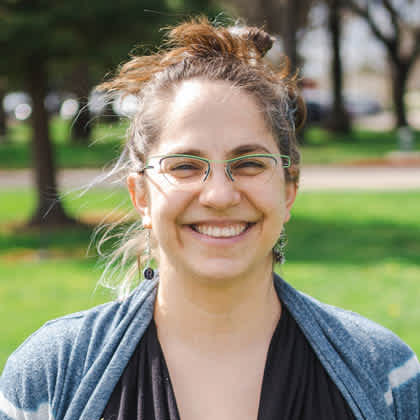
Lauren Kendall Brown-Berchtold, MD, FAAFP

Jason Marker, MD, MPA, FAAFP
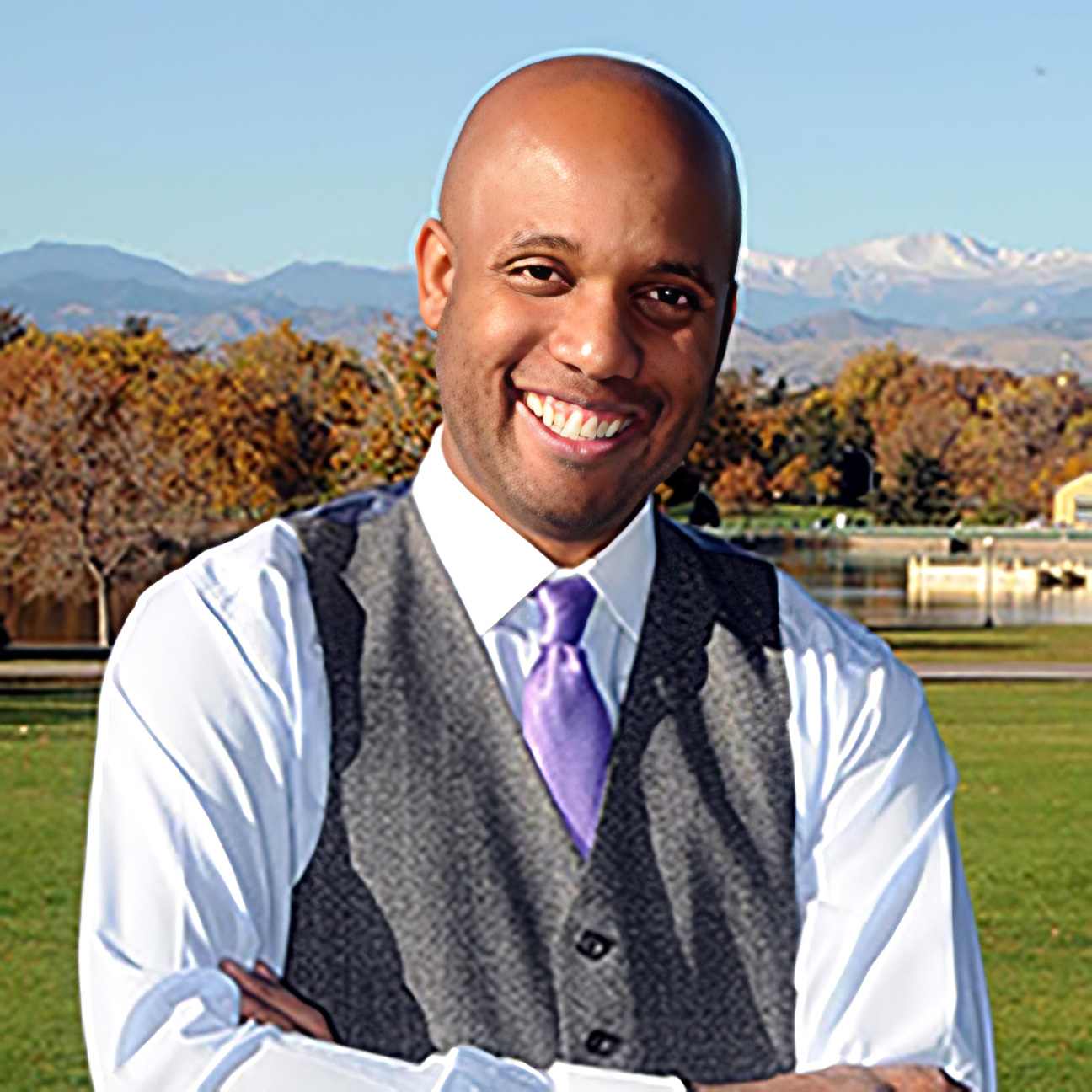
Tamaan K. Osbourne-Roberts, MD, MBA, FAAFP, DiplABLM, DABOM
Transcript
Welcome to CME On The Go, the podcast crafted specifically for family physicians by family physicians. Whether you're seeking clinical insights, professional development, or simply a sense of camaraderie, you'll find those all here. Plus, you can earn CME credit with every listen. So grab a coffee, hit play, and let's embark on this journey together.
My name is Dr. Jason Marker, and I'm an associate director at the Family Medicine Residency program at Memorial Hospital in South Bend, Indiana.
I'm Tamaan Osborne-Roberts, a family medicine, lifestyle medicine, and obesity medicine physician for the underserved from Denver, Colorado. I'm also a part-time medical executive, a professional medical communicator, a happiness scholar, and an occasional humorist.
And I'm Lauren Brown-Berchtold, and I'm the program director for VCME Family Medicine Residency in Modesto, California.
All right. Well, today, friends, we kick off season three of CME On the Go, and we're going to talk about climate change. Wild. I know. Can you believe it? Two years in the can, ready to start number three. Excellent.
They keep inviting us back. I love it. I'm not sure it's certain they do, but yeah, I love it too. I got a text message from a friend about a half hour ago saying that one of her residents quoted me to her while staffing a case, and I thought, "I have finally arrived." Excellent. Let us know when we get the trailers and the bowl full of green M&M's. What a good writer.
All right. Well, hey, as I think about topics in healthcare that are going to be important to the next generation of physicians, I think climate change is going to be one of those. And then, as soon as I say those words, it tips the cards of exactly the biases that are leading to a climate-related health crisis in my own time.
I think that many of us don't want to believe that climate change is already affecting the health of our patients, but I think we'd be wrong about that. So today, we're going to talk through some of these climate-related issues so that are going to affect our patients right now while we're taking care of patients this year, no doubt.
So first off, which one of you wants to risk a definition of climate change, and then a definition of climate change-related health concern?
I suppose I'll take climate change because I desperately want to have no political future whatsoever.
Let's just, let's just own that. So climate change. First of all, important thing to understand, climate and weather are not the same thing. Weather is what is happening really outside of your door right now, which in Denver, Colorado, actually happens to be a very sunny snow melt after 24 hours of snow here in, in May. So that's Colorado for you.
So climate is this, and I'm going to read it so I get it correct. So it's, "Long-term changes in the average weather patterns that define Earth's local, regional, and global climates." It's not the weather right now. It's not the weather just in your space. It's long-term changes in weather over larger areas up to and including the globe.
I think it's important to recognize, as I did, that climate change and whether it's man-made or not is a bit of a political hot button. We're not going to really go into whether it's man-made or not. I think what we're going to go into is something that the vast majority of people, whether scientists or laypeople, seem to, to believe and understand, is that climate is changing.
That is something that has certainly been happening over the past several decades here. And given that, we're starting to see health effects. That is also very well scientifically documented, and our patients are coming in telling us about this as well.
Yeah, absolutely. And that leads into this phrase of climate change-related health effects, which really just means changes in disease patterns that are most closely related to changes that are happening in climate.
I think that all of us can think of a patient, many individual patients perhaps, that we're like, "Yeah, this person is being impacted by what is happening in their community and in their region from a climate perspective." I can also think of changes that happen from infrastructure perspectives, et cetera.
Some of those things can be really difficult to quantify in the data, right? Because the reality is we're still looking at very short periods of time where we're not able to extract data for hundreds of thousands of years and put them on a pretty chart in a way that might feel most compelling to some people with regards particularly to patient outcomes.
But the reality is that we're seeing change and we're seeing impact on our patients, like you just said, Tamaan. And we're doing the best that we have with our modern tracking of that to make sense of that data.
That's exactly right. And I think for some of my colleagues here in a little redder state than maybe you two are in, there may be some denial from some of our colleagues about whether climate change exists or not, and that doesn't really bother me a whole lot in the sense that I still want to take the best care I can of the patients who are in front of me, and if they're having a condition that may or may not be climate related, it's still a condition that I need to take care of for them.
So our conversation today is going to talk through a lot of different types of conditions that we ought to know about as family doctors and be ready to take care of irrespective of what the underlying cause of the patient coming in to see me about that condition is. So what we're going to do is we're going to take this in two parts.
We're going to quickly go through some kind of international data, because there's a lot of stats that are kind of worldwide stats out there in about five different areas of climate, and we're going to kind of go through those pretty quickly because I want to spend more time talking about some actual United States data sets that have to do with climate related health conditions.
We’ll launch into that first set right now with sort of heat related morbidity and mortality. So the 2024 Lancet Countdown, which is sort of a big annual survey of climate related things that are happening, in 2023 there were 50 additional days of health threatening heat around the globe, and it resulted in 167% more annual heat related deaths among adults over 65 compared to the 1990s.
That's a problem, right? That just is a problem. What we know is that heat stress increases stress on all sorts of different systems, and the morbidity related to that, including the heart, the respiratory system, our renal systems. All of our listeners, and y'all know that OB is one of my favorite things to think about and talk about.
And there was this really interesting article just last year that came out talking about extreme heat exposure leading to a statistically significant increase in risks during pregnancy, like preterm birth, like low birth weight. That article actually said that for every one degree increase in the kind of latent environment, there's a 5% increased probability of stillbirth.
That's a shocking statistic, and something that we should be paying attention to when we're thinking about caring for our patients here and around the world, particularly since we are talking about sort of worldwide perspective right now, and we'll, we'll transition to US based perspective. But if we're thinking about patients who are in countries that might not have easy access to something like central heat and air, this becomes an even bigger concern.
Yeah, I definitely agree, and I would add to that, that the concept of it being worse in various communities worldwide also applies domestically. I would say that even in domestic health equity, we actually tend to see heat-related morbidity and mortality spike in communities of various types that, like you said, have less access to cooling. Those tend to be poor communities. They oftentimes tend to be communities of color. We also see this amongst older patients, so this is, this really worsens health equity in a range of ways.
Both of you sort of mentioned respiratory and cardiovascular specific kinds of conditions, and that's sort of the next big point in a lot of these studies internationally, which is that the climate change appears to be worsening air quality through three main areas, increased wildfire smoke and particulate matter in the air, ground level ozone formation, and then aeroallergen production as well.
So many more heat waves and extreme weather events happening around the planet has resulted in a 30% rise in respiratory diseases, 25% increase in cardiovascular conditions that seem to be more closely tied to climate change than other indicators in those areas. Yeah, we have definitely. Allergies is another one that comes up secondary to this.
Despite having some snow outside right now, we've also had blooms starting in March here, so it's been a real thing. Wildfire is very real out here in the West. Obviously, I think about it a lot. But I should mention that wildfire risk has increased in 66% of countries, two-thirds between the 2003 and 2007 period and the 2019 and 2023 period.
And exposure, and this is one folks don't always think about, to desert dust rose in 48% of countries. I actually have a couple of personal stories related to this. In regards to wildfires, we've had some really big ones out here in the West. We're kind of used to it. But Florida has had a record wildfire season in, in, in recent years.
And this is something I was discussing with my wife, and she put it this way. She's like, "Really? The swamp is burning now?" As an ex-Floridian, I found that somewhat amusing, but also kind of telling. Yes, you know, even the moist climate's having this issue. As far as desert dust, I got the worst infectious sinusitis of my life a couple of years ago while at Carnival in Trinidad and Tobago, which is not a desert country.
It's a tropical wet country. But the dust blowing over from the Sahara was reaching the Americas, and they had had the worst dust in that area that we've ever seen, and it made about a third of revelers actually come down with, with some sort of, of respiratory illness. So this is real, and I've experienced it. Let me say that. And whether that event happening in Trinidad and Tobago was actually climate change related or whether it was just going to happen this year anyway, patients who are affected by that, we've got to be prepared to talk about how to manage that problem irrespective of what the underlying cause was.
Let's talk about climate-sensitive infectious diseases. Now, I remember being in medical school hearing about a lot of conditions that they pretty much said to me here in Indiana, like, "We don't see that here. We're going to teach you about it because you need to know about it, because who knows where you're going to go practice medicine, but you're not going to see it in Indiana."
Well, the bottom line is there are a lot of infectious conditions which are creeping their way northward that seem to be related to some climate-related changes on this planet that are allowing them to be in a more friendly environment a little higher northern latitudes than they had been before.
We're talking about things like dengue fever, Zika, chikungunya, West Nile virus, vibrio infections. This is a significant problem and especially for those of us who really haven't been around those conditions, to get on my differential diagnosis alone is a pretty big struggle for me.
Yeah, absolutely.
That it feels like just a step two board question or a step two exam question perhaps, and then the reality is, would I recognize someone with malaria if they walked in to my exam room? But what's interesting is that I actually became a doctor because I encountered a patient with malaria. I was in the Riau Islands of Indonesia, and that is a place where people are going to be more likely to encounter malaria that's in the Southern Hemisphere.
But when you have populations that are dealing with standing water that they weren't necessarily set up to be dealing with because we're having climate related changes, you're set up to have these infectious diseases that can really devastate individuals and the communities that they're in. And so it's something that can feel really distant and yet remains really important.
Yeah, I am definitely keeping my eye on this, and I'm keeping my eye actually on some of the fungal diseases, which is really, really interesting. You know, right now we don't necessarily have evidence of increased fungal disease in people. We're, we're still kind of eyeballing that, and typically with our high body temperatures, fungi don't have a particularly great time infecting us, but we're seeing some of the really, really concerning things in the animal world.
The general increase of chytrid fungus in frogs amongst other things has been a real issue. But we, when you think about animals, we're actually seeing a fungal epidemic of something called white-nose in bats, and bats are resistant to a whole range of diseases that actually infect the rest of us. So when I see increased fungal disease in bats, I'll admit, I'm kind of hoping that our surveillance folks are keeping an eye on what's happening to fungal diseases in humans because it makes me wonder.
Next, we'll talk about food and water insecurity. Climate change, it threatens food systems. Drought, heat waves, declining crop yields. These are the climate change statistics out there, and that's a real problem. As Tamaan said just a little bit ago, it's going to disproportionately affect some members of our society more than others, and that's a big problem all by itself for us, let alone the direct effects of these climate change food system changes.
So that’s an area that's worth all of our attention as well. Food and water insecurity is a big problem. No, absolutely. I completely agree with you, Jason. Really, a record 151 million more people experienced either moderate or severe food insecurity in 2022 than in the period between 1986 and 2010.
Yeah, I'll admit, as a lifestyle medicine doc, I'm always worried about too many calories really in domestic population, but the reality is, is worldwide that's not the case. And even domestically, we're going to actually going to start to see this affect domestic food supplies in very particular ways because climate change is everywhere.
In addition to that, we're linked to the domestic food production economy in very real and substantial ways nowadays that are not always easy or quick to change. The other thing that I find particularly concerning, and that is certainly affecting populations in the US right now, is water scarcity.
Again, I'm out west in the seven basin Colorado River region. We have record droughts. We're looking at rationing. Arizona is in a much worse way than we are here in Colorado, and there are people actually been running out of water that they've paid to have, especially in places where they're off grid or not connected to a municipal water supply.
This is a real concern, I think, for everyone everywhere. And I'll throw out, I'm in the Central Valley of California, which grows a huge amount of food that is shipped all over the country. And so the linkage of both food and water insecurity as our water supply is threatened, our ability to grow the food that is going to then serve the country is impacted in itself.
Then we drill down into having populations with food deserts who are having difficulty being able to access any sort of fruits or vegetables because that's not what their community is set up for. And so definitely a major concern and something that meaningfully impacts. Like if we're not thinking about what are our patients able to consume, then that is pretending that we have a luxury that truly just doesn't exist in a lot of communities.
All of these things we've been talking about flow directly down into mental health effects, and some of that is pretty easy to get my brain around the direct exposure to an extreme weather event, tornadoes coming through the Midwest here, major wildfires out West or in Florida as it turns out, hurricane-related events.
People who are in those, it's going to create some PTSD, anxiety, depression perhaps. These are life-altering events that people may be a part of. But beyond that, chronic heat stress affects mood and cognition, displacement of individuals, loss of livelihood because of changes that have happened in weather and climate around them, this general eco-anxiety that is sometimes politically driven around the whole planet.
These mental health effects have been well quantified in the international literature for sure.
Absolutely, and I think the perhaps easiest to understand and closest-to-home experience of that is that with children who were affected by Hurricane Katrina, half met criteria for a referral for mental health services from a PTSD or a depression perspective.
And you've heard us say this multiple times, right? You could argue about was the hurricane going to happen anyways, or they could have been traumatized by something else entirely. But, but the reality is that this is impacting people's lives, and so that's why it's important for us to have this conversation at all.
Yeah, I definitely agree with that, and I'll say that my mental health has suffered having to take occasional road trips with family members who desperately hate heat and dislike the increased number of bugs that they're encountering outside. So working through those issues with my family is, you know, it hasn't put me in therapy yet, but I anticipate there may be a moment.
All right. All right. Enough humor. No, don't be bringing humor to my podcast.
I guess you claimed right up front in your introduction. Okay, well, this is a great time for us to sort of switch gears a little bit and talk about really the US-specific statistics. So I think there are some docs out there, I'm colleagues with some of them around my community, where they're not going to be sure that any of this climate change stuff exists, and that's fine.
But, we need to think about what's happening here in our own country and where that's going to show up around our country in ways that we can really make a really big impact for our patients. So let's dig into some of those and cite some of the statistics around that. In 2025, just last year, JAMA, there was a big study that covered high temperature attributable deaths, and saw an increase in 53% of those between the first and the second decades of this century from 2,670 to 4,091 annual deaths from high temperature attributed conditions.
That’s a really big deal, and it resulted in a record-breaking number of heat-related emergency department visits in that timeframe as well. And the other statistic that I like to sort of lean on a little bit is that US heat waves are now twice as frequent as they were in the 1980s and more than three times as long as they were in the 1960s. These are significant changes in weather and/or climate that are happening in our country.
Absolutely. And again, I live in the Central Valley of California, and if you've driven through here, it feels a lot like an irrigated desert. I've lived here virtually my entire life, and when my air conditioner went out two years ago, I was really stressed, not just because I don't like the heat. Maybe it was longer than two years ago. I had a really young baby, and I was very concerned about her safety, putting her down to go to sleep in this incredibly hot room in our house that had a broken air conditioner. Talk about risk of morbidity with extremes of age, but also then going back to the idea of mental health concerns.
Like, man, what a hardship to be thinking as a family member who has a loved one of like, "Are they going to wake up from this nap? Because when I touch their skin, it feels like it's burning hot because I can't get into a safe environment." Yeah. Well, I think that is so concerning and points back to mental health amongst other things.
I'll say we're definitely seeing it out here. Interestingly enough, I've started referring to the city as Denver Diego. We've always been a very mild four-season climate, but we have generally had four seasons. Not that we won't get 60 or 70 degree days in January or February, but it's like maybe a week, week and a half run of that.
This has been a record-breakingly warm winter. So warm that my family bought ski passes and didn't go up once because it was very hard to find the snow. We have been seeing just all sorts of increased heat, not simply during the summers which have been record-breakingly hot, but during the winters too. It's affecting all sorts of things, including water availability and also our wildfire risk. It's a real issue.
We were visiting my oldest daughter down in southern Indiana here over this last weekend, and they have an old TB sanitarium on the outskirts of their town. And we were sort of talking about that while I was visiting. And, you know, the reason that we have those usually out in the country is because it's been well known for a long time that particulate matter in the air is generally higher in urban areas than it is in rural areas. And as a consequence, it's sort of if you have a respiratory problem, asthma, COPD, tuberculosis, like it's easier to breathe out in the country.
And yet as we start to measure wildfire particulate matter, we find that those levels are much higher even than urban particulate matter levels. And so wildfire smoke and air quality in particular shows consistent evidence of increased asthma exacerbations, COPD flares, respiratory infections, and hospitalizations.
They did an interesting study during the 2020 California wildfire season. Of course, this was in the start of COVID. Particulate matter concentrations increased by 221% during that particular California wildfire season, and it was associated with a 57% increase in COVID-19 cases compared to other areas of the country that were similarly situated in demographics, et cetera, et cetera, and a 148% increase in COVID-19 related deaths in those affected counties compared to other similarly situated counties that were not in the midst of a wildfire.
So big effects when people have other underlying respiratory diseases or respiratory infections. And I was here in California during that season and the many others, right? And what's shocking is there were times when it was like, oh, we weren't under lockdown from a COVID perspective, but I can't go outside because I'm checking air quality on an app like AirNow or Plume Labs or something like that to say am, am I safe to expose myself to the air even though the fires are five hours away. These aren't right next door necessarily, and they're impacting communities very far away from us. That's scary.
Yeah. I very much agree. It's been interesting at various times here, really about a third of a country away from the fires on, on the West Coast, and to have what looks like sunrise persist all the way through to about 11 a.m. because the sun's just trying to shine through the smoke that's come over.
Like when you walk outside and the world smells like bacon- Well, that really should be a good thing, but it's not. In this case, it's really actually very disturbing and terrible for health and not good at all.
Tamaan, you mentioned earlier about allergies and allergy related concerns related from climate change and weather related events.
The statistic here in the United States is that over the last 30 years, the North American pollen season has lengthened by approximately 20 days compared to what it was 30 years ago, and pollen concentrations in the air have increased by about 21%. That's a pretty big deal. One model projects that 5% to 10% increase should be expected in oak pollen-related asthma emergency department visits in the years ahead.
So we need to be thinking about what this will mean for folks who are going to be sensitive to those pollen and allergic conditions along the way. So that's where we stand with pollen and allergic disease. Again, underlying cause, like, we can debate that all day long if you want to, but we s- are seeing a longer pollen season right now, and we're going to have to tackle that as physicians for sure.
Yeah. It's been just crazy. In my backyard, normally our magnolia tree, which has spent years trying to get better at blooming and finally is kind of in a good place, flowers once. It's flowered twice this season, during the early season and the late seasons. First time I've ever seen a magnolia anywhere do that.
That's been very, very, very substantial. And like you said, allergies, just huge morbidity. Asthma, we're talking about mortality. I mean, this is a real deal issue.
Yeah. Next up, vector-borne disease expansion in the United States. In the United States, vector-borne diseases nearly tripled from 2004 to 2016.
Now, maybe that's because more of us are living out in the country. I don't think that's true, but maybe it is. Maybe it's because we don't want to use our insect repellents, but I don't think so. There's been a lot of press about wanting to do those things. And so that's a big change, a tripling in just those 15 years.
Insurance records indicate that there's been a 43% increase in Lyme disease cases. The blacklegged tick is rapidly expanding northward in its range. There's been a 205% to 248% increase in suitable habitat area predicted over the years ahead, and the mosquito vectors are expanding northward as well.
There's been a small local dengue fever outbreak in Florida, Hawaii, and Texas recently, and, like, that was just not a thing that was in the States until recently. So these are some areas of vector-borne disease that we're going to need to be thinking about, especially if you're physicianing. If you're... Is that a, probably not a verb. I think you're physicianing, yeah.
Physicianing. I was busy physicianing there. I've never heard anyone argue that, you know, what we really need in this world is more mosquitoes. It's just never, I've never heard that.
Yeah. Yeah. Okay. A couple of quick compounding effects. These are compounding effects are those that threaten to co-occur and make things compoundedly worse, as the name would suggest.
So heat waves that coincide with wildfire smoke, that's a big one. Drought that changes food and water insecurity during an extended warm season, like these are the sorts of things. A pollen problem associated with vector-related disease. Like, these combinations of the things that we've been talking about today are particularly troublesome, and we're seeing more and more of those overlapping compounding effects.
You can think about compounding effects, just the rise in the geriatric population, which is generally a vulnerable population, but also, you know, children, outdoor workers. Like, there's just a lot happening that compounds each one of the things that may be tied to climate change-related health conditions.
So when you think about those in our own population, depending what the demographics that you take care of are, for example, I take care of a lot of geriatric patients in a rural community. There's a lot of homes out there that do not have central air conditioning. They may have a fan in them. They may have a window air conditioner.
But I've taken care of patients who are spending the whole summer, like, in the back bedroom because it's the only room that has air conditioning, and they're just sort of sitting in their La-Z-Boy watching TV, getting swollen ankles, and now I'm trying to sort out are they having heart failure exacerbation from just chronic venostasis, and they're consuming healthcare that they may not otherwise have consumed because of things related to the weather and/or the climate in the area where they're living. So these are things worth us thinking about and how this is going to affect the people in our own practices as well. Absolutely.
So I want to talk about some action items. This is a good way for us to wrap up. We're into our last few minutes here. What are some things that we can be proactively doing in our practices to be thinking about climate and weather and as it relates to the conditions that we're likely to see?
I'm going to throw out the first one, which is just to say, I gotta be prepared to manage these conditions. If I haven't thought about tick-borne disease since medical school, I might want to bone up on that. I might want to read a little bit more about how I'm going to manage that or what the symptoms are so I keep it on my differential diagnosis.
If I'm going down to Southern Florida to meet with a family member and there's a malaria outbreak going on, I want to be thoughtful about like, what, how do I, how do I manage that? When can I go outside? When should I not go outside? I need to remember to use my bug spray, et cetera, et cetera. Being prepared to manage some of these conditions that you may not have heretofore needed to be prepared to manage would be a thing that we could each do.
Yeah. And I'll go next and say jumping off of I might need to be prepared to have my bug spray or, or be more willing to use it even though it smells weird. Like, it's easy to talk about bug spray and we recommend sunscreen, and do we extend some of those things that we know there's great evidence for talking to our patients and having them protect themselves about.
Do we extend that to saying, "Hey, like, you might need to be thinking about wearing a mask if you have times where you've got high particulate matter, and here's how you could check if the air is safe." You might not be able to see the smoke on the horizon. You might just know, like, hey, I think there's a fire even a state away.
I should probably look into what's my air quality like right now. Do I need to be thinking about air and car filters if I'm able to afford it? Which is a whole other component. And I'll say that many times per summer while the, the heat, and temperature is like over 110 in the Central Valley, I've got patients who are coming in and I'm like, "Yeah, you're not drinking enough water, and that is compounding everything else that's going on that brought you in to see me."
And so that's, I think, something that every family doc can be able and prepared to do, is talk to patients about those things.
No, those, those are really great points, Lauren. I suppose I'll go next. And since I have already, as I pointed out, destroyed my political future by giving a definition of climate change, let me destroy it even further by saying that this is actually something that regardless of really where you are on climate change deserves your time and attention, and arguably your political advocacy.
Let me take it from two separate standpoints. Let's say you are an individual, you know, our listeners who believe that climate change is anthropogenic, you know, is man-made. Well, there's a lot of things that you can advocate in regards to trying to change things. You can make personal choices in a variety of different ways that overall decrease carbon footprint, potentially do things to conserve water.
You can advocate for larger changes in the energy systems and with your politicians on a whole range of things that if you do think climate change is man-made, you probably actually have a good idea about already. Let's say you are skeptical of that. You do not believe that climate change is, is man-made.
Well, as somebody who spent about half his childhood growing up in the American South, specifically in the Deep South, I'm going to say that I'm certain at least a few of you believe climate change in some way or another is happening, whether it's hurricane issues, whether, as we talked about, as wildfire issues in places that wildfires were not so prone to, whether it's in the increased number of tornadoes and the increased strength we've been seeing.
So I know there are a lot of folks in that area who really do see this happening on their doorstep. I remember I occasionally find myself in Louisiana, in New Orleans, and I remember being there and talking to people about this, and while they might not agree about the solutions for increased flooding, particularly from hurricanes, nobody's arguing about the increased flooding, one of those things where the solutions might differ.
They don't know whether or not flooding the salt marshes is helping. They don't know whether or not putting up new levees is going to be helpful. There's a lot of debate around those issues. But regardless of what the debate is, if you're in those areas it's going to affect you, it makes sense to go and talk to your politician about solutions.
You can argue about how the problem got the way it is until you're kind of blue or red in the face, depending on which side of the aisle. But the long and the short is if these things are affecting you, go and talk to those who have some power and some agency. Figure out how you can mitigate and work to make your community, and by extension the community your patients live in, safer and more resilient and better able to handle these sorts of changes.
I want to say it louder for those in back because that was really amazing, Tamaan. Like regardless of why you think we might be in this situation, at the very least, arguing to say we need to spend more dollars on investigating how to mitigate these effects and what possible solutions we have is going to be something that I think most people are going to have a hard time disagreeing about, to say we, we need to create some improvements and find some improvements.
That leads into the next point that I have of we need to be mindful of our special populations. You said this earlier, Tamaan, right? Our Black and brown communities, our patients who have been historically marginalized are going to be at exponentially increased risk from all of the things that we've talked about in today's episode.
And so this is a form of social advocacy as well, to be thinking about what we need to be doing and how we can protect and chat with those patients. And I'll take the last word on action items here and just say, if this is an area that's particularly important to you, there's a lot of things that each of us could do every single day that might make a difference.
I think about it usually when it's really, really hot in the summer and I'm leaving my office to go downstairs to the clinic for the whole day, and I think, "I should turn my light off. I could use a little bit less electricity in this office today, and I can do my part as well." And when I was in private practice, there were some weeks where I actually opened my office a little bit early and tried to close a little bit early so I could dial back the air conditioner during the hottest part of the late afternoon.
That was something that I could pretty easily do, and my patients would adjust their schedules kind of around that. That was not a big problem. We could think about how we think about our water consumption and the ways that we make some of the choices about our intake during the course of the day and how long are you going to wash your hands?
Are you going to leave that thing running while you're not really, you're washing your hands at the moment? Like, there's lots of little things that we could all do in our own practices. Keep your air filters clean and swapped out as you need to so the air inside your office is as clean as possible. Make that space available in your lobby, in an air-conditioned lobby, for an older adult to come in who just needs to cool off because they don't have air conditioning in their house.
These are things that you could think about doing in your own practice. So I think that's a great list of action items and a really nice walkthrough. A lot of the statistics that are happening around the planet and here in the United States as well for us to think about on how we prepare ourselves as physicians to manage some of those conditions for our patients.
So thank you, listeners. I know that politically speaking, some of you were right with us the whole time, and some of you are a little dubious, and that's okay too. I want you to be ready to take care of those patients when they come into your office and be able to offer them amazing care, which is really what I know you want to be able to do for them as well.
So let's wrap up with our moment of gratitude. I am pleased to have had this opportunity to have this conversation with y'all. We're not afraid to lean into some things that can be a little bit politically charged and think about them through the least politically charged lens that we can because this is just an area of wanting to do well for our patients.
I feel really grateful, A, that we're here for season three, and that we get to have more amazing conversations with y'all together, and I feel really grateful, B, that I live in the middle of nowhere, which is where I learned that since I'm on a well, I have a very low water threshold. And so when my daughter is just running that water for, like, five minutes, I'm actually being forced to think about where is this coming from? And I'll be honest, maybe it sounds silly. That's not something that I was really forced to confront when I was living on a grid for a long time. And so I've gotten some exposure that I feel really grateful for.
Yeah. I'm going to be grateful for two things that are really polar opposites. The first of which is going to be artificial heating, because as I mentioned, I grew up in the Latin American South. I was actually born in Guam in the Pacific. My parents are from the Caribbean. So, while I do love our four-season climate, there are days I hate it and having heat available, even if it requires a bit of negotiation with my wife because she's dedicated to decreasing our carbon footprint, and I can't really argue with her there.
That's one thing. And the second is, I am grateful very much for the amazing invention and promulgation of artificial cooling. It's a very simple physical concept, but took human beings a very long time to get to. HVAC is amazing. I'm happy to be able to have access to that when it's necessary, and I absolutely adore ice. It is one of my favorite things in the whole world. I think it is magical, and it is always wonderful to be able to put ice into a nice, cool drink and be able to enjoy that.
Thank you for joining us for another episode. We appreciate you joining us on this journey to elevate family medicine. To continue this journey, stay tuned for new content brought to you twice a month with CME On The Go.
Visit the show notes for instructions on how to claim CME credit and find additional resources for today's episode. And until next time, serve from your values, pursue your vision, and let's protect our planet. See you next time on CME On The Go, a production of Inside Family Medicine.
References and resources
Disclosure
It is the policy of the AAFP that all individuals in a position to control content disclose any relationships with commercial interests upon nomination/invitation of participation. Disclosure documents are reviewed for potential conflicts of interest and, if identified, conflicts are resolved prior to confirmation of participation. Only those participants who had no conflict of interest or who agreed to an identified resolution process prior to their participation were involved in this CME activity. All individuals in a position to control content for this session have indicated they have no relevant financial relationships to disclose.
Disclaimer
Copyright 2026. AAFP. The views presented in this broadcast are the speakers own and do not represent those of AAFP. The information presented is for general, educational or entertainment purposes and should not be considered legal, health, financial or other advice. AAFP makes no representation as to the accuracy or completeness of the information and is not responsible for results that may arise from its use. Consult an appropriate professional concerning your specific situation and respective governing bodies for applicable laws. Reference to any specific product or entity does not constitute an endorsement or recommendation by AAFP unless specifically stated otherwise. AAFP and the AAFP logo are registered trademarks of American Academy of Family Physicians.