
CME | Dementia demystified: From early signs to everyday management
Show notes
In this CME On the Go episode, our hosts discuss evaluating and managing dementia-related concerns in primary care using a common scenario: an older patient brought in by an adult child concerned about Alzheimer’s disease and possible nursing home placement. These visits are time intensive and require history from both the patient and family, and our hosts emphasize distinguishing normal aging from functional cognitive decline across domains such as memory, judgment, language and orientation, while remaining aware of family dynamics. Key exam priorities include vision, hearing and depression screening.
They review brief and extended cognitive screening tools, labs for reversible causes and selective imaging.
The episode outlines definitions of normal aging, mild cognitive impairment and dementia, along with practical, safety-focused management, medication options and the family physician’s role in long-term planning and caregiver support.
Learning objectives
Recognize early signs and symptoms of dementia, and distinguish them from normal aging and potentially reversible causes of cognitive change.
Differentiate behavioral and psychological symptoms of dementia (BPSD) from unmet needs or environmental triggers, clarifying what BPSD is—and what it is not.
Share practical, evidence‑informed management pearls with patients and caregivers, focusing on nonpharmacologic strategies and realistic expectations for disease progression.
The AAFP has reviewed CME On the Go, Season 3 and deemed it acceptable for AAFP credit(s). Term of Approval is from 07/06/2026 to 07/06/2028. Physicians should claim only the credit commensurate with the extent of their participation in the activity.
This session “Dementia Demystified: From Early Signs to Everyday Management” is approved for 0.50 credits Enduring Materials, Self-Study, AAFP Prescribed credit(s).
The AAFP is accredited by the Accreditation Council for Continuing Medical Education (ACCME) to provide continuing medical education for physicians.
The American Academy of Family Physicians designates this Enduring Materials activity for a maximum of 1.00 AMA PRA Category 1 credit(s)™. Physicians should claim only the credit commensurate with the extent of their participation in the activity.
Claim CME credit
Episode hosts
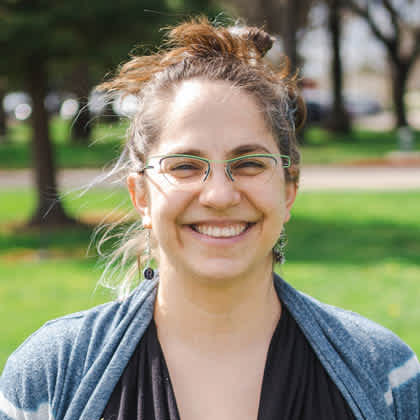
Lauren Kendall Brown-Berchtold, MD, FAAFP

Jason Marker, MD, MPA, FAAFP
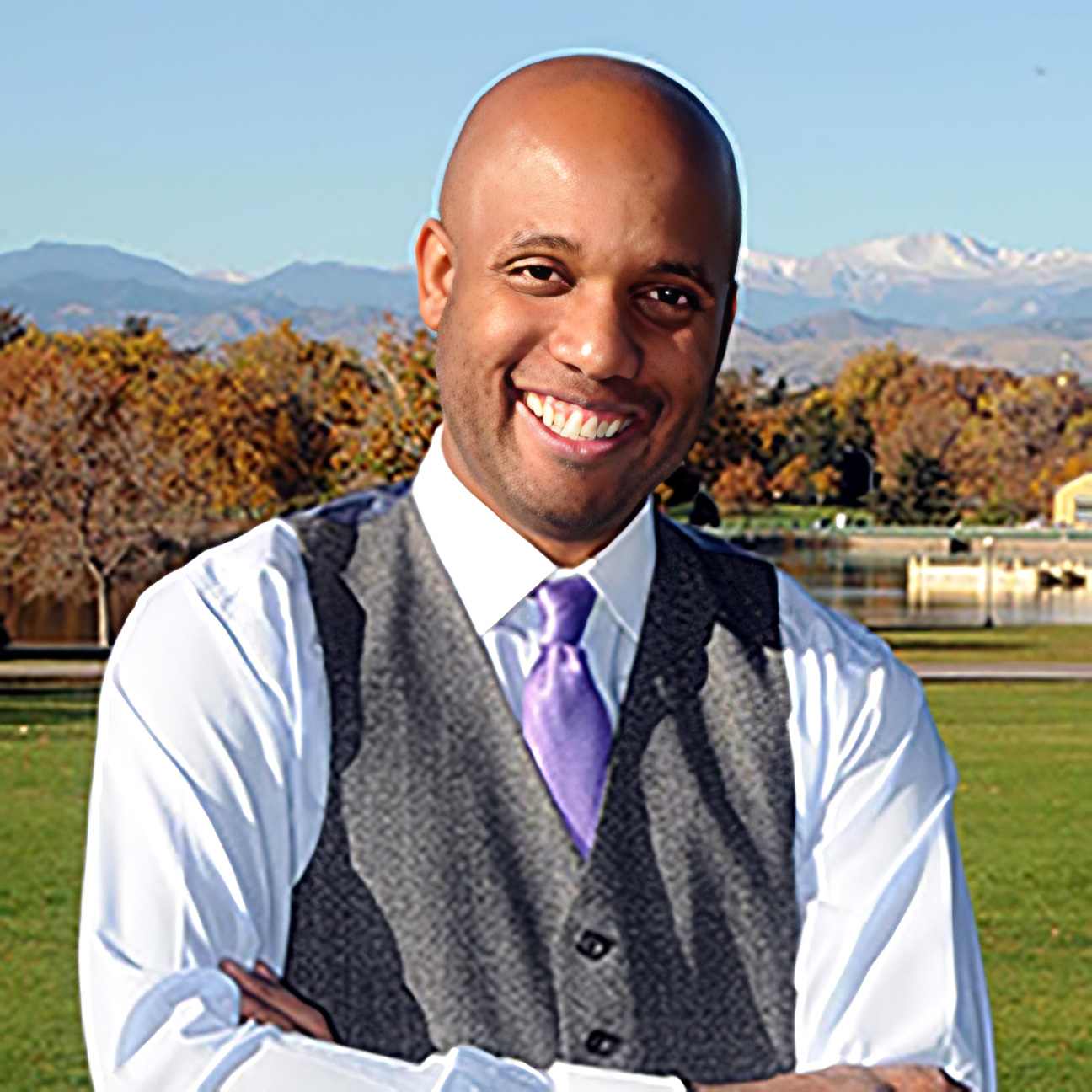
Tamaan K. Osbourne-Roberts, MD, MBA, FAAFP, DiplABLM, DABOM
Transcript
Hello and welcome to CME On The Go, the podcast crafted specifically for family physicians by family physicians. Whether you're seeking clinical insights, professional development, or simply a sense of camaraderie, you'll find those all here. Plus, you can earn CME credit with every listen. So grab a coffee, hit play, and let's embark on this journey together.
My name's Dr. Jason Marker, and I'm an associate director at the Memorial Hospital Family Medicine Residency Program in South Bend, Indiana. Hey, y'all. I am Lauren Brown-Berchtold, and I'm the program director for VCME Family Medicine Residency in Modesto, California.
Howdy. I'm Tamaan Osbourne-Roberts, a family medicine, lifestyle medicine, and obesity medicine physician for the underserved from Denver, Colorado.
It's great to be back here on the go with you two. I found my CME On The Go cap to wear tonight for our video/audio recording of our dementia episode, so nice to have that with me today.
We're going to talk about dementia and related concerns today. I'm going to start us off with a case presentation. An 80-year-old patient of yours comes in for an unexpected visit shortly after a holiday, accompanied by an out-of-town child.
When you ask what they're here for, the patient says, "I have no idea. My kid's overreacting." And the child says, "My parent is getting Alzheimer's, and you have to tell them it's time to go to a nursing home." Hey, on a scale of one to four, how many hours is it going to take for you to sort this out? So when you say one to four in hours, do we mean cosmic hours?
Yeah, it's going to take a while, isn't it? Yeah, I was going to say 20, but I think that, that breaks your scale. You're going to be here for a while, right? And I was reading a comment from a physician I don't know earlier today on a forum that said "Let me just walk people who aren't PCPs through my day."
And I think at least two of the patients they talked about were some diagnosis of dementia-related or sussing out could dementia be there. And yeah, we're going to be here for a long time. And I think it's a really good reminder that Alzheimer's is something that impacts a huge proportion of our population.
And so not only is this going to be taking a long time, but the frequency with which we get asked questions like this is pretty high and probably likely to rise.
Yeah. I agree with all of that. And I would say that sorting out most conditions involving the brain, psychiatric, neurological, other, is always going to take a long time because when the organ that accounts for who a person is the organ that may not be functioning correctly, that's a really meta problematic place to find yourself in.
There's a lot of pieces of history that kind of come into this, and ways to listen to people. And I know we're we'll get to discussing all of that later, but all of that together, plus a good exam and everything else, not to mention just dealing with the social various things that may come in here from health-related social needs to family dynamics or other things like, yeah, this is, it's not a short visit.
And yet this is one of the visits that I love the most. I know it's going to put my day behind schedule, but I know that what I'm going to bring to that family is really high value, and probably only a family doctor can give them what they're going to need in that moment, especially if you're talking about out-of-town family members who maybe haven't seen a loved one for a while.
You're making really important decisions about the autonomy of the patient and the context of their mental status and what their family thinks about what should happen versus what may be possible that they are not even aware of. There's so many things that we're going to bring to that conversation that will really change the dynamics of this family for a long time, and we're perfectly suited to be able to do it.
So we want to make sure that in this episode, we talk about how to do this evaluation well so that you're comfortable leaning into it, taking that little bit extra time, but doing it as efficiently as possible so that it doesn't take unnecessarily long amounts of time, even though it's still going to take quite a while, help you do this well so you can do it well for the families that you take care of.
All right, so with that in mind, we nee`d to begin to take some steps to evaluate this patient. And so not surprisingly for us as family doctors, we've got to lean into the history and exam and maybe some testing along the way.
So in turn, each of us will talk through some different parts of this. So Tamaan, I think you're going to kick us off talking a little bit about the history-taking that's necessary in evaluating this kind of patient.
Yeah. No, so when thinking about the history and the best way to take it there's a couple of things that really come to mind.
The first of which is really exemplified by the case you brought up, Jason, which is it's very important both for the patient and also for their family members to distinguish between things that might be early signs of dementia and things that really might be normal cognitive changes that are related to aging.
Because as many of us know, me, there are things that change as you get older in regards to your overall cognition. These are things that, that just occur. They're not necessarily pathological. They're not necessarily dangerous. They're things that just happen, and there are other things that point a little bit more to dementia.
And as you go through trying to distinguish those things, there's a number of different domains that you can get into in regards to the history. We can talk about how, or I should say query about both the patient and if they have family present or how they handle familiar tasks. So for instance, to give you an example in this particular domain, an early sign of dementia would be are they really struggling with daily tasks?
Are they having a lot of difficulty really doing many things throughout their life in regards to familiar tasks? As opposed to something that might be a little more circumscribed. If they're having a hard time with the microwave, if they're having a difficult time with television settings, dare I say if certain things in regards to digital devices and the internet are perhaps a little mystifying, these are not necessarily things that are related to dementia if they're very well circumscribed and on their own.
Yeah, I know. I feel good about that. Thank you. Many of our listeners and watchers do who feel much relief at the digital inclusion. But no you really see that in other places. So for instance, judgment. Is their judgment globally impaired, or do they, like pretty much all of us, occasionally make decisions that are perhaps not entirely accurate?
The second, I wouldn't even necessarily say that's a normal sign of aging. That's a normal sign of being alive. The first one, however, if there's globally impaired judgment where time after time, day after day, instance after instance they are making judgments that are not in line with ways they've made judgments previously and that might be maladaptive for them, that's a concern.
Similar things for language and communication, memory loss misplacing items, mood and personality changes, planning and problem-solving, social withdrawal, time and place orientation, and visual perception. I won't go through examples in all of those because this is a very long list to give examples for all of them.
But again, the focus really Is the patient having global problems with these, multiple problems, pervasive problems that are interfering with their life and their functioning? Or are there occasional things happening that might indicate to them that, to use a colloquialism that a lot of our patients would use, they're a little less sharp than they used to be, but it's not globally impairing their life?
My grandma was diagnosed with mild cognitive impairment and we had suspicion that she was being under-diagnosed. We had suspicions this is Alzheimer's. This is really impacting her life. But my aunt was really locked in and was really frightened of an elevated diagnosis, in her view.
And so she went to the doctor, and the doctor was taking orientation questions and assessing her memory, and my grandmother very proudly got all of them freaking wrong, right? And so we're at a family party and my aunt is like, "Yeah let's ask again. Maybe she'll be a little bit more sharp right now."
What comes out is that my aunt had been coaching her through orientation questions, including what is the year, and my aunt had been giving her the wrong answers the whole time. And we're like this doesn't help actually suss out anything that's going on.
Makes you wonder a bit about your aunt.
Exactly. I think when we think about the history taking, we do want to get that history from a lot of family members, but also realize sometimes there is some secondary gain that's involved here in some of these situations, and we’ve got to keep our antenna up a little bit about what we're getting and trying to put it into context of hopefully we have known this patient for a while.
Obviously, with the dementing illnesses, that usually this has been coming on gradually over time. It's not a new sudden sort of thing. And I find with history taking, I tend to take a lot of review of systems questions, which I don't often have to do with a lot of things, because I'm trying to look for an alternative diagnosis to get myself out of this that might be a little bit more treatable along the way.
So yeah, a lot to be said for the history taking there. Thank you for walking us through of some of those domains of the history, Tamaan.
And now I think, Lauren, you're going to go through some exam things for us. Are there exam things that we have to think about?
Sure. We should touch our patients in a clinically appropriate setting and manner.
Let's make sure, if there's obviously a giant gourd here that no one's picked up on for 70 years maybe we should address that. But outside of your basic physical exam, what I'm going to emphasize is three things: checking your patient's vision, checking their hearing and screening for depression, preferably with the geriatric depression scale as opposed to just the PHQ-9.
Because what we know is that depression can show up differently in our elderly patients, and what we also know is that if you can't see because of cataracts, then maybe what we're inferring is issues with dementia that are impacting our activities of daily living from a visual perception. In reality, we just have to treat the cataracts.
We also know that with hearing loss, you're at exponentially higher risk of developing dementia over the course of your life. And so addressing that in patients who are not presenting to you with concerns for MCI or dementia is going to be protective, and then making sure that we're allowing our patients who might be dealing with dementia to hear is going to only improve everyone's lives.
That's what I'm going to say about exam, short and sweet.
Would either of you put any specific cognitive testing into the exam category? Do you guys do a lot of MoCA, Mini-Cog, MMSE, those sorts of things in your practice?
Yeah. There's a fair amount of that I end up doing. And it's actually important to consider what specific tests you're actually using these various instances.
So for instance, like you just mentioned, there's a whole bunch of various kind of validated tests. The one that I've ended up using in my practice more than any other ones is the RUDAS, because that one is actually fairly well-validated from an evidentiary standpoint in people who don't speak English and in multiple populations that don't.
It has the best evidence from that standpoint. There are other ones validated for other populations, it's just very important to, to be careful in that. While my thought around this is that while cognitive testing can be helpful, it's not the be all and end all of dementia evaluation. Where folks sometimes have a tendency to stop there, they don't go further in the history-taking amongst other things.
So it's an important piece, but I don't think it's the place to stop. I guess I short sold us, but I was going to talk a little bit more about some specific testing when I talked about how we differentiate what we might be finding in front of us. But yeah, recommendations would be to do a short screening tool, like a Mini-Cog or an AD8 at the point of care in that 15, 20-minute clinic visit, and that if you're either concerned that you're not picking up the true state of what's going on for this patient, but your initial screening is negative, or if you have an initial abnormality in those screens, then you might bring them back for a longer visit and do a MoCA or a SLUMS.
You mentioned a different test that I'm actually unfamiliar with,Tamaan.
There's a lot of different validated ways of trying to get to the bottom of am I actually dealing with a moderate cognitive impairment versus dementia. I like to use the MoCA, especially early on. I take care of a lot of older patients, and often they'll come in and they'll be convinced that they're developing dementia.
The and the fact that they actually come in presenting that way tells me they almost never do. And so I like to do a MoCA with them, and they're like, "Oh, I got a 28 out of 30 on that." That was pretty good." "Yes, not only do you not have dementia, but you did really well on this." But it gives me a chance to have that pre-conversation with them.
"Here are the things that I would be looking for." They're often very relieved to know that I'm keeping an eye on them for those things as they age. And doing one of these tests earlier on than you think you probably need to is actually very educational. Helps bring the anxiety level for our patients down quite a lot when they see that they do pretty well.
And on the times when they actually don't perform very well, sometimes I'm surprised, and we can move on to a really important next part in their care. And the other place that I actually find these tests particularly useful is the patient where they come in and, for instance, they are being worked up for long-term care.
Long-term care forms are saying we need a dedicated neurological evaluation for this. And I go looking through their chart, and I realize they have a diagnosis of dementia, but have actually never been evaluated for dementia, that this was more of a I think I have dementia, and it ended up on the diagnosis list somewhere.
Now, do I often find that the cognitive evaluation is supportive of that diagnosis? I do. Do I also find times occasionally where it's not? Yes. And it ends up being a useful tool to go let's figure out how to go back and reevaluate this.
I have a question for y'all because I think that I can actually hear the listeners of our future potentially saying "But seriously, how much time are you in this room?"
And so what's y'all's practice about initial evaluation and bringing patients back to do that longer evaluation? Because if I'm just seeing my patient presenting for this complaint, I'm probably not going to do a history and an exam and think about what, if any, imaging or labs I want and get a full MoCA done and scored without truly messing up my day.
I usually have the flexibility in my practice to knock that all off on one visit. When I have done it in a two-step approach, it's usually because I've wanted to have other family members there where I've said I'm going to have you back and I'd like you to bring your three daughters with you, and we're going to have more of a...
We're going to use it as a family meeting time and also do some of this discussion history taking exam and testing as a group so that actually everybody can be on the same page right from the start and I don't have to call a bunch of family members after the fact.
Yeah, for me it's going to depend on the nature of the practice I'm working on at the time and whether it's highly resourced or not and what resources are available.
There have been times that I've been able to do this all at one time. It does take a while and sometimes I have to see other patients while this is happening. It can be helpful to involve a behavioral health professional if you have one working in your practice to work through some parts of this.
Traditionally they've actually done the cognitive tests in places I've worked. Honestly, there are places that have been so under-resourced that a lot of this does get turfed to neurology. I've certainly worked in those places as well. That's not ideal because we are family docs and we really want to keep as much under our space as possible, but there are times in places I've worked where that, that has been the case.
Okay. All right let's wrap up this section here by talking just briefly about some laboratory testing and imaging that we might want to do and then we'll move on to thinking about some buckets of diagnoses that our patients are likely to fall into.
So not a whole lot to say here. There's not a lot of well-validated tests that you're going to want to do, and usually, almost exclusively I guess I should say, they are to rule out other conditions that could be causing a pseudodementia.
Typically, you're going to get some of the following, a B12 folate level, TSH, CBC, comprehensive metabolic panel. Maybe based on your history you're going to pull in some inflammatory markers, homocysteine maybe. I've never done that. I've read that is a thing that you might need to do. RPR in the right circumstance, probably more circumstances than I ever give it credit for as far as a screening sort of thing to put into the mix.
HIV testing, thiamine, heavy metals maybe, a Lyme titer. I'm really scraping the bottom of the barrel here. Paraneoplastic syndrome testing. These are going to be driven by history largely how far down this list that you may go. So start at the top and draw the line where you feel like you need to. You can always come back at a later time and draw more of those as more history may become apparent.
I will say I'm particularly interested and curious, because I do have some family history of dementia, to continue to see what evolves with genetic testing and biomarker testing. I think that could really revolutionize the way we think about diagnostic and pre-screening for patients for these conditions.
That'll be more important to me when we also have better treatments or preventative treatments that are out there. I think there's some of those on the horizon as we think about how AI helps us evaluate some genetic conditions and whether there's a genetic component to some of this. So I think be on the lookout for that, I think, over the next five to 10 years, what may evolve in this regard.
Imaging in a sentence, if you need to do some imaging, you're going to do a non-contrasted MRI, maybe a non-contrasted CT if that non-contrasted MRI is not available in your community, and that is to rule out secondary causes. There is not a specific thing that you are looking for to say, "Aha, look, your MRI says that you have dementia."
It's to rule out other pathologies. And might not always need to do that. I don't think... I think of one, I think of one time that I've done that, but most of the time good history, exam, and screening, I'm where I need to be with the family, and if it's somebody I've taken care of for a long time, we defer imaging.
Yeah. No I think a lot of it for me is dependent on the confidence of the family. Folks, I find, still sometimes have a hard time with the concept of a clinical diagnosis, and there are times where they really want imaging and, in that it can be useful from the standpoint of creating confidence in the diagnosis, let’s say, in pneumonia.
You can certainly diagnose pneumonia clinically. It is a clinical diagnosis, but folks kind of want to see what's on that X-ray. Now that means if somebody has a pulse OX of 87 and bilateral rales and fevers and chills, in a clean chest X-ray I'm still going to treat them. The same really applies here.
Yeah. All right, Lauren, break down some of the possibilities here. What are you going to find with these patients?
Yeah so the reminder for us all in case we're just throwing around terms that feel like, wait, are we using all of these interchangeably? You feel like that because the history of medicine is that we have used a lot of terms really interchangeably.
So what we're talking about here is dementia, a major neurocognitive disorder with evidence of decline in at least one of the six cognitive domains that interferes with daily function. That's the definition of dementia. And if you think about those generally thought about six cognitive domains, they're learning and memory, executive function, language, complex attention, perceptual motor, and social cognition.
And then the interfering with daily function within those domains is the key because mild cognitive impairment, or MCI, which is functionally distinct, is thought to be this pathological stage between healthy aging and dementia that shows cognitive impairment without that functional impact.
Does that make sense? And so these impacts in our daily lives is where you get from MCI to dementia. The preceding component before MCI, I'm going to get a lot of patients who are showing up and it's like you are aging normally, or you might have some age-related cognitive decline. And how often is that actually just a mild cognitive impairment?
There was a recent article from JAMA that said maybe 10 to 20% of people over the age of 65 actually are dealing with a mild cognitive impairment. And so as we have an older population and people are living longer and longer, we're going to continue, in my opinion, to narrow down the terms that we're actually using in the literature, because this is one of the areas that we're really suffering from throwing a bunch of different terms out with perhaps not clean definitions.
Okay so I've said way too much about that. We've got normal aging, maybe some age-related cognitive decline, maybe that is actually a mild cognitive impairment. We might have some normal aging with exacerbating factors. We've talked about a bunch of different reasons, like medical conditions, environmental concerns, or social factors that might say, "Yeah, you don't actually have dementia or mild cognitive decline, but you do have some other things I need to take care of. You're severely depressed, potentially."
Probably Alzheimer's dementia, and that's going to be about 33% of people over the age of 65 will have either a mild cognitive impairment or dementia. And then finally, we've got some other dementing illness that might not be Alzheimer's. What I'm just going to say in, in one sentence or less is you're thinking your vascular dementias, which is going to be the most common after Alzheimer's, Lewy body dementia, or my favorite that I've never seen, which is Creutzfeldt-Jakob disease, which is related to prions and is extraordinarily rare and a huge issue.
But really where you're going to be spending most of your time is Alzheimer's versus MCI. If there's a problem, which of these is it most likely? And that's where I'm going to send us back to earlier in our episode and say that I already mentioned the test that you're going to be thinking about doing is you're doing your Mini-Cog.
If you have longer to spend with your patient, you're going to be doing a MoCA and a SLUMS, and then you're going to be sussing out, is there functional impact to my patient? And that is really where the differential between Alzheimer's and MCI comes in All right. That was my TED Talk in five minutes or less.
All right, so what I hear you saying is we're mostly going to sort this into dementia, Alzheimer's type most likely statistically, versus mild cognitive impairment or something in a normal patient. And then we need to think about are there different treatment strategies for those two things?
Tamaan, take us into some thoughts about are there treatment things and are they different between these two big groups?
Now hold on a second. We're supposed to treat different conditions differently? Shocked. Okay. This is new. But in all seriousness, yeah, no, there really are and I think it's really important to discuss Alzheimer's and MCI in particular because of what you said, Lauren, given the relatively common nature of both of those things.
Hoof beats, horses more often than zebras, as it were. So as far as treating MCI, there's a range of different things that, that make a lot of sense to do in regards to that. One is having an overall supportive environment, and that means the patient's physical environment, wherever they happen to be living.
There may be various sorts of accommodating things that you can do there. But also the family and caregiver environment. We talked a lot about how this is a long visit. These situations get complicated.
Jason, you mentioned secondary gain as a possibility. There may be a primary gain in terms of the caregiver's approach and how they live their life and how they've centered their lives around their parent.
There may be wider family issues. There may be a whole range of folks who want to help but don't know how and these are all the sorts of things that you really need to go over when thinking about a supportive environment. There are a lot of safety enhancements. The common ones that we think about that I just mentioned, there may be various sorts of things that perhaps an OT could assist with in regards to determining some assistance with various activities of daily living.
There's also various sorts of automated or non-automated monitors that can provide a lot of security to both the patient and their family so that when they fall and then they can't get up, then there's an opportunity to be able to assist with those sorts of things. And if you recognize that commercial, I know you're my age or older.
One has to consider, and this is a very hard one, driving decisions. That is something that gets very complicated. I would advise anyone in any given state or municipality to look into and understand the nature of the physician's role in advising around this, including whether or not there's a formal role in advising around this.
Different states are going to be very different in their tolerance and their accommodation for various people who drive. Good or bad, that is the case. I say this as an ex-Floridian and somebody who as an adult got his first driver's license in Florida. If you want to get a driver's license in any state in the country, that's the one because they are more accommodating for people who may have a certain level of impairment than many other states.
So understanding those sorts of things and what will be safe in your community is very important. Trying to drive in Manhattan will be very different than trying to drive in, I don't know, Fredonia, Kansas. And that being the case, one needs to consider those sorts of details. There's overall, and this is true for, NCI and Alzheimer's and other forms of dementia, considering the patient's level of insight.
This is going to vary widely between patients. Patients will sometimes feel like things have changed. Other patients will be like, "No, I'm the same as I always was." And that being the case, it'll be important to work with either of those situations in the ways that make sense, non-confrontational ways that help patients get what they need.
And then there's brain engagement, and there's a lot out there on this. What I will say is that the evidence supports a wide range of keeping one's cognitive faculties engaged on a regular basis. If you are on social media at all, you will see a whole range of games that claim to boost IQ. The vast majority of those, I'm not certain actually any of those are evidence validated.
But what we do know is that various types of new activities, learning, physical learning in addition to cognitive learning help with cognitive impairment of all types. And this is something that there's tons out in the literature you can read about individual sorts of things, but ensuring that those things are present is very important in mild cognitive impairment.
All of those things are also very important in treating Alzheimer's, but there are some additional things to consider. The first of which is that Alzheimer's is a progressive condition, and it is very important to talk with patients and their families about that reality.
It is a very difficult conversation to have. It is generally not pleasant for the patient or their family. They... It is oftentimes not one conversation. As we know, the literature says, you have to tell most patients something at least three times before they begin to have it even just imprint into their memory.
And in this case, these are conversations that take even longer because of the amount of anxiety oftentimes around this particular condition. So this is one where oftentimes patients, I find, have to come back and back. And the families especially have to come back and back. But it's important to just continue to reinforce the expected natural progression of this condition and what will happen with it.
Because of that, it's also appropriate to have regular reevaluation. In early stages, that may be simply at an annual physical, just because the early progression and the moderate progression, or in the middle stages, I should say, oftentimes take years. Those reevaluations become more frequent as time goes on, and that'll be something driven by the clinical judgment, the clinical acumen, what you're seeing in the patient who's in front of you.
And of course, because we wouldn't be doctors if we didn't try to push medications on people. I'm just kidding. That's a joke. There are medications that are potentially helpful in the presence of Alzheimer's disease. None of them are cures, and none of them are full-on treatments that will stop progression of the disease.
But they may either slow symptoms or slow the overall physiological progression. As far as slowing symptoms, one of the ones that a lot of us have heard about, and because it's one of the first on the market, was donepezil or Aricept. It's a part of a number of medications called cholinesterase inhibitors.
You may have also heard of galantamine and rivastigmine or Razadyne and Exelon, although I haven't heard the brand names on those in actually quite some time. The long and the short is that Aricept is actually approved for all stages of Alzheimer's to attempt to improve cognition from mild to severe.
The other two approve from mild to moderate. And while they do have a temporary effect of being able to boost cognitive function, the effect is moderate, typically, and is also temporary and time limited. They will help for a short period of time, but not for forever. However, a short period of time is a lot of time, both to patients and families, so they can be worth it for people.
There's also glutamate regulators. Most of us have probably heard of memantine and its brand name Namenda. Also approved actually not for mild, but for moderate to severe Alzheimer's. Also improves cognitive function and has good data behind that. Again, not a cure, not even a treatment that will work forever.
Its functionality as well wears off. But can be helpful for a period of time. Then there are some actually newer therapies that I have not actually seen in use very much, but really what they are is they attempt to get at one of the underlying physiological changes that we happen to see in Alzheimer's, which is the collection in the brain of amyloid protein.
And these are antibodies that work to remove amyloid protein from the brain, and they do appear to slow decline in mild cases. Once you get to moderate or severe, they don't appear to be as effective. But in mild cases they, they certainly do that. Now, those ones come with more potentially serious side effects, amongst those cerebral edema.
So it'll be important to counsel patients on that. But I would argue that actually if you've reached that level of treatment, you're probably involving a neurologist at that point, and discussing that with the family will probably fall under their purview since they're likely to be doing the injections I think you've carefully skirted some of the political ramifications and hand-wringing that there is out there about these newer agents.
I think it's going to be really curious over the next five years to see some larger studies come out about that. I think there's some folks that feel like this is going to be the next best thing. We’ve just got to keep approving them until we believe they work, and there's other folks who say there's no evidence that these have ever been helpful, and the risks far outweigh the benefits.
I think it's incumbent on all of us to continue to read and reread some of that literature and see how this continues to evolve. I don't want to close myself off with a bias against these when they're still relatively new, and at the same time, I want to be careful to protect my patients while these mature in their research base a little bit more.
So thanks bunches for the review of all of that and the medications. No, no worries. I actually have one other thing to point out, which is that there are a range of medications available for symptomatic care in people who are experiencing various types of dementia. So if you have somebody who, for instance, is experiencing what we colloquially as family docs call sundowning, and as they are having delusions or hallucinations, there's a range of various psychiatric medications that are available to help with those symptoms apart from that.
There's a range of medications for other symptoms, whether that's appetite stimulation or other things that you see at various stages of Alzheimer's, and it's important to consider all of those. I won't go through all of them now. This is not a geriatrics episode. But I will point out, by way of that, if you need some advice, calling up your local geriatrician, who may also be a family doc, can be very helpful in helping to guide you.
And those adjuncts can sometimes be the thing that will just make care of a loved one that much easier on the family or the caregivers. They might care less about getting Aricept than they do about maybe their loved one needs Seroquel because they're getting really difficult to manage, right?
And so thinking about not just managing of the underlying disorder, but management of the symptoms, I think is clutch. Much agreed. And one last thing, I know I'm talking for a while, but I think this is an important point is that it's also important to consider what medications perhaps to stop and not give.
Polypharmacy, especially as our patients age, is just a very common thing. As much as we were all taught in medical school, no more than three, it's very common to see patients with lists of a dozen or more medications. And it's also very common, especially as patients come into your practice, if they've just been doing well on something for a very long time, they may have something that is potentially exacerbating some of their symptoms.
The Beers criteria is not a be all and end all where you must stop everything there, individualized care to the patient, but there may be some things that it would be appropriate to deprescribe because under the framework of the two-hit hypothesis, it's important to ensure that while we're optimizing a patient's health, we're optimizing their brain health at the same time and close attention to what medication is going to be a part of that.
Okay, I'm done. Let me wrap with this. So you two have both been just dancing around this a little bit, but this is a super common condition that we're all going to see and we're all going to manage, and usually it doesn't need a specialist, but it's always going to need a great family doctor because it's not going to take too long until you realize that you're going to need to be talking about the transition to bringing in some home care, maybe to a skilled nursing facility, maybe bringing in hospice care at some point.
How am I going to help these families make this transition? Not just the patient, but their families who maybe I take care of and maybe I don't, and maybe they live here and maybe they don't. And how am I actually going to help this family operationalize a plan that doesn't involve having to go to the hospital?
Can I take care of them without exposing them to the risks of a hospitalization? And what do I need to say and when at a different stages about the risk of complications like falls and respiratory illnesses and malnutrition, and how am I going to manage that? And do I need to call their dentist and their eye doctor up?
And as Tamaan just said once they're in a skilled nursing facility, like, how many of these meds can I deescalate and how quickly do I do it so they don't get worse instead of better? These are all questions that sort of burden me from the first visit when I'm trying to sort out mild cognitive impairment from a normal change of aging because I can see the path ahead from all the patients I've taken care of.
And I begin to think on that first day about what the pace of some of these conversations is going to need to be to help this family through what can be a long and arduous journey. I just can't imagine another specialist who's able to do that as well as we can as family doctors.
So any final words from you two before we move on into our time of gratitude today?
Go family medicine. Sure, that. All right. I want to thank Doctors Kramer, Johnson, and Winslow, who wrote the excellent article on dementia for the December 2025 issue of American Family Physician. All of our listeners should go back and reread that. It's just three or four months old now as we're recording this.
It is the bomb. I looked at a lot of different articles to prepare for this episode, and I just kept coming back to that and back to that and back to that. It is so clear and well-written. Thanks to those three.
Yeah, I'll say for my part, I'm actually really grateful for the quality of clinicians out there who are willing to take the time to provide excellent and comprehensive care for individuals and their families when they're the individuals are suffering from dementia.
I have had people in my family who've had dementia. I've seen some of them receive excellent care. I've seen some receive care that I found highly questionable. I've found some that were treated with great compassion and others that, very frankly, I feel were victims of medical racism. And to know that there are people out there who think about this and are dedicated to what is otherwise really hard work is very comforting to me, Absolutely.
I'm grateful for the caregivers, the unsung heroes of caring for our patients with dementia and all of the work that I've seen so many amazing families and loved ones do for their loved ones going through this.
Thank you. Thank you both. That's all the time that we have for today. We want to thank you for joining us for another episode.
We appreciate you joining us on this journey to elevate family medicine. To continue this series, stay tuned for new content brought to you twice a month with CME on the Go. Visit the show notes for instructions on how to claim CME credit and to find additional resources for today's episode. Until next time, serve from your values, pursue your vision, and I know I'm going to keep doing the Wordle every day to try to keep my brain healthy.
We'll see you next time on CME on the Go, a production of Inside Family Medicine.
References and resources
Disclosure
It is the policy of the AAFP that all individuals in a position to control content disclose any relationships with commercial interests upon nomination/invitation of participation. Disclosure documents are reviewed for potential conflicts of interest and, if identified, conflicts are resolved prior to confirmation of participation. Only those participants who had no conflict of interest or who agreed to an identified resolution process prior to their participation were involved in this CME activity. All individuals in a position to control content for this session have indicated they have no relevant financial relationships to disclose.
Disclaimer
Copyright 2026. AAFP. The views presented in this broadcast are the speakers own and do not represent those of AAFP. The information presented is for general, educational or entertainment purposes and should not be considered legal, health, financial or other advice. AAFP makes no representation as to the accuracy or completeness of the information and is not responsible for results that may arise from its use. Consult an appropriate professional concerning your specific situation and respective governing bodies for applicable laws. Reference to any specific product or entity does not constitute an endorsement or recommendation by AAFP unless specifically stated otherwise. AAFP and the AAFP logo are registered trademarks of American Academy of Family Physicians.