
CME | From awkward to affirming: Mastering the sexual history
Show notes
In this episode of CME On the Go, our hosts discuss how family physicians can take a comprehensive, sensitive sexual history.
They highlight common discomfort and bias in asking “Are you sexually active?” and emphasize using respectful, gender-inclusive language, humility, trauma-informed care and clear medical purpose to avoid voyeurism, with supportive EHR documentation when possible.
They review terminology around sex, gender and sexuality and outline the CDC “Five Ps” framework—partners, practices, protection from STIs, past history of STIs and pregnancy intention—adding two additional Ps: permission and primary sexual and gender identity. They suggest open-ended questions, assess STI risk and prevention, address sexual function and trauma and revisit the sexual history during major life transitions.
Learning objectives
Recognize the clinical and relational consequences of poorly conducted sexual histories, including the role of implicit bias and documentation challenges in EMRs and patient portals.
Differentiate between sex, gender and sexual identity to enhance inclusive, respectful communication during sexual history taking.
Demonstrate strategies to reduce personal discomfort and foster a safe, affirming environment for patients during sensitive conversations.
The AAFP has reviewed From Awkward to Affirming: Mastering the Sexual History and deemed it acceptable for up to 0.50 Enduring Materials, Self-Study AAFP Prescribed credits. Term of Approval is from 05/18/2026 to 6/4/2027. Physicians should claim only the credit commensurate with the extent of their participation in the activity.
The AAFP is accredited by the Accreditation Council for Continuing Medical Education (ACCME) to provide continuing medical education for physicians.
The American Academy of Family Physicians designates this Enduring Materials for a maximum of 0.50 AMA PRA Category 1 credits™. Physicians should claim only the credit commensurate with the extent of their participation in the activity.
CME activities approved for AAFP credit are recognized by the AOA as equivalent to AOA Category 2 credit.
Claim CME credit
Episode hosts
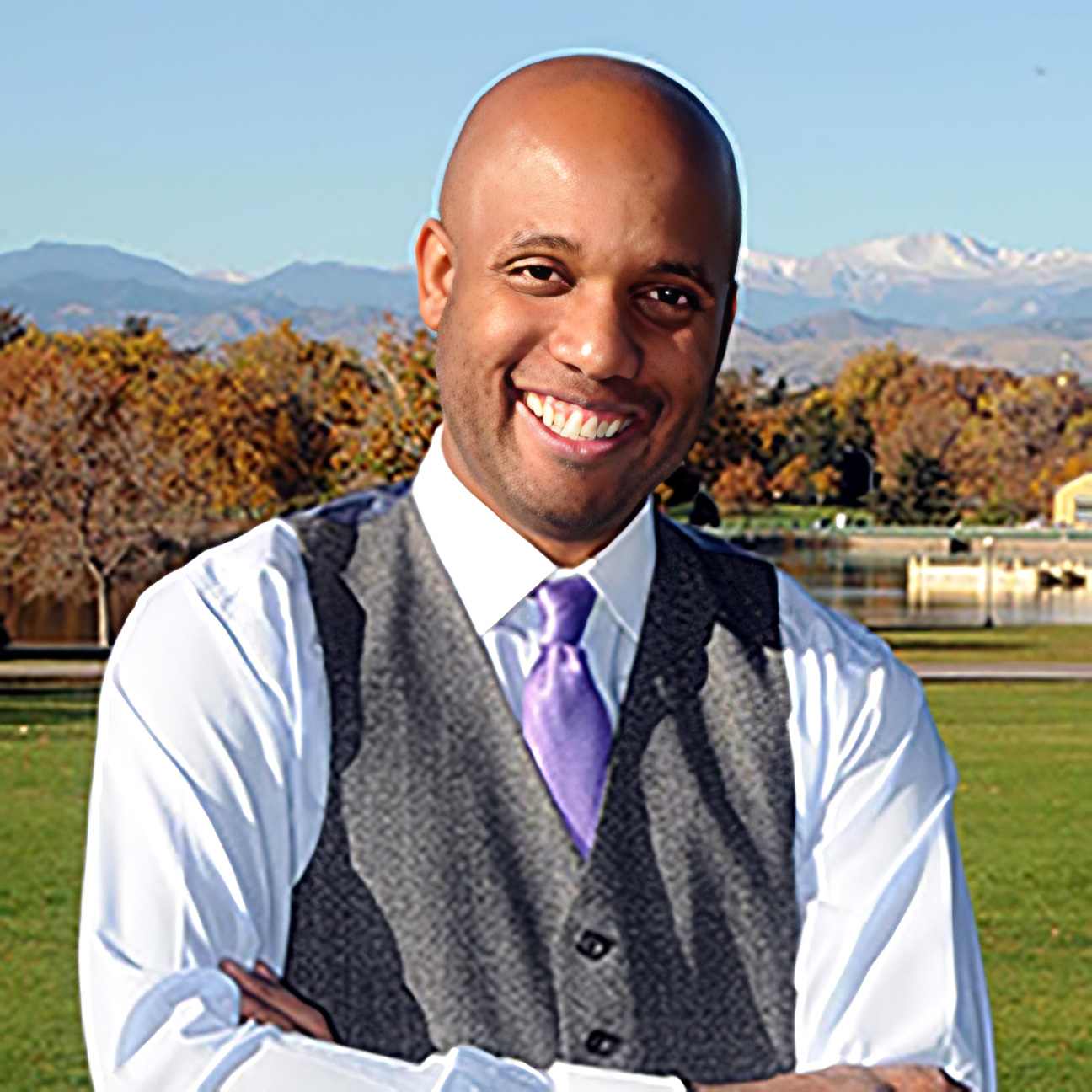
Tamaan K. Osbourne-Roberts, MD, MBA, FAAFP, DiplABLM, DABOM

Jason Marker, MD, MPA, FAAFP

Lauren Kendall Brown-Berchtold, MD, FAAFP
Transcript
Welcome to CME On The Go, the podcast crafted specifically for family physicians by family physicians. Whether you're seeking clinical insights, professional development, or simply a sense of camaraderie, you'll find it all here. Plus, you can earn CME credit with every listen. So grab a beverage of your choice, hit play, and let's embark on this journey together.
I'm Taman Osborne Roberts, a family medicine, lifestyle medicine, and obesity medicine physician for the underserved from Denver, Colorado. I'm also an occasional medical executive and policy maker, a scholar of happiness studies, a professional medical communicator, and sometimes a stand-up comedian. Hey, friends.
This is Jason Marker here. I'm an associate program director at the Family Medicine Residency program at Memorial Hospital in South Bend, Indiana. And I'm Lauren Brown-Bergtold, and I'm the program director for VCME Family Medicine Residency in Modesto, California. And it is fantastic, Jason and Lauren, to be back with you on the go today.
So Jason, Lauren. Yes? Our topic today. Uh-huh. Let's talk about sex, baby. Let's do it for the AAFP. Let's talk about all the good things and the bad things like STDs. Let's talk about sex. Let's talk about sex for CME, for CME. Let's talk about sex. Let's talk about sex. Whoo. I, I hope some of our listeners know that actual song that that comes from.
That'll make it so much more interesting for them. I, I, I still haven't- How long did- ... run the, I haven't run the demographics. At least some of our listeners should be old enough to get that reference. How long did it take you to craft that gem that you just gave us? You know the sad part, Lauren, is that these sorts of parodies occur in and out of my mind at least 12 times per day.
I, I feel like I, I, I, I missed my, my calling. ZDoggMD and- Yeah ... and, and Weird Al Yankovic are eating my lunch. But, but that's okay. I think you're right. Because I, I, I'm here on a podcast with both of you, and that makes it all right. Yeah.
I will say that I recently was doing an evaluation of an 80-year-old patient of mine who is a reasonably new-ish widow, and he has a, a new partner now. And I was immediately able to roll right into taking a fresh sexual history with him, which kind of shocked him. So we can do things we haven't done in a while.
We can surprise our patients once in a while, and we should always be willing to do those things. I love that. That's pretty, that's pretty great. Yeah. Yeah, yeah. What a good way of helping our patients and surprising them. I'll say that the challenge that I've noticed both for me, but also for my residents, is really the desire to avoid having this conversation.
And, you know, sometimes my residents will come precept with me, and I'm like, "Hey, like, you know, you're talking to a teenager who's here for a well, well child exam. You do your heads assessment that includes the full sexual history. Like, I don't wanna do it either, just to be honest, but, but it is part of that assessment."
And so, so that's been my experience, is noticing where I'm wanting to lean out of that conversation, where I'll say that I have- Been more comfortable and more practiced in leaning into some of that conversation is I do a lot of women's health. I've talked about that on the Pap s- on the Pap smear, on the, on the podcast before.
And the recommendation around Paps at age 21, regardless of reported sexual activity, is one that really trips a lot of people up. And the reason for that is that there's a lot of bias in our language, right? When we ask, "Are you sexually active?" What patients are going to be stereotypically primed to understand is, do you have penetrative intercourse between a penis and vagina, right?
And, and th- that does not fully represent, A, the realm of sex, and B, the fact that you can have HPV transmission from the hands to the genitals. You can have a history of unwanted sexual contact and sexual abuse, and that those are things that are probably not going to be heard in our patient if all we say, if the words we say are, "Are you sexually active?"
That, tho- those nuances are not gonna be explored. And so being able to unpack really what do I mean by that question has been where I feel like I've been more likely to succeed in my sexual history. No, it's really fantastic to, to, to hear Jason and Lauren. I'll say for my own part, I talked a little bit about a success, which is learning at all, but really some of my challenges have been in, in moving through what I learned initially to update my knowledge.
I actually remember a very specific case that occurred right out of residency for me when I was just really starting my first job. I had a patient who'd come in. She was a transgender woman, and at the time, I really didn't have sufficient either formal education or life experience to really conduct a sexual history in an appropriately comprehensive, but more importantly, sensitive, respectful, and compassionate manner.
Despite my attempts to help this patient, you know, I, I think that I may have unintentionally caused her some, some trauma, and she left fairly quickly, and it, it was one of those experiences that certainly spurred me to try and get better at this in a lot of different ways.
And that being the case, you know, and everything that we've just both, or all three of us, I should say, have just talked about, let's talk about how to take a good sexual history.
So let's start with something we've done several times on this program, level setting with terminology. Because being vague or precise is really the death of a good history of any type, but especially as, as you just brought up, Lauren, a good sexual history. Given that, Lauren, would you mind starting us off with some definitions of sex and gender, followed by maybe some common but important pieces of other terminology to know in the sexual history?
Yeah, absolutely. I don't know that this is what you meant, but definitions of sex, I love, I love that question because, like- Cool. What is our definition? And I think the thing that I'll, I'll say is that there are a lot of kinds of sex. There's oral sex, and vaginal sex, and anal sex, and that expanding our definition of what is sexual contact is something that is really important to remember, particularly when we live in a society that's relatively heteronormative and that makes some baseline assumptions and, and, a- about the types of sex that someone is having.
When we think about gender, right, we can think about our assigned gender at birth or the gender that we identify with, particularly now, and that that is something we've talked about making sure that we're denoting in, in EMRs, particularly as we might be, be treating our trans patients and population.
And that gender doesn't really have anything to do with sexuality, which is who you love, right? We might think about heterosexual or straight, homosexual or gay, pansexual, bisexual, omnisexual, queer, asexual. A lot of these terms are, are in use and sometimes feel really uncomfortable. Sometimes we have populations who are like, "Hey, I wanna really reclaim the, the term queer."
I'll say that Glennon Doyle is an author, and speaker, and activist that I'm a huge fan of, that she recognized her sexuality really late in life and she has gone very public and said, "I identify as a queer woman," and that other people who are in the LGBTQ community is like, "Well, I remember when queer was a slur, and that's not something that I'm gonna be using for myself."
And so having, and again, we've talked about this before on this podcast, but having humility in showing up for our patients and knowing that we might say something wrong. Like, we're gonna make mistakes. We're human. And being open to hearing that rather than necessarily being offended or embarrassed, and then that coming off as offended is going to be important as we go through this.
And so that's, that's where I think the level set will be. What thoughts do you guys have? Yeah, no, that makes a lot of sense to me, Lauren. I, I, I think that what you're really kind of discussing is, is being open to learning, which, as family docs, we generally should be in many different places, both clinically and non-clinically, because in both those places it really helps us help our patients.
The more we know and understand who they are and where they're coming from and all sorts of parts of their lives, the easier it is, and it's really kind of no different in regards to their gender identity or their sexuality or anything else. That's, that's, that's what I heard you say. Absolutely. Jason, did you have any further thoughts around that?
Yeah. I, I feel like when I take any sort of history, I, I try really hard to put myself in a posture of curiosity- And the sexual history is not really any different than that for me. I can be curious about a whole host of things that I don't know very much about, and that's part of why I'm being curious about it, you know?
But I think my patients, this is an area where I frequently sort of pull back the veil a little bit and acknowledge right up front that, like, this is maybe not an area that we're both perfectly comfortable with. But it's an important part of my care of them, and I wanna make sure to partner with them as well as I can.
And so to say something like, "I wanna make sure I get a full picture of who you are as a person, as a patient for me so I can do my best job. I want to take a little bit of some sexual history. I know even that little bit means a lot of different things to a lot of different people. What does being a sexual individual mean to you?"
can sometimes be the only question I have to ask, and the rest sort of tum- begins to tumble from them into my mind and leads to other questions that I may want to ask that are very specific or other more general questions. But I think when I express to a patient that, "I know this is important but also maybe mutually awkward.
Let's do this together in partnership," it actually bonds us together in a lot of ways that can be really important for other areas of their cardiac health and als- skin health, all sorts of other things down the road. So that's, that's sort of how I think about it. If I'm curious and I'm willing to be a little bit more vulnerable, it's gonna work out okay.
Well, that's really, really kind of fantastic. You know, I think what I'm hearing from both of you is that your open-endedness in really kind of the way we approach our language in this and, and also just a high degree of compassion, which, as family docs, we're all about. You know, really helps us to go in, in a lot of directions.
One more thing I might say about that is when I do that for a patient, I, I know that they have some perhaps of their own biases and expectations of what I know about sexuality. And I feel like one of my jobs behind the scenes is to be able to know and use all of the words that are out there. They're not gonna surprise me with about anything they say, because I've taken the time to really make sure I understand all the different language that can be used and how it's used, and try to grow into that.
I, I use CME time for that. I make sure that I'm asking good questions of myself as I'm learning new things so that it's not just that I can have a cisgendered heterosexual interaction with a patient and ask the questions about that, as Lauren was talking about a moment ago. But, like, if, if they wanna use sort of different language than I use for sexuality and it, it requires a lot of trauma-informed Q&A from my part, I, like, I, I'm open to all of that.
They may not know that at first, but as they start to use their language and I can lean into that with them, it becomes a much more open and friendly and robust conversation where their needs can be met. And so it's not that I'm just like, "Tell me what, how you think about this, and I'll see if I agree with it."
It's like, "You start talking, and I'm gonna be there with you through the conversation."
Let's move on to the sexual history itself. I was initially trained in a method which is now known as the five Ps, but which has actually been substantially updated since my training. Perhaps a bit surprisingly, given the recent edits we have seen on this particular site, the CDC website actually still maintains a fairly comprehensive guide on the five Ps sexual history, and the link to that is actually copied in the show notes.
So just to let you know what the five Ps stand for, it stands for partners, practices, protection from STIs, past history of STIs, and pregnancy intention. It's a really, really wonderful model. However, in looking at it, we kind of think there are two more Ps to add, permission- And primary sexual and gender identity.
I'll take those first two, and then we'll proceed to discussing the rest of the model as it's kind of traditionally set up.
So permission is exactly what it sounds like. You know, I think we've talked a lot about that so far, really asking the patient if you can ask them some questions pertaining to their sexual health in order to take the best care of them.
It kind of seems obvious that we'd ask permission, but we all find ourselves in practice at times, we've done this many, many times, we just kind of launch into something, whether that's listening to a patient with our stethoscope without asking, "Is it okay if I do an exam?" I'm sure we've all been there at various points.
Or taking a sexual history. And it's really a critical first step. It helps to build trust with the patient. It can help patients who have had sexual or gender-based trauma in the past begin to open up. You know, perhaps patients who have had current sexual or gender-based trauma potentially open up. And kind of looking at the patient and using all of our both verbal and non-verbal in terms of cues is really, really kind of important in, and, and can be really critical here.
The next P prior to the traditional five Ps is understanding the patient's primary sexual and gender identity. It really should kind of generally be the second set of questions, unless, of course, it's obviously been asked before, it's recorded in the EMR, you have the opportunity to really see that. I will point out that I was initially taught to ask, "Do you have sex with men or women?"
I modified that pretty quickly to, "Do you have sex with men, women or both?" But really, given the increasing recognition of sexual and gender diversity that we've already talked about, I'm trying to become more open-ended in questioning. It can seem hard when there are so many diverse identities that people hold, but I think that questions such as, "Would you please describe your sexual and gender identities for me?"
Or, "Tell me about your sexuality. Tell me about your gender identity." Finding ways that are comfortable for you and the patient to, to ask open-ended questionings give more space for someone to really specify things about those parts of themselves. And that, that is more often a better place to start.
That's, that's great, and I agree with that 100%. I will say that I can think of many of my patients who if I ask them that question in that way, they may not even know where I'm going with that. Those are not words that they use or maybe even fully understand. So there's a little bit of know your community, know your practice, adjust as necessary.
Though the question that you just ended with, Toman, is 100% correct. I like that a lot. No, thank you for that. And, and I very much agree with you. You treat the patient in front of you, not the theory in your head. Always. Sometimes hard to do. Can be. Absolutely. Absolutely. But we're family docs. We're brave.
Absolutely. Absolutely. Some days. It requires us getting out of our heads sometimes, right? And being really aware and present with what we're doing and who we're doing it for. Absolutely. I'm absolutely with you.
Jason, could you tell us a little bit about partners and practices in the five Ps? Sure, happy to launch into those first two Ps.
And again, as he said, that's in the show notes for you to link to. The partners question is what you're really trying to get at is Are there multiple partners, and what are you and those partners doing? Like, sort of at the high level sort of thing. The question I was taught to ask is basically just to start with, "Are you sexually active?"
But that leaves out so many nuances. It doesn't give any permission. It doesn't assume anything about how many partners you may have. So are you currently having sex of any kind with anyone, oral, vaginal, or anal? Like, that might be the screening question of the day. It allows them to sort of have a pretty common language usage, a chance to give you an answer to that question.
And if they say no to the, "Are you currently having sex of any kind with anyone?" "Have you ever had sex of any kind with another person?" is the follow-up question from the CDC guidelines there. In recent months, how many sex partners have you had? That's pretty straightforward, I think. What is or are the gender s- of your sexual partners?
Again, how open you want that to be may be predicated on the initial questions, obviously. But I think there's often a value to sort of leading down through all of those, even if it's just to educate a community of patients you take care of, that there are other answers than the ones that they may have at first given you along the way.
And some patients who are expecting a very traditional sexual history, I need to get two or three questions into this history before they realize that I am not taking a traditional history, that I'm really asking about a lot of different things than they thought I was asking about when I started down this line of questioning.
And then, do you or your partners currently have any other sex partners is very reasonable. We wanna think about their risk for STI, which is where a lot of this comes from here So those are kind of the partners questions. How many current or past, and what sorts of activities are you engaged in generally?
'Cause you're gonna get into more of those discussions in the, in the next P to a certain extent. So those are the, the partners questions. The second P is practices. I need to ask some more specific questions about the kinds of sex you've had over the last 12 months to better understand if you're at risk for a sexually transmitted infection.
Like, that's kind of where we're going with this. You have a sense in your brain of how many partners they have and what sorts of general things they've been doing, and now you wanna get a little bit more specific about what those practices have been. And if you couch it a little bit in the sense of, "Because I'm trying to understand your risk of infections," and they may or may not know that some of those are treatable and some are just manageable, this is really where you wanna go with the practices question.
What kind of sexual contact do you have or have you had? What parts of your body are involved when you have sex? And then as needed, getting into those specifics. Do you have genital sex, where the penis is in the vagina, or anal sex, oral sex, manual sex, hands and fingers on or in the penis, vagina, or anus?
Are you on the top or on the bottom, are fairly common questions that may get asked. Some of your transgender patients may be more familiar with those than your more traditional heterosexual patients, but that doesn't mean this can't be a teaching opportunity to ask a question that they don't understand.
Pause a moment and explain what that question means. You are now educating a community, and that is certainly a thing that family doctors should be doing along the way. You might wrap up this practices part with, do you meet your partners online or through apps? Have you, have you or any of your partners used drugs in the past, or have you exchanged sex for your needs, money, housing, or drugs, et cetera?
Again, this may be kind of dependent on your community, but it may not be also. And so knowing that these are the sorts of things that fall into the P of practices that you will want to know, and that this is a risk-assessment tool for you to lead to the next questions, is where you kinda wanna start with that practices P.
Fantastic. That was pretty comprehensive, and I think- Thank you ... really led us very, very well through kind of those first two Ps.
Lauren, can you take it away for the next three? Yeah, absolutely. Like you mentioned a couple times, Jason, right, the reason that we're asking these questions does heavily have to do with what concerns might I have about things like STIs.
And so going into what kind of philosophies or thoughts have you had about your protection from sexually transmitted infection. Do you and your partners talk about prevention? What do you use for prevention? How often? Is that sometimes or always? Right, what we're thinking about here is classically going to be male condoms.
Female condoms do exist, although they're, I believe, exponentially less common or familiar to most of our population. And then some of our other thoughts are, hey, have you gotten your HPV vaccinations? Right? Hopefully that was something that you got when you were younger, but, but do you know your history?
Have you gotten hepatitis A or B vaccinations? And then really thinking about PrEP, pre-exposure prophylaxis to prevent HIV in particular. Is that something you're familiar with? That's gonna lead us into our next P of past history of STIs. Have you ever been diagnosed with an STI? Have you ever been tested?
Have you ever thought about your partner's HIV status as really important questions? Those things really lumped together. The last P really being what are your thoughts about pregnancy? Are you hoping to have more children? Do you know when that's going to be? Are you wanting to prevent pregnancy until then?
I have a lot of teachers and colleagues and mentors that have made statements just to me during our time together of, "Hey, if you're not on a form of birth control, you are, you are open to being pregnant," and making sure that that fits with your patient's philosophical thoughts about this. And then what, if any, contraception are you using, and can we talk more about that?
So that's, that's my rough overview of those three Ps. And again, I think that these are things that we do as family docs. These are conversations that we have, and perhaps some of the questions that give some form and structure and scaffolding to the conversation can make things a little bit easier or less awkward for us.
Thank you for that, Lauren. That was also quite comprehensive.
You know, but as we all know, as comprehensive as we try to be, there are always kind of things that always kind of come up based actually largely on the questions and the way people answer them over the course of trying to take a, a complete sexual history.
And in my parents' home country of Trinidad, and ironically also in New Orleans, this is the type of thing they call line up. And line up is a little extra, if you will, a baker's dozen. And, and really there's some other things that we should be thinking about. So really we've talked about it several times, but any history of trauma, sexual abuse, or violence, as those things come up, those patients really may need additional care.
That's the really, really important things that we, we need to pay attention to. We should consider their sexual functioning, but because just because somebody is having sex doesn't mean that they're having sex that they like or that's healthy for them or that is occurring without difficulty or that is not impacting their life in some other sort of a way.
So really asking about pleasure, about their specific sexual functioning, you know, various sorts of things like dyspareunia or erectile dysfunction or some of these other things that, that come up for various people is, is going to be very, very important. It'll be important if you find risk factors for STIs to ask additional questions about that.
If you have patients that are at high risk for STIs, say they have a partner with an STI that can be managed but not cured, HIV, uh, HSV, all of those sorts of things, you want to find out what they're doing to try and manage that, whether it's barrier methods, whether it's not having sex. If PrEP is possible, pre-exposure prophylaxis, whether or not they're, they're using that, these things are, are all important.
And really kind of more than anything else, the open-ended final question. What other things about your sexual health or sexual practice do you have questions about or do you want to talk about? Is there anything else we haven't addressed today? Patients sometimes will have something on their mind, but need that space and need that permission to be able to discuss it, and that really is one of the most important things, I think, to wrap up on.
And speaking of wrapping up, that looks like all the time we have for today. Lauren, Jason, any final pearls to, to add? Any fi- closing thoughts? Yes, absolutely. For me, you know, I always think to do a good sexual history when I'm meeting a new patient for the first time. It can be an easy part of a intake evaluation, thinking through all the things.
We're already asking a lot of other questions. It's just another thing in that roll call of Q&A. But, you know, revisiting these questions regularly, and certainly as needed in a patient's life, is actually way more important to me because that's when they really are more open to the conversation, and I have a good reason to bring up sometimes a specific part of the sexual history.
Starting and finishing high school and/or college. When they're in a new relationship, and I happen to know about that when they're in to see me about something. At the time of marriage, for example. W- when they're about to be new parents. Like, I know their life is gonna change. I know their sexual life is about to change in a lot of ways, and I, I know to ask those questions at that time because it helps dispel some myths, helps them be on the same page about their relationship perhaps and how that will change when there are children in the household.
When a partner is ill with any sort of chronic medical condition and how that may change. We think of diabetes and maybe erectile dysfunction, but that's just one of, of so many examples that we deal with. When a couple is perhaps becoming empty nesters. When one or the other is retiring. When there's the loss of a significant other.
These are all really important times for us to lean into the sexual history because you can bet that this is something that is on the minds of those people at that time. Transitions in living, when a person needs to go to an assisted living or even a nursing home facility. That doesn't mean that their sexual life is done, and we should be the ones who lean into that space and say, "I wanna talk to you about a piece of this transition that I suspect is probably important to you, and I know it's been important to other patients I take care of, and I wanna ask you about it briefly to make sure if there's anything I can do for you, I'm doing it well as your doctor."
These are amazing opportunities to regularly revisit the sexual history. Fantastic. Lauren? Honestly, all I have to say is, like, mic drop on that, Jason. I, there... Nothing I could say would be as good as that last bit. Thank you, Lauren. And I would agree with that.
That being the case, as we always do, we have reached our moment of gratitude.
Lauren, take us away. You know, I'm grateful that I get to remember that as humans, we can grow and change. And so it might feel really uncomfortable to be, to be remembering o- and then doing a sexual history with our patients, but we can do hard things, y'all. And, and with practice, we will become more comfortable, and that this is an important part of our medical care So remembering that and, and, and that growth is, is fully possible.
Fantastic. Jason, what you got? I have so many mentors that I'd like to thank in this space who've helped me see how important it is to take a good history, even when the topic is not one that I'm naturally comfortable with. I grew up in a fairly conservative religious community. We didn't talk a lot about these things in my family.
That would not have been an appropriate thing to do. And, and yet I feel like I'm fairly good at taking a sexual history. I, I've learned from so many folks who've said, like, "That's fine that that's how your upbringing was, but let's talk about some of these terms. Let's make sure you're comfortable saying some of these words."
I, I've grown so much in this space, and I'm thankful for the people who helped me do that well, who gave me a lot of grace along the way and helped me be able to do it better. Nice. That's really fantastic. I'll say from my part, this is really coming from my standpoint as a lifestyle medicine doc, and we learn about many things in lifestyle medicine.
But, you know, realistically, a healthy sexual life, however an individual defines that, sexual and romantic life both, are really kind of important for lifestyle medicine. I'm just grateful that so many types of sex exist in the world and that various people are able to participate in at least some of them.
Great. I love it. And on that note, that is all the time that we have for today. Thank you for joining us for another episode. We appreciate you joining us on this journey to elevate family medicine. To continue this journey, stay tuned for new content brought to you twice a month with CME On The Go. Visit the show notes for instructions on how to claim CME credit and find additional resources for today's episode.
Until next time, serve from your values, pursue your vision, and talk about sex frequently. See you next time on CME On The Go, a production of Inside Family Medicine.
References and resources
Disclosure
It is the policy of the AAFP that all individuals in a position to control content disclose any relationships with commercial interests upon nomination/invitation of participation. Disclosure documents are reviewed for potential conflicts of interest and, if identified, conflicts are resolved prior to confirmation of participation. Only those participants who had no conflict of interest or who agreed to an identified resolution process prior to their participation were involved in this CME activity. All individuals in a position to control content for this session have indicated they have no relevant financial relationships to disclose.
Disclaimer
Copyright 2026. AAFP. The views presented in this broadcast are the speakers own and do not represent those of AAFP. The information presented is for general, educational or entertainment purposes and should not be considered legal, health, financial or other advice. AAFP makes no representation as to the accuracy or completeness of the information and is not responsible for results that may arise from its use. Consult an appropriate professional concerning your specific situation and respective governing bodies for applicable laws. Reference to any specific product or entity does not constitute an endorsement or recommendation by AAFP unless specifically stated otherwise. AAFP and the AAFP logo are registered trademarks of American Academy of Family Physicians.