
CME | Magic, microdosing and moral panic: A primary care look at substances with abuse potential
Show notes
In this episode of CME on the Go, our hosts discuss the integration of psychedelic substances like ketamine, psilocybin, iboga and various social stimulants into treatment practices.
The conversation delves into the therapeutic potential and risks associated with these substances, particularly for treatment-resistant conditions like depression and opioid addiction.
The hosts emphasize the importance of setting, intention and evidence-based practice while navigating the emerging landscape of psychedelics in medicine.
Learning objectives
Examine the emerging evidence on therapeutic uses and risks of substances like psilocybin, ketamine and other quasi-illicit drugs, while recognizing historical and cultural influences on their stigma.
Discuss strategies for counseling patients about the actual versus perceived risks of these substances, including legal, safety and harm reduction considerations.
Recognize the impact of regional attitudes and biases on clinician-patient conversations around quasi-illicit substances and develop approaches to foster open, nonjudgmental dialogue.
The AAFP has reviewed Magic, Microdosing, and Moral Panic: A Primary Care Look at Substances with Abuse Potential and deemed it acceptable for up to 0.50 Enduring Materials, Self-Study AAFP Prescribed credits. Term of Approval is from 02/16/2026 to 6/4/2027. Physicians should claim only the credit commensurate with the extent of their participation in the activity.
The AAFP is accredited by the Accreditation Council for Continuing Medical Education (ACCME) to provide continuing medical education for physicians.
The American Academy of Family Physicians designates this Enduring Materials for a maximum of 0.50 AMA PRA Category 1 credits™. Physicians should claim only the credit commensurate with the extent of their participation in the activity.
CME activities approved for AAFP credit are recognized by the AOA as equivalent to AOA Category 2 credit.
Claim CME credit
Episode hosts
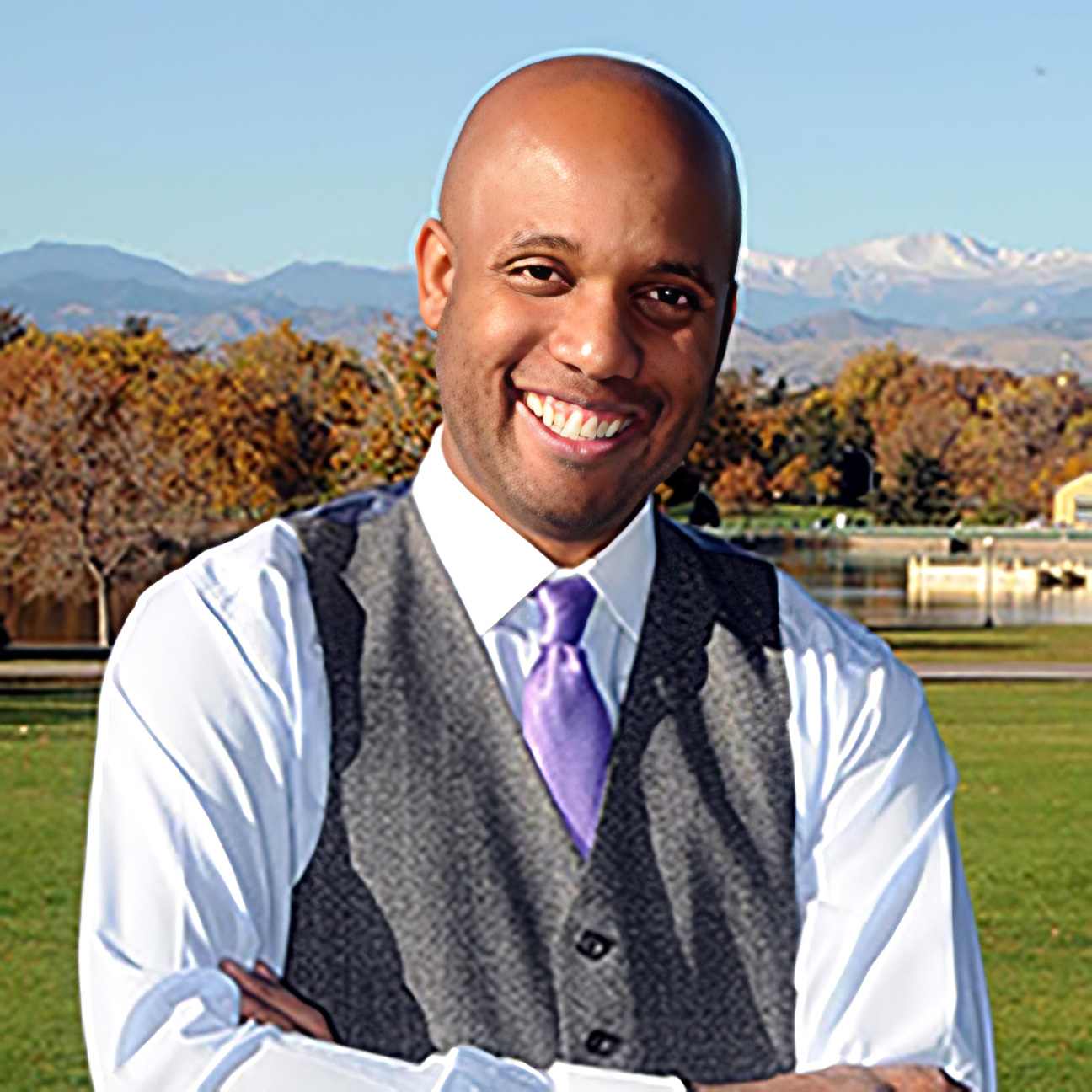
Tamaan K. Osbourne-Roberts, MD, MBA, FAAFP, DiplABLM, DABOM
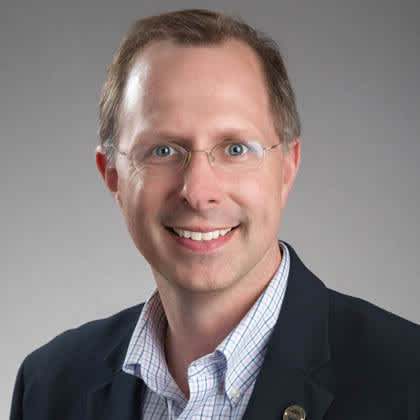
Jason Marker, MD, MPA, FAAFP
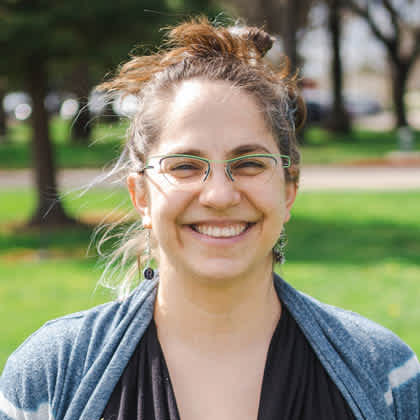
Lauren Kendall Brown-Berchtold, MD, FAAFP
Transcript
Welcome to CME on the go. A podcast crafted specifically for family physicians by family physicians, whether they're seeking clinical insights, professional development, or simply a sense of camaraderie. We'll find it all here. Plus, you can earn CME credit with every listen. So grab a fully legal and hopefully mentally clarifying recreational beverage of your choice.
Hit play and let's embark on this journey together. I'm Teman Osborn Roberts, the family medicine, lifestyle Medicine and obesity medicine physician for the underserved and immigrants from Denver, Colorado. I'm also an occasional medical executive and policy maker, an early career scholar of happiness studies, professional medical communicator, and sometimes a standup committee.
Hi y'all. I'm Lauren Brownberg Bechtold, and I'm the program director for the VCME Family Medicine Residency in the Central Valley of California. Hey Al. My name's Dr. Jason Marker and I'm an associate director and clinic medical director at the Memorial Hospital Family Medicine Residency Program in South Bend, Indiana.
State where I suspect that everything we're talking about today is either illegal or at least severely frowned upon.
Well, since I can't possibly beat that last piece of the introduction, let's launch into some case presentations and explore whether or not that is or is indeed. Not true. We actually have a Let's do it.
We, we, we have a lot for our listeners today. We actually have four case presentations. Lemme get right into them. So, a 47-year-old woman comes into your office complaining of a history of depression, resistant to es, citalopram and sertraline, as well as resistant to CBT therapy and EMDR. She lives in Denver, Colorado, and she's interested in trying ketamine for treatment resistant depression.
She's also wondering if she should consider a foreign retreat to Peru to try Ayahuasca or a more local retreat to the four corners area for a peyote retreat. How would you advise her? Any ideas or just. Ketamine maybe. I mean, I know enough about this to be dangerous. We'll talk about it a little bit more later, but I know that it should be within our scope of practice.
The other two sound like a bad idea to me. I think that this is actually the most familiar scenario of the ones that we have today. Ketamine is something that is used and is legal to be used for treatment resistant depression. But additionally, ayahuasca and peyote have been in the cultural zeitgeist.
And, and so I think that, I don't know if bad idea is the right word, like there are certainly cultural and religious uses that that go back a very long time in history for these things. But I do think that it would be correct to say that those specific substances are never going to be in our scope of practice, and it would be reasonable to have less familiarity with them.
Okay. Okay. Those are definitely good responses. I think we'll unpack that overall. So case two, a 48-year-old man from Oregon comes in for a general checkup or the end of his visit, he stops you for a, by the way, Dr. Momish is you grab the doorknob and he wants to ask you about psilocybin mushrooms. He indicates that as an amateur mycologist, an avid consumer of culinary mushrooms, he went to a local mushroom festival.
That during a foray, and much to his surprise, the foray leader indicated he was a therapeutic mushroom distributor and gave samples to the entire group, including the patient and his 12-year-old daughter who actually suffers from A DHD depression and anxiety. He's very quick to point out that he immediately confiscated the sample given to his daughter.
He indicates he's never tried Chewings himself, but his friends and colleagues who swear by microdosing therapeutic dosing and heroic dosing, whatever those need. Additionally has no idea whether psilocybin mushrooms are safe for kids to take though the foreign leaders seem to think microdosing should be fine.
How would you advise them? Lemme tell you, I, I think that you better have like a very strong medical background and a very strong professional psychologic background if you're gonna do this. Anything close to safe shrooms are risky. That's my answer. I'm sticking to it there. Yeah, I, I feel like you really shouldn't ingest anything that a random stranger is giving you and shrooms fall into that, that, that's, that's probably where I'm gonna settle down.
Just like don't we know all the food off of food trucks before? Those are kind of random strangers giving me food, but I think you're right for medicinal purposes, going with some, I mean, I'm going and purchasing it. It's not someone walking up to me and saying, here's a burrito. I guess the question is it.
Vegan mushroom burrito, right? I mean, hey, I don't know. Yeah, I, I think that that's where I would settle out though, that, that if I'm ingesting something that anyone is saying for medicine, that I need to know a lot more about this person and about what I'm getting into here. I think that's fair. Well, we'll explore that a little more as well.
Case three. A 23-year-old man from Oakland, California with a previous medical history of opioid addiction, non-responsive to both methadone and buprenorphine therapy, comes in asking about Iboga, a traditional African hallucinogenic. He saw in a documentary about a Canadian woman with opioid image. He says it looks somewhat dangerous to use in the film, but highly effective.
He's desperate to find a treatment that works for what evidence-based recommendations can you get. Iboga, my evidence-based recommendation is that I would 100% need to look up that new word. Same. Yeah. Nothing to add. I, I feel like that's in line with 98% of our listeners, so we'll get into that one a little bit.
Alright, last one. A 67-year-old woman from the thriving rural Hamlet of Fredonia, Kansas population. Just over 2000 people comes in for a general checkup. She has a previous medical history of anxiety and chronic back pain, and when queried about any treatments per such, she indicates she goes to a small shop in Kansas City each month to pick up kava, which she mixes into smoothies to control her anxiety.
She notes that she's tried both SSRIs and a different supplement Kana in the past without effect. She also notes she drinks four Creton energy drinks per day from her local gas station, which seems to help her chronic pain. She indicates she had previously had back injections and prescription opioids, which she didn't seem to help, and she notes that while marijuana seemed to make her not mind the pain, it also made her too groggy to engage in her daily life.
He's also interested in whether beetle nut or CO are safe or might help with her social anxiety. How would you advise her on what risks and benefits come with her current supplement? Rich? Oh my gosh. To man, you're hurting me here. Creative energy drinks. Really, I don't know anything about that. I know that's a thing.
I remember being told that was dangerous, so I'm not gonna dabble in that. I am a pretty big fan of milk though, and anything stronger than that, it just seems drifty, THC, kava, those are outside of my scope of knowledge. I will say here at Indiana, CBD is everywhere though, and a few of my patients have used it, but they didn't use it for long before stopping and telling me they didn't think it worked.
So that's kinda my experience with. Same on the experience side, and I would advise her to really investigate whether therapy might be a really useful and evidence-based adjunct to the various real things that she is definitely dealing with and trying to treat with some over the counter substances.
Okay. I would say that's a pretty wide variety of responses to a pretty wide variety of substances, which I think kind of sets us up really, really, really well for our conversation here today. But really overall, I, I, I think that. It's gonna be important for us to, to talk about this in a real way. Like this is the sort of thing that family docs on the street are going to, to be encountering all of the time, but there's always gonna be kind of one very big elephant in the room.
How patients feel about, quote these quote unquote quasi-legal substances. And also, frankly, how many physicians feel about these quote unquote quasi-legal substances. So let's start there. Lauren. Jason, do you have any personal stories, any thoughts about this? How this might break down regionally, what you've heard at national meetings, anything like that?
I'm in California and to hear my sister talk about her friends, it sounds like everyone in the Bay Area gets like a microdosing regimen when they move to those zip codes and, and it's just incredibly prevalent. I'm in the Central Valley and so that's a little bit less. Prevalent to hear people talk openly about using some of these substances, but I know a lot of people who have received ketamine from a physician in a therapeutic context, and that is a legal thing to be doing that is really changing lives.
Right, particularly for treatment resistant depression or people who have suicidal ideation. And so I am really interested in knowing more about the data. And I'm actually in a certificate program right now that goes over research on psychedelic therapies through a Bay Area college because I really wanna know more.
And I think that this is an emerging area of, of science that. Can fall within our realm of influence as physicians potentially. I like that point. And as I think back at last fall's, FMX, like there were topics around this available there as it's getting a little more common in all the CME out there. And that's a good thing.
Like some of these won't turn into real major breakthroughs for the way we manage a lot of conditions and we have to start somewhere. So as family doctors, we should be learning all we can about this. I appreciate before. Case studies that demand started us off with, because at least begins to give us a common lexicon, some language around some of this, and begin thinking about what our patients are thinking about.
And sometimes they're bringing it up to us and there are some conditions where probably we should be bringing up to that. Mike, my patients are, are mostly from a conservative farming community, but. I've been surprised a few times when they've brought up one of these substances. I mean, usually in very hushed tones at the end of a visit.
So I, I do find myself talking a little bit more about CBD and, and even straight up medicinal marijuana. Occasionally something like ketamine comes up and I get a chance to spout the little bit of knowledge that I have there. On occasions when I have brought this up, there's often menopause. They seem to be considering whether it's really safe to have this conversation.
So for me, these conversations are really about setting up a safe environment to have conversations about emerging therapies with patients. And that's, that's really important for us to spend a little time talking about. Yeah. No, I, I, I definitely agree with you, Jason. I, I'm coming from a very, very different spot.
I. That's from Denver, Colorado, which has, you know, not to everyone's liking, developed a bit of a reputation as a vice city, if you will, or as most first city in, in the country of our vote, just a few hours ahead of Oregon to legalize recreational marijuana. And it was a very, very kind of interesting process.
Since that time, you know, there's been. I would say amongst my patients a fair amount of Des Sensi sensitization around most substances. It's just kind of a piece of the local thing. I think people from Portland would probably say the same. Some of your commentary about the Bay Area, excuse me, Lauren very much lands.
I've talked to a a lot of CEOs, I should probably disclose that of. Those four case studies, three of them are, are not from patients I've had. They're actually from friends and family. What details change to protect the, perhaps not so innocent in some cases and it's just kind of a thing, but that contrasted you really widely with my experience that.
I've had with my colleagues, whether it's a FP, national meetings, a MA national meetings, or various other places where lots of physicians get together. My experience has kind of been universally, there's a very big split amongst the physicians that I know. Some are kind of like, well, let's see the CO we should probably study this more.
Understand if these things have any therapeutic potential. If not, maybe get them out of our hands and, you know, say this is not a, a medical sort of piece. And then another half of folks are like, if you. You open this can of worms, you're going to destroy public health. As you know, there is really kind of this camps if you'll, and people feel fairly strongly in both of those camps.
So it's, it's really kind of an interesting situation to, to a guy from the state that is moving more and more to towards trying to, to see if there's therapeutic for potential for any of these. And struggling with that was as we often. Do on public health and, and they're really kind of meeting people who feel different sorts of ways.
So that being the case, I, I think one of the best places to start is with a quick level set just based on initially some of the, the facts around these sorts of things. So many, so many substances. So many substances, and we're not gonna get to all of 'em today. Well, what they all have in common is that they are in this area where.
They're in, it's this legal gray area. They may not have a status. They might have a different federal and state status. They may be controlled or scheduled in various different ways, and that gets very confusing width of it, the gray area of it. This is a place to actually remind our listeners that at the end of the day we're just three regular old family docs who are gonna have this conversation.
And we actually think with this particular topic and many of the topics we cover. Actually that this is where a lot of family docs find themselves. You know, we are the experts in being slightly expert about everything, and that's kind of where we're all coming from. But I think we're going to do our best to take a look at the evidence the same way we figure all of our listeners out there.
We're going to tackle it like any other doc on the street. Definitely, and, and we get to talk to colleagues just like so many of our listeners are doing in their daily lives, right? They say, Hey, I saw this weird case, or, or I heard this weird thing, and what do you think about that? And, and we get to do that with the three of us here, and that's pretty cool.
Yep. So I think that I get to take us into sort of just a broad overview on the history of psychedelic use, sort of through the ages in two minutes or less. Is that right, Tim? That is absolutely, absolutely true. Lauren, please, the magic carpet ride, if you will. So like I mentioned to you, Jason, right? I think that level setting about the fact that many of these substances have very deep roots into cultures from all over the world for very legitimate uses that might not be recognized by our.
2026 Western mindset is something really important for us to recognize. When I was prepping for this episode, I was like, man, what's the first documented use of any sort of psychedelic use? And, and archeologists say that there's evidence of some sort of psychedelic use 7,000 years ago, which is pretty cool.
And these have. Generally been really intensely related to medicinal and cultural norms. Again, all over the world for very specific purposes. What is interesting about introduction, at least in the United States, is that there was just exponential usage and research that happened from the 1940s through the 1960s, and some of that got related to some of the political and social upheaval that happened in the sixties.
And so. In association with that political activism, with the perception that these substances might have been encouraging some countercultural norms. These medications, including LSD, got swept up into this war on drugs that happened, even though there really wasn't any great evidence of significant harm.
LSD in particular was, was criminalized in 1968 and then classified as a schedule one drug in 1970, and and so we then lived there for. Over two decades where this was just considered, uh, an illegal drug and, and there could be no therapeutic potential. And in the nineties, that slowly started to change.
And what I'll say is that for many of our listeners right now, again, in 2026, that if this feels like a conversation you're having more and more, that that can probably be pointed back. To Michael Pollan's book, how To Change Your Mind, that was released in 2018. That seems to be where the popular recognition of psychedelics as something that could be really useful for changing someone's life, someone's diagnoses, someone's experiences, became really widespread.
And that came on top of some of the research that started happening again back in the nineties. And so recently, there's been a lot of approved research. We talked about presentations at FMX that. Are looking at things like psilocybin facilitated therapy for depression that are looking at things like MDMA, which is colloquially called ecstasy, MDMA, assisted therapy for PTSD and and the FDA heard arguments based on clinical trials about why that should be brought out of the Schedule one class and be able to be prescribed.
And so these are evolutions that are happening and that physicians are going to have to know about because it's happening right now. That is a lot of info in a very short period. I took my assignment. Seriously, you, you very much did. Thank you for making the rest of us look bad. I appreciate it.
Well, let me move to somebody else who, who, who can help polish if you want this case. Can you start us off specifically getting into individual substances by talking a bit about ketamine and its accrued therapeutic use and depression? Sure. This actually won't take a real long period of time. Uh, there's a nice little bit of evidence out there and I think the family doctors are starting to lead into this.
Lots of slang out there. Names for ketamine. As you're working with your patients, they might call it K or Special K or Kit Kat. Usually there's a K in the name somewhere. That's what they're talking about. They're talking about ketamine here, both ketamine and S Ketamine, the actin metabolite, which can be intranasal.
These are approved by the FDA for treatment resistant depression. And yes, this is the thing you learned about in anesthesiology for anesthesia, but at very, very low doses. It has its effect on the an MDA receptor. It's an antagonist. And it does something that we're not exactly sure what that is yet, whether it's something directly related to that NMDA receptor, or if it's facilitating some other action at the synapse that allows it to really fairly substantially and quickly improve depression symptoms.
Now what we know about it is that if you're doing it, you're probably using a half a milligram per kilogram. In an IV infusion that runs over usually 40 minutes, sometimes as long as 60 minutes nasal spray dosing is not really well, well established. It might be 50 milligrams. But that would be probably some, some local thoughts around what's happening as standard of care in your community.
We really do not know what the proper frequency of administration of ketamine might be. It often is given two or three times a week at first and then spaced out over time. That seems to be very safe for patients and useful for creating, especially treatment resistant depression. And sometimes I would say even, especially if there's suicidal ideation, it seems to really help that particular symptom very well.
A thing our listeners might be asking themselves is, what if they're already taking a lot of antidepressants or even a antidepressant? Can they continue with those? Yes, absolutely. And we believe from the research that is available, you can continue to take your S-S-R-I-S-N-R-I, the rest of the medications that you might be on while undergoing active treatment for ketamine.
And so that's, so that, that's something a patient may ask and you can answer for them. Probably this is safe for children. You had to do some dose adjustment there, and I would just direct you to the excellent UpToDate article about that all of these things have some reasonably high quality evidence to support using them.
And so I think this would be the first one that most of us may be involved in, in, in prescribing the patient. I'm going to just give us a shameless plug for the last episode of season one, where we did have a guest, Dr. Robert Grant, who came in and talked a little bit about ketamine in the primary care space and when and how we should either be referring or potentially considering adding it to our practice, although that would take some more training to, to be doing safely.
Excellent plug, Lauren. And while we have you speaking, Lauren and I will just say, I've always wanted to say this to somebody live on air somewhere. Please trim it up.
What a privilege that was. So, so, like Jason said, ketamine is probably going to be the, the substance within this episode that the vast majority of listeners are going to have more familiarity with than any other.
The next level down is going to be psilocybin. Psilocybin is derived from mushrooms and is a really well identified substance within those and, and.
Psilocybin is considered a classic psychedelic. It works on the serotonergic system. It's the five HT two A receptor agonist, if you remember that. But it, it works on the serotonergic system. Right. And what it does as many of these medications do is induces altered states of consciousness that might include hallucinations.
It can lead to really profound experiences, particularly at high doses. It can lead to things like a dissolution of your sense of. Self, an ego death, which is a phrase that is sometimes used and there is a theory about why psilocybin works that it works at the default mode network, which is this intrinsic network that you might have heard of.
It takes a bunch of different pieces of our brain and all of these areas of our brain. Are really active during task free resting states. And so the theory about psilocybin is that what it actually seems to be doing is resetting and disrupting those ingrained and intrinsic connectivity patterns, and by disrupting all of those pieces of the brain that are just operating on these really well grooved patterns and memories of how we operate.
By doing that opens this therapeutic window and allows patients to have new insights to potentially deal with really significant emotional baggage that they've been carried or carry, carrying, and, and finding new ways to move forward again. Most commonly things like PTSD or depression or suicidality are the areas that have been researched a lot, but there have been a var variety of areas that that psilocybin and other psychedelics have been shown to be effective in.
What's interesting is that. Psilocybin is illegal. And recently, about seven years ago, Johns Hopkins published an entire and very boring article about why we are going to justify reclassifying this drug. And their proposal for psilocybin specifically was due to its low abuse potential and its high therapeutic window that it should be a schedule four drug.
And so obviously Johns Hopkins doesn't get to make that decision, but, but I thought that that was a really interesting outcome while boring in execution of reading it. One of the scenarios that you gave above was a facilitator who was trying to provide this to a 12-year-old child, and the evidence is incredibly limited.
It's very difficult to try to think through the ethics of giving psychedelics, particularly something likes. Si to children. And so the short answer is like, do not do that. And if you're going to be doing that, that that's going to be in a really large, tertiary sort of based study and probably with an adolescent as opposed to a, to a true child.
The last thing that I really wanna say, because this comes up a lot with psilocybin, but but all of the other psychedelics as well, is that. Early researchers talk about this concept of set and setting, which is meant to indicate that just taking the substance alone is not going to do the job for you.
That coming in with intention, with preparation, and then with really paying close attention to what is my surrounding going to be while I'm under the influence of this substance, and then integrating insights after the experience is really integral to. What you are going to take away. And researchers within this field have gone so far as to say, like, taking substances like psychedelics without intentions is not medicine.
It's just taking a drug for whatever reason. And, and that's fine, but let's not pretend that that is trying to take medicine. And so I just wanted to bring that up here. Yeah, that's, that's really a, a fantastic point, Lauren. If, if you actually look. At the traditional non-Western medical use of, uh, a lot of the traditional, classic psychedelics, whether that's psilocybin mushrooms, or coyote or ayahuasca, set setting and reintegration are, are just part and parcel of the entire.
Tradition, oftentimes spiritual or religious tradition that goes around it. So that that makes, that makes a lot of sense. It should also be pointed out that the two I just mentioned actually a mescaline from peyote and BMT from Ayahuasca also affect the five HT receptor system. They all vary subtly in the way they exactly do, in which exact receptors of the effect and whether or not they have crossover.
But kind of an interesting. Thing that, that various fungi implants have all come up with this, uh, for some function in, in how they, they, they work with nature. Just, just a little kind of interesting fact. I should also mention there are actually other much less pleasant psychedelics, some of which are, are fairly common, like high dose nutmeg will actually lead to a hallucinogenic trip.
Gsen weed, which is not an uncommon garden plant, will also kind of have that. Those are anecdotally from people who've been poisoned or intentionally took them really terrible trips on do not, could have any therapeutic purpose, and in some cases can cause all sorts of. There sets of problems. So yeah, not those, probably not.
It, it really makes me rethink my Christmas lattes with that nutmeg thing. I, I think you'd have to drink a lot of lattes to get a high enough dose of nutmeg. That's, that's, that's gonna be a lot of lattes. Lord, a lot latte you, you, you would turn into a a, a pumpkin. All the spice. Yeah, literally orange.
Well, that actually brings us to another particular psychedelic, which is an interesting one, and that's iboga, which is not the world's most common psychedelic, but is starting to pick up a a little bit. Of interest in inside of the, the world of opioid addiction. So it works in under an entirely different series of pathways.
It does affect, uh, the serotonin system, but it also affects the opioid system. And in addition to that, also affects the NMDA and sickness systems because of its effect on the opioid system There. Some anecdotal evidence that it may assist in helping people to who have opioid addiction to stop taking opioids without having substantial withdrawal syndrome.
This is something that's been investigated by various folks in the documentary community. It is, there are people who actually give iboga for this, uh, particular reason in various different places and, and attempt to, to help people detox. And it's something that's been seen the unfortunate. Piece of it really is that there isn't much evidence around this right now.
There's currently a paucity of evidence in regards to that, and part of it is because Iboga is one of the few substances we're discussing today that is actually schedule one. The other thing is that, and this is actually well recognized even anecdotally, because it affects so many different systems, it does appear to potentially be cardiotoxic, particularly at high doses and lower doses has a stimulant effect.
High dose is a very, very strong hallucinogenic effect, which people described as not a nice trip, despite the fact that it. They, they believe it has therapeutic effects, but it can affect the heart, it can affect other parts of the autonomic system. It comes with a fair amount of risk. So between that and it not being particularly well studied and having a lot of evidence behind it and being schedule one, I am afraid that I am going to have to tell the young gentleman from Oakland, California in that case, that Nancy Reagan is right in this particular instance, and that he really should just say no.
And that actually then takes us to the quote unquote social stimulants. Now, these are very wide ranging in their mechanisms of action and the botanical identities, all those sorts of things. But one of the things that have in common is that they tend to be traditional stimulants in very particular cultures, and they tend to get to the us.
Through their use from immigrant populations. These are things like Chava, which is from the South Pacific Beetle Nut, which is also from their cot traditionally for various parts of the Middle East Creton, traditionally from Thailand and Southeast Asia, and, and there are certainly others out there and certainly others that would come.
The main thing that all these have in common is that even if we understand. Their active ingredients in how they work. We don't understand the long-term effects of all of them. Some do appear to have real potential for harm. Creon is really starting to fall into that category. Others appear to be actually very benign.
You such as Kava and KA as well. Others may fall into the center. It'll not, doesn't appear to be more addictive than safe cigarettes, but cause a little bit of cancer, mouth cancer in particular. So these are really all ones that is important to understand the individual substance. Talk to your patients and, and, and try to, to see what you can do to accommodate.
So I think we've covered a lot today, guys. We have, we have covered a lot. This has been really fun and I, I, I don't think that anyone's gonna come out feeling like, oh, I'm an expert in psychedelics. But I do think that they hopefully are coming out feeling potentially better able to direct those patients from those four scenarios above.
I, I absolutely agree, and I really think that the most important thing about this is keeping your eye on the evidence. Some of these things we have more evidence, some less, but all of them, this is, they're still evolving areas, so it's important to keep an eye on the evidence so you can advise patients who will inevitably come to you and say, just questions.
Yeah. With that, I think we've come to our moment of gratitude, so let's go ahead and, and start with you, Jason. My Board of gratitude this episode is that I was interviewed for a podcast internal to my health system today about the science of gratitude. I mean, it was great and I am glad that the power of gratitude is starting to catch on.
It was a wonderful conversation, Lauren. You know, I feel grateful to show up and just be a regular family doc with you two and chat about really fun topics and, and learn a little bit. Have some fun and, and get this out to our listeners. Uh, for my part, I'm glad that I get to have micro doses, therapeutic doses, heroic doses of the two you on a regular basis.
Wow. Wow. What an integration, man. And with that, that's all the time we have for today. Thank you for joining us for another episode. We appreciate you joining us on this journey to elevate family medicine. To continue this journey, stay tuned for new content brought to you twice a month with CM E on the go.
Visit the show notes for instructions on how to claim CME credit and find additional resources for today's episode. Until next time, serve from your values, pursue your vision, and serve your patients with evidence, compassion, and open mind, and an open heart. See you next time on See Me on the Go of Production of Inside Family Medicine.
Resources
Disclosure
It is the policy of the AAFP that all individuals in a position to control content disclose any relationships with commercial interests upon nomination/invitation of participation. Disclosure documents are reviewed for potential conflicts of interest and, if identified, conflicts are resolved prior to confirmation of participation. Only those participants who had no conflict of interest or who agreed to an identified resolution process prior to their participation were involved in this CME activity. All individuals in a position to control content for this session have indicated they have no relevant financial relationships to disclose.
Disclaimer
Copyright 2026. AAFP. The views presented in this broadcast are the speakers own and do not represent those of AAFP. The information presented is for general, educational or entertainment purposes and should not be considered legal, health, financial or other advice. AAFP makes no representation as to the accuracy or completeness of the information and is not responsible for results that may arise from its use. Consult an appropriate professional concerning your specific situation and respective governing bodies for applicable laws. Reference to any specific product or entity does not constitute an endorsement or recommendation by AAFP unless specifically stated otherwise. AAFP and the AAFP logo are registered trademarks of American Academy of Family Physicians.