
CME | Navigating the latest in atrial fibrillation guidelines: Bedside implementation
Show notes
In this episode of CME on the Go, Eddie Needham, MD, an experienced family medicine educator, discusses recent updates in the classification and management of atrial fibrillation.
He outlines the new classification system introduced by the American College of Cardiology and the American Heart Association, including risk factors and the importance of early rhythm control. He emphasizes the important role of lifestyle modifications and the influence of social determinants of health in treating atrial fibrillation.
The conversation also includes practical strategies for patient counseling and shared decision-making.
Learning objectives
Discuss recent updates to the atrial fibrillation clinical guidelines and their impact on health outcomes.
Discuss the influence of social determinants of health on atrial fibrillation patients.
Explore the role of shared decision-making in improving patient outcomes.
The AAFP has reviewed Navigating the Latest in Atrial Fibrillation Guidelines: Bedside Implementation and deemed it acceptable for up to 0.50 Enduring Materials, Self-Study AAFP Prescribed credits. Term of Approval is from 02/02/2026 to 6/4/2027. Physicians should claim only the credit commensurate with the extent of their participation in the activity.
The AAFP is accredited by the Accreditation Council for Continuing Medical Education (ACCME) to provide continuing medical education for physicians.
The American Academy of Family Physicians designates this Enduring Materials for a maximum of 0.50 AMA PRA Category 1 credits™. Physicians should claim only the credit commensurate with the extent of their participation in the activity.
CME activities approved for AAFP credit are recognized by the AOA as equivalent to AOA Category 2 credit.
Claim CME credit
Episode hosts
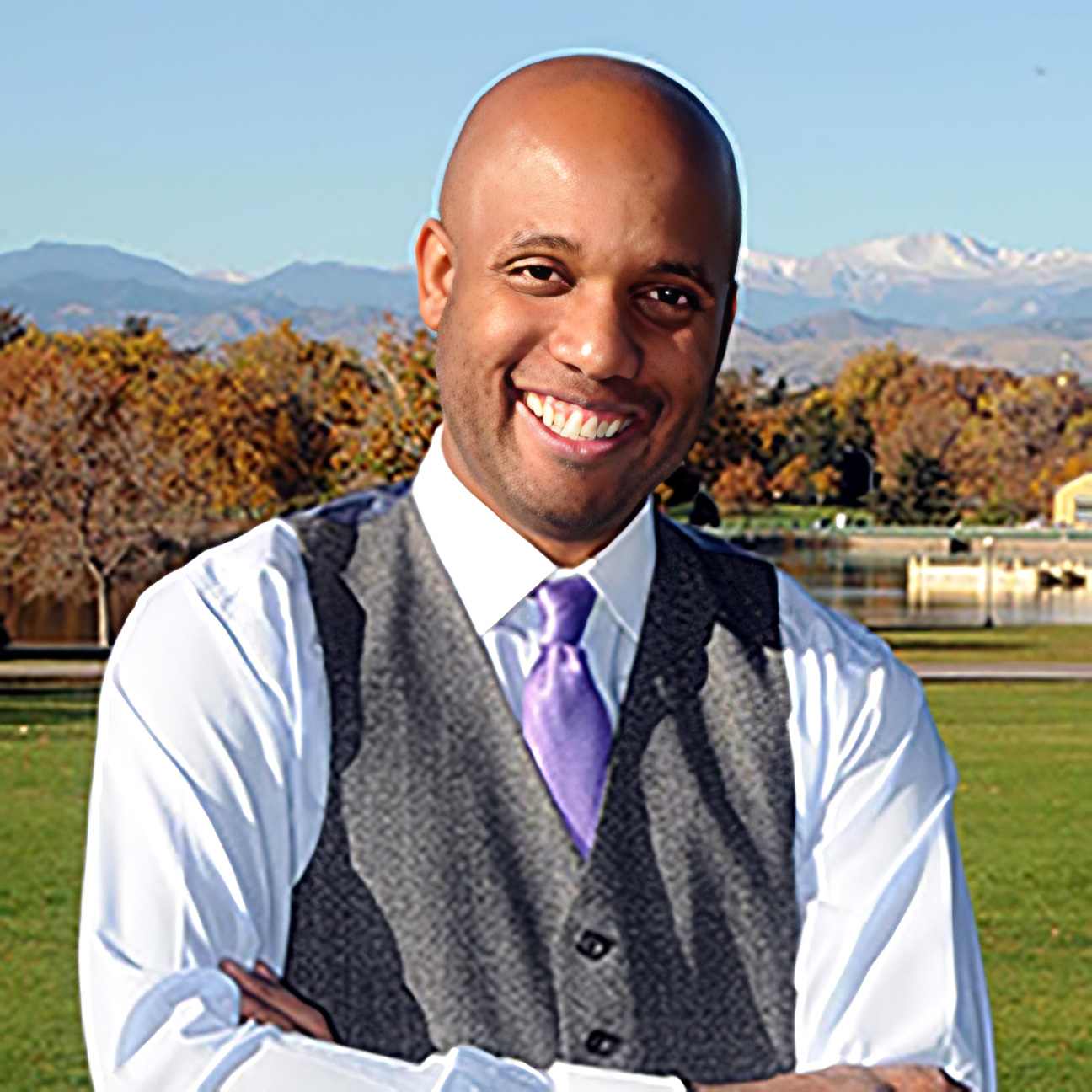
Tamaan K. Osbourne-Roberts, MD, MBA, FAAFP, DiplABLM, DABOM

Jason Marker, MD, MPA, FAAFP
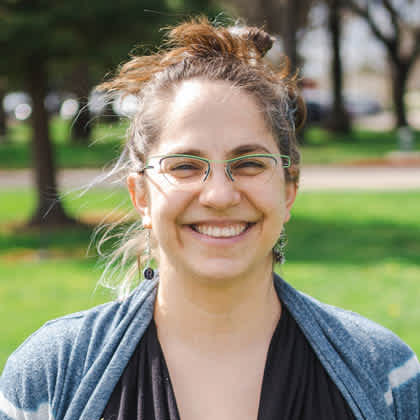
Lauren Kendall Brown-Berchtold, MD, FAAFP
Transcript
Tamaan Osbourne Roberts: Welcome to CME on the Go. The podcast crafted specifically for family physicians by family physicians. Whether you're seeking clinical insights, professional development, or simply a sense of camaraderie, you'll find it all here. Plus you can earn CME credit with every listen. So grab a coffee, hit play, and let's some embark on this journey together.
Tamaan Osbourne Roberts: Today we're here with Dr. Eddie Needham, MD, who loves family medicine and has taught for 30 years, 21 as a program director and seven as a US Army physician. He received the A-F-M-R-D program Director Gold Award in 2017 in the 2013 Florida in 2007. Georgia Family Physician Educator of the Year Awards.
Tamaan Osbourne Roberts: He's been a speaker at the American Academy of Family Physicians FMX since 2010 and has spoken internationally at the Emirates Family Medicine Society's annual conference in Dubai since 2018. Loves. His wife of 37 years has five adult children and seven grandchildren. The wonder and surprise of fishing, the beauty of shells, especially calories and outdoor adventures with friends.
Tamaan Osbourne Roberts: He's here with us today to discuss the latest and greatest in atrial fibrillation matter. Dr. Needham, welcome to the show.
Dr. Eddie Needham: Thank you so much for that kind warm introduction. So for listeners who may be newer to diagnosing atrial fibrillation, talk about some of the earliest clinical cues you look for before you have confirmatory testing.
Dr. Eddie Needham: I was in clinic just yesterday and was seeing a patient who was in her late sixties, early seventies, and she had some conditions going on, and as I had my medical student with me, I was listening to her heart and I'm thinking, this is not what I was anticipating. This sounds like atrial fibrillation or PMI was laterally displaced and all these things were coming up and I'm going, wait a minute.
Dr. Eddie Needham: I have to be a clinician. And so. Hopefully the things I share with you in the next few minutes are gonna be relevant 'cause I was using them yesterday, right there in clinic. And then after doing a more thorough chart biopsy, one of the more important biopsies we learn how to do. I saw that this undescribed arrhythmia was actually atrial fibrillation, so found that on the back end.
Dr. Eddie Needham: So hopefully we've got some updates to make things relevant for you as a practicing physician.
Tamaan Osbourne Roberts: You just mentioned doing a char biopsy. Can you be a little more specific on what that looks like in regards to atrial fibrillation?
Dr. Eddie Needham: So first of all, I am indeed still practicing. I love cardiology. That thing called the stethoscope is not just a paperweight, but something that we still need to know how to use and not just be able to say, oh, that's a murmur.
Dr. Eddie Needham: Is that atrial fibrillation? Is that aortic stenosis? Is it ular rigor? So in 2023, about a year and a half ago, the American College of Cardiology and the American Heart Association updated their guidelines on atrial fibrillation. And because it's cardiology, everything is a 1, 2, 3, 4 scheme. If it was renal, it'd be 1, 2, 3, 4, 5, right?
Dr. Eddie Needham: Because chronic kidney disease goes all the way to five. But atrial fibrillation now is classified. In four different areas, and as most of the other cardiology guidelines, one and two are either at risk or pre disease. And so your risk factors for atrial fibrillation, you and I know them, we're not gonna go into detail there, but they're there.
Dr. Eddie Needham: The pre atrial fibrillation is a class two. And things that we are, we might find this relevant, is if we were to do an eek G in clinic and you see someone's got a biphasic P wave in lead V one, a deep portion, more than one box, slide by one box deep and they have left atrial enlargement. Hey, that's someone who's now at risk for atrial fibrillation.
Dr. Eddie Needham: Be aware of that, Eddie. If you get an echo for that, I'm not sure what that murmur is and I need to confirm that, or I think it's aortic stenosis, but lemme see how bad it is. And you see left atrial enlargement on the echo with a chamber size more than four centimeters. Hey, be aware if they have hypertension, you need to be aggressively treating that so that the left atrium doesn't dilate any further.
Dr. Eddie Needham: And that's a risk factor for atrial fibrillation. So that's one two. Three, then has an A, B, C, and a D. And so the newer classification now divides atrial fibrillation into less than seven days, which is termed paroxysmal. That's three A. Three B is persistent atrial fibrillation, going from seven days out to 12 months.
Dr. Eddie Needham: Longstanding. Persistent is more than 12 months. And then D, you would think, oh, that would be permanent. No D is actually successful ablation. So someone who goes to ablation and it works, which it does about 70 to 80% of the time, that's actually three. D four is permanent. If I ruled the world, I would've made 3D the permanent, and I would've made four the long term.
Dr. Eddie Needham: But it is what it is. And so those are the new categories.
Tamaan Osbourne Roberts: Can you talk a bit more about why this new classification system is important for frontline family physicians and how it changes day-to-day management?
Dr. Eddie Needham: Anybody who actually has atrial fibrillation, I need to consider what their risk of stroke using the CHADS two vast calculator.
Dr. Eddie Needham: And for men who have a score, two or more. Women who have a score of three or more, we really should consider the institution of a D oac that is level one evidence to help decrease the risk of stroke in the future. What's interesting is what about this people like men who only have a score of zero to one, or women who have a score up to two.
Dr. Eddie Needham: The recommendation there is, it says, consider, and for those of you who are listening who can't see me, I'm putting air quotes around the word Consider, consider using a do oac. So two or more for men, three or more for women. Do this. This is gold. Standard level of care. Use a Doac or warfarin. We'll talk about that in just a second.
Dr. Eddie Needham: Less than that, you can consider it. Way back when I was a young warthog. We would also think about what about aspirin for those people who had what we called lone AFib. Lone AFib is no longer in our nomenclature, and those were low risk patients. There's definitive evidence that now shows that just using aspirin with or without clopidogrel actually does a little bit more harm than it does benefit.
Dr. Eddie Needham: So either do nothing, control the risk factors, get their blood pressure under control, get them exercising, losing weight, stopping smoking, moderating alcohol, or treat them if they have a high enough a chance to vascular score. Now I mentioned warfarin who should still be placed on warfarin. So two indications if you have a mechanical valve.
Dr. Eddie Needham: Well, we're using warfarin for the mechanical valve, not necessarily for atrial fibrillation, but for the mechanical valve. And by the way, some of you may have heard of the newer valve. It's called an onyx, ON hyphen X. In those instances, you don't have to shoot for an INR of two and a half to three and a half.
Dr. Eddie Needham: It's actually a little bit on the lower side around two, and that's a separate talk. But if you have a patient come in and they're on a lower INR target and they have that valve, that's why. But if someone has atrial fibrillation and they have mitral stenosis, mitral valve is the only one that this is indicated.
Dr. Eddie Needham: But if they have moderate to severe mitral stenosis, that's someone who still should be on. Warfarin, it's a better drug as far as the evidence that we have now. All right, so we've talked about here's the indications for being on a doac. Well, which one should we choose? And like you and I, you have the dice in your office and you roll the dice and they both come up with apixaban or rivaroxaban or whatever, or the insurance cost.
Dr. Eddie Needham: I have a tool for you that someone showed me and I wish I could share that with, with you. Who, the who this was, that's been out there now for probably at least five years. We use a Chad two VAST score to calculate the risk of having a stroke. Yes. We also currently use the HAS BLED score to calculate the risk of having a bleeding episode either in the gut or in the brain.
Dr. Eddie Needham: What did you put both of those risks together? Into one beautiful deliciously blue and red kindergarten legible app to be able to say, here's the D OAC that has the lowest blue risk of stroke and the lowest red, the risk of bleeding. And better yet, you turn it around to the patient and you go, look, which one on the chart looks like it's the best?
Dr. Eddie Needham: And you have a shared decision making experience. So that is called the spark. So if you go into your browser and you type in S-P-A-R-C, not K-S-P-A-R-C tool, TOOL, for family physicians who haven't used Spark before, what's the quickest way to con incorporate it into a, a busy visit? It has two portions to the app and unfortunately it's not on our phone.
Dr. Eddie Needham: It's not a, an app that we can have on our devices, but it is on, if you can reach the internet from your cell phone, then you can get to it. So that really takes the evidence from CHADS two VASc for each of the different DOACs, warfarin and aspirin. And then it also takes the bleeding risks that we have for each of those, and it puts it into a chart.
Dr. Eddie Needham: So then you can choose, is it apixaban, is it a dban, is it rivaroxaban? Is it pic, Aban? Which one is it? I don't know. I don't wanna all that memorized. And so that to me is one of the best things I could share with you today as a tool. Not for you to sit behind your computer screen, but to turn it around to the patient and make a decision together.
Dr. Eddie Needham: Most of them are now covered by insurance, at least at tier one or tier two, so 30 to 50 bucks, maybe even cheaper. You're not having to go two to $300 anymore for most of them. Dabigatran older direct thrombin inhibitor actually is cheaper for many of them, and so that might be within their cost range.
Dr. Eddie Needham: So that is a tool, one of the big takeaways. I would encourage you to think about the Spark tool to help choose your D oac. So this is a bit of a difficult one. How do you counsel someone who feels fine but has atrial fibrillation about why rhythm control might still matter? Shifting gears to one of the other bigger concepts that is changing in atrial fibrillation in the prior century.
Dr. Eddie Needham: I'm not that old, but in the prior century, the concept was. Rate control is just as good as rhythm control. So if someone comes in and they're stable and you happen to listen to their heart because of their hypertension and they're having an irregularly irregular beat, you do an EKG and it confirms atrial fibrillation in an asymptomatic patient, you start 'em on therapy and you were done.
Dr. Eddie Needham: You shot for a heart rate goal of less than 110. Why 110 versus a hundred? I have no idea. We'll talk about that in a moment. I have time, but you shoot for a lower rate and you let them go. In the past, probably five to 10 years, there's been a large body of evidence that has started to question that the Affirm trial and the race trial were the ones from the previous entries, the newer trials, east ANet and some other trials.
Dr. Eddie Needham: What we're doing now is we're getting to people earlier, within a year. We're also treating people with ablation, and it decreases the risk of mace major adverse cardiac events like death, stroke, heart attack, admissions for a variety of things. Now, the number needed to treat are still in the upper nineties.
Dr. Eddie Needham: It's less than a hundred. Any number needed to treat that's less than 10 to 20 gets my attention. I'm gonna see that probably today or this month in clinic. As a individual provider, I may not see 90 patients with atrial fibrillation in a year, but you and I, and as a discipline, we're seeing millions of patients and eventually that becomes a number that we need to think of population health.
Dr. Eddie Needham: It's a team sport, not just an individual sport. So that is where a lot of our patients are starting to land, is they're earlier in their age. They either have failed an anti-arrhythmic drug or they really don't wanna be on it. The not being on it is like a two a two B indication. But there is benefit now to getting patients into sinus rhythm, especially if they're younger aged patients.
Dr. Eddie Needham: Now, one of the things I was taught in med school, and it's still valid, is that about five to 10% of our ejection fraction is from our atrial kick, and so the atrium contracts squeezes blood from the left atrium, the left ventricle, the valve mitral valve closes as the pressure GR increases in the left ventricle and then blood goes out.
Dr. Eddie Needham: If you have someone who's got HFrEF, let's say their EF is. 25 to 30% their New York Heart Association class. I can walk out to my mailbox and I have to stop and catch my breath and then I come back. They're like a class two, class three. Where did you get that patient? Into sinus rhythm. Not you personally, but you and the cardiologist.
Dr. Eddie Needham: You get that patient into sinus rhythm. Now they can go for a walk with their grandkids. They can go some shopping, do one or two aisles in Walmart before they have to stop. That is a life changer for those patients. And so there's a move towards offering not just anti-arrhythmic drugs, but ablation, and most of your cardiologists are going to start with an antiarrhythmic drug.
Dr. Eddie Needham: And if the patient fails at either they continue to be symptomatic or have other less optimal outcomes, they'll move to ablation. But in some of our larger teaching academic centers, we're also seeing some of our cardiology or electrophysiologists going straight to ablation.
Tamaan Osbourne Roberts: Talk to me about the most common hesitation patients have about ablation and how do you go about addressing it and
Dr. Eddie Needham: what's the benefit of ablation?
Dr. Eddie Needham: You're not in sin, you're not in AFib anymore, and with one application of ablation. There's about a 70 to 80% success rate. So the success rate is pretty good. It's a little better than antiarrhythmic drugs, which are right in the 60 to 70%. Mm-hmm. So that's a benefit to our patients. And if you had 70% of your population no longer in atrial fibrillation at a year, that's really good.
Dr. Eddie Needham: That much improvement in the ejection fraction. So I just wanted you as a colleague in family medicine on the front end when you make these diagnosis with the patients. Use your DOACs. Yes, that hasn't changed, but think about is this patient young, meaning 50, 60, not 80, and hey, they've got another 20 or 30 years of living.
Dr. Eddie Needham: If we could get them in sinus rhythm, they're just gonna have better outcomes for everything. So that's another big takeaway for us to consider. So that is a pretty comprehensive piece in regards to all of the recent clinical changes and, and clearly there are a lot of them for this year, remarkably complex condition.
Dr. Eddie Needham: Can you discuss a little bit more some of what we've learned about trying to use lifestyle medicine treatment in regards to treating atrial fibro? Well, you know, that is such a great point. As you know, the lifestyle medicine pill that's been approved by the FDA is still in a lot of legal concepts and research.
Dr. Eddie Needham: We're not gonna get a pill. You know that lifestyle medicine is hugely important on the front end. So with atrial fibrillation, class one, basically if you're alive, you're at risk of atrial fibrillation. We know that patients who, male patients, patients who are overweight with a BMI, greater than 30 patients who are drinking alcohol on a regular basis.
Dr. Eddie Needham: I would go to the old guidelines. So two or more units a day for a man, one or more unit a day For a woman, if your blood pressure is not controlled, the guidelines just say optimal blood pressure, that they don't put a number out there. I would suggest in someone at risk, go ahead and shoot for the one 30 over 80 goal versus one 40 over 90.
Dr. Eddie Needham: If you have AFib, it's interesting, it's not just 150 minutes of exercise a week. They actually say you should go up to 210 minutes. Of exercise a week, just to the point that you're barely outta breath. That's all you need to do. You don't even have to be running. So there are a variety of things that we really should consider, and if you and I ruled the world, wouldn't it be neat to somehow link insurance premiums to people's participation in their own?
Dr. Eddie Needham: Health with lifestyle. So how do we encourage and cheer our patients on and not be personally discouraged because it seems like nothing's changing, but lifestyle, medicine, food, exercise is medicine. You make a great point and encourage us all to. Continue to stay in the game with our patients. No, it's an interesting point to make actually, in particular about all of those.
Dr. Eddie Needham: Some of those I think for our listeners would be really kind of bread and butter, but the 210 minutes as opposed to that 150, which I think most even lifestyle medicine certified physicians like myself tend to, to work with is an interesting, very variant to to consider a treatment of atrial fibrillation.
Dr. Eddie Needham: Yep. Like you, I'd like to see how better we might be able to help patients with those sorts of things. Who knows? With the advent of wearables, we might see an opportunity to track and intervene in those in a more effective way. But one of the things that I think comes up for a lot of patients are social determinants of health and health related social needs in regards to, to their ability to.
Dr. Eddie Needham: Comply with both clinical and lifestyle medicine treatments in atrial fibrillation, and really the influence of these things is probably underappreciated in regards to success of these treatments. Can you discuss the influence of social determinants of health or health related social needs? On the treatment of HGO patients and what you've seen, I'd be more than happy to do so.
Dr. Eddie Needham: So my current practice, I have a, a veritable opia of flavors and colors and so we have a group of Haitian patients, most of who speak English, but some who don't, and many come with their family members. Fortunately, we have a great iPad translator that's out there. The same thing with our Latino population.
Dr. Eddie Needham: Our residency clinic cares for folks who are in very challenged situations with use of drugs and are at difficult environments. And then we have people who are just chugging along. They're doing okay, but their medical literacy is, you know, barely even eighth grade level versus anything else. So that's where I live.
Dr. Eddie Needham: And as I was thinking about this question, I had someone share this with me. How do you spell love? Do you spell it? T. IMEE. And so in loving our patients, we can give them the best absolute education that's out there. And most of them's gonna go just over their head. They're gonna nod their head 'cause they're nice, you're talking to them.
Dr. Eddie Needham: But how do we give them time? And so that spark tool, I think is helpful in the conversation with choosing a doac, Hey, look at the blue bars. Look at the red bars. Blue means less stroke. Red means less bleeding. And that's a decision almost that's an elementary level decision regardless of your culture, your ethnicity, your language.
Dr. Eddie Needham: And so I think that's a tool that puts it, it it takes our education and equalizes us down to where our patients are coming from. Obviously there's a lot of challenges with the cost of medications, but many of our meds now cost is not as big an issue as it used to be. For those who can't afford some of our older, our more expensive medications, warfarin is still out there.
Dr. Eddie Needham: It's dirt cheap. Yes, it requires some monitoring. It's not a step backward, but it's not a step forward into the Doac world, but it's life gets real, real for some of our patients. At a previous, one last thing I'll say. At our previous institution I was at, we also did something called Walk with a Doc. So we talked about exercise.
Dr. Eddie Needham: Then once a week we actually met at the local community health center. We did a five minute or less talk on something, and then we went on a walk for two miles. And so putting our money where our mouth is, wouldn't it be neat if we could actually lead or be part of a. Smoking association or lifestyle medicine.
Dr. Eddie Needham: Here's what that looks like, group therapy. And again, that takes time. It takes time away from what we wanna do, but as we have a heart to care for our patients. So lifestyle, medicine's hard, I wish we could encapsulate it, but pick and chew the morsels that you can do with your patients and hopefully some of those tools I mentioned there can help you move that forward.
Dr. Eddie Needham: No, those are are excellent suggestions. I think. And like you said, it's, it's hard, but I think what I, I'm taking away from what you're saying is really two things. One is there's no substitute for time that you really need to be able to have the time to work on these patients. But also that, and we've seen this in the research and other places, that one of the ways to get past.
Dr. Eddie Needham: Various barriers that patients may have is the individualized treatment as much as possible is where the time comes in. Really getting to know your patient, really getting to to know what they can and can't do, and what barriers they may happen to have in their lives moving forward. I think all of that is a really.
Dr. Eddie Needham: Substantial part of the work that we as family docs do. A lot of it is really working with patients co and, and, and really going through shared decision making. You really started to get into some of the tools to help you with shared decision making with patients. I'm wondering if you can talk about that process and counseling patients around atrial fibrillation and helping them develop a treatment plan in, in more.
Dr. Eddie Needham: Be more than happy to. So as I shared the patient who I saw yesterday, she already knew that she had atrial fibrillation. But if I was making that diagnosis for the first time, I'd have high excellence in my clinical skills. I would confirm it with an EKG, and then I would, my style is to, I sit down next to people and I say, here's the data, and I hold it out in front of us and we're sitting side by side.
Dr. Eddie Needham: Here are the risks. And in an older individual. I don't suddenly wanna have my arms spin like this and talk 'em like this, like kinda this, that's a stroke. Most older people would just assume, excuse my transparency, take a bullet to the head and just die. Versus being stuck. Now I am, you know, I'm, I'm, I'm a draw on society and my family has to care for me.
Dr. Eddie Needham: Hey, here's a way that medically we can perhaps decrease that risk. And help you walk along. So you're speaking to the benefits. I don't think we need to take a marketing class in med school as to here's all the benefits. We just assume everybody gets it wrong. And so market the benefit to our patients. I sit down next to them and then all the different teach back techniques, whatever, have an assessment of does the patient understand this?
Dr. Eddie Needham: And some patients especially, they're like, Dr. Needham, I feel fine. Why should I do anything? I, I, I agree with you, and the day right before you have your big stroke, you will feel fine. Then the day after, you will go, huh, I wonder if there was anything that I could have done, and this is that moment right now.
Dr. Eddie Needham: So making it real for them, finding what motivates them. Motivational interviewing, if you have some commonalities with your patients, things that, Hey, I have grandkids. How would you like to be able to see them graduate from kindergarten without walking on a walker or a cane or something like that? And so making it real for them, partnering.
Dr. Eddie Needham: So those are some tools that I use. I'm not sure if you have anything you'd like to do with motivating patients. It's hard, you know, you lead the horse to water. You can't make 'em drink horses outta the bar and cats outta the bag. Pick your allegory. It's hard. And so getting them at least to the table to explain why you think this is important, ultimately.
Dr. Eddie Needham: They trust you, Mrs. Smith, if I were in your shoes, this is what I would do because I think this is best. No, I I I think that really hits the nail on the head. I, I honestly don't have too much to add from that. And I think, like you said, it's hard. The devil is in the details, but overall, I think you've given us a, a great place to start.
Dr. Eddie Needham: We're coming kind of towards our wrap up. Speaking of practicalities and speaking of motivation. One of the things that we have a tendency to do on the podcast is to find a moment of gratitude towards the end of the podcast, because those can be, especially in a, a difficult medical environment, to work in remarkably motivating, very practical way to to, to kind of keep us going.
Dr. Eddie Needham: So I'm wondering if you'd be willing to, to share one thing for which you are grateful today. It can be related to atrial fibrillation or not to you. I'd be more than happy to do so. As a grandfather now of seven, I am, my heart gets watery and buttery every time I'm around my grandkids. I have six granddaughters and one grandson over the Christmas holiday.
Dr. Eddie Needham: As a grandfather coming in, oftentimes you're gonna have to build your relationship, your rapport with your grandkids again. So we were watching Theo, who is one years old, I was playing around. Then he crawls up in my lap and not like from a distant, he just puts his head like all the way on me, puts his arms around me, and I will say, I'm a person of faith.
Dr. Eddie Needham: I'm thinking. What in the world did I do to, to deserve this? I am I kid. My heart is yours. Up to half my kingdom I will give you. And so being thankful for the ones that we have in our lives, it just, you know, we love one. I was in church last Sunday and my granddaughter is just falls asleep in my lap. And I'm like, okay, you guys are having church up there.
Dr. Eddie Needham: I'm having it right here. As I'm being thankful. For this little one in my arm. So you may or may not be a person of faith, but looking for the things that cause your heart to beat and be soft, that might actually be more of a priority than this podcast on atrial fibrillation. Just putting some priorities out there, but thank you.
Dr. Eddie Needham: For an opportunity to be grateful. Absolutely. Of course. So not so much atrial fibrillation is cardiac dissolution, having your heart melt down into bed. I like that. I like that. That's, that's a really lovely ative gratitude. I'll say, I'm actually grateful that there are people like yourself out there doing incredible work around.
Dr. Eddie Needham: These particular areas of actually encountering medicine in family medicine, there is absolutely incorrectly a focus on being really broad and really head to toe, wound to tomb, if you will. You know what we do, but there is a time and place to, to focus in down a little more to find that piece that, that we have that real interest in, and then to be able to, to take that and, and educate our colleagues and ourselves.
Dr. Eddie Needham: And I think you pretty much exemplify that. So I, I really did wanna thank you for, for coming onto to the show today and, and sharing all of that with us. So kind. So kind. Oh, yeah. So true. So true. Another thing that's true is that is all the time that we have for today. And a reminder, the AFP's Board Review Express is happening both in person in Atlanta and live streamed from February 18th to February 21st, 2026.
Dr. Eddie Needham: You'll be able to use it to get an in-depth board review on topics like this. To prepare for the A VFM exam from your home or office. It's like having a mini med school in three and a half days. Please check out the show notes to find the link to register. Thank you for joining us for another episode.
Dr. Eddie Needham: We appreciate you joining us on this journey to elevate family notes to continue this journey. Stay tuned from new content brought to you twice a month with seeing me on the go. Visit the show notes for instructions on how to claim CME credit and find additional resources for today's episode. Until next time, serve from your values, pursue your vision, and lead from your heart.
Dr. Eddie Needham: See you next time on CME on the go. A production of Inside Family Medicine.
References and resources
Disclosure
It is the policy of the AAFP that all individuals in a position to control content disclose any relationships with commercial interests upon nomination/invitation of participation. Disclosure documents are reviewed for potential conflicts of interest and, if identified, conflicts are resolved prior to confirmation of participation. Only those participants who had no conflict of interest or who agreed to an identified resolution process prior to their participation were involved in this CME activity. All individuals in a position to control content for this session have indicated they have no relevant financial relationships to disclose.
Disclaimer
Copyright 2026. AAFP. The views presented in this broadcast are the speakers own and do not represent those of AAFP. The information presented is for general, educational or entertainment purposes and should not be considered legal, health, financial or other advice. AAFP makes no representation as to the accuracy or completeness of the information and is not responsible for results that may arise from its use. Consult an appropriate professional concerning your specific situation and respective governing bodies for applicable laws. Reference to any specific product or entity does not constitute an endorsement or recommendation by AAFP unless specifically stated otherwise. AAFP and the AAFP logo are registered trademarks of American Academy of Family Physicians.