
CME | Private practice, public impact: Finding your fit in medicine
Show notes
In this episode of CME On the Go, Jason Marker, MD, MPA, FAAFP, and Lauren Brown-Berchtold, MD, FAAFP, discuss how private practice in family medicine is evolving and how physicians can evaluate different models in 2026.
They review trends showing a shift from 50/50 self-owned vs. other-owned practices in 2016 to about 75% other-owned and 25% private practice today, note rural workforce losses, and highlight rapid growth in direct primary care (DPC) and concierge models, alongside increasing corporate ownership.
They compare employed practice vs. independent practice trade-offs, outline traditional fee-for-service, DPC, and hybrid structures, define the Triple Aim and related aims, and emphasize aligning practice choice with desired autonomy, scope, patient relationships and community investment, with resources available through AAFP.
Learning objectives
Compare the structures and implications of direct primary care, fee-for-service and hybrid practice models to identify how each can impact patient access, continuity of care and physician satisfaction.
Evaluate the trade-offs between employed and independent practice models, focusing on how physician autonomy can influence clinical decision-making, patient relationships and practice sustainability.
Formulate personalized strategies for incorporating “private practice” principles—such as relationship-based care and operational efficiency—into any clinical setting to enhance both patient experience and professional fulfillment.
The AAFP has reviewed Private Practice, Public Impact: Finding Your Fit in Modern Medicine and deemed it acceptable for up to 0.50 Enduring Materials, Self-Study AAFP Prescribed credits. Term of Approval is from 05/04/2026 to 6/4/2027. Physicians should claim only the credit commensurate with the extent of their participation in the activity.
The AAFP is accredited by the Accreditation Council for Continuing Medical Education (ACCME) to provide continuing medical education for physicians.
The American Academy of Family Physicians designates this Enduring Materials for a maximum of 0.50 AMA PRA Category 1 credits™. Physicians should claim only the credit commensurate with the extent of their participation in the activity.
CME activities approved for AAFP credit are recognized by the AOA as equivalent to AOA Category 2 credit.
Claim CME credit
Episode hosts
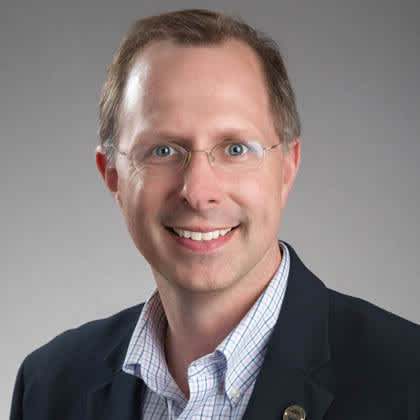
Jason Marker, MD, MPA, FAAFP
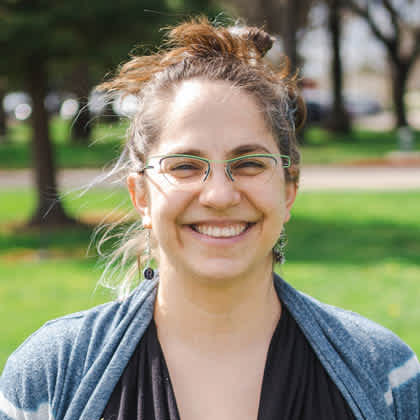
Lauren Kendall Brown-Berchtold, MD, FAAFP
Transcript
Welcome to CME On the Go, the podcast crafted specifically for family physicians by family physicians. Whether you're seeking clinical insights, professional development, or simply a sense of camaraderie, you'll find those all here. Plus, you can earn CME credit every time you listen. So grab your coffee, hit play, and let's embark on this journey together.
I'm Dr. Jason Marker, and I'm an associate program director at the Memorial Hospital Family Medicine Residency Program in South Bend, Indiana. And I'm Lauren Brown-Birchtold, and I'm the program director for VCME Family Medicine in Modesto, California. Lauren, it is great to be on the go with you again.
Taman is not with us today. He had a last minute thing come up, and we decided we needed to move right on towards our deadline with this episode, but I'm glad to see you. Have you been having an amazing week? Man, I have been having such an amazing week. I do miss Toman today, but this last week I've been, again, reminded, as I often am, about the breadth of what family doctors can and should be doing.
I was in procedure clinic yesterday doing some Nexplanons and some skin procedures. I was on inpatient a couple days before that. It's been really fun. What about you? I love that variety of things that we do in medical education. In fact, it goes along well with today's podcast because I had a resident in my office last week who sort of sheepishly inquired whether I knew anything about private practice because he's looking at an opportunity that is a private practice opportunity.
And I closed the door and we had quite a great conversation, which we're gonna have an extension of today on our podcast. I love that. I also had that conversation with my resident yesterday who's joining a, a pretty interesting private practice in town, and it feels great to have those conversations with learners who, at least in my experience, I'm not sure what your thoughts are, might feel sheepish because they feel like they're supposed to be joining a Sutter or a Kaiser or a university.
And I'm not really sure where that supposed to is coming from, where that maybe subliminal message of you should be doing something like signing with these people is coming from. But I love that residents are actually looking and questioning like, "Hey, I've got a lot of options." Yeah. Yes, absolutely. The, the premature demise of private practice is greatly overrated, and I'm very excited that it's alive and well and may actually in some ways be growing, and we're gonna talk about some of those ways that it might be growing today.
So that's pretty exciting. I spent 15 years running my own small rural private practice before I switched over to full-time residency teaching, and that was a great transition for me. It gave me a moment to spend some time thinking about all the different options that I had, including some thoughts I had about DPC and some interesting sort of hybrid, rural Medicare, DPC items that were rolling around in my head there for a while.
And I suspect that more than a few of our listeners are wrestling with some of those same kinds of thoughts, like, is this the right practice opportunity for me? Is there something more? Is there another chapter in my career? And is private practice part of that? What might that even look like in 2026? We wanna answer some of those questions today and break down some of the communist private practice models in 2026, talk about how they work, some of the pros and cons that there might be for those practice styles.
You know, I will confess, and I think I've shared on this podcast before, I got out of my residency and fellowship, and I dreamt straight into being a core faculty for a residency in the Central Valley of California. And so I knew from the get- go that I was probably going to be in a non-private practice model, and so I've spent my whole career within the residency and GME construct.
But you mentioned something just a few minutes ago. You said the premature demise of private practice. And so as a non-practitioner, either currently or in the past, do you mean like that's what the talking heads were talking about, that there's a premature demise, but it's not real? Or do you mean there was this really downshift in private practice prevalence and we're seeing potentially an upswing?
Talk, talk to me more about that. Lauren, I'm old enough now that I have seen two waves of people trying to tell me that what I wanted to do wasn't gonna be possible. My mother-in-law, my mother-in-law actually was a private practice physician in our home community, my wife and I's home community, and there was a, a wave during the rise of the HMO, the health maintenance organization, where she sold her practice and went to work for a bigger organization.
And she kind of just said to me, "I'm not sure what sort of practice you're gonna go into, young man, but there's probably not gonna be private practice because everybody's getting bought up by HMOs, and that's just the way it's gonna be. " And that was not true. And even more recently, there's been a big move over the last decade, I guess, where we've seen a significant rise in the number of sort of owned practice models.
We're gonna talk about some of those statistics here in just a second. But twice now, I've had people say to me like, "Oh, private practice is going away. Everybody's gonna get owned by somebody." And that actually is unlikely to happen, though it continues to morph in what it looks like. So let me just throw a few statistics out there for you.
Okay. I'm ready. About 75% of family physicians right now report being in a practice that's owned by someone other than themselves. That leaves about 25% who self-describe as being in private practice or, or in a self-owned situation of some sort. In 2016, that ratio was fifty fifty. That, that's a big change in a decade.
Of the people who are in a practice that's owned by someone else, there are a s- a percentage of those that they're owned by other doctors. So, you know, a big multi-specialty physician practice that's owned by physicians, you know, they might describe themselves as owned by someone else or they might say that they're in a private practice.
It's kinda hard to know how they might answer some of those surveys. Rural areas continue to be a place where it's more likely that you're gonna find typical private practice physicians, and mostly in smaller practices, less than five docs in the practice. But there has been an 11% net loss of any physician in rural areas over the past decade, and so along with that comes a decrease in sort of typical private practices.
Mm-hmm. Now, we're gonna talk about direct primary care, DPC a little bit during this episode, and it continues to be a fairly small percentage of the total number of private practices out there, but it is on the move. It is the single biggest area of growth in private practice. Between 2018 and 2023, the number of DPC and concierge practices grew by 83%.
Now, interestingly, between 2018 and 2023, individual ownership of DPC practices actually dropped a little bit, and corporate ownership of DPC practices went up almost sixfold. Even within DPC, there's some really interesting ownership trends that I think we all need to be watching, especially in the physician leadership spaces.
That was a lot of information. And, and a couple of different things pop out at me. Number one is the comment about rural areas and rural physicians. This is, this is a whole other conversation, but the number of physicians who are not in rural areas and the healthcare deserts that we're really starting to see and experience, really with obstetric provision of care being sort of the canary in the coal mine of this is something that is going to be at emergency levels very, very soon in a vast majority of these areas.
And so that's a, that's a really concerning trend. It is interesting and does reflect my experience in talking to colleagues that we've seen that shift that you mentioned in a decade where the ratio of self-owned versus being in an owned practice went from fifty fifty in 2016 down to 75% in an owned practice and 25% private practice.
And what's really interesting is that in those conversations, what I'm observing is physicians calling out like, "Man, are we as a profession more likely to be unhappy or dissatisfied because we've given away our autonomy with the decline of private practice?" And again, as an outsider, as a non- non-private practice, uh, uh, a history without that, uh, a person without that history, that's a good question, right?
That's a really thought-provoking question. And we've talked about DPC, we've talked about DPC on this podcast. The, those numbers are just not shocking, although 83% does have some degree of sticker shock to me.
With all that said, I think that when a doc is considering some of these options, we do have to consider some of the various trade-offs, right, between being private practice versus being employed.
And what feels really attractive to me, to my residents, with the employee trade-off, the, the pros are a guaranteed salary, benefits most of the time, ostensibly, maybe fewer administrative headaches. The cons then being if you don't have control, you don't have control, including overscheduling, staffing, clinical protocols, and that there is some degree of, like, dollar is king, right?
Is decision-making, even within organizational directionality and goals, is that influenced by RVUs rather than clinical nuance? Right. Being independent, though, right? There are pros of total clinical and o- operational autonomy. You are the boss. You choose your staff, you choose your culture, a- and then the con is you're the boss, meaning your HR, your IT support, you're everything.
And the impact ends up being that sustainable ability really depends on how well you can think about the dollars and cents to run your own practice with your own directionality, just as much as your clinical skill as a physician when you're in that clinic room with your N of one patient in front of you.
Yeah, that, that's very wise. And, and I know that you, being also in a residency setting, spend some time doing some career counseling with your residents, as I do, and it sort of begins with what do you want out of your practice? You know, there is this statistic still that half of new residency grads are looking at their next job within two to four years.
And I think when a resident or when an attending physician looking for a change in their practice style really sits down to say, "What, what am I really looking for in a practice? What do I feel like I want control over? And what are some things that I don't want control over?" And really does some discernment and some deep work around that, they're more likely to find their way along that spectrum of truly private practice to truly own practice to just write at the sweet spot that they need.
So what I'll say this is, I, I set my residents down. We played the pros and cons game. You listed some pros and cons if an employed practice and unemployed, not an unemployed practice, but a private practice. And, and I, we go through some of those together and I try to get a beat on sort of where they are along that perspective.
And we have to also acknowledge, I think that some of those pros and cons will change over time. The things that I loved really early on in my private practice, eventually I loved less. And the things that I was looking for in my maybe work-life balance began to change a little bit, and I started to think about what are some different ways I could structure my workday that might feed some of those balancing things that I, that I had out of balance maybe in earlier parts of my practice.
So realizing that over the course of a spectrum, whether you are a, a resident listening to this or you are a 60-year-old attending physician who's thinking about a change in practice style, it's, it's always the right time to sit down and do a little bit of pros and cons and what would bring meaning to your workday, what are the things that really excite you right now or what are the things that don't and begin to look at just the right alignment for you.
Yeah. I think that there is definitely a picture in my head, right, that says, "If I am not the owner or the employer in a private practice, well, then that means that as an employee, I get to lay down my concerns at the end of the day. I am not in charge of, like you've shared with me previously, thinking through, do I have to go shovel the snow off the steps tomorrow morning?"
Right? Yep. But at the same time, I and many of my colleagues who are in employed situations are indeed taking home that mental load at the end of the day, but it might just be that I'm signing notes till 10:00 PM at night. And so there might be a perception or an assumption that we're laying down some of this, but, but I think the reality is that any situation in which we're working is going to have trade-offs that we might not expect.
True, true. Very true. And when we think about those trade-offs and maybe a physician out there who's listening and sort of exploring what their options are, you really need to sort of get down to some basics about what we're really talking about with these practices. So in a tr- typical fee for service private practice model, this is sort of your grandpa's private practice.
You just, you've got a big checkbook and you send your billing codes in and the insurance companies send you some money and you use that money to buy things like support staff and maybe your electronic health record and a security system at your office or all the things that you might need, but your, your income stream is gonna be based often on volume.
Mm-hmm. And you're gonna have sort of some trade-offs there where you're gonna be doing all of the things. Your patients may have amazing access to you, but you're gonna need to make sure there's some throughput there and you're having to have some risk of burnout and some moral injury there because there's gonna be some things at odds between what you need to make a living and what you may want to do for your patients.
Now, direct primary care as kind of a counterpoint to that often has a very different financial structure, a monthly membership fee, and we're not even talking too much today about concierge medicine and how it is different than direct primary care, but a fee is paid and with that money, you run your practice, but you're not billing things off to an insurance company most of the time.
You are using the money that comes in in those monthly membership fees to, to buy the same sorts of things, but often it's a, a smaller staff and you c- can keep a lower volume that way, but there might be higher on- demand access needs. The expectation of you as a physician is gonna be sometimes a little bit different than if you are, you know, one of 12 doctors in a great big office somewhere, and you often don't have the same ability to, you know, trade off patients with another provider today because, you know, your schedule's already full or something like that.
A lot of autonomy, there's time for complex care, but you also, there's an expectation from your patients that you're gonna be providing a lot of things for them. Most people in DPC practices will have some lab availability, they'll have contractual relationships with some maybe relocal radiology services.
There's lots of things about DPC that we're not gonna dig into the deep parts of today, but that's kind of what direct primary care is, and that you'll have that monthly membership fee, but you'll be disconnected from insurance, but reconnected to a very intimate type of care that is sometimes not what a doctor's looking for.
There are a few hybrid practices out there where there's a little bit of a mix of fee for service and membership payments. This is what I was thinking about once upon a time in my own career, when I continue to take Medicare, but have a membership model for non-Medicare patients. I was in an older rural practice where that could have been a thing worth trying, and it would have been a, a balancing act of risks and benefits at that point as well.
So anyway, both of these models, the fee-for-service for private practice model and the direct primary care, private practice model can both serve patient populations incredibly well. They both can achieve the Triple Aim. They both have pros and cons, as we talked about before. And what some of our listeners may be thinking is like, how would I begin to sort of choose between these?
How about, how, what do I need to think about if I'm thinking about going into any sort of a private practice at all? Well, before I talk about one aspect of that, Jason, I think that there might be some lis- listeners who are saying, "What is the triple aim that I might be trying to achieve?" And I'm curious if you could break that down and maybe even do a brief mention of the quadruple aim.
Sure. The Triple Aim is a very well researched thing about family medicine, which says that if you can provide care that is both cost-effective, meets the patient where they are, and results in better population health outcomes for the population you serve, that is the triple aim. And it turns out that really only family medicine can reach the triple aim.
Generally, internal medicine doesn't, mid-level providers do not. And so it's incumbent upon us knowing that we can reach a triple aim to say, "How do I do that? " And doing it from private practice, doing it from an employed practice, you, you can get there both ways. The quadruple aim includes physician satisfaction or provider satisfaction.
If you think about your team of clinicians that are working together, maybe your MAs and such, and there is an evolving concept of the quintuple aim, which talks about, you know, doing good for your community, that you look at it with some judgment around what are the things that my community really needs and how am I attending to those well?
I know I put you on the spot with that, and I appreciate that quick breakdown. What I would translate those details into is that you're really saying that regardless of how we show up to work for our patients, can we do that with a holistic lens, right? And, and that one of those ways might be exploring some private practice that.
A- a- and one version of that is traditional private practice. And you mentioned some of the fee-for-service component. Earlier, we talked about that in either private practice sort of lens, the draw is very likely going to be autonomy and clinical decisions, being your own boss, how do I schedule and run my clinic?
The traditional private practice or fee-for-service is still insurance-based, and so you might still feel like, "Man, even though this is mine, I'm having to answer to these, you know, unknown faceless payers, and does that cause conflicts with the value of care I'm providing? Does it cause conflicts with the quality of care?
Am I incentivized to potentially be over-prescribing or over-testing?" A lot of conversation has been out in sort of the, the world about is overall healthcare expenditure in the United States because we have set up a system to drive us towards overtesting and prescribing, and if we could set up a different system, would we be able to reduce some of the national healthcare costs?
There, there's been pushback on that. I don't think that that's the end of the story at all, but it is a question because the structure inherently does encourage a higher volume of services. And I do think that the friends I have in both DPC and still in the private practice world, because they are so intimately attached to their patient population and often very intimately attached to the financing of their practice, they're very, very thoughtful about this.
They, they realize that there are gonna be trade-offs here. If, if I wanna bring in a small radiology machine, you know, where's that money gonna come from and is that a, a value to my community for me to do that? I decided in my private practice, not a DPC practice, that I was not gonna have lab services in my office because for me, I wanted to be a partner with my local small rural critical access hospital, and, like, that was a fair division of labor.
My patients could drive down the road and get their lab work there. Yes, I could have provided it in my practice, but most folks in private practice think about their place in the community and how they can best partner up with the other, other folks in their community. I appreciate that, because I've now said three times that I am coming at this as an outsider, right?
And I think the nuance is really important- mm-hmm. ... and that we can get lost in, in some of the public discourse that isn't tied to an N of one physician who's doing this, right? Right, right. Blame might be placed. I have a lot of colleagues who have talked about when they think about physician wellbeing and doing well within their private practice, doing well so that they can live, but also doing good work for their, for their community within private practice.
They've said, "Man, we want the people who are advocating for us as family docs to be advocating for in- insurance reimbursements, including Medicaid and Medicare, to really be set at appropriate levels to allow us to survive." And I'm curious if you have comments on that or thoughts on that because you did this for so long.
Yeah. I'll tell you, it, the, the margins got smaller over time when people start to ratchet down payment for certain things, if I am in a practice where someone else is just writing me a salaried paycheck, or maybe there's some quality incentives and things, I don't, I don't see that margin shrinking as much as I did in private practice, where it's, it's obvious at the end of the year, like, these bonus checks for my employees are gonna be smaller than last year, or, "Wow, I used my line of credit a lot more in this year than I did in prior years."
And so the physicians in private practice of all types are much more intimately tied to some of the policy changes and what that means day-to-day for the dollars that flow through the system. They're often big advocates for the sorts of reforms that may be needed. And in fact, one of the reasons that I've been thinking so hard about, can we separate the way that family medicine is paid for from the way subspecialties are paid for in this country comes from how I feel about what payment looked like in my private practice days compared to what it feels like in a residency program to me.
I think that's a great point that I appreciate the nuance again. And the final thing that I'll say, thinking through traditional private practice as just another question of is this right for you is there's a question of, of innovation and whether innovation within that private practice will be sustainable or reimbursable at the same rate, right?
The telemedicine was, was sort of ignored before COVID, but we've seen changes even within that, either in employed practices or not employed practices over the last several years. And so there's, you know, I'm sure so many more things to think through when you're comparing traditional to DPC, but those are some of the high level components.
Yeah. Let me talk about some of the things that I know are on people's minds when they choose a direct primary care practice. I've got several close friends who do TPC and, and actually, I think about it in a lot of different models, corporate models and sort of traditional private practice DPC models.
And here's what they say to me, I wanna choose my patient population. I wanna choose my panel size. I want to think about the scope of practice that feels right for me. And at the end of the day, that's the scope that I wanna have for the patients I take care of. I am in a community where I know it can support DPC.
I'm not disenfranchising anyone by getting into a DPC practice, and I have enough tech savvy that I can run this off of a laptop really well and not have to have a super high overhead over the whole thing. I know what I want my hours to be, and my patient population is in agreement with me about that.
And there's parts of the business of medicine that I'm interested in, maybe it's pharmacy or lab. There's other parts that I'm not, and that's why there's software packages out there for DPC doctors that offload the parts of it that they're less interested in. A lot of my friends in this space say word of mouth gets me all the patients that I need, and if I need to do a little advertising or marketing, I know how to do that.
And that's not rocket science in 2026 to even use AI to help me with the marketing campaign and understand who I'm gonna talk to about that. They're often very involved in their community. That's where they get some of their new patients from, and they love the fact that they're able to go out there in the middle of the day and close their office for a couple of hours if they want to and do a thing at the local high school that probably brings some patients in the door eventually, but is good outreach for them into the communities that they serve.
Like, these are things that my DPC friends wanted to do, and that's why they went into DPC. And I, as a guy who was in a traditional fee-for-service private practice for 15 years, said, "Yes, absolutely. You wanna do that. That's what I loved about my practice, and that's exactly what you're gonna love about your practice."
So I don't think these are unique to DPC, and I think my friends out there in traditional fee-for-service private practices would agree with all those things. So what I think I'm hearing you say is a couple things. Number one, there are some big differences, and then there's some places where, man, at the end of the day, there's a lot of overlap between traditional and DPC private practices, and that one of those areas of overlap is the requirement for some emotional investment and relationship building that you're going to be doing within your practice that, uh, you really do have to own the practice, not just in the financial sense.
Yeah. That, that is so true. I mean, how often have either you or I, but certainly our listeners heard somebody say, like, "I wanna punch the clock, I wanna see some people, I wanna punch it again and go home." And that's not age specific. I, I hear Gen Zs tell me that, and I hear baby boomers tell me that. And that can be just the right model.
And that, that is, that is fine, that if that's the way that you wanna see yourself practicing medicine. But for that set of people out there who says, "I wanna give everybody my cell phone, I, I wanna, I wanna be there down in the weeds with my patients and all the things that they need," then private practice is probably gonna be a thing you need to look at.
And whether you do that through DPC or concierge or a hybrid model or a fee for service practice, I'm a little less worried about because you're, what you're telling me is you, you want the autonomy to be audaciously invested in your community. And that's a beautiful thing when people wanna do that.
They just need to find their way to the role models and the services they need to make sure they can launch that and be successful financially. Which, you know, I, what I'm finding is a lot of young people who are interested in that, you know, they, they understand they could make more money in another model often.
That's not what's driving them. And I think that is so beautiful. Audaciously invested in my community might need to be a tagline that the AAFP tries to, tries to buy here from us at CME on the go. I love that. You know, the big DPCs ... So for those of you who are thinking about DPC or, or already investing in DPC, you'll know this, but, like, the, the DPC Summit, the AAFP's DPC Summit is coming up in mid-July in New Orleans.
And, like, maybe there's gonna be a banner that says that. I don't know. We'll just have to find out. But there are so many resources on the AAFP website for people who are interested in DPC or in fee-for-service-based private practice models. I mean, I, I, you know, this is gonna date me. I bought a spiral bound, how to open a private practice educational thing from the AAFP-
When I was a resident, it was sent to me by snail mail. It was amazing. I probably still have it somewhere, but it walked me through, here's what you do to be successful in private practice. And I was on the website today looking at private practice resources from the AAFP, and there's, there's a bunch of
There's, the, all that stuff is still there, and there are so many people who would like to partner up with young or older physician who is interested in a private practice model and help you do that really wisely. So we're gonna put a lot of stuff in the show notes for you, our listeners, and you can dig into those.
There's really a lot out there on the AAFP website about it.
Statistically, most of our listeners are not going to be going into private practice. And so I think that it's important to remember that we can have some private practice principles that we pull forward into anywhere. One of the things that I've really seen be game changers is the idea of team check-ins.
Some people might call them huddles at the start of the work session, because your team might just be you and your MA, and you are next to 50 other docs in a large system that has, you know, clinics all over the, the city, and it might be that you're in a smaller clinic, maybe you are in a owned private practice, but someone else owns it, and the team's a little bit larger.
That, that has been a game changer to say, like, "What are we doing today, regardless of who pays the checks at the end of the day to help serve our patients?" And I really like that. Yeah. Uh, I love that too. I think when I have residents shadow me in our residency clinic, or maybe I have a student with me, they see me practicing in a way that is sometimes shocking to them because they've not always seen it role modeled when they've just been in a lot of owned practices over time.
But, you know, I, I invest a lot in relationship building during the visit, like non-medical relationship building, because that's just important to me and it's been important to my patients. Between visits, I don't hesitate to shoot a text message off to one of my patients or call them on the phone because something, it was on my mind that I think is related to their healthcare that suddenly comes to me and I just reach out and, and have a conversation with them about that.
Every single visit has, has an element of preventive care for me, not because there's metrics that I'm own, that I'm trying to own, but because, like, that's the right thing that, that you do in private practice, like, every visit is a moment to take care of them in the biggest possible way, which means a prevention first scheduling principle is really important to me.
I'd rather have a 60 minutes with a patient once a year than two 15 minute visits once a year where I can really just spend that time getting deep into all the preventive things that I can and the acute things that may be on their mind at the moment too. So these are all things that I have built into myself from my private practice years that I'm bringing into my residency clinic, and tho- those are really important principles that anybody can do in any sort of practice.
Absolutely. It sounds like you are saying just there that even though you're in an em- an employee position at this exact moment that you're not relying on metrics to say, "Hey, did this person get their Papsme or their mammogram?" You're like, "No, no, no. I, I, I'm taking my private practice philosophy of I don't need an external incentive to do the right thing.
I'm just gonna do it for my people. " And I love that. I think it's beautiful. We know that most people listening are not in a private practice. They're not particularly interested in a private practice, but there's often curiosity around private practice and how it works and DPC and whether that's a model in private practice that people are interested in.
And so if we've nudged even one listener today in the direction of considering private practice somewhere along their career, I think that's great. I loved my private practice time, even though it was a ton of hard work, but I don't go through a single workday at the residency without using some skill that I hone while I was in private practice.
I wanna move us right into our moment of gratitude today by saying that I wouldn't be half the doctor I am or a fourth of the physician leader I am today without my private practice experience. I know that you've not been in private practice, but for me, it was a real game changer. What, what do you have for a moment of gratitude for us this week?
You know, I thought for a long time that I might move up to the county seat of Modoc County in Northern California, and that's because I spent time with Dr. Rickert, who was the physician for that community for decades. And I don't really know, was he in a private practice or was he employed? What I do know is that he was a classic family doc.
He was doing clinic, including circumcisions, running over to see his hospitalized patients in the interim, going after clinic to go see some skilled nursing facility patients. And that, you know, as a really early medical student, seeing him model broad spectrum patient care that thinks about what do I need to do from a holistic perspective for my community was life-changing.
And so I'll always be grateful for that. Yeah. Yeah. That sounds beautiful. That sounds beautiful. All right. Well, that's all the time we have for today. I wanna thank all of our listeners for joining us for another episode and for being with us on this journey to elevate the specialty of family medicine.
Stay tuned for new content brought to you twice a month with CME on the Go, and visit the show notes for instructions on how to claim CME credit and to find additional resources for today's episode. Until next time, serve from your values, pursue your vision, and never stop exploring the ways that your practice can impact your community.
We'll see you next time on CME On The Go, a production of Inside Family Medicine.
References and resources
Disclosure
It is the policy of the AAFP that all individuals in a position to control content disclose any relationships with commercial interests upon nomination/invitation of participation. Disclosure documents are reviewed for potential conflicts of interest and, if identified, conflicts are resolved prior to confirmation of participation. Only those participants who had no conflict of interest or who agreed to an identified resolution process prior to their participation were involved in this CME activity. All individuals in a position to control content for this session have indicated they have no relevant financial relationships to disclose.
Disclaimer
Copyright 2026. AAFP. The views presented in this broadcast are the speakers own and do not represent those of AAFP. The information presented is for general, educational or entertainment purposes and should not be considered legal, health, financial or other advice. AAFP makes no representation as to the accuracy or completeness of the information and is not responsible for results that may arise from its use. Consult an appropriate professional concerning your specific situation and respective governing bodies for applicable laws. Reference to any specific product or entity does not constitute an endorsement or recommendation by AAFP unless specifically stated otherwise. AAFP and the AAFP logo are registered trademarks of American Academy of Family Physicians.