
CME | Staying power: Aiming for longevity in your family medicine career
Show notes
Host Lauren Kendall Brown-Berchtold, MD, FAAFP, talks with Angela Bacigalupo, MD, MPH, FAAFP, a primary care medical director and ambulatory informatics medical director with Cone Health, about what helps family physicians build careers they can sustain over decades—and what increasingly drives physicians away from clinical practice.
Dr. Bacigalupo identifies several factors she sees in physicians who have maintained long careers in medicine: a meaningful degree of autonomy, a trusted team, work that continues to provide purpose and clear boundaries around professional demands. The conversation also examines how expectations around work-life balance are changing and why viewing medicine solely as a calling can sometimes contribute to unsustainable expectations. Loving medicine does not require sacrificing personal well-being.
The discussion then turns to the pressures making longevity more difficult. Dr. Bacigalupo reviews data on physician burnout, intentions to reduce clinical hours or leave an organization, and leaving clinical practice at younger ages. Administrative burden, prior authorization, payment complexity, unrealistic demands and time spent in the EHR all contribute. She highlights the cumulative effects of inbox management, documentation, forms, refills and work that spills into physicians’ personal time.
Learning objectives
Evaluate factors that influence physician longevity in practice, including workflow efficiency, administrative burden, payment complexity and professional autonomy.
Assess strategies that promote professional fulfillment and support a sustainable future for the medical profession.
The AAFP has reviewed CME On the Go, Season 3, and deemed it acceptable for AAFP credit(s). Term of Approval is from 11/18/2026 to 07/06/2028. Physicians should claim only the credit commensurate with the extent of their participation in the activity.
This session, “CME | Staying Power: Aiming for Longevity in Your Family Medicine Career” is approved for 0.50 credits Enduring Materials, Self-Study, AAFP Prescribed credit(s).
The AAFP is accredited by the Accreditation Council for Continuing Medical Education (ACCME) to provide continuing medical education for physicians.
The American Academy of Family Physicians designates this Enduring Materials activity for a maximum of 1.00 AMA PRA Category 1 Credit(s)™. Physicians should claim only the credit commensurate with the extent of their participation in the activity.
Claim CME credit
Episode hosts
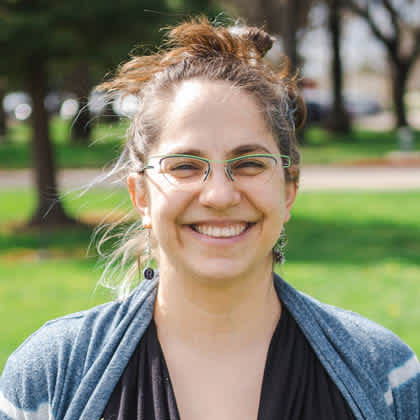
Lauren Kendall Brown-Berchtold, MD, FAAFP

Angela Bacigalupo, MD, MPH, FAAFP
Transcript
Hello, and welcome to CME on the Go, the podcast crafted specifically for family physicians and by family physicians. Whether you're seeking clinical insights, professional development, or simply a sense of camaraderie, you'll find it all here. Plus, you can earn CME credit with every listen. So grab a coffee, hit play, and let's embark on this journey together.
You know me. I am Lauren Brown-Berchtold, one of your co-hosts, and as is appropriate for a topic about longevity in your career, I am in the middle of a job transition, and given that I don't know exactly when this podcast is being released, I'm not going to talk about what my job is. We can just assume that I'm on a slight break right now.
More importantly, though, I'd like to welcome a very special guest for our episode today, who is both my friend and colleague and frequent co-speaker, Angela Bacigalupo. Angela, can you tell us a little bit about yourself?
Yeah, thanks, Lauren. I'm Angela Bacigalupo. I'm a primary care medical director with Cone Health in central North Carolina.
We've got about 40 primary care clinics that we manage, and I'm also the ambulatory informatics medical director for Cone. I'm really passionate about reducing administrative burden and inefficient workflows that really contribute to pajama time and burnout for other physicians, and I always look to use technology and the EMR to improve patient quality care and safety, but also the physician experience in their day-to-day.
You know, like I said, you and I have done a lot together, and you and I are very different people, which is probably what makes us meld so well together. And I know that this is your jam. I've attended talks that you've, that you've done on some of the topics that you just mentioned, and it is always just so fascinating how, like, such a foreign, seemingly dry concept to me, you make really actionable and engaging, and I've always really appreciated that about you.
So I'm excited to, like, mine your brain for some tips and tricks today so that we can better promote people wanting to stay in this career.
Yeah. Love that.
Yeah, it's going to be great. You and I have recently hit a mark, a mark in our career, and have transitioned from being early career in the first seven years out of residency.
We're now both mid-career physicians, and so that feels a little bit weird to say, but what are you, or what is keeping you still practicing these days?
So I remain passionate about the thing that got me into medicine, right? Like caring for my patients and the long-term relationship I have developed with my panel.
I've known some of these people for a decade or more at this point, and that remains very meaningful to me. But I think the thing that keeps me excited and, like, gets me in the car to go to work every day is really just that opportunity to make the lives of my fellow physicians better. And what I mean is, like, when I work with informatics, I can really bring the physician voice to the table and make sure that we're including helpful upgrades and not just more clicks for you, hopefully improving your work-life balance in the discussion.
And so by helping those other physicians stay in practice longer, see their patients, work more efficiently, not burn out because of their pajama time- I really feel as if, like, my impact can expand exponentially, I guess, and I can help, like, even more patients downstream, if that makes sense.
Absolutely.
Yeah. Yeah. What about you, Lauren? What keeps you in practice?
Well, the first thing I want to say is, you know, sounds like you're an amazing family doc, right? You are here with that longitudinal relationship, caring for all sorts of people. And I notice that sometimes people who are still in practice are like, "Get me out of direct patient care as quickly as possible." And so I think it's incredible that's what you opened with. Our listeners in general know I am in residency and general medical education, and I am here for teaching. I've actually started transitioning how I think about myself and my profession as opposed to being a physician as to being a teacher.
That feels like it resonates a lot more deeply with who I am and the purpose that I have every day. But the similarity that I see between what you just shared and w- how I think about what keeps me in medicine is that exponential impact, right? That I am taking care of so many more patients without a direct touch on their lives or their charts or their medications because I'm helping teach the physicians who will be caring for them down the road, much like you, by taking care of the physicians and helping them stay in practice.
Absolutely.
I would really like to get to ask this question, what keeps you in practice, why are you still in this profession, of family docs all around the country, and collate their answers and do some really cool Medscape survey with it.
So maybe that's something that someone else can do. I also, you know, think that the one-on-one kind of conversations about what might make you want to leave medicine on your harder days is sometimes a more compelling question because it gets all of our fussing out, and I don't mean that in a derogatory way.
I love to vent. And so I can't have that conversation, I'm wondering, with other people, but I get to have it with you. Can you give us a big picture on longevity in medicine these days?
Yeah. So when I think about my colleagues that I know who have been in practice for decades, there are a couple of things I think about that they have in common.
And I do, I do have a little data to share with you because some Medscape-like folks have done some of these studies about why people are leaving.
Amazing.
But when I think about those things they have in common, the folks who have just been in this for a long time, I think there are a couple of key points that resonate.
And so one of those is some sense of autonomy, right? And you don't have to be in private practice to have autonomy. More and more of us are employed these days, and some semblance of control over something, right? Yeah. How your day runs, any modifications to your schedule, like something that makes you feel like you have some control
because you're a professional, and that's what we all would love to have- right?
The other, another piece is, like, having a team you trust so you aren't doing everything yourself.
Because frankly, as someone who employs other physicians, right, I can't afford to pay you as a physician to do, like, clerical work, right?
Yeah.
Yeah. And so I need you to have a good team around you, and I need you to be able to offload some of that, and that then keeps you happier as well. So it's like a win-win.
And I think one of the more important points of this, that seems to be connecting people who have done this for a long time, is having kept some part of the job that really feeds you.
And, you know, whether that's teaching, right, Lauren? Whether it's procedures, you know? Maybe some of us did more procedures earlier in our career than we do now, but maybe that's something you really love, and you hang onto it. Is it a leadership role? For me, that's meaningful, right? That downstream impact I talk about.
Or if it's just, like, a really particular patient population. You found this little niche that you love taking care of, you know, HIV-positive patients or addiction medicine you've incorporated into your career, whatever that looks like. I think having something that continues to feed you and drive you is really meaningful.
And then I will put a plug in. I think most of these folks have also learned that they need to set boundaries and set them early, because if you wait until you're burnt out to try to go back and set your boundaries, it's more difficult. And so, setting some guardrails up with your patients, with your staff, and for yourself, I think keeps you in practice longer as well.
And I think when you look at this generational shift that we've experienced, so I'm a millennial and I'll admit it, right? And you are, too. But when I think back to my parents bringing lots of work home and working through weekends and just a lack of boundaries around work, frankly, I just don't think that's, like, who we are as a generation anymore, and I think there's been this real change in mindset.
And so you do see more of us now who are deciding to leave on our own terms and not work till we die, and I think there's something healthy about that. But it's, we've have to ask the question about are we losing people who wanted to stay but the job wasn't sustainable for?
Oh my gosh. I think that if we wanted to, we could talk for probably two more hours just about the things you've already said. And, you know, one of the things that was coming to my mind is the idea of, like, 20% time, that we find the most meaning in our jobs from something like 20% of our professional work effort, and that's perhaps most famously coming out of Google and where, like, Google Calendar was created.
Talking about generational differences, you know, there was this Wall Street Journal article from, what, a year ago, maybe two, that was really inflammatory titled Young Doctors Want Work/Life Balance. Older Doctors Say That's Not the Job. There's, there's so many things to, like, parse. But one of the things that perhaps resonates the most with me as I think about well-being and longevity and joy in medicine is that I think this…
And I'll just, I'll just say it. This is probably not going to be very popular, okay? But I think that the idea of medicine as a passion and a mission and a calling is something that allows us to have our jobs weaponized against us. That if you are born for this, if it is your mission, that automatically we have these subliminal messages from society, sometimes religion, that say that we need to burn ourselves up in service to this higher calling.
And I love my job. I'm unwilling to burn myself up for it. And so, I think that there's a difference between joy and love and satisfaction and the weaponization that comes from these kinds of more aggressive, idealistic phrases that I know I grew up on. I think they were in my personal statement.
I don't know about you.
Probably. If I can remember back then.
Right, yeah. Now that we're mid-career elder millennials. So regardless, you know, that's my hot take. We can debate that all day long, but the conversation here about how do we have longevity in our practice is really important, like you said, 'cause people are leaving.
And do they want to be leaving medicine, or are they like, "I loved this job for a long time and I just can't do this anymore. Am I unwilling to serve myself up on the platter?" And it's getting harder and harder because the practice environment in this country is so wild. Two of my least favorite components of this have to do with prior authorizations and payment complexity. And let's just be honest: like prior auths, at the most cynical side of the prior auth damage that is done here, it's because we're trying to save money. Like, the insurance companies just want to keep money in their pockets for longer. Will the GLP-1 be approved for uncontrolled diabetes?
Yeah, of course it will be. But they're going to fight it for as long as humanly possible because that one-, two-, three-month delay keeps money in their pockets. And so, we're just wasting time on the inevitable, on things that should be approved according to best practices and the insurance company's own guidelines, which is ridiculous.
And then we get into payment complexity, and I'll be honest, I'm directly employed. I've always been directly employed because I can't bear to think about RVUs or to see dollar signs in what I talk to my patients about. That leads to not just burnout; that leads to moral injury in my perspective.
And so it gets, it gets really difficult.
You know, we've talked on this podcast before about direct versus not directly employed. Directly employed versus private practice, and I think that to some degree there's some loss of autonomy there. But I also think that the shift of, not that I have to have autonomy over everything, but I need autonomy over something, is really important.
That's my soapbox. What are the broad issues that you see obstructing longevity in our career?
We love a hot take, first of all, Lauren. I'm sure you come with plenty of them, but I want to, I want to share a little data with you. And I'll tell you that a lot of my work centers around the EHR and administrative burdens and workflows that make us inefficient and lead to burden in our day.
But when I—and that's all very important in the data, and I'm going to tell you about that, but I want to just tell you about this trend that I see when I look at it. So overall, the trend's encouraging, like if you're just looking at a, you know, does the bar go up or down, but it's, it's still a little harrowing.
So we, I think we all remember in the height of COVID, like 2021, when they surveyed physicians, burnout was like at a record high of almost 63% across the board, which, I mean, that's a huge number.
We lived it. We remember that, and no one is surprised by that number anymore. And then the subsequent three years after that, it fell each year, and in 2025 it hit a low from COVID times, around 42%.
Family medicine was still above average through all of that, 45% in 2025. When they asked about leaving your organization within the next two years, almost a third of physicians said that they had at least a moderate chance of doing that. And that's in 2025, when we're down to only 42% burnt out, right?
Right. Right.
And then 34% of people also said that they might cut back on their clinical hours. And so then I did find this study, recently in JAMA Internal Medicine, and they—this was very interesting. It was like a different take on it. So they surveyed physicians who had left clinical practice.
Okay. And how often do we get this retrospective on people who have just totally left clinical practice, to understand why? The one of the last times they did that was in 2008, so almost a 20-year difference.
Wow.
In 2008, the average age that people left clinical practice was 57, okay? So not too far off from retirement for some of us, right?
And the top reasons people gave were personal health issues and malpractice premiums.
Wow.
Right? The top reasons now, when they ask, were, and these are all over 40% of people said these things: one, the hassle factor, which- right? If prior auths don't fit into that, I don't know what does.
Seriously.
The next one was, quote-unquote, "too stressful."
Like, literally, people just said it was just too stressful. And then the third was unrealistic patient demands.
And so, some of the things that brought us in, drove us out because of the shift in this, like, consumerism in medicine, right?
And the average age that people were leaving when asked this year, compared to 2008, nine years younger, 48.
Wow.
Right? I don't think most of us spent our 20s in medical school, and some of our 30s in medical training, to leave clinical practice before 50, right?
And I think, you know, more research needs to go into that and stuff, but I think it's quite telling. When I look at our day-to-day and how this ties back to the EHR and administrative burden, it's like, where does your time go, right?
There's too much hassle; everything's too stressful. Like, where are you losing your time? And like, why do you have so much pajama time? And there was this study a few years ago, this, like, time motion study that they did, and they found that for every hour with a patient, physicians, especially family physicians in primary care, were spending nearly two hours on the EHR, yeah, a day. And so, like, double the time in the chart as you are, like, looking at a patient. And I feel like we signed up to look at a patient and not look at a computer, right?
That's not a hot take, I don't think. And so- seems pretty logical.
Seems straightforward. And so for me, there are several sections of that really, like, suck the joy out of us and take away a lot of our time.
And it's the inbox, and it's documentation, and it's, like, that clerical work of, like, clicking buttons and signing forms from who knows where. And then, like, these, like, pre-visit and post-visit gaps, right? Like, you, you order something to be done, like, it doesn't happen, and you're spending time figuring out what did happen and why didn't it happen, and where did the ball get dropped?
And so when we start talking about solutions, you have to hit these points, these pain points that people experience in their day-to-day.
Yeah. I, let's just jump there, you know, because again, I could vent all day long and I think that might just be a general human state. We generally know the problems.
We know that there are so many of these issues, and some of them are tiny little pebbles in the shoe, and some of them are like boulders that are keeping us stuck on mountaintops with our arms trapped underneath them, right? Like we have to gnaw our arms off to dig ourselves out from under there.
And so let's flip the conversation and go to what our solutions are. You've mentioned, and I know, EHR tweaks are your jam. And probably the more accurate phrase would be efficient and productive use of your time in the EHR rather than tweaks. But what would you say to listeners about that issue?
What tips and tricks do you have for them?
Yeah. And I feel like there's typically like a collective groan when I say this to people, right? But I think you have to start with the inbox. And I think it's our biggest pain point as a, you know, as a whole subject. Yeah. And I think when people think about the EHR, they just die a little on the inside.
And I'm energized by it, and that feels weird. But I'm energized by making it better and helping you use it better. So when I think about starting with the inbox, there's, there's a few things that we find that give measurable difference. And so one of those is triage protocols. So what can you delegate and get it off of your plate, right?
Like, where can you have your staff working to the top of their license so that everything is not in your basket? And some examples, so forms. Every time I filled in the address for my clinic on a form that I had to sign, I died a little on the inside, right? And so I think, so now we have a protocol.
The form comes in. Awesome. The front desk is going to fill out everything they can on that form. You know, the patient's demographics, our office demographics. It does not take an MD to fill those out, let me tell you.
And so having some of that work offloaded, listen, there are still forms. I, you know, I still get FMLA like the rest of you and I don't know if any of us love filling that out, but, none, but so much of it's taken care of before it gets to me.
And it, after it goes to the front desk, it goes to my clinical staff, and then there are things my clinical staff can fill in. You know, when was their last appointment? When are they coming back to see me? How often am I seeing them?
Right.
Those sort of things, to take it off of my plate.
The same is true with refills, okay? So probably one of the first things that I delved into for workflow efficiencies when I started in my clinic was a refill protocol because, and this varies by state, like, what job title's allowed to do what thing. Let's, let's fully admit that. But for us, we can, our CMAs can sign by protocols and, like, co-sign to us basically.
And so, every time I got a Zyrtec refill in my in-basket, I also died a little bit. And so it was like, is it a good use of, you know, all of my years of study to be spending time, like, signing for Zyrtec?
You know? And so we made a protocol and now it's built into the EHR, these protocols, so it can flag red or green and it's very easy for someone to follow, and it's based on class of medication, when the patient was last seen, and were their labs in a safe level, and all those things that we have to think about.
Right. Just take them off of your cognitive burden.
Right.
And help someone else do it. And then there are still things that have to come to you, but my number of refills I sign in a day is single digits most days.
That's incredible.
Which is awesome. It was much more; it was probably triple digits initially, right?
Right, and I think that's the experience of probably most of our listeners. Yeah. And so to say, oh my gosh, like, not only is it possible theoretically, but you have done that.
Chef's kiss.
Yeah. Thank you. I think kind of with that is message routing. So, when things come in, it doesn't all need to go to you.
It needs to go to pools of other people who can handle things and use these protocols you've developed. And really only true clinical decisions reach you and reach your in-basket. I think another thing to talk about with the EHR, and what I would recommend to your listeners, is to just start with some quick wins.
You don't have to fix everything overnight, right? Like, there are lots of different EMRs. We have different love-hate relationships with all of them. But, like, where can you find your quick wins?
Can you make a note template that's smart enough to pull in things you need and save you lots of typing or talking or clicking?
Can you make order sets or preference lists of things you do all the time?
And just make them easy. Like, I have an order set for fatigue labs, okay? How often does somebody come into your clinic and say, "I'm tired?"
Right? Right. And you have to start somewhere. Right. And it's very vague and nebulous about why they're fatigued often.
And so I have my workup for fatigue saved in one panel. I just type in fatigue, and bam, there's all of my labs I typically do to start to figure out: are they anemic? Are they vitamin D deficient? Right. Are they X, Y, Z, right?
And then find people who seem to be, like, getting out of the clinic quicker or not having as much pajama time, and see what their quick wins were, right?
Like, see what you can just borrow from them- and not reinvent the wheel. And see what's already available to you that you don't have to spend hours creating yourself. And then the other piece that we talk about is this, like, team-based care. And so to be able to delegate, you have to develop that team you trust, as I mentioned, that keeps you in practice.
And so see who you have, who you trust, what training do they need to get to the top of their license. And that time-based study they did, looking at hours in the EHR compared to hours of patient care time, like, it also found that when you use team documentation and shared care, you can, like, really reduce your EHR time.
So, you know, where can you find your quick wins in your day? I think that's a starting place.
I heard you say what I'm going to paraphrase as steal great things from your colleagues. Yeah. And I love that. A lot of EHRs have an easy mechanism for you to go in and take someone's really amazing dot phrase, and, you know, we don't need to reinvent the wheel.
We don't need to just type things for the sake of typing them. Like, take it over. That's one of the benefits of EHR, and I don't know that there are that many, so let's take advantage of the ones that we do have. The question that I have on the flip side is that I know that you have, probably in your practice, definitely in different sessions, and I think sometimes just when you and I are at conferences together, we encounter people who are like, "Well, that's not going to work for me because."
And I would bet a lot of money that some of our listeners on this, on this podcast, are going to say, "Well, that's not going to work for me because." And what would you say to those people? Like, how might you encourage them to get over some of that inertia to just take one step towards a quick win, even if they are convinced that they have tried everything in the world and that nothing will ever work until medicine changes in its entirety?
Well, first of all, let me validate you, right? Like, medicine's very hard right now. Primary care is very hard.
And so, like, first I just try to validate these people, you know, because I think, like, I'm not going to tell you my job is easy, right? I'm not going to tell you that I see 20 patients in a day and skip out the door to sunshine and rainbows, right?
But I think that you- anytime you're trying to implement change, you have to, like, give yourself some, like, space and grace around it, and almost do, like, a mini PDSA for yourself, right? So give it the college try and really invest in it if you're going to do it. Don't go in thinking it won't work. Right.
That's probably not the right mindset to approach it and make it successful. And then really give it some time to work, because it's going to feel more cumbersome the first couple of times you do it, likely. Or you might have to invest some time and effort upfront into it and you're going to have to wait to see the dividends on that later.
So just giving yourself lots of space and grace and trying to go in with a mindset of, "I'm going to find this thing that can help me." And then I think my third point of that is just approach your leadership, right? If you really feel that you have tried everything, and you've tried, and you have no, you feel as though you have no autonomy, you have no, like, ownership over what happens to you, right?
Then I think it's worth a conversation with, you know, is it your medical director? Do you have a physician informaticist, right? Like, can you find me in your organization, right? Yeah. Like, I love when people come to me with these things, and I will sit down with you. I will look at your data. EHRs capture lots of data on how you're using it and your outside hours and all of that.
Like, let's look at it together. Let's find a place. Let me shadow you in clinic, right? Let me see what I can see from a separate set of eyes and give you a nugget, right? And then let's work on it together, and let's also go to your leadership together and say, "Here's what we're seeing. Here are their message volumes compared to their peers."
"Here's what we're proposing, and here's the downstream effect that will have on access, on quality, on RVUs, if you must." But maybe just help, you know, start that conversation, start that momentum that maybe builds downstream.
I can imagine that strategy feels less lonely to have an expert physician advocate on your side, looking at real data and not just saying, "Go fix yourself."
Yeah. Well, I mean, because at the end of the day, like, burnout's not a you problem, right? Yeah. I mean, I think you've probably said this on here before, but like, the evidence really shows the most consistent change you can make on burnout is system-level, organizational-level changes, right, not individual ones.
But in a place where we can feel like we've lost autonomy, the EHR fe- and your use of it, your efficient use of it and workflows feels like a place that you can have a little ownership and you can- you can make some changes for yourself if you otherwise feel kind of trapped.
And that's why, to me, it's a place of change. But you also have to have your leadership on board to make some larger system-level changes too.
I also really like thinking about the issues that we cause ourselves from our clinic templates, from how we schedule, how we think about patient types.
And if you talk to 100 doctors, you're probably going to find, like, 90 different ways that someone would like their template to be built and would like their patient scheduling to be created. You know, people who have thought a lot about this have challenged the idea of, regardless of you having your way of scheduling, trying to move away from this idea of rigid template design, meaning a 15-minute slot, a 30-minute slot and an hour-long slot.
Like, what we know is that patients are weird, patients are unique, and not every patient is going to require the same amount of time.
And not every patient visit type is going to require the same amount of time. And so this goes into changing our own expectations and our own ways of historically doing things, while also helping, like you've mentioned, change our patients' expectations.
It's not that when you have a 9:15 appointment, if you are doing something like what's called a wave design, that you're guaranteed going to be seen at 9:15. But instead, this is, like, a general suggested time for when you're going to be at your appointment, and when you're going to be roomed, and when you're going to be in the flow of clinic.
There are a lot of countries that might feel really familiar with a wave design because I've worked in clinics where patients show up, and they line up, and they hang out, and when they're seen, they're seen. That's obviously not the design template that I'm advocating for, but I do think that we can start thinking about time and the visit encounter as being a little bit more fluid than we historically have been.
To that end, though, I also want to get out on time. That is not what feels fluid to me, right? The inside of my day feels fluid, but I need to be out, and I need to be eating dinner with my little one when I'm supposed to be at home. And so when you notice, like, well, I'm getting out late every day, but I'm also not able to see my patient until 8:30 every day, it's really beneficial to start asking a lot of people why, and keep asking. Listeners might remember that I've shared this story before, but to make a long story short, I basically found out that we were telling patients they were going to be seen at 8 a.m., but our clinic doors didn't get unlocked until 8 a.m., and it's impossible to do both of those things.
And so we just have to say, like, what are our expectations, and how do we then set ourselves up for success rather than failure to be able to achieve those expectations. And that mismatch is just something that's, unfortunately, really common.
Yeah. I found that same thing. Like, yeah, we would schedule people at 8:00, yeah, and our doors weren't open until 8:00. Wow. So I think that's a common experience, yeah.
Shock. And then if you're double-booked at 8:00 forget it, you know, like, we're done for. It's a whole day gone.
What are your thoughts about how are patients, no, how our listeners might be thinking about schedules, templates, panel sizes, reclaiming control? Like, what are your thoughts in this kind of realm?
Yeah. I think I would start with you just having to look at your data, right? Like, your organization or your practice or yourself if you're self-employed, right, you have to be able to share your data, yeah, with the person who needs it, and that's you. And so start by looking there. And how many patients are you seeing? Like, what is their actual complexity? There are lots of complexity indices. Like, we're, we're looking at building in the Charlson Comorbidity Index, as measured, so that there's plenty out there. Some EHRs have them built in naturally. We are all familiar with HCC coding, right? But start somewhere to say, like, you know, every 65-year-old woman is not the same complexity as every other 65-year-old woman, so age alone is insufficient. A panel of 2,000 patients with, like, high social and medical needs, yeah, is really different than a panel of 2,000 healthy college students, right? Right. And so ask for that. Like, how is your template built? How is your schedule built? What is your panel size? What is your patient complexity? What's your inbox volume? Like, studies are saying that female physicians get a lot more patient portal messages than our male colleagues, so look at that.
Look at what your, I call it pajama time, is, but your EHR usage outside of your working, your scheduled working hours. A lot of EHRs have dashboards you can look at for this, or have these reports that can kind of show you your breakdown of time in each of these sections and your after-hours working time.
And so you have to start there because, like, my pain points may not be your same pain points. Right. And, and then when you think about control, like, listen, I've had physicians in my group who were very particular about their schedules. You know? I only want to see physicals at 9:00 and 10:00, which is interesting.
But, like, maybe that's not a thing you can control. So how can you take these pain points and think about, like, what you can change on your own and what might need a conversation, and maybe also what's just not possible, because I think some things fall into that also, but so look at the things you can change on your own, right?
Maybe you're always running, you know, the clinic's always opening late, and realistically, you can't start seeing your first patient until 8:30. So do you just adjust your day? Like, do you just start later and shift your hours? Or, you know, maybe that's not what you want to do, and so maybe it requires a conversation, and maybe it's a conversation about, like, hey, like, the people who are opening the office, the front desk, I'm going to need them here before 8:00 if we're going to schedule patients at 8:00, and I'm going to be expected to see a patient at 8:00.
Can you look at buffers or catch-up time? So, something we've built in as a standard, we do have some standard expectations around patients you see in your template, and you can't have an hour for every patient. But we've given people these chart block times. So, whether you use those as, like, buffers or catch-up time in the middle of each half-day, or you use them as I do at the end of my day so I'm done a little bit earlier because I tend to stay more on time, you have flexibility in where you put those.
But we can also have some guardrails as an organization to still have access for our patients, right, and not restrict our patients' ability to schedule too much. And so is that an option for you? Can you build in some buffers or chart review time or inbox time or whatever? Would it be worth having a conversation with leadership or bring them this data and a specific proposal rather than just a complaint, right? I think the squeaky wheel doesn't always get the grease. Sometimes the squeaky wheel gets put under a microscope, in a way. Right. And so can you bring a proposal rather than a complaint and say, "Here's my data. Here's my after-hours working time. Here's my average complexity of patients compared to my peers." Here's what I'm proposing, right? I need to be able to have a longer block for these complex patients over a score of XYZ, and here's what I expect the effect of that to be on access, on quality, on patient satisfaction, if you must.
If you must.
Right? But some downstream effect, I think, is very meaningful to the business people that we work with, right? And then I think the, my last point, and I probably have more than three points, but it is like reframing it for yourself, right? And we talk about this a little bit, about giving yourself some grace and space, but also, like, reframe it.
You don't have to fix everything to make you love your job.
And so find a pain point and then really lean into that and show, like, if you've had to have this conversation and this proposal, show that it works and build your credibility and build some momentum around making that change more widespread so that we can all improve together, I think is meaningful.
Something that I think a lot of people who are making decisions on behalf of physicians in medicine don't remember, and something that I think sometimes physicians themselves don't remember, is that not every human is the same.
And so what you said, Angela, about having some baseline expectations but then having flexibility within those guidelines and guardrails is really important for us to remember: that we don't all have to have the exact same schedule or patient population to be able to serve patients in a meaningful way that is in a way acceptable to the organization and to the population that you serve, et cetera, et cetera. And that, you know, the perspective of, "Oh, my life will be easier if everyone just does the same thing," is in the end really unrealistic because that's how you get physicians leaving. Yeah. And so then you're disrupted even more.
And patients appreciate that we're all different too, right? We all bring something different to the table for them too.
Absolutely.
Okay, before we come to the close, hot take. What is over-hyped versus under-hyped as a strategy for promoting wanting to stay in this career?
Hot take? That's not a hot take. Over-hyped, pizza lunch. Okay? Great.
But any of these, like, individual wellness fixes, right? Over-hyped. Resilience training. Ugh. Died on the inside when I said it. A Saturday yoga session to come to. Listen, if you love yoga, great, I love it too, but it's just not everybody's thing, and it doesn't make me more well if my organization makes me come to something on a Saturday, right?
Yeah. Yep.
And then under-hyped, maybe not under-hyped, but just like evidence-based that actually work are system-level changes, not these individual ones. So the total flip side of that. So how can we give you some flexibility? Like, how, like what we were just talking about, I find I can hire and retain so many more physicians if I can just give them some flexibility in the guardrails, right?
We're still employed. We don't have full autonomy over every decision we make every day and our staffing ratios and all of those things, but where can I give you some flexibility?
And then I think a promising thing that there's not enough evidence for yet, but is showing early, like, promising data is ambient AI scribing/documentation. Yep. Right? And, you know, I think there are pros and cons to AI, and I could talk to you about AI all day, but I think this is a place where we take some of that cognitive burden. You know, you get to the end of your day, and you're just so exhausted, right, from having all these conversations but then having to regurgitate them all into the record.
And so we take that cognitive burden off of you, where you can sit in a room and talk with your patient, and then it is being documented in real time during that conversation, and you actually get to sit and look them in the eyeballs and not look at your computer screen that's between you, and not hear the clicky-clacky typing, right, over your voice the whole time. And so in these early studies, they're showing that. I mean, improved well-being, some reduction in documentation time. But mostly, people talk about that cognitive burden reduction. The time savings so far are much more modest than the people selling these things to you would suggest.
But we need some longer-term data on that as people get more efficient in their use of these tools and implementing them in different ways. But to me, even if my time is the same, if I'm less exhausted from that time, that's pretty meaningful. So I think absolutely that's a under-hyped, maybe more up and coming, like could really help us tremendously.
I'm excited to see how it can make our lives easier and our work easier.
We've been here for a minute, and sadly have to close this conversation. This is an enormous topic, and there are no easy answers that will solve things, but there are strategies that make things better. Before we close, I have two things that I want to plug as places that we can really be doing a deeper dive because we know, we've talked about it here and elsewhere, the demands of practicing medicine can take a toll on how you feel, on how you practice, on how you show up for the people in your life.
So one place where you can be doing a deeper dive into these topics is at the AAFP Whole Health Summit, which just had its year one this year and is going into year two next year in Texas. AAFP Whole Health Summit is a conference experience focusing on what impacts you as a physician. You address the stressors and the barriers that make practicing medicine harder than it should be.
It's a place to step back, find support, and make a plan for moving forward, and you can find more about Whole Health Summit at aafp.org/whs. The other place that I want to plug is the AAFP Leading Physician Well-being Program, which this year is in cohort five. This is a longitudinal program, not a short-term conference, that does the same thing.
Says like, "What are your pinch points? Let's think about well-being," and then helps you design an impact project around what your pinch point or pain point or adjustment that you want to see in your sphere of influence and helps you design and implement and come back with some real data to your organization.
So both of those things, the Whole Health Summit and Leading Physician Well-being certificate program, or LPW, are really amazing places to take a look at if you are wanting to explore more. Okay, before we close, two questions. One, and this is rapid-fire, okay? What would it take to make family medicine an appealing, sustainable career for the next generation?
And two, what is one workflow change that our people need to try this week?
Okay. To make family medicine more appealing and sustainable for the next generation, I got a couple of things. Reasonable administrative load, fair payment that values primary care and the relationships that we build with patients and isn't just procedurally driven, real team support and a voice in how our care is delivered. We want meaningful work and a life outside of it, and I don't think that's too much to ask for.
Second hot take.
Oh, yes. One thing to try this week.
Look, I got so passionate about that. I know I totally forgot about it. I loved it.
It was amazing.
I forgot about your workflow change. Okay, workflow change to try this week: track your after-hours in your EHR. Whether you have a reporting structure for that or you track them yourself- track them and then find a thing that took up way more time than it ought to have, and see how, who you can hand it off to, or how you can automate it, 'cause even that one change can make a difference for you.
Workflow changes for the win. Okay, so here at CME on the Go, we do a gratitude to close every week and/or every episode. And what I'll say is I'm really grateful for you, I'm really grateful for your expertise, I'm really grateful for you being interested and excited about things that make me want to pull my hair out, but that really change the day-to-day experience of a lot of physicians. And so thank you for being here to share that wisdom with us. Anything that you want to say about what you're grateful for this week?
Yeah. Yeah, it's almost, I'll, I will echo all of that, but I will also say, I will say I am grateful for the AAFP and programs like LPW for bringing us together.
This is how I met Lauren, and as she said, we're very different and we're passionate about very different things, but come at them from a similar angle and have an end goal that's similar. And so I'm, I'm very grateful for that, because it brought new perspectives into my life that I appreciate.
All right.
That is all the time we have today. Thank you for joining us for another episode. We appreciate you joining us on this journey to elevate family medicine. To continue this journey, stay tuned for new content brought to you at various times throughout the month with CME on the Go. Visit the show notes for instructions on how to claim CME credit and find additional resources for today's episode.
Until next time, serve from your values, pursue your vision, and wow, make friends with your informaticist in your institution or work environment. See you next time on CME on the Go, a production of Inside Family Medicine.
Resources
References
Disclosure
It is the policy of the AAFP that all individuals in a position to control content disclose any relationships with commercial interests upon nomination/invitation of participation. Disclosure documents are reviewed for potential conflicts of interest and, if identified, conflicts are resolved prior to confirmation of participation. Only those participants who had no conflict of interest or who agreed to an identified resolution process prior to their participation were involved in this CME activity. All individuals in a position to control content for this session have indicated they have no relevant financial relationships to disclose.
Disclaimer
Copyright 2026. AAFP. The views presented in this broadcast are the speakers own and do not represent those of AAFP. The information presented is for general, educational or entertainment purposes and should not be considered legal, health, financial or other advice. AAFP makes no representation as to the accuracy or completeness of the information and is not responsible for results that may arise from its use. Consult an appropriate professional concerning your specific situation and respective governing bodies for applicable laws. Reference to any specific product or entity does not constitute an endorsement or recommendation by AAFP unless specifically stated otherwise. AAFP and the AAFP logo are registered trademarks of American Academy of Family Physicians.