
Twisted truths: What you didn’t learn about sickle cell
Show notes
In this episode of CME On the Go, the hosts discuss sickle cell disease (SCD) and the role of family medicine in recognizing, screening and preventing complications.
They review SCD as an autosomal recessive hemoglobin disorder distinct from sickle cell trait and highlight major complications such as anemia, infection risk, pain crises and acute chest syndrome.
The episode emphasizes global prevalence, newborn screening (and potential gaps) and risk beyond African ancestry. It also covers hemoglobin electrophoresis patterns, preventive care including penicillin prophylaxis and vaccines, recommended screenings, preconception and genetic counseling, and the use, dosing and monitoring of hydroxyurea.
Learning objectives
Differentiate between sickle cell trait and disease, and interpret screening results across the lifespan to guide patient and family education.
Apply evidence-based screening recommendations and routine treatment strategies for sickle cell disease across the lifespan to support longitudinal care in primary care.
The AAFP has reviewed Twisted Truths: What You Didn't Learn About Sickle Cell and deemed it acceptable for up to 0.50 Enduring Materials, Self-Study AAFP Prescribed credits. Term of Approval is from 04/06/2026 to 6/4/2027. Physicians should claim only the credit commensurate with the extent of their participation in the activity.
The AAFP is accredited by the Accreditation Council for Continuing Medical Education (ACCME) to provide continuing medical education for physicians.
The American Academy of Family Physicians designates this Enduring Materials for a maximum of 0.50 AMA PRA Category 1 credits™. Physicians should claim only the credit commensurate with the extent of their participation in the activity.
CME activities approved for AAFP credit are recognized by the AOA as equivalent to AOA Category 2 credit.
Claim CME credit
Episode hosts
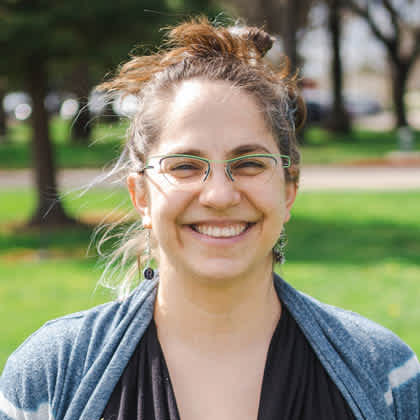
Lauren Kendall Brown-Berchtold, MD, FAAFP

Jason E. Marker, MD, MPA, FAAFP

Tamaan K. Osbourne-Roberts, MD, MBA, FAAFP, DiplABLM, DABOM
Transcript
Hello and welcome to CME on the Go. The podcast crafted specifically for family physicians and by family physicians. Whether you're seeking clinical insights, professional development, or simply a sense of comradery, you'll find it all here. Plus, you can earn CME credit with every listen. So grab a coffee, hit play, and let's embark on this journey together.
I am Lauren Brown Birchfield, and I am the program director for VCME Family Medicine Residency in Modesto, California. And I must, must must point out that we are recording this on March 20th, which is Match day. And so happy match to all of our amazing new colleagues in this wonderful profession. It's, it's been a great day already.
I will add my congrats to all the folks working in graduate medical education out there. My name is Dr. Jason Marker and I'm an associate director at the Memorial Hospital Family Medicine Residency Program in South Bend, Indiana. And we are also celebrating around here, a very successful match and eager to be on the go with y'all this afternoon.
And now to man Osborne Roberts, a family medicine, lifestyle medicine and obesity medicine physician from Denver, Colorado, who works primarily with the underserved. I'm also an early career scholar of happiness study, so let me wish the happiest of trails to all of you who have matched and are heading to various different places.
I'm also an occasional medical executive and policymaker and occasional standup comedian and a professional medical communicator. We get to see the standup comedy at various and sundry times in these episodes together. You never stand up for the comedy, but that's okay. We'll, we'll leave it alone. Oh, I think you, I think you're, I think you're trying to break into my field here, Lauren.
I know I'm bringing in the mom jokes.
So today we are talking about an important topic, as always, which is sickle cell disease, and some of the particulars that lean into the family medicine side of caring for patients with sickle cell disease. This affects about a hundred thousand people in the United States, but affects millions of people around the world.
It leads to a life expectancy of about 20 years less than might otherwise be expected within the United States, and that's separate from quality of life concerns. And so again, something we as family docs need to be familiar with and that we are going to be thinking about ways to care for and prevent complications of in the clinic as well as the hospital.
So let's remind ourselves really quickly. What is sickle cell disease, right? It's a hereditary recessive disorder that results from a gene mutation and that mutation leads to an abnormal structure of hemoglobin. That weird structure causes this sickling of our red blood cells, a, a sickle cell disease, and leads to those red blood cells not being able to flow smoothly through blood vessels.
Symptoms that result from that can lead to chronic hemolytic anemia, infections, pain crises, acute chest syndrome, and various sundry. Other issues. What's important to note is that sickle cell disease is separate from sickle cell trait, which means that the patient in front of us only has one sickle cell gene and therefore they don't have the symptoms of sickle cell disease.
'cause again, this is a recessive disorder and so you need two copies to actually lead to the disease.
Jason, talk us through who we might think is going to be diagnosed with sickle cell disease. Yeah, I think that's an important thing. I, I remember back to medical school and I feel like I left medical school believing that this was only a disease of African American patients, but as I've done a little bit more sort of like medical history reading about this, I mean, I, I remind myself that this is evolutionarily protective against severe malaria.
So any patient whose ethnic ancestry is from a place where malaria has been endemic. Should be considered at risk. This includes not just Sub-Saharan Africa, but also across the Mediterranean, middle East, India, as well as the Caribbean and parts of Central and South America. So for a little more statistical nuance there, African Americans have about a 10% risk of sickle cell trait and a one in 3001 start one in 300 to one in 500 risk of sickle cell disease.
While among Hispanic Americans, the risk is closer to one in a thousand to one in 1400 of sickle cell disease. So we're gonna see it not, not just in the group that we might remember from medical school being told to be worried about that, but in in folks whose ethnic heritage is, is really around the globe.
So we have to think about that. There's mandatory newborn testing in all states within the us but that's not all the people that we're gonna be seeing Obviously. It's important to be talking to parents of newborns regarding anticipatory guidance. So we're gonna be doing this newborn screen and some things that it might show us.
Those are, those are gonna be important for us to think about taking a good family history. We're meeting patients for the first time, thinking about their pregnancies and new well-child visits you're gonna do. People who are new to your practice maybe immigrated to the United States recently. Refugee status.
Take the good history, be thoughtful about where this disease can be historically speaking, and be ready to, to roll on into some thoughts around how do we anticipate trouble for these patients and help them, uh, be well. What other opportunities do you think we have regarding screening? Teman? You wanna take that one?
Yeah. Yeah, no, I'll, I'll talk a bit about that. You know, one of the things that we also don't always think about as family physicians in general, but especially family physicians who work in urgent cares and emergency departments might think about is the need for acute screening. So somebody comes in with chest pain, they come in their bone pain, they come in with shortness of breath, and there's a lot of things that can cause those.
But one of those things that, that we need to be thinking about is sickle cell and whether or not there's a role for acute screening in that. Place. And even if we're not necessarily doing the screening in, in, in that space, oftentimes we're going to get patients who are following up with us after either an initial or in some cases restricting practices, uh, a chronic, uh, history of, uh, sickle crises from the emergency department or the hospital.
And we'll, we'll need to really kind of be thinking about that and astute for that. I, it's interesting to think about the history of, of screening and diagnosed with sickle cell. I think that what you talked about, Jason, in terms of broadening the idea of, of who was at high risk for, for sickle cell trait and sickle cell disease, intellectual advancement, if you will, in thinking about this particular condition, and it'd be interesting to see in the future, is we move into kind of precision medicine and we start having a a, a wider range of people tested for a wider range of conditions.
You can kind of stop these rough cuts while thinking through these sorts of, of population risk issues is important. And one of the better tools we have right now in terms of the universality of a lot of conditions is even better to get away from that than say, well, let's decouple these sorts of things from thinking about them in a minoritized status or in a racialized status and things like that.
And moving into. A space where we can say, let's just see what's in somebody, what, what somebody has in terms of their overall risks in life. And that's going to be very individual and very different between people and, and as we move into precision medicine and personalized medicine and these things that we've been talking about for decades, and that is moving a bit slower, but hopefully we'll speed up with time.
I think it'll give us this wonderful tool to be able to think about people's individual risks in a way that's particular to them. And it avoids maybe some biases in thinking about populations. Yeah. You know, it's interesting. I find it easy sometimes to like rest on my laurels and say, well, we have mandatory universal screening in newborns, right?
So therefore, everyone who has sickle cell disease who shows up in my clinic will know about. That. And then I remember that I take care of a lot of patients who have moved from other countries that the number of people that we take care of are a wild and and magnificent, varied number of humans from all over the place.
And so I can't rest on. That universal screening, and it's important to just be remembering like, let's also just be a little bit crazy and say that our medical system isn't perfect. I know that's shocking to some of our people. You, you could imagine that a positive screen in a newborn. Is not known by the time that that newborn is like 20 years old, you could come up with a variety of medical and personal issues and circumstances that lead to that being an unknown thing.
And so we just need to have our radar up. I wanna take a second and talk about testing specifically. It's not my favorite thing. I don't really like having to interpret the tests that I get. Like spirometry interpretation really actually needs to be another podcast that we do because it's one of my least favorite things to do.
Hemoglobin electrophoresis is something that recently I've been in a place that doesn't actually perform the interpretation for me, that I'm the one who's getting the raw data. And I'm having to interpret it. And so, so let's just take a really brief overview. If you have a person who has a sort of typical adult hemoglobin and they have hemoglobin electrophoresis, what you're going to see is that HBA is making up 95 or more.
Percent of the hemoglobin type that is coming out on that hemoglobin electrophoresis. Hemoglobin A two is the second most common adult type of hemoglobin, and then HBF is considered a fetal hemoglobin for a person with sickle cell disease. 80 to 90% of their hemoglobin on that electrophoresis will be an HBS or an HBSS.
However, you might still have smaller fractions of hba two and HBF. If you have sickle cell trait, you're going to see an HBS fraction of around 40 to 45% with a pretty large fraction of HBA. That can be up to like 60%. And those are the patients who are then not having that sickling happen in their blood vessels.
And so. That might sound really boring, but again, if you're like me and you all of a sudden are being given a hemoglobin electrophoresis report and like, oh my God, I have to Google how to interpret this here. Quick overview is going to really help you from a sickle cell perspective. There are other nuances about like our beta thalassemias that, that I'm not gonna get into right here, but when we do a Thalassemia episode, I'm sure we'll talk about that more, Jason.
Okay. We've interpreted a test, where do we go from there? Thank you for that reminder, Lauren. I certainly do not remember all of those details from medical school. I, I would say I do remember that patients who have sickle cell trait, even though the vast majority of the time, they're fine throughout their lifetime and not really at risk of sickling symptomatically.
If you have a patient who's been at C level for a long time and they're gonna do something that puts them, especially under sort of oxygen stress, they're gonna go skiing for the first time way up north of Denver, then maybe there's reason that they could put themselves in a situation for some sickling.
So if you have patients who you know have sickle cell trait, there can be still a conversation you wanna have related to, you know, athletic activities and other times of stress that they may have on their body where hypoxemia could be a real issue for them. Thanks for that reminder. That's, that's a good, it's rare, but it is possible and, and does occasionally happen.
Alright, let's talk about preventive care just a little bit. You know, one of our biggest concerns with sickle cell disease patients is to prevent infa invasive pneumococcal disease. They're functionally asplenic, and therefore it's important that we're thinking about that in the context of preventive care.
So it's recommended that people with sickle cell disease receive prophylactic penicillin daily, starting at age two months until at least age five.
There's also an enhanced vaccine schedule for sickle cell disease patients. I'm not gonna go into all the details of what's in that enhanced vaccine schedule.
We're gonna put that in the show notes, but it has modifications for the timing and frequency of all of the pertinent childhood vaccines. Specifically, we're talking about concern for strep pneumonia, meningococcemia, hemophilus, influenza, hepatitis B, and COVID. So if you have patients and you're thinking about, oh, I, I didn't even know there was this enhanced vaccine schedule, that's gonna be the show notes.
It's really clear to have with those. We're not gonna into the details here, but grab that. It's got a nice outline for you. I'll say that I was sharing with you guys when we were prepping for this episode. I have never once prescribed or maintained penicillin in children with sickle cell disease. I can't remember having thought about give enhanced vaccines to sickle cell disease.
Patients like, like my experience with sickle cell disease patients has predominantly been in the hospital. Or right after the hospital. And you can imagine that for many of us, we're going to be having colleagues like hematology specialists who might be managing most of this, right? And they don't have to, they don't have to be the ones who are managing our sickle cell disease patients.
And there are a lot of people who live in a lot of places where they don't have access to specialists. And so we can, like, this is our wheelhouse. We can do this. We just have to have it on our radar. And so. That's my thought about those things, and this is a good conversation that elevates some of my understanding of that.
Right, and brings it to the level of recognition. The other place that I'll also argue that we can really lean in into our sickle cell disease care is with regards to anticipatory guidance and prevention. When we're thinking about pregnancy or contraception, I think I've shared on this podcast, I did an OB fellowship.
I did C-sections for the first six years of my attending career, and I care for a lot of patients who are thinking about wanting to be pregnant. Not wanting to be pregnant or in the middle of pregnancy. There are known risks associated with being pregnant while having sickle cell disease, like preeclampsia, preterm delivery, increased rates of maternal mortality because of the sickling that comes with some of that stress and various, I injury others.
And so even though I do a lot of OB care, including some things that I would not do if I hadn't done a fellowship, if you have a patient who's pregnant with sickle cell disease, that patient really needs to be managed by ob. MFM in consultation. However, we as FM can really lean into some of the preconception counseling pieces of the conversation, talking about these risks, saying that if our patients are interested in, in getting pregnant, that they probably wanna go talk to genetic counseling beforehand that is applicable to patients who might have sickle cell trait.
And not sickle cell disease as well, because you could theoretically have two persons with Sickle Cell Trait who then have a child with sickle cell disease. And so genetic counseling is a really great resource that we can get those patients over to.
My favorite thing to talk about is contraception for patients who are wanting to prevent pregnancy.
And so as a reminder, in sickle cell disease, we cannot be giving those patients estrogen because of risks of clotting. Instead, we can use barrier methods. Which have their own issues with usual use. And then progesterone only methods, if you like me, are a huge fan. And true ado of the CDC birth control chart, AKA, the US medical eligibility criteria for contraceptive use that has all of the Greens and Reds Lincoln show notes.
If you don't know that resource, it's amazing. You'll notice that continued use of Depo-Provera is listed as a number three. Which is a theoretical or proven risk might outweigh or usually outweigh the advantages, and that's just because of a, of a possible increased risk of venous thrombo embolism with that long-term use of Depo-Provera, maybe increase in in sickle cell disease.
All of that to say. This is a real area that we can spend a lot of time in. And I'm gonna have to stop talking 'cause I could go on for a while. I think you pretty much covered it, Lauren. I appreciate it. I well, I, I, I won't cover it anymore. Other screenings that we gotta do. Absolutely. There are a lot, and I'd forgotten most of these since medical school, but it wasn't really too hard to get back on that horse.
There's a lot of them, but they're very straightforward, and if you're taking care of patients with sickle cell disease, it's worth reminding yourselves what these are and making sure they get done because they really can impact the quality and quantity of life for these patients. So renal function, you wanna do some screening around that.
Patients with sickle cell disease should have an annual urinalysis to look for proteinuria. And you initiate an ACE inhibitor as soon as there's any microalbuminuria as they head into adulthood annual, her retina examinations for proliferative sickle cell retinopathy are recommended to be done. And so getting them attached with at least an optometrist familiar with sickle cell disease, if not an ophthalmologist would be really great idea.
Laser photocoagulation is sort of the treatment of choice if they begin to develop that proliferative sickle cell retinopathy. Pulmonary hypertension is a concern for our patients with sickle cell disease. So if there's reasons based on exam or symptomatology, you think some high pulmonary hypertension is developing, echocardiography is a test of choice for that, no surprise.
Not surprisingly. Also, assessment regularly for iron overload is sometimes needed. Many of these patients get chronically transfused along the way in their lifetime, so being able to refer for chelation therapy when indicated by iron overload is a, is a good thing to do. One that that I. Uh, I, I don't, I don't even if I remember hearing about this the first time in medical school, but doing annual transcranial doppler screening for patients with sickle cell disease age two to 16, looking for signs of, of trouble in there, some stroke risk source of things, especially if there's been long-term transfusion therapy.
This is a, a test that you'll want to have done yearly for young people who have sickle cell disease as well, so. There they are. Renal function, ophthalmologic screening, pulmonary hypertension, iron overload, and then that annual transcranial doppler in kids age two to 60. That's a list. Yeah. No, that's.
That's a lot of tests. Well, yeah, but you had 'em on one hand and it's gonna be in the chart of your patients who have sickle cell disease. You're gonna open up your chart. It's gonna be right there. Have I done this this year? We can set up our systems of care to make sure we don't miss those things for our patients.
I, I'm sorry, Jason, I'm going to ruin your one hand here by talking a little bit about prophylactic therapy and there will be other tests. So, okay. Well, so the longer the short is, is prophylaxis for sickle cell is a very common treatment. The prophylactic agent is hydroxyurea. Typically. It's something that a lot of family docs don't have a lot of experience in using.
I, I'm going to, to split the difference between Go Family Docs here, check out the T-shirt. You gotta see this. Ooh, nice. Yes. What a, what a day to wear that shirt too. Again, in, in indeed, all of our new matched family medicine docs. Indeed, indeed. And I'm gonna say that while we, this is actually a, a treatment we can definitely manage, it's important to listen to your insomnia assigned and by insomnia assigned, I mean, you know, if you prescribe this treatment, are you gonna be up at midnight thinking about it?
And if the answer. Answer to that question is yes. Then best to do some additional education for yourself, like listening to a podcast like this, or consider whether or not you want to bring in a hematologist colleague if you have those options available. If you do, it's a great partnership to have, but at the same time has been mentioned.
Previously, like, you know, we all live in different places and patients have access to different resources, and we don't always have that option. So understanding how to utilize this medication is important for us. First thing to note about this medication is that it is a, a really a, a traditional form of chemotherapy.
It's actually used more commonly in the family medicine mindset, I think, for treatment of a chronic myeloid leukemia, but in addition to its effect of potential myelosuppression. Acts also to increase the amount of fetal hemoglobin that gets expressed in cells. It's kind of a workaround. You won't get normal adult hemoglobin, but you will get fetal hemoglobin, which functions.
Uh, well as a substitute hemoglobin and bypasses the, the amount of hemoglobin s really leading to decreased likelihood of probability of sibling. However, in using the medication because it is utilized for intended myelosuppression is really important. While. Somebody takes this medication to monitor for myelosuppression that we don't want.
In this case you, so you'll want a CVC. Obviously look their white blood cell counts. You'll also wanna look at platelet counts, and interestingly enough, you'll want to look at MCV. You know, this is one of those things that'll help you to understand if the medication is working, if CV goes up, and so, uh, am CV.
It's not just for iron deficiency anemia anymore, which. Really. So that being the case, you know, you'll wanna look at that reticular side count, of course. So you, uh, to, to, to monitor that. And you'll actually also want to look, uh, for, so, uh, hepatic function panel or CFP is not a bad idea. You wanna look at these, uh, labs fairly frequently, every two to three months and, and really have that as the monitoring schedule.
You don't just kind of wanna put somebody on this. Believe it alone. What I say is this is a medication that has kind of a level of intensity of use and monitoring, like methotrexate. If you're comfortable using methotrexate in your practice, you'll probably be comfortable using hydroxyurea. If not, seek out specialists, so you'll help with your colleagues.
Starting dose, usually about 15 milligrams per kilogram. You're usually not clinical outcome. Another monitoring lab that will be helpful. In determining titrations is taking a look at actual levels of peoples and fetal these sorts of things. As you're titrating the medication, there are places online you can take a look to see what the specifics of, of those regimens are.
We'll go into them here. Again, little complex. Some of us will be comfortable with this, some not. So, uh, do your best and make appropriate determinations, and if we know things. Nothing else. Family docs are the best docs in the system at knowing what we do know and knowing what we don't, and getting help when we do need it.
And being amazing, gigantic unicorn cowboys when we don't need it. Or cowgirls. Cow people. Cow. Cow. Cow. Cow. Persons. Cow. Cow. Cow. Persons. Cow. I have a question for you, Tam. I have already said how I have not had. Routine care of sickle cell disease on my mind. And can I go back to the dosing that you just talked about?
We start at 50 mgs per kg, but we don't go above 35. Normally. Normally we don't go above 35. And I, I would say that if you are getting and running up, I guess at 35 and it seems like it's not quite working, that's definitely an indication to call in, uh, a hematologist and say, yeah, what do you think about this?
But that's, that's the usual range for, for dosage. Am I? Am I misunderstanding? The math isn't 50 greater than 35? No, 15. Sorry. One fives. Thank you. Okay. Alright. Alright. I told you I'm not used to this. This is super helpful. No, no, no. This is helpful. One five dash three five. Got it. Okay. Thank you. Thank you.
That's super helpful because I, I have worked in some very rural places and have had very limited specialists available, and so yeah, like the, the data on hydroxyurea, the, the consensus statements that are out there. Talking about how this is significantly underutilized. Yeah, yeah. And so if we can either be comfortable prescribing or be comfortable recognizing like, Hey, we gotta get you to someone to get this medication.
I was shocked to see how young that starts at nine months of age. That's really incredible. Absolutely. Dosing recommendations go all, all the way down to around six months of age starting, so Wow. Wow. A huge, huge game changer. Yeah, that's wild.
This has been a great conversation, guys. What some of our listeners might recognize is that we are not doing a deep dive into things that are putting someone in the hospital like pain crises or acute chest syndrome, and we're doing that really intentionally that.
Is a whole other podcast, and we're gonna plan on doing that so that we can do, do justice to those conditions rather than sort of brushing over both the clinic-based care and the hospital-based care. So don't worry, that's coming. We're not just leaving it out. It's, it's just, it's just not right now. And so I think let's move towards closing.
My, my big reminder here is that obviously none of this is gonna be in a vacuum. We're caring for our. Patients in general, but our sickle cell patients in particular with our specialist colleagues. Colleagues, particularly hematologists, potentially some case managers, our inpatient care teams, pain management specialists, but we as family docs do play just an essential role in the care and coordination of that care for our sickle cell patients and, and can be the linchpin across the lifespan.
And so I think that's an important thing to remember. Any other last thoughts from y'all before we close? Nope. Nope, we're good. That was great. Quick and easy. We're gonna move into gratitude, and I'm gonna be redundant and say how grateful I am to be here on Match Day talking to y'all and celebrating just across the country with everyone.
Yeah, I can second that and just say that right now, all across the country, there are young people who are getting ready to pack up and sometimes move across the country. Sometimes they're just gonna walk across the street into a hospital they've been doing a lot of training in and start their residency this summer.
But. All of them have decided that family medicine is the way to go, a field that allows them to bring value to the communities they take care of. And I just have so much gratitude for the the process and the way that it allows folks to get where they need to be to get the training and the next step along the way to becoming a great family doctor.
Yeah. No, I, I am gonna do a two-parter here. One is that I ended up in family medicine. There's a lot of people who know me know I scrambled. I was not gonna be a family medicine doc initially, and th that would've been one of the bigger mistakes in my life. Had I not been a family medicine doc, I ended up here.
I found a real home. It's probably telling that my entire med school class thought I was trying to match the wrong specialty, that I was supposed to be a family medicine doc. She just to them upfront and it just happened to work out. So I'm gonna, and also to be redundant, I say I'm happy to be. On the go with y'all.
Oh, you've got your cap. That's so great. Amazing. I still have my See me on the Go Cap at home too. That's great. I'm, I'm bringing it to, to one of our next recordings. All right, y'all, that is all the time we have today. Thank you for joining us for another episode. We appreciate you joining us on this journey to elevate family medicine to continue this journey.
Stay tuned for new content brought to you twice a month with see me on the go. Visit the show notes for instructions on how to claim CME credit and find additional resources that we've talked a lot about for today's episode. Until next time, sir, from your values, prefer to your vision and happy match day y'all.
See you next time on CME on the go. A production of Inside family Medicine.
References and resources
Disclosure
It is the policy of the AAFP that all individuals in a position to control content disclose any relationships with commercial interests upon nomination/invitation of participation. Disclosure documents are reviewed for potential conflicts of interest and, if identified, conflicts are resolved prior to confirmation of participation. Only those participants who had no conflict of interest or who agreed to an identified resolution process prior to their participation were involved in this CME activity. All individuals in a position to control content for this session have indicated they have no relevant financial relationships to disclose.
Disclaimer
Copyright 2026. AAFP. The views presented in this broadcast are the speakers own and do not represent those of AAFP. The information presented is for general, educational or entertainment purposes and should not be considered legal, health, financial or other advice. AAFP makes no representation as to the accuracy or completeness of the information and is not responsible for results that may arise from its use. Consult an appropriate professional concerning your specific situation and respective governing bodies for applicable laws. Reference to any specific product or entity does not constitute an endorsement or recommendation by AAFP unless specifically stated otherwise. AAFP and the AAFP logo are registered trademarks of American Academy of Family Physicians.