
Coverage and care: What family physicians should know about disability insurance
Show notes
On this episode of Inside Family Medicine, you’ll hear from Jered Hunt, MBA, president of AAFP Insurance Program, and Eric Muehlbach, disability insurance manager, about why disability insurance is a critical part of a family physician’s financial plan.
They emphasize protecting a physician’s greatest asset, future earning potential, by securing coverage early to lock in insurability due to intensive medical underwriting.
The discussion covers how to start by reviewing existing employer benefits, common limitations such as own-occupation caps, monthly benefit caps, offsets, taxation of employer-paid benefits and poor portability, and how personally owned policies can supplement coverage and travel throughout a career.
Episode hosts

Emily Holwick

Jered Hunt, MBA
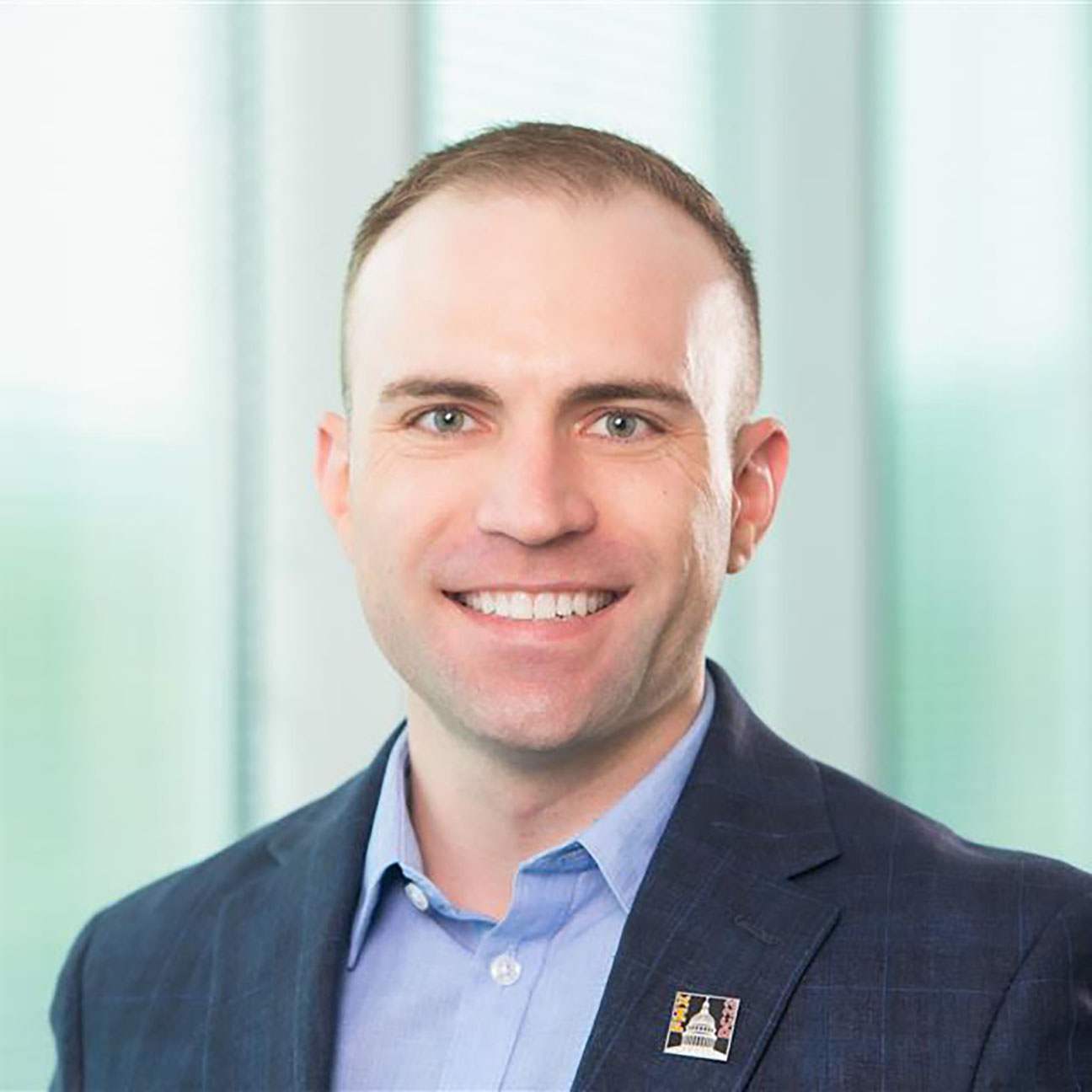
Eric Muehlbach
Transcript
Welcome to Inside Family Medicine, where you hear from leaders and peers in your specialty while learning about new tools and resources. I'm your host, Emily Wick, a member of Team AAFP. Today's topic is one that's vital for every family physician planning for retirement, and ensuring your financial security.
We're joined by Jared Hunt and Eric Nebach from AAFP Insurance Services to talk about critical elements and strategies for disability insurance. So welcome to both of you and thanks for being here. Very thanks for having everyone. Yeah. Yeah. So first I'd like to start by just having you each explain your roles with AAFP Insurance.
I'll start with you, Jared. Thanks again, Emily, for having us. My role with the A FP Insurance program is as president and my responsibilities are to oversee our various programs and lines of business, and I also am a financial advisor and work directly with our members for planning as well as the growth side of the and financial plan investing.
Okay. And Eric. So, yeah, disability insurance manager. I've been with the A FP Insurance Services for the last 10 years doing disability insurance and practice overhead coverage and advising the members on those two lines of business specifically.
Well, I would like to hear both of your input and perspectives on why family physicians need disability insurance, Jared.
So when most people think about their financial situation, they think about growth and investments. And, and that is extremely important, but there's another key leg to a good financial plan. And that's the protection side of the business. The protection side of, of what would happen, right? That's where disability is so important, especially for physicians.
The biggest asset one has is their ability to earn income, and our members are, do have the potential to earn a a, a very good living over a long period of time. Disability insurance is key to. Protecting that in the event that something were to impact your ability to work. So fundamentally, disability is a key component of a good financial plan.
And Eric, what would you say? This is an area obviously you work very closely in. Yeah, so these family physicians, you all have been to school for countless years, spent a lot of money investing on yourself. You want to be able to protect your earning potential, not just what you're capable of earning right now.
It's what are you going to be making in the future. We want to lock in your insurability at the time of the application as young as we can because things can happen as you get older. You're gonna develop medical history and. And disability insurance, they do look at you head to toe. It's a little bit more intensively underwritten.
So it's a very important, it's the, the first step I think coming out of residency is you gotta get that knocked out, just get it behind you, and then you have that peace of mind going forward.
So let's start at the beginning. What does it take to get disability insurance? Where do family physicians start?
So, yeah, they start with us, of course. And, and what they're gonna want to do is, is look at what they have in place first, what they're going to have access to at the, at their future employer, if they're gonna provide coverage. And then it's going to be, we're gonna explore the options out there. We're gonna help steer you in the right direction, arrive at the appropriate coverage amount.
We'll talk through it with you and, and then we'll help you get an offer from one of the carriers. So there is that medical underwriting part of it as well. And Jared, what are some of the key considerations for family physicians when you're evaluating their current or potential coverage? Very good question.
I'll answer it in two parts, right? First of all, for our private practice physicians or DPC. Those physicians that do not have employer provided benefits, that's a pretty straightforward equation, right? We're gonna talk to them about their overall situation, find out what is a comfortable level of protection for them, both based on need of how much monthly benefit or as well as budget right there.
There is a cost to that, but for the majority of AAFP members that are employed, it's a little more complex. We do need to take a look, and Eric and his team do a great job of this. They need to take a look at what they have currently. Their existing coverage through their employer, because there are some, some facets to that that can have an impact on what one wants to do.
The key is to understanding what they have. So for example, we have seen a, a downward pressure on employer provided benefits over the years, right? Everybody's looking to save some money. Sometimes that has moved. The features of products, for example, own occupation limits, own occupation, is a key consideration for physicians.
Sometimes they're putting a two or three year cap. On what they would pay for own occupation before the product would revert to any occupation. Something that you wanna know inside of your plan. Sometimes there are monthly caps on what an employer provided policy will pay. So if they might max out at a level of, say, 6, 7, 8, $9,000 per month, that's not necessarily the 60% of a physician's income that most people think they have.
That's something that, that Eric and his team studies, portability is a big one when you leave an employer, because most people do not stay with the same employer Yes. For their whole career. What does that look like if something has happened to you medically? That could impact your potential to get additional coverage.
Portability matters and portability. Typically with employer provided insurance is not that great. The terms will change. Yeah, the terms change. Oh, and so those are all things that we study, help educate people to understand what they have. Then the appropriate decision can be made. Should I supplement this?
Or should I not?
Eric, how do you determine an appropriate level of coverage with a client? Can you give us some examples that might fit different situations? Yeah, so a, a resident coming out, they're, they're in their first job. They're looking at those employer provided benefits, assuming they're going to have them, not every, like an FQHC.
A lot of those don't have those employer provided benefits. So they'd be looking at probably a 60% coverage on their gross income level with one standalone policy. We can't always pair two plans together. And achieve roughly 75% total coverage on your gross earnings. Those benefits are paid out tax free.
So when you factor in income tax, deferred income, things like that, the, the percentage of the earnings you're taking home looks a little bit higher than 75% or 60%. But those are kind of the, the two levels you, you want to achieve at least 60% coverage in a true 60%. Like Jared said, the employer plans are not gonna provide a true 60%.
They're gonna be incorporated with other things like social security. There's offsets and. A lot of things in those contracts that reduce the amount you actually receive from those plans. So getting that personally owned protection on the side is going to travel with you your entire career. That is the, that's the, the, the goal every you found that most people don't, don't know that if their employer provided benefit was ever needed in the event of a disability.
Most people don't know that those benefits are taxed because they did not pay the actual premiums the employer did. So that has a, a, a downward impact on the coverage somebody actually has as well.
Yes. Okay, that's good to know too. So, Jared, what should physicians be looking for in an advisor to work with?
Obviously you, you want someone that you can trust. I mean, this is a big decision. Yep. And investment in your future. Absolutely. So I think the way I look at this is. Our industry insurance. There are a lot of product solutions out there, and there are a lot of organizations and individuals that can provide a product, just sell a product to, to fix something.
Sometimes that's appropriate, sometimes it's not. The biggest thing that I would say to somebody is find somebody that you can trust. Find somebody that has your best interest in mind. For example, we, we take the, the tact of being a fiduciary across the board, whether we're talking about financial planning and growth.
Or whether we're talking about protection and insurance. We want to evaluate the market so people understand here are the pros and cons of different options. So finding somebody that you can work with on that level versus just saying, Hey, I need X, Y, Z coverage. Get it for me. So consultative versus transactional, I think.
I think that's important. You know, I think. Looking at an organization to partner with and their longevity, and potentially any succession. If you're working with one individual, what does it look like? If that individual is no longer there, who's going to be responsible for taking care of my product and policy?
I think that's a key consideration. You know, of course we're, we're biased for, for our situation, our affiliation with the AAFP. We're owned by the AAFP Foundation and all the revenue generated by our agency goes back to the foundation. So, you know, we're, we're very pleased with that, of course. So looking for that affinity.
And there are other great organizations that do that as well. So that would be, make sure they work with family docs so they understand what, what family medicine physicians needs.I am wondering if either of you can share an example of when having disability insurance greatly helped an AAFP member, where you really saw that benefit and why it was so important.
Not to dodge that question, but I'll, I'll answer it maybe at a little bit higher level. Okay. And, and then, and then maybe Eric can can speak to it as well. We've been around 75 years, so we have thousands of members insured in our, in our operation. And therefore there are a lot of claims ongoing. Right.
And, uh, claims are tough. You know, it's, it's, it's a sad situation when somebody's having to deal with something like this. And, and I'm, I'm very proud of our organization. As well as many other insurance organizations out there that deliver on the promise that they made when they accept that premium.
From a, from a person who's securing those products, those, that's big. So maybe not a specific example, but just know that there are a lot of ongoing claims that we deal with constantly and it is a, you don't wanna see somebody go through a bad situation, but it's rewarding to see the help that that can be provided.
We're, we're constantly updating our plans and then our offerings to better suit and to pay out for more kind of situations, more nuanced things, and improve the, the terms of the coverage that they have in place. So student loan forgiveness was a recent ad and. We've had a few other, we've extended the benefit period to age 72 instead of age 67 and, and there's things of that nature that we are, we're improving to hopefully get better protection for the members.
Student loan forgiveness is a big one. Yeah, right? Yeah. Anybody that would have a disability prior to age 0, our product provides a $250,000 benefit to help deal with student loan payments. Oh, outside of your monthly benefit, it's an, it's an an add all. Yeah. An yeah. We haven't had that happen yet, thankfully.
Right. And hopefully we never will. For, for their sake, for our members' sake. But a, a awesome benefit that could be there if it's needed. Yeah, absolutely. We know family physicians certainly have a lot of student debt and, and that is a burden for a lot of people, so that is a great benefit. I'm sure you've piqued a lot of people's interest about disability insurance, maybe even younger physicians who haven't thought about it because they think, oh, I don't need to worry about that yet.
But what advice would you give to physicians at any point in their career who are considering getting disability insurance? What advice do you have and why do you encourage them to get it? Well, one in five of today's residents coming out are going to experience a disability at some point in their career, whether that be short term or long term.
So getting something that you personally own and control that is individually underwritten, the terms are specific to you is incredibly important that it's going to be with you your whole career. You can't always trust the employer provided coverages, so getting that coverage wherever you get it, but get it.
I think I would say just get organized. Understand what you have, if you're an employment situation, what they provide or what you maybe you already own or maybe you bought it 10 years ago when you fresh came outta residency. So the way I look at it from a financial perspective is I go see my physician every year.
I get an annual physical, right? And why do we do that? We do that as a touch base to check in, make sure. Baseline things are good. Yeah. And then obviously in an effort to, to mitigate surprises, that's exactly what we do on the, on the insurance and financial planning side. And disability is one of those products you kind of have to do a little bit of maintenance on.
Yes. As things change in your career. Absolutely. So understand what you have so that therefore if something comes up from a surprise, you're ready for it and you know what's going to happen afterwards. Yeah. Thank you so much. Yeah. You've shared so much great information. I know this will be helpful to our members at any stage in their career and hopefully.
They'll be able to work with you, whether it's you or other organizations, to make sure that they're securing their futures. So absolutely. Thank you all so much for having us. Appreciate it. We appreciate it.
And to our listeners, if you'd like to learn more about disability insurance and AAFP Insurance Services, we have links for you in the show note.
If you enjoyed today's episode, let us know by dropping a line to a AAFPnews@aafp.org. Be sure to share the episode with your followers on social media and tag the AAFP.
Resources
Disclaimer
Copyright 2026. AAFP. The views presented in this broadcast are the speaker s own and do not represent those of AAFP. The information presented is for general, educational, or entertainment purposes and should not be considered legal, health, financial, or other advice. AAFP makes no representation as to the accuracy or completeness of the information and is not responsible for results that may arise from its use. Consult an appropriate professional concerning your specific situation and respective governing bodies for applicable laws. Reference to any specific product or entity does not constitute an endorsement or recommendation by AAFP unless specifically stated otherwise. AAFP and the AAFP logo are registered trademarks of American Academy of Family Physicians.