
IFM | Direct primary care: Building autonomy, access and sustainability
Show notes
AAFP Vice President of Practice Advancement Karen Johnson, PhD, welcomes Maryal Concepcion, MD, FAAFP, a full-scope family physician, founder and CEO of Big Trees MD, and host of the My DPC Story podcast, to discuss direct primary care (DPC) as an evolving practice model for family physicians.
Drawing from her own transition out of corporate medicine, Dr. Concepcion shares how DPC has allowed her to build a sustainable practice centered on physician autonomy, meaningful patient relationships, and comprehensive, community-focused care.
The conversation explores Dr. Concepcion's journey into family medicine and direct primary care, practical considerations for launching and growing a DPC practice, strategies for managing financial and operational challenges, and the flexibility DPC provides to meet community needs. She also discusses common misconceptions about direct primary care, improving access to care in rural and underserved communities and why supporting diverse practice models is essential to the future of family medicine.
Episode hosts
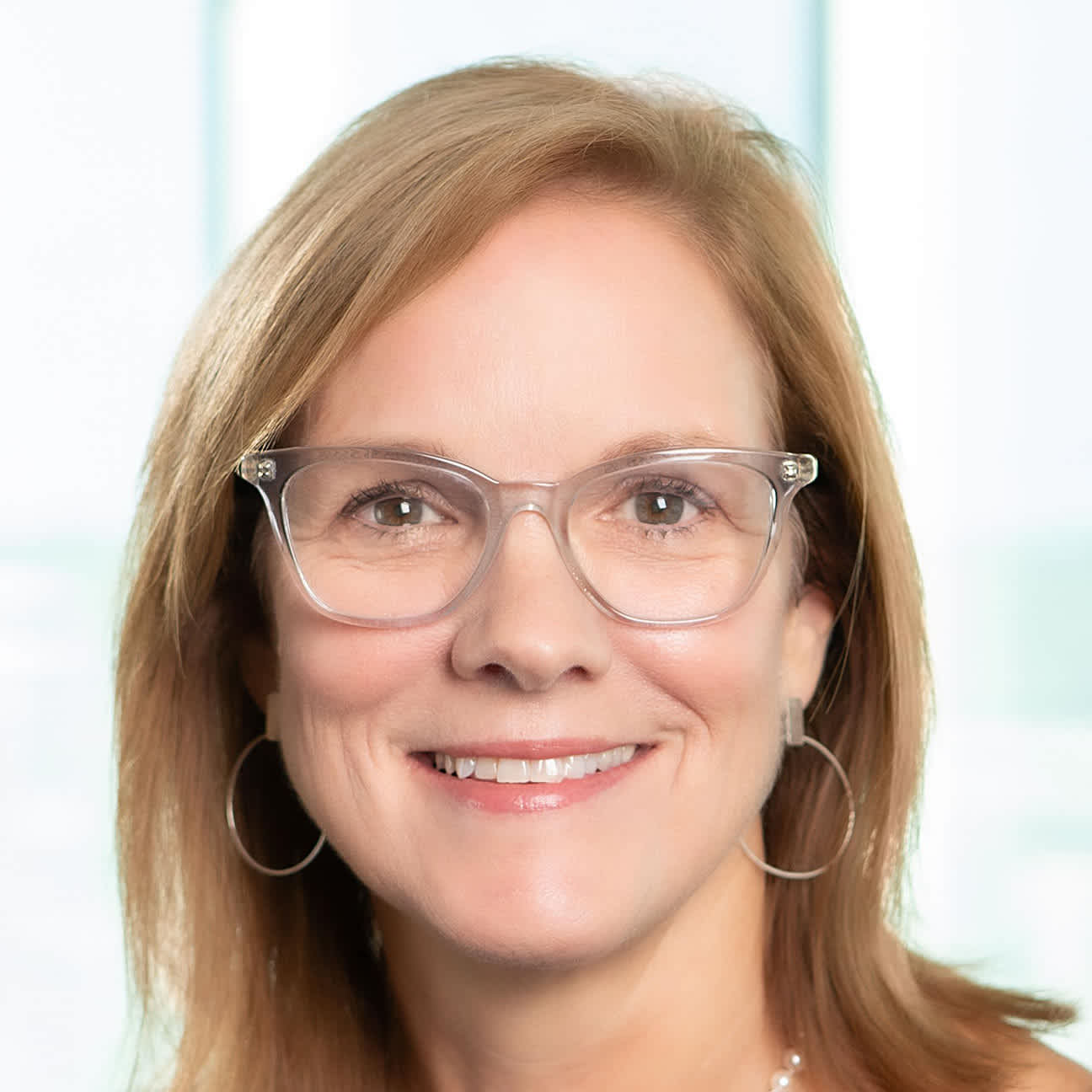
Karen Johnson, PhD
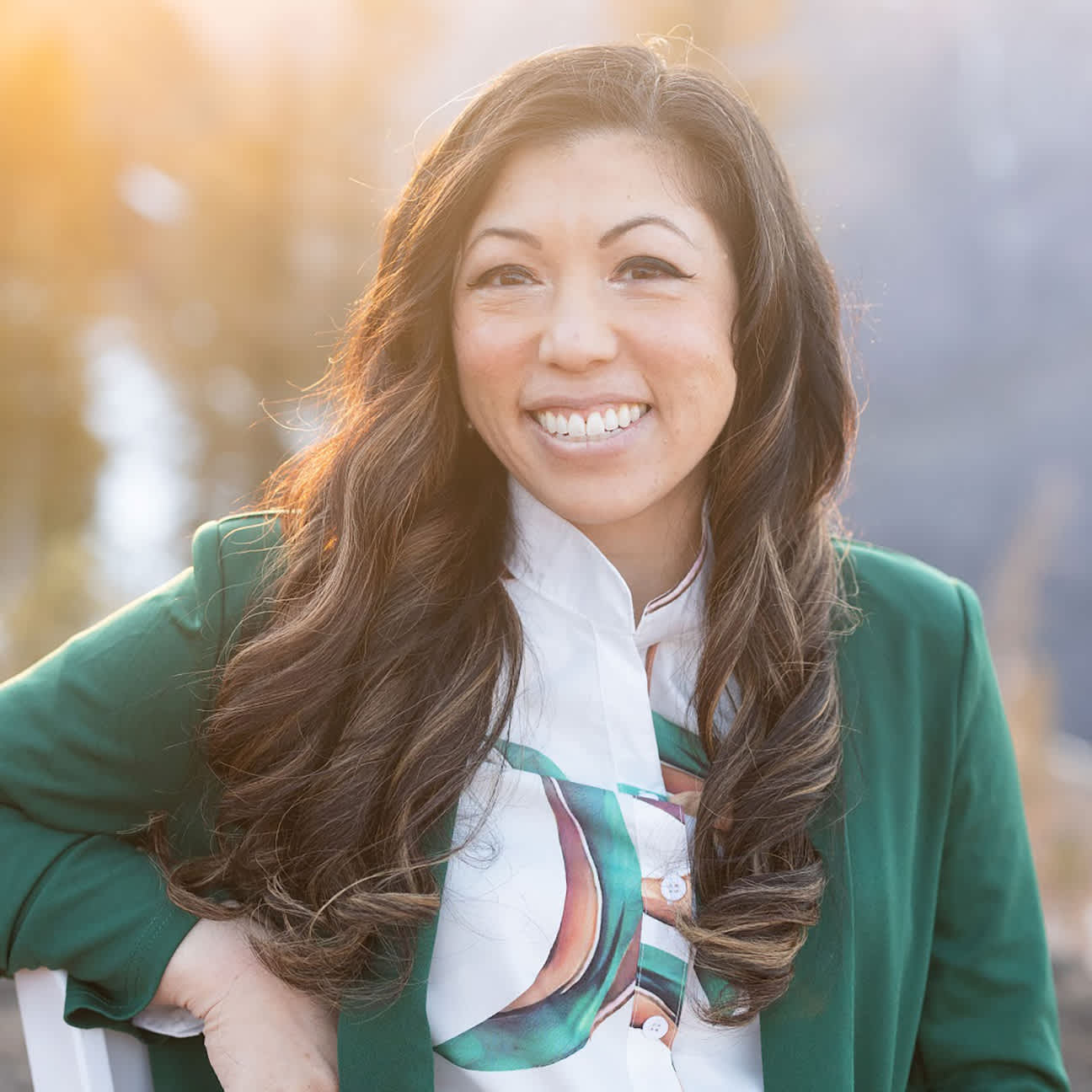
Maryal Concepcion, MD, FAAFP
Transcript
Welcome to Inside Family Medicine, where you hear from leaders and peers in your specialty while learning about new tools and resources. I'm your host, Karen Johnson, vice president of practice advancement at the AAFP.
We're here to talk about direct primary care, which isn't a new practice model, but one that has picked up steam definitely over the last several years as physicians look for ways to practice more autonomously and spend more time on patients and less on administrative tasks associated largely with insurance.
The model is positioned for further growth given more flexible rules that allow for the use of HSA funds to pay for DPC fees. The AAFP has seen a growth in DPC from around 3 to 5% in '21 and '22 to approaching 10% more recently. Our goal today is to share some of the best ideas to steal and to implement for those working towards sustainable success or opening their own DPC practice.
There are few more equipped to help us do that than AAFP member Dr. Maryal Concepcion. Dr. Concepcion practices full-scope family medicine as the founder and CEO of the direct primary care practice Big Trees in Arnold, California. She talks about her journey to where she is today through numerous speaking engagements and educational programs, as well as on her own podcast, My DPC Story.
She's interviewed and mentored hundreds of physicians who, like her, are tackling some of the biggest problems facing physicians and patients with the direct primary care model. She's a former speaker at the—well, former and probably current speaker at the annual DPC Summit, which brings together hundreds of physicians and others supporting the direct primary care model.
She has advised AAFP on various DPC projects for members over the years, and we're so grateful for her taking her time out of her busy schedule to join us for this conversation. Welcome, Dr. Concepcion. Thank you so much for joining us.
Thank you so much for having me.
Yeah, you bet. You bet. I'd like to start with the opening question that we like to ask all of our family physician guests on the podcast.
Why did you choose family medicine?
So going back to undergraduate, I remember that I was very passionate about pediatrics at one point. I love kids because my younger cousins, I would help take care of them as they were growing up. And my youngest second cousin has Down syndrome, and he was benefiting from occupational therapy, physical therapy, speech therapy, music therapy. And I saw this amazing child who was blossoming with the help of these different therapists who were helping him, you know, learn how to be confident in the world. And so, I was really obsessed with pediatrics until I got to undergrad, and then I was doing different volunteer opportunities, through in-home physical therapy, private practices, child life at UC Davis, the pediatric ER, Shriners in Sacramento.
And what I found was that the people that were sharing the stories clearly, especially if, you know, the kiddo is a baby, was the parents and the family. And so for me, it was those experiences in pediatrics that made me shift towards, I actually like talking to the entire family to get the whole story about whoever the patient is in the room.
That's how my journey shifted from pediatric-focused to family medicine-focused. And that was definitely reinforced during my amazing first rotation in family medicine third year at Creighton during medical school, where I was lucky enough to go to rural Nebraska, where Dr. Tim Blecha, who graduated Creighton 1979, was this amazing person who is the epitome of a full-scope family medicine doctor, who is also so invested in the future of family medicine and teaching others. And it was quite a shock, but also a good shock when at 6:30 on my first day of rotation in Superior, Nebraska, he said, "Yeah, we're going to do a scope."
And so that's how I was inspired also to do really full-scope family medicine, and I was doing colonoscopies up until 2019 even because of Dr. Blecha.
Oh, I love that. You know, there's a couple things that we often hear when we ask that question. One is someone inspired you, there's a mentor, there's a person who's been inspirational to you. But also the relationships and, you know, I'm kind of a policy nerd myself, and I do lots of definitional things.
We talk about family medicine practiced in the context of families and communities, but your story really illustrates that, and I love that so much. Thank you.
So Dr. Conception, tell us about what prompted your move into direct primary care and how that led to all of the work that you're doing to really be an advocate for that, especially through your own podcast, My DPC Story.
Yeah, thank you so much for this question. I will say that I'm continuously learning, so it definitely is a journey similar to family medicine where we're always learning. What happened was that My DPC Story, it's almost like a phoenix-type story. I have a 5 and an 8-year-old, so we're very much into the Harry Potter lands right now.
When it comes to my experience as a physician in a corporate practice model, unfortunately what happened was my husband, who's also a family physician, and I were 28 weeks pregnant with our second son, and unfortunately, the corporation that we were working for at the time told us in an emailed letter that unless we had signed a particular contract that they were presenting to us, we would be fired in 28 days.
It's very painful when I think of that still. I think this is absolutely part of the fuel that pushes me forward in, in My DPC Story and doing the podcast and highlighting my colleagues' stories because I didn't know that... it's sort of naive to say, but I did not know that physicians, in my opinion, are so undervalued at times in corporate medicine that the person who's actually doing the care is not actually valued, and this is represented in this letter that said, "You know, if you don't sign this contract, we're going to fire you."
But the contract contained things like, "If you work for other people, we own your money," exclusivity. "We will never renegotiate your rates," even though CMS rates for reimbursement had gone up, and so we were locked into a rate for perpetuity. When it comes to policy, you know, this is prior to the law in California AB 890 passing where a nurse practitioner with 4,600 hours is basically an unsupervised doctor in the state of California.
And that plays into our story later but, you know, when it comes to policy, non-competes thankfully are not enforceable in California and so at that point, already having gone down the road of administrators telling me that everyone had to have an A1C of 7.1, that everybody had to do this many minutes per visit.
The frustration that I was feeling around the anger of my patients who loved me but hated the hour-and-a-half waiting times in the waiting room, the frustrations that I had when I could have done something but I didn't have the time to, so I had to refer out. All of these culminated along with the fear of me losing my health care insurance coverage while I was pregnant and losing access to my own obstetrician who also had trained us in residency.
And so I worked to optimize the income that I could make before I had to take off time to deliver our son. And then I took seven months of unpaid, mostly unpaid maternity leave, to basically plan my DPC. And then the day that I went back to work, I handed in my one or two sentence, "I quit" letter.
So that was my experience in terms of transitioning out of my practice. Very traumatic as you can hear. But when it comes to the podcast, what had happened was I was sensing that the future of me practicing in corporate medicine or an employed fee-for-service practice was not going to be tenable.
So I had actually started the podcast prior to opening my doors for DPC in 2021. The podcast I started in September of 2020, and that was right after the time I had been given this letter that was threatening to fire me. And it was and it is a manifestation of my righteous rage and the power of a family physician who's passionate about this career, who's passionate about this opportunity to serve others, and who's passionate to protect that patient-physician relationship.
So you've left corporate medicine, you've started a podcast, and then you opened your DPC practice. So tell us, as you're opening, what that felt like and what kind of decisions you were making in your practice, and what do you think you got really right at the beginning, and what did you learn from in those early days?
So I would say that in terms of opening, because I had started interviewing my colleagues and friends on the podcast prior to me opening, and I had attended multiple summits, including the AAFP co-sponsored DPC Summit in 2019 in Chicago, from the very first seeds in my head of starting a DPC practice on my own, one of the things that I kept always at the forefront and continue to keep at the forefront is there are other people who have done this before me, and there are people who are opening with me, after me, and together we can learn how to optimize physician autonomy, scope of practice, as well as protecting the physician-patient relationship.
So it is definitely my honor to be able to have conversations weekly with my colleagues about direct primary care and how people made their own transitions, how they're succeeding in business, and how as physicians we're learning how to do business even though most of us don't have MBAs. And so I think that in terms of the things that I did right, I think that one, was present with all of the frustrations, and you can still hear the trauma that I experienced from my transition.
But I think just being present in a space where you no longer have to be told from 8:00 to 5:00, or really 6:30 to 6:30 at night, you need to be doing these things, and if you don't do these things in 72 hours, you won't get paid. When you have that stress relieved of your body, of your mind, of your soul, for me, what happened was that I was able to, one, be more present for myself and for my family and my patients, but then also I was able to receive the words and the wisdom of my colleagues in a different way.
And so to me, what that manifested in is this sense of pure freedom and joy of this is my practice that I'm building. How do I want to build it? And so the person in me who's always loved graphic design and who loves talking with other people and who loves the specialty of family medicine because it's literally the opportunity to get to have a conversation with a person about something that is very, very scary, one's health. Or it can be very scary, one's health. It's so beautiful when you can do that without the extra pressure of you have to see a certain number of heads per day in order to make the amount of money that you're used to making
Yeah, so the joy in taking care of patients is what it's really all about, and we hear that so frequently.
It's amazing that you've been able to carve out a space for you to do that. But whether it's an entrepreneurial energy that pushes someone that direction or, in your case, righteous rage that pushes you in the direction of making, it's scary to take that first step, I'm sure. So can you talk about some of the financial or operational decisions you've made that really help your practice feel more predictable, more safe, and a better choice for you, and sounds like your whole family?
Yeah, and that is true. I will put in here, as I mentioned, AB 890 in the state of California, and this is very common where nurse practitioners in most states are able to practice unsupervised. But when it comes to my husband, he was actually let go from his practice. Because he stayed. He signed the contract that I refused to sign so that we could have an income while I was transitioning over to DPC. And so to protect our income and have money to pay the bills, he stayed on up until 2023 when he was told by the corporation that the clinic was going to close.
The community, because we live in a town of 4,000 people, the community reacted in, obviously, a very frustrated way. And just to put a note here also, he and I, since 2015, are the only physicians who you can see in this entire county if you're pregnant, if you need a procedure.
We're the only full-scope physicians in our entire county of 58,000 people, since 2015. And so when our community was threatened with the loss of losing the clinic access, they were up in arms. But then the corporation said, "Okay, we hear you. We're going to keep the clinic open, but we're going to a non-physician model."
So the corporation, the way I like to say it, is the corporation denied our community access to a full-scope family physician who takes insurance by eliminating his role and going to a non-physician model. And so the statement of that this is our entire family, 100%. It is very scary when, especially both breadwinners are affected and you are looking at, how do I still maintain, how do we as a team, maintain food on the table, paying our electricity bills, doing all of the things we need to keep the business open?
The way I opened Big Trees MD was that I opened as a telemedicine home visit model to start, and this is an option. Again, I was thinking about, you know, this is my practice, how do I want to build it? And I had a newborn baby, as well as it was during the pandemic, so I had no daycare for our 2-year-old at the time.
It was beautiful to be able to sit with a baby, have some movie or, you know, activity going on on the side as I was taking care of my patients via telemedicine. And then if my patients needed to be seen, I would work with my husband, who was doing only part-time when he was let go from his position.
I would work with him and around his hours to make sure that I could go to my patients' homes. And so that really helped with keeping the overhead low to start with. There definitely are some caveats too, like where you're practicing in California, which county you're practicing. There are definitely fees associated with that, and those are easier things to find out now because there are so many people in the DPC movement in every state.
But in terms of the strategy to keep the overhead low, that definitely was something that I had heard over and over from my colleagues who'd opened before me, and it's something that I honored when I opened our practice.
That's awesome and what an amazing thing that it happened during a time when people were really so open to telehealth visits and that you were willing to do home visits, which I'm sure were so valued.
As you've evolved your practice over the years, because you are now, you do include bricks and mortar, right? You do have an office space. So what changes or decisions have you made in your practice over the years that maybe had a bigger change than you expected?
Yeah. I think that when it comes to that question, the first thing that comes up is being okay with the fear of finances and what that is going to mean in your future.
To me, what that brings up is the discussions my husband and I had even buying our building, that was something that my husband was like, "No, we don't, we don't want debt. We don't want to buy a building." And so I spoke to my cousin who's a Realtor. We had a longer discussion about the fear of being in debt, the fear of what's going to happen if this doesn't work that definitely was entertained in this household when my husband joined the practice out of sheer necessity because there wasn't any other option that he was open to entertaining.
But, I think that the fear of money is so important to acknowledge if one has it because I think that just like anything, if we're fearful of something and we're talking about it or we're asking others about it or we're stating our fears out loud, it becomes something that is tangible. Like it's an audio thing that you can hear and you can feel, and other people have been there too.
And so for me, looking at money head-on is definitely not something that I was trained in because I'm only an MD, I'm not an MBA nor a business major. And so that was something very real and impactful for us doing things like growing our practice by buying a brick-and-mortar building.
And I think that the other thing, the other change that I and my husband have made is definitely this continuous addressing of boundaries, and that the issue of boundaries, the idea of boundaries wasn't really a thing in corporate medicine because we were told, again, like, "You have to get your notes done in 72 hours to get paid. You have to keep your A1Cs at 7.1. You have to have only 15 minutes for this Medicare physical where you can't touch or listen to a patient."
And so I think that it's more of how boundaries were getting reconnected with. Our way of being doctors and humans as doctors. And so I think that when you talk about changes, that this practice really affirms that, one, we're in the right career as, as family doctors, but two, it also reaffirms that, that our patients really value us as physicians and not because we're on their insurance card, because we don't take insurance at our practice.
And so I think that those are the two big changes, or the two big things that I would say resulted in changes, for myself professionally, as well as our practice.
So we haven't really talked about what your practice looks like today. So it's you and your husband. So what, what's does the rest of the team look like?
How many patients are you serving? What do they look like?
Great question. So geographically, we live in rural Northern California. We technically live in the forest, in the Stanislaus National Forest. We are about two hours from Sacramento to Tahoe and Yosemite. And so we live in a medical desert.
As I explained, we are the only physicians still in this county who you can see if you're pregnant, and so our practice went from telemedicine home visit to then I transitioned to a space that I rented for $1,290 a month, a space that was on a six-month lease, and then I went month to month as we were looking to purchase our office, which is a former dentist office.
And so the practice is physically myself and my husband. We're the ones who only go in when we need to see patients because we do DPC. Because we don't have to justify our work through codes, we're able to, like I am right now, work from home. I'm in my home office, AKA my dining room table today.
When we go into the clinic, we have all of our standard things. You know, at Creighton, we were given our stethoscopes and we've added tools like a point-of-care ultrasound, 12-lead EKG. We have a VO2 max machine in our clinic. But we've definitely built a practice that is around the needs of our community.
And to paint a picture of our population, our community is very much a representative of people who are affected by the changes because of the one big, beautiful bill.
And just to be clear, meaning they're losing coverage.
Correct, yes. I'm so excited to answer this question because part of our work has expanded because of people losing access.
Our traditional patients, the people who are members of our practice, these are people who 80% of my practice when I opened the first few months were people who had come over and they didn't even really know what DPC was. Everybody had insurance. Most of my members initially had Medicare, but they didn't want to lose me as their physician, so that was definitely reaffirming again that people wanted me as their doctor and not just who I worked for or the fact that I was on their insurance card.
When it comes to the people who are Medi-Cal beneficiaries, we have Medi-Cal beneficiaries who, you know, can't stand the delay in care because nobody will see them because they have Medi-Cal or there's so many things that they have to do in order to get the next level of care that they actually need.
So for example, I have a 50-something year old patient on Medi-Cal and this patient I had actually taken care of in my corporate practice and then transitioned over to taking care of them in my DPC practice. But they were having, back pain, hip pain. They had to do the six months of physical therapy, we all know that journey, before you can get the MRI.
And then, had to do injections in the back, blah, blah, blah. It just kept going, going, going. Three years later, this patient is at my DPC, and I'm doing an exam, and I'm narrowing in on that we need an MRI of your hips because I don't think this is a back issue, I think this is a hip issue.
And sure enough, bilateral avascular necrosis of the hips. And because I was able to say, "The cash price of the MRI that I need for you to get is $465 down in Modesto, an hour and a half away. If you get this, then I can send it, and I can advocate for you at the orthopedic surgeon who does take your Medi-Cal so that you can get seen and your hips replaced."
And the kicker, of all of this is this person's way of earning income, and this person definitely needed to be able to work. And so it was very powerful that within six months my patient was able to say, "You know, I'm so glad we did this. I cannot even express to you that as soon as I got the MRI, all of the doors were opened. You helped me advocate for my own body and helped me actually save money and time by doing things in a transparent way." Just by her knowing what the cash price was. And so that is an example of how our Medi-Cal patients benefit at our practice.
And then what I was alluding to in that our practice has expanded, the creativity that one can have in DPC because you're unfettered by insurance codes and insurance reimbursements is fantastic. And for me, there's a part of social justice that is tied to DPC, and what that looked like in our community most recently is that we have a grant that we have through Calaveras County of Public Health, where if a patient is completely uninsured or they're needing acute services like they're pregnant and they can't get in to be seen and they have a UTI, this grant will cover for basically us to take care of these patients.
And so one of the most powerful stories that I am so proud to share was that we had a 32-year-old patient coming up from a different area, a different county, and they were out of their Biktarvy. And within eight hours, I was able to call the UCSF hotline to ask for help in, like, where do I go to get Biktarvy for this patient?
I was able to give the cash quote for what's the CD4 count going to be and so I could talk with the county about this is how much the care is going to cost with cash price labs, and the Biktarvy was sent within eight hours of the patient contacting us. And so to me, it represents how nimble DPC is as a practice.
If somebody is needing your acute care, a person who is an older member of your practice who's having concerns for a cardiac issue and they have a cardiac history, you can bob and weave with the needs of your members and the needs of your patients. And so the time that DPC allows for us to take care of our patients is really tailored to the needs of our patients.
When it comes to the team, to answer your question there, my husband and I, like I mentioned, and then we, we have a nurse who works virtually from the Philippines, and then we're looking to bring on a phlebotomist for a couple days a week to offer blood draws for the entire community because we are the only Quest account in the entire community, but yet Quest will not send us a courier.
So we're hoping to change that, but it's so wonderful to be in this place of being nimble that we can serve our community based on community needs.
One of the things that I know you're well aware of is that one of the critiques of DPC is that it's going to harm access, and it's not going to be equitable.
I think so many of the things that you've already stated around serving full-scope family medicine and OB in areas that don't have other access and ways that you can adapt your care to meet your patients' real needs regardless of their insurance coverage really help speak to that. Are there other ways that you would highlight why that should or should not be a concern?
Well, I definitely will say I appreciate when people state that as a concern because it gives us, as the DPC community, an opportunity to address that concern and what that concern looks like. There are people who are concerned about, most of my patients have IHS. Look at Dr. Katie Burden-Grier, who's in Weleetka, Oklahoma, who has a DPC practice on the reservation and 20% of her members have IHS. I love having conversations with people who are, "I don't think DPC can work because..." And so I think that again, like you mentioned, the number of people who are AAFP members alone, and that's not all family physicians, has grown to almost 11% in a short amount of time, while this year we just saw from AAFP data that more physicians are retiring than entering the practice of family medicine.
And so I think that when it comes to equity, when it comes to accessibility, we see that the access to family physicians is already massively threatened because this is just a canary in the coal mine that we saw coming years ago, that the number of people choosing primary care, family medicine was not enough to serve our, our population.
But I do think that when it comes to long-term sustainability, when it comes to long-term health care access, wouldn't it be wonderful if every single person in this country had access to a personal physician that they know despite, you know, their income level, their insurance status? Because we're human doctors, we take care of people, not insurance cards.
And so when especially younger members, pre-medical students, medical students, residents, when they know that there's a way of practicing specifically the way you want to practice for the people you wish to take care of, it completely changes the fallacy that DPC is concierge, that DPC prevents access.
We definitely need more DPC physicians, but we need more family physicians, period. So I do think that when we see that so many people are choosing DPC so that they can maintain their practice, so many people are choosing DPC instead of retiring, I think it's so powerful to ask the questions, state those fears out loud, and talk to a DPC doctor to see how they answer it themselves.
Part of the reason we're having the conversation today is because we know, are acutely aware that physicians are struggling where they are and not even always wholesale retiring, but maybe reducing their hours or considering other non-clinical work. And the AAFP honors all ways of being a family physician and supports all of our members regardless of the path that they choose, and just want to make sure that all of our members are well aware of all the paths available to them.
And so telling your story today is really powerful and really helpful, so thank you so much.
Is there anything that we haven't covered that you would really like your fellow physicians and other listeners to know?
I would definitely say that when it comes to specifically AAFP, something that I've, I've brought up because I'm the member interest group chair for the DPC member interest group this year is encourage your state chapter especially to make sure that there is representation of all types of practice.
And I talk about DPC absolutely, but to your point of inclusivity, when I was looking at and I think only five state chapters have actual DPC content on their websites, which is quite sad. But when it comes to representation of California, we have the JEDI committee that is specifically focused on diversity and inclusion.
But when it comes to rural practice, when it comes to solo practice, when it comes to transition of practice, when it comes to direct primary care, my call to action for everybody out there is family medicine needs family medicine doctors, and you can only be a family medicine doctor if you are taking care of yourself before you take care of others.
And so if there's not representation of the way that you want to see representation at your chapter, my encouragement is to get involved. I've sat on the education committee at CAFP because I didn't see DPC represented at all. And so to your point that all family medicine doctors matter, absolutely because there's not enough of us.
But we need to also speak up for what we want and what we need to see out there in order to help us be those family medicine doctors. And in my world, that's direct primary care.
Thank you for helping us to accomplish that today through this podcast. We really appreciate you so much, your time, your insights, and for sharing your story and your journey.
And to our listeners, if you'd like to learn more about direct primary care and whether it's right for you and your patients, see the links in the show notes. There's lots of information there. And if you enjoyed today's episode, let us know by dropping a line to aafpnews@aafp.org. Be sure to share the episode with your followers on social media and tag the AAFP.
Resources
Disclaimer
Copyright 2026. AAFP. The views presented in this broadcast are the speakers own and do not represent those of AAFP. The information presented is for general, educational or entertainment purposes and should not be considered legal, health, financial or other advice. AAFP makes no representation as to the accuracy or completeness of the information and is not responsible for results that may arise from its use. Consult an appropriate professional concerning your specific situation and respective governing bodies for applicable laws. Reference to any specific product or entity does not constitute an endorsement or recommendation by AAFP unless specifically stated otherwise. AAFP and the AAFP logo are registered trademarks of American Academy of Family Physicians.