
FFFM | FamMedPAC: How family physicians engage in policy and politics
Show notes
In this episode of Fighting for Family Medicine, David Tully, AAFP vice president of government relations, reviews recent AAFP advocacy and interviews Domenic Casablanca, MD, FAAFP, at FMX about the Family Medicine Political Action Committee (FamMedPAC).
Highlights include urging HHS to preserve family medicine representation on the United States Preventive Services Task Force, AAFP advocacy efforts around Medicare payment reform and student loan repayment updates.
Dr. Casablanca explains how a political action committee pools member donations to support vetted, bipartisan candidates, describes the importance of relationship-building with lawmakers and cites AAFP advocacy wins. He also shares how physicians can stay involved and make their voices heard.
Episode hosts

David Tully
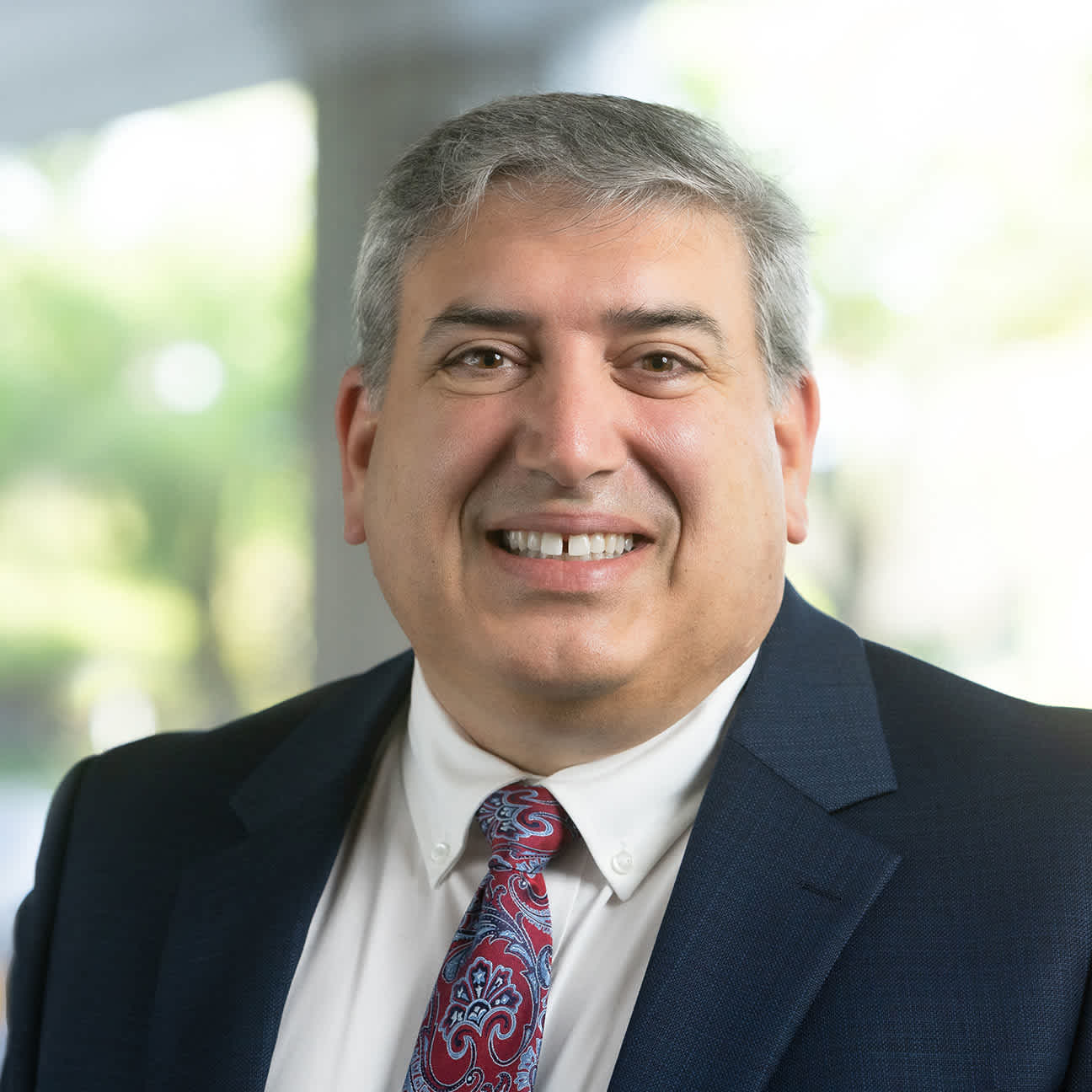
Domenic Casablanca, MD, FAAFP
Transcript
Welcome to Fighting for Family Medicine. I'm David Tully, Vice President of Government Relations and a member of the AAFP's advocacy team.
In this episode recorded at FMX, I sit-down conversation with Dr. Dominic Casablanca about a key element of the AAFP's advocacy, Family Medicine Political Action Committee.
We'll start today by zooming out and taking a look at some of the key highlights from AAFP's advocacy efforts this past month to keep you up to speed on the policy work happening on behalf of family medicine.
With that, let's dive in.
The HHS Secretary recently removed two leaders of the United States Preventative Services Task Force, also known as the USPSTF. Family physicians and the USPSTF share a common goal: to help people stay healthy through early detection and evidence-based preventative care. Because USPSTF recommendations directly shape insurance coverage and patient access to preventative services, it is essential that the task force includes the perspective and frontline experience of primary care physicians.
The AAFP urges the HHS Secretary to preserve family medicine representation on the USPSTF. Take action today by going to our speak out in the show notes and tell Congress that the USPSTF panel must reflect the expertise of family physicians who deliver preventative care every day.
On Wednesday, May 20th, former AAFP President Dr. Steve Furr testified before the House Energy and Commerce Committee on ways to improve the Medicare physician payment system. His testimony focused on four key areas. First, better recognizing and valuing primary care work within the Medicare physician fee schedule, which also shapes many value-based payment models.
Second, reforming budget neutrality rules that can create competition between physician specialties and limit CMS's ability to invest across full range of patient care services. Third, reducing financial barriers for patients by waiving cost sharing requirements for chronic care management and other primary care services.
And lastly, creating more stable, predictable payment streams for primary care practices so physicians can better tailor care to patients' needs. To lend your voice to our advocacy efforts around physician payment reform, be sure to check out our active speak out in the show notes below.
The AAFP continues to urge the federal government to speed up visa processing for physicians who play a vital role in family medicine, especially in rural and underserved communities where workforce shortages continue to grow.
The AAFP recently endorsed the Prioritizing Primary Care Act introduced by Representatives David Rouzer and Ami Bera, which is designed to increase investment in primary care by requiring federal health programs to track and report how much they spend on primary care services.
Ahead of the government's new healthcare advisory committee's first meeting, the AAFP and SCAN CEOs penned a new op-ed in Fierce Healthcare that called for bold actions to improve the nation's health, from rebuilding trust in science to ensuring technology supports rather than replaces human connection in healthcare.
The AAFP is continuing to advocate for policies that support the physician workforce and strengthen pathways into primary care, as well as regulations that expand loan repayment and forgiveness opportunities for physicians who commit to serving high-need populations. The AAFP continues to engage with the Department of Education following the release of the RISE final rule, raising concerns about provisions that could restrict access to federal student loans for medical students and residents.
We also remain concerned that the current PSLF rule could allow the Department of Education to disqualify certain employers from the program, creating uncertainty for family physicians currently participating in or considering PSLF. The AAFP supports legislative efforts to overturn the rule.
The Ensuring Community Access to Pharmacist Services, also known as ECAPS Act, is seeing renewed movement in Congress. The AAFP continues to express concerns about the potential impacts on care coordination, continuity of care, and patient safety for Medicare beneficiaries. We remain committed to working with Congress to instead advance policies that promote nationwide access to high-value physician-led care, such as allowing family physicians to be able to administer all recommended vaccines to seniors under Medicare Part B.
Be sure to follow us at AAFPadvocacy on X for real-time policy updates.
I'm glad to be here at FMX today with the Chair of the Family Medicine Political Action Committee, Dr. Dominic Casablanca of East Hampton, Connecticut, a longtime family medicine advocate and a friend of the Fighting for Family Medicine podcast.
Dr. Casablanca, welcome back to the podcast, and it's great to see you at FMX. Thank you, Dave. Pleased to be here. It's good to have you here. So, you know, back in 2024, you and I had got together on this podcast, and we actually talked about your advocacy journey in family medicine. At the time, you talked about how, for you, your journey advocacy was overwhelming experience as a new advocate, but over time, that evolved for you and obviously became a much more confident advocate.
And then fast-forward, over this past cycle, you've had the privilege of being the chair of the Family Medicine Political Action Committee.
So can we start our conversation first by talking about what is a PAC and what FamMed PAC does for our members?
Thank you, Dave. A PAC is a political action committee.
It is basically where members of an organization will make donations that we can pool together, where the governance of the committee can then decide which candidates and which causes will receive income. We do a good job vetting those candidates, I believe, and certainly they have to prove to us that they are in our corner in terms of trying to push our priorities forward.
That's a great primer. There's a lot of complexity to the process, but it's also something that AAFP members can be part of. What makes it so easy, and why is it so important for our members to be involved in the political process? Now, in terms of what makes it so easy, it's the work of you and your staff, as you know.
There are multiple ways that members of the Academy can get involved in advocacy. The easiest are the Speak Out programs that we run, where if you and your staff and the Academy knows that there's an issue that we need to speak about, being able to receive that email from you or from Julie Harrison or from whoever to basically say, "Look, we have this letter.
We want you to send this to your representatives," and the fact that that form is already preloaded. And even if you did not want to make any change at all in the letter that is being sent, you can hit click in a matter of about half a second, and you know that you've already sent it to your representative and congressman, senator, exactly why these issues are important.
So all of that background work has already been done. So for the average family doc, it's the, the issue of just understanding why we're asking for what we're asking for. If there are questions, there's always the opportunity to email you and your staff back if there's-- find out why we're doing this, so there's no reason they can't be educated on the issue before we send it forward.
And certainly, the more of these emails and calls that the senators and representatives get, clearly the more important that issue is going to be to us, and they see that volume, it does affect, hopefully, how they vote and look at that issue. Yeah, and the PAC is very much an extension of that too, and so through the strategic contributions, we're able to, to identify and help candidates.
Maybe we can unpack a little bit about how FAM Med PAC decides which candidates to support. You know, we are very fortunate that we have a, a very generous membership that very much supports the political activities of the Academy. But then we have to translate that into a strategic decision about who we support.
So I wonder if you can unpack that for us a little bit, what that looks like from a process standpoint. Sure. First of all, when we have candidates who are entering a race, new candidates who we may want to support, we have a questionnaire that we send out to that candidate to have them fill out that's basically filled with questions of What is important to you regarding medicine in general?
How does this issue impact family medicine? And would you be willing to fight for these priorities? And certainly we make it somewhat easy in that questionnaire, right? We spell out for the candidate exactly, here's the issue that we're worried about. How do you feel about this? And certainly there's been no shortage of issues recently between vaccinations and some of the other things we've seen.
Once we get that questionnaire back, we can vet the candidate, and then for people who we've been giving to in the past, how well have they held true to what they said they were going to do? And has their direction really helped enhance what we're trying to do as an academy? Or have they changed their positions over years, or have they not proven to be as strong as we want them to be?
Then we have choices to make.
You pointed this out in sort of the intro, but I think the one thing that FamMedPAC stands out from other groups is that we are bipartisan in nature, right? Our work is bipartisan. Our issues are bipartisan. You know, can you talk a little bit about what you tell members who may be focused on specific issues that are important, but not necessarily to family medicine, why it's so important to think about making strategic contributions to support the work of FamMedPAC?
That’s a great question, David. I think there's a lot of ways to look at the answer. One thing that people have to understand is that not every candidate's gonna be with us on every issue, and so we have to look at what's important to the group as a whole. I have had people in my state who have said to me, "Well, I really don't wanna give to a certain party, and since you give to both parties, why should I do that?"
And the response I normally will give them is, "The person who you're aligned with is going to do what you want them to do, but the person who you're not aligned with might be the one who needs to hear from you." And certainly in these times, one of the two parties seems like they don't want to be with us as much as we would like them to.
It's important that we're able to make inroads and be able to speak to those people because as much as what we see publicly and in the press, a lot of things are going on behind the scenes. And to be able to have the ability to sit down with a legislative assistant or sit down with a senator or congressman who doesn't necessarily share our viewpoint, those discussions usually can be more cordial when you're in the private office of a senator or congressman when the pressure is off, and you don't have to worry about the press writing down what you're going to say.
And in those one-on-ones, in those small meetings, is where we tend to make a lot more of our message known and can explain why we stand a certain way on an issue. Yeah. I think one of the things that you and I have talked about over the years, and maybe you can build out a little bit, is through the strategic work of the PAC, you've been able to build some really solid relationships where you're from in Connecticut.
I'm always drawn back to the story you talk about where you got pulled into a physician roundtable with Chris Murphy, you know, the junior senator from Connecticut, and had the opportunity to talk about some of the real-life impacts you're seeing with consolidation in the state of Connecticut.
And I think in many aspects, the fact that the PAC has been able to help you build trust over the years ensured that we had a seat at the table for a very important conversation, ultimately legislation that he would introduce. I don't know if you want to talk a little bit about that and how unique that was.
Yeah, it was actually fantastic, and we've had, honestly, Dave, a couple of experiences over the years where we've seen this happen. Student loan repayment was a big issue it seems forever. And the first time I had gone down to meet Joe Courtney and his office staff, we ended up having a resident from my program be able to go to Hartford and testify when he was back at home to speak about these issues.
We've had callbacks from Jim Himes' office early when I was an advocate in my home district in Connecticut Four, where I was actually able to bring a medical student with me as well. And that was way back then having to do with the Medicare Doc Fix, which came before the passage of MIPS and all these other, you know, new things that happened since.
And certainly, our experience with Chris Murphy more recently has been excellent in that out of the blue, I receive an email from his legislative assistant saying, "Senator Murphy would like to know what the Academy thinks of this particular issue." I made sure that I rearranged my schedule and then also for my resident who was interested in advocacy and these sort of things, was able to bring her to the meeting, and she ended up being directly asked by the senator how his proposed policy may affect her, which was just great for, for us to get exposure, but also for that resident to understand that, you know, this process isn't as hard as people think, you know, and it's our job to educate.
You know, this is our, our field.
Yeah. Let's talk strategy for a second. So, you know, as we sit here today at FMX, we're 10 months into the year. We've already seen a wave of retirements. We've seen lawmakers who, between the chaos, between the, the passage of HR 1, they're deciding that their time in Washington is coming to an end.
Talk to me a little bit about FamMed PAC's strategy as you all look at the horizon, the races, and the involvement that we'll have in shaping, hopefully, the next Congress, and hopefully with the goal of being more favorable to primary care and family medicine. Sure. A-as we know, there are issues that affect us more acutely, correct?
Physician payment, what's going to happen with the effects of HR 1 in terms of what it did to Medicare, what's going to happen for patient access as Medicaid promises to be cut over the next several years. What type of position is that going to put our physicians in as they try to keep their doors open and serve their patients and get them coming?
And so to be able to look at candidates who have helped us in that regard and also to look at particularly the number of physicians who have entered the race and how to help them understand the issues that are important to us. And we've been, I think, pretty lucky in terms of having family docs run, having other specialties who are at least primary care affiliated or understand, even as I recall, someone from ER and someone from pulmonary over these last few years who have aligned quite closely with what we're trying to do.
And at the end of the day, I think to remember that it's not all about us in the sense that there are some things that may hurt us a little bit, but that are gonna help patients. And so at the end of the day, our ability as family physicians to understand that our practices, for the most part, are gonna survive no matter what happens, but that the patients are gonna do poorly.
So how do we bring patients in who are underrepresented, underserved, to be able to get them the care they need without bankrupting our offices or without making our bottom line worse? And I think Those that are understanding and sympathetic to that are the people who we generally have been trying to support.
I mean, the twenty twenty-four cycle was, was very promising for FamMedPAC. We had a eighty-plus percent, you know, return on retention of lawmakers who are running for re-election. We had a sixty-plus percent win rate in terms of candidates, all physicians running for Congress who are, like you said, are doing great work reflecting, representing the issues of primary care in Congress.
A lot of great, you know, in, in an environment where wins are very hard right now, we-- there are some wins in FamMedPAC that we chalked up, and I'm sure there'll be more going into the next cycle. I know one thing that you and I talk about constantly as we're educating members about the PAC is really getting back to how we can tie our PAC contributions to policymakers and what we're seeing in the way of wins and advancements for family physicians.
Can you talk a little bit about some of the wins and advancements that we've seen for family medicine as a result of the strategic contributions that we've made to policymakers? Yes, sure, Dave. I think the, the most recent big example of this is the G 2211 code, which we were able to pass. This, for those who don't know, is an add-on code that we will use in the office that tells insurances that we are the primary care physician and we're managing complex problems.
Most insurances, I believe, have put a price tag of twelve to sixteen bucks per visit on that, which doesn't seem like a lot, but when you add that to the volume of the number of patients you're seeing and the fact that you can use it on almost every code that you have or visit that you have, I think it potentially adds a ton of income.
One of the things that we need to do with that code is to continue to fight to tee it up for those who are doing home-based care, which we know has been an issue, and some concerns from some docs that we need to protect that code specifically for primary care. And I do know of specialists who are using it and billing it and, you know, it's really not designed for them.
This is our thing, you know? So we, we need to be able to do that. The SUPPORT Act is important, so and this is for accreditation of CME that's done outside of the AAFP so that, for instance, if a, a doc goes and gets trained on opioids by a different organization, that that accreditation stays and that that doc can still get CME credits for that.
And then certainly all the things that we're seeing with Medicaid that are coming down through H.R. 1, very important that we keep our fight up to not let it go. And then certainly the DPC funding through HSAs, et cetera, which I think are gonna be helpful to a lot of primary docs. So even though H.R. 1 is probably not that favorable in total, there's still a couple of clauses in there that will help us.
Absolutely. So I wanna t- I wanna shift gears for a second and talk a little bit about advocacy topics. And you, obviously, you, you're chair of the PAC, you serve as chair of the commission, you obviously have played a very important role at the AAFP's Congress of Delegates as delegate from Connecticut.
But talking about specific policy topics for a second, what is an issue that you have come across over the last year that you really care about, that you really have invested a lot of time in talking with lawmakers about? And why is it important for AAFP members who are listening to this podcast to really be thinking about opportunities to dig in on key issues that, that are impacting their work with the patients that they serve?
Yeah, that's a great question, Dave. I think we've seen a lot of issues that we've talked about in our advocacy role that have been important. Although it doesn't affect me personally, the teaching health center situation really, I think, is important to a lot of docs across the country, especially in rural areas.
And if you start a residency, and your residency is getting defunded because the teaching health center is defunded after two years, what do you do for that senior year residency? How do we, how do we deal with our productivity issue and our, our pipeline issues, if you will, of how we're gonna get more family docs doing what they're doing?
I think certainly many people are invested in the women's health situation right now, especially what's going on and this divisiveness throughout the country. I think those are the two big issues we see a lot. And, and Connecticut being a more liberal state as well right now, many clinicians worry about access to service, and I think that's a, a big issue.
Right now we're doing okay, but who knows where we're going there. The most important thing is the vaccine issue, I think right now too, for all of us, in terms of the advice that we're getting from CDC. Is it trustworthy? And some of the other issues, unfortunately, that have come up with public health.
Certainly from a vaccine perspective, I think what the western states have done in terms of coalescing to get their schedules coordinated and the plans in the northeast very soon to come forward with the same thing are gonna be really important going forward, especially to try to avoid future epidemics, pandemics, or the resurgence of diseases that we just haven't seen.
You're a seasoned family physician. You're a seasoned advocate. You love family medicine, and I know this 'cause I work with you a lot. I'm thinking about a lot of the new physicians who are gonna be listening to this podcast who are at the very start of their career, right? What advice do you give to, to folks who are just entering the pathway, have come out of residency, they're starting to think about that first job?
Maybe they're in that first job and they're thinking about that second job. What's some helpful advice that you would give them to help navigate them through the, the first years of their career? Right. I would argue, Dave, I would go back even a little bit further to medical school. How does one choose a specialty?
And I think one glimmer of hope for medical students is we'll hear a lot that, you know, family docs are relatively less paid, let's say, than other specialties. But at the end of the day, what I tell folks is, yeah, I don't make as much as other docs do, but I'm doing better than probably ninety-five percent of my patients.
And at the end of the day, don't let that income number scare you away from this wonderful specialty. There's so many things that you can do within the specialty, and we see it here at FMX between people who are hospitalists, people who do outpatient, people who do ICU, people who are doing geriatrics.
I'm involved in the home-based primary care member interest group, and even at that meeting yesterday, seeing the different faces just of home-based care. Once you're in the field and once you're going through residency, the advice that I give to my residents is, number one, stay grateful. Understand that what you're doing is really service.
You have to love what you do. And that if you don't love what you do, you're not gonna be happy no matter what you do. It's not all about the money. By the same token, what's important to you, you need to make sure that that gets into your contract wherever you're going to be interviewing, because at the end of the day, you're in a buyer's market.
You know, you're gonna have whatever job you wanna have as long as you come out as a compassionate, competent family physician. And so, you need to understand the dynamics of the market. You need to understand that if you're gonna join a private practice, you may not get paid as much upfront, but how much is that gonna be related to your autonomy?
Can you put your thumb on the, on the operations of the practice and be able to make your niche and become a leader within that atmosphere? Or if you're an employed physician, making sure that you know the economics of the contract, not just in terms of comp, but in terms of what's your expected productivity and, and knowing your numbers and, and where you are, because we know, if anything, you know, being, being an old Gen X-er and working too hard and not having work hour requirements as a resident, do I have a tendency to work too hard?
Yeah, probably. But folks who are in, you know, this new Gen Z folk co-cohort coming up, they seem to get it, and I like that. Working with residents my last nine or ten years in a residency setting, I love the fact that they have great balance for the most part, and making sure that when you're working, you're working, and when you're playing, you're playing, and that you maintain being refreshed.
But where else but family med can you do that? A-and as you get older too, what do you do if you get hurt and, you know, a surgeon can't operate anymore? You know, they don't have a lot they can do. A family doc, you know, something bad happened to you, you can recreate yourself in any one of a number of ways.
So long-winded answer, but I think it relates. Oh, it's a good one. I, I mean, and I, I think it's all very valuable advice. So as we close up our time together, you know, we're living in very interesting times. We've lived through ten very interesting months. I think that there are some that may be inclined to kind of retreat from what's happening.
I would make the case that now is the time that we have to dig in. For folks listening to this, what's- final little bit of advice that you would give for why it's important for us to dig in right now? We have an opportunity every day to make an impact on the lives of people. If we lose track of that, if we lose our focus on that, it's going to affect not only your own happiness, but the happiness and survival of patients who are dealing with things that are a lot worse than what we will deal with ourselves.
I think it's to remember that we're part of something bigger. We're called to something bigger and different. And when you're silent, then you can't complain when things are changing and not going your way. You have to stay involved and to understand we're leaders, all of us. Absolutely. That's a great way to end it.
Dr. Casablancas, thank you for being here. I so appreciate your leadership with respect to the PAC and for your continued call to our advocacy. I know I can always rely on you. I pick up the phone and you're always willing to dig in. So thank you for being here and I hope you enjoy the rest of your time at FMX.
Thank you for the invite, Dave. It's been a pleasure. Absolutely.
You'll find links in this episode’s show notes to more information about FamMEd PAC, as well as our advocacy ambassadors program and other grassroots resources available to AAFP members.
If you enjoyed today's episode, let us know by dropping a line to aafpnews@aafp.org.
Be sure to share the episode with your followers on social media and tag the AAFP. We will talk to you soon.
Resources
Disclaimer
Copyright 2026. AAFP. The views presented in this broadcast are the speakers own and do not represent those of AAFP. The information presented is for general, educational or entertainment purposes and should not be considered legal, health, financial or other advice. AAFP makes no representation as to the accuracy or completeness of the information and is not responsible for results that may arise from its use. Consult an appropriate professional concerning your specific situation and respective governing bodies for applicable laws. Reference to any specific product or entity does not constitute an endorsement or recommendation by AAFP unless specifically stated otherwise. AAFP and the AAFP logo are registered trademarks of American Academy of Family Physicians.