
IFM | Solving practice challenges with AI
Show notes
In this episode of the Inside Family Medicine podcast, recorded at FMX, AAFP Vice President of Practice Advancement Karen Johnson, PhD, talks with family physician Nipa Shah, MD, FAAFP, and internal medicine physician Sudeep Bansal, MD, about how artificial intelligence is moving from an emerging technology to a practical tool physicians can use to solve everyday problems in primary care.
Shah and Bansal discuss how their views of AI have evolved as the technology has rapidly advanced. Shah points to agentic AI—systems capable of performing tasks rather than simply generating information— as an important turning point. Bansal shares how experimenting with relatively small use cases in his practice changed his perspective from viewing AI as a novelty to seeing it as a tool that can reduce repetitive work and give physicians more time with patients. The conversation explores some of AI’s biggest opportunities and challenges in primary care. Shah describes the potential to use large amounts of health data to improve prevention, diagnosis and treatment, while Bansal focuses on eliminating administrative burden. They also examine a major obstacle: health information remains fragmented across EHRs, health systems and other data sources. AI may help physicians turn the information they do have into actionable summaries at the point of care, but better interoperability remains essential.
The guests then reflect on the AAFP’s first FMX AI Hackathon, where family physicians worked in teams to identify real problems from their practices and rapidly prototype potential solutions. For example, Shah’s team developed an AI-supported tool for onboarding, evaluating and providing feedback to medical assistants. The episode closes with practical advice for physicians beginning to use AI. Shah suggests expanding the traditional “build versus buy” decision to consider whether to build, buy, borrow or bot a solution. Both physicians stress that AI should strengthen rather than undermine the human relationships at the center of family medicine — and that primary care physicians need a meaningful role in determining how these technologies are developed and implemented.
Episode hosts
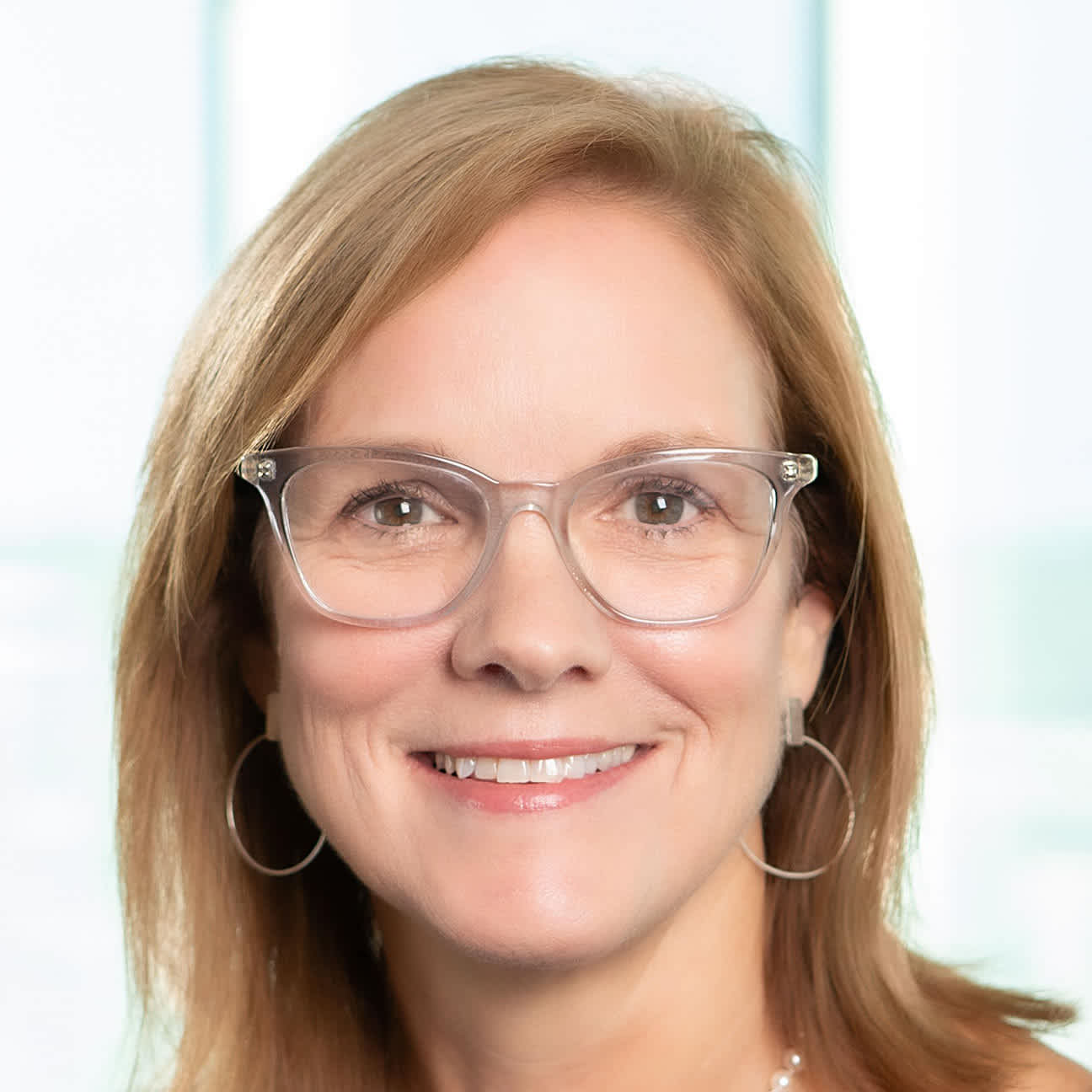
Karen Johnson, PhD
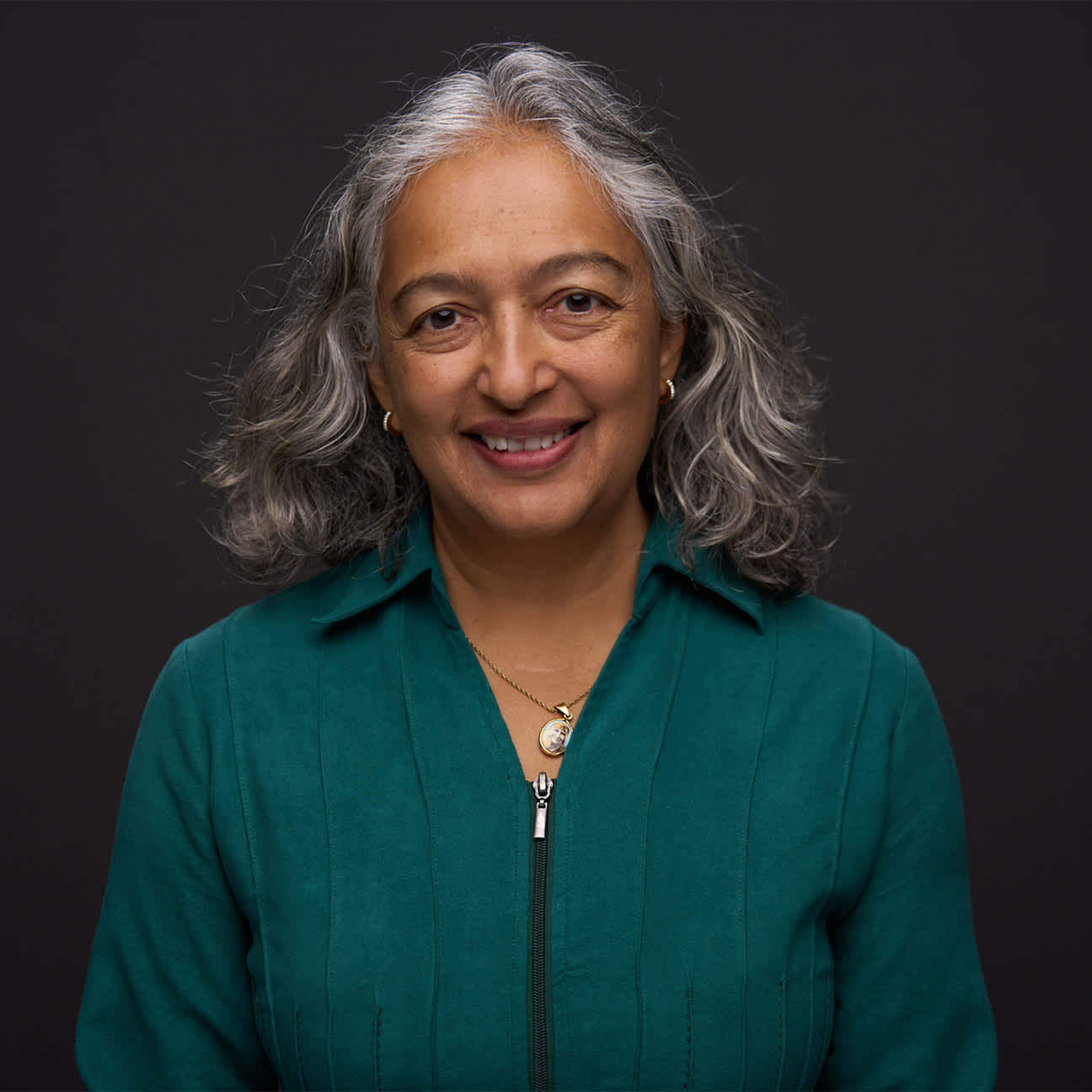
Nipa Shah, MD, FAAFP
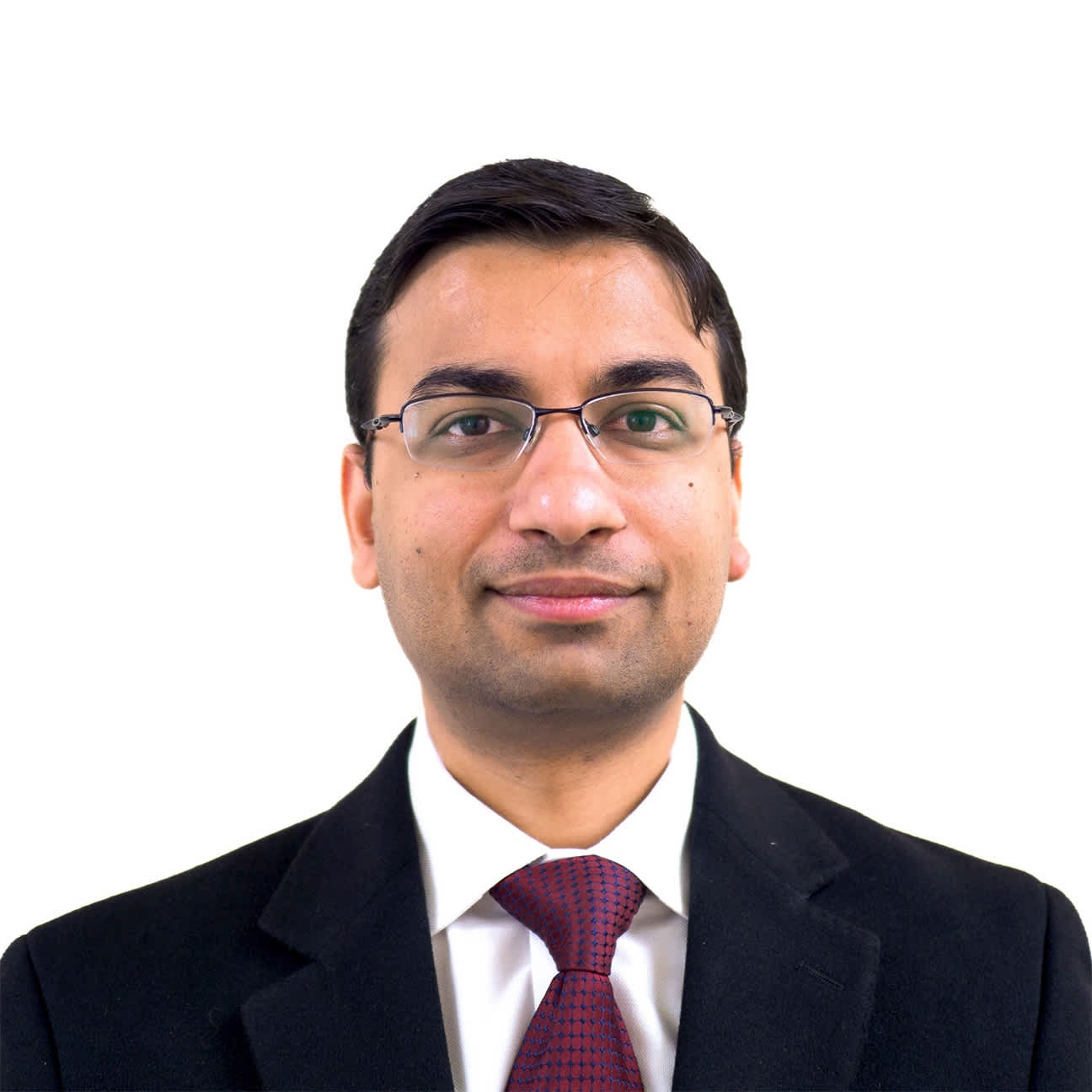
Sudeep Bansal, MD
Transcript
Welcome to Inside Family Medicine. I'm Karen Johnson, AAFP vice president of practice advancement, and we are here today to talk about AI, specifically AI in primary care. We all know that AI is not new. We've been talking about it for a long time, almost as if it's coming. But guess what? It's here. In fact, the train has left the station.
We're all on it, and it's moving super fast. So, we are here to talk about what the AAFP is doing, how family physicians and other primary care physicians are addressing AI in their workplaces, and also to share with you a little bit about what might be coming. Our guests today are Dr. Sudeep Bansal, who is a general internal medicine physician.
Welcome to Family Medicine Experience (FMX). We're glad to have you here. Dr. Bansal served as a mentor for our AI hackathon this week. And we're also joined by Dr. Nipa Shah, a family physician who was a participant in this week's hackathon, despite the fact that she's also presenting on AI at this event.
She's not someone who's completely new to it. We're going to talk about the unique role that AI is playing in primary care, especially given its breadth and depth and the need for continuity, comprehensiveness, and the core aspect of primary care, which is also called the secret sauce: the relationships between patients and physicians.
Looking forward to hearing the perspectives on those aspects of AI and anything else you want to add from Dr. Bansal and Dr. Shah. Is Sudeep and Nipa OK?
Absolutely.
Yes, absolutely.
Great. Sudeep, we're going to start with you as our guest here at FMX. You were a mentor, so tell the listeners a little bit about yourself and also why you would come to FMX to be a mentor.
And I'm just going to say, this is a volunteer position. We're so grateful that you and so many others took your personal time and money to be here with the family physicians at FMX.
Thank you, Karen, for the really nice introduction, and it was a pleasure to be here. A little bit about me.
I finished my residency in 2009 and started off as a hospitalist. 2010 was when the Affordable Care Act and Meaningful Use passed. And one of my interests besides medicine was computers and health tech. And very quickly after the passage of the Affordable Care Act, I became involved in my hospital system with implementing Meaningful Use and then the hospital made the decision to move on to Epic, and I became one of the youngest CMIOs over there.
Following that, I moved into a position in our accountable care organization as chief medical information officer and chief quality officer and worked with implementing accountable care, organization contracts, quality measures, all of that stuff. While doing that, I was also talking to a lot of my primary care colleagues, and I realized that there's a huge need in the market.
And I'm a builder at heart and that was an opportunity for me to go and try to build my own primary care practice and start something new and try to serve the people in the Glastonbury/Hartford community in Connecticut. And because I'm a builder at heart, and I'm passionate about helping all my colleagues, that was one of the reasons why I ended up coming here, because AI is something that gives us a lot of power and opportunity that we didn't have to shape how we practice medicine.
And, I've been tinkering with it for a fair, long time, and I really want to share some of the things that I've learned and hopefully advise and help others be able to really provide the best care that they can.
Well, thank you for that. What a great pathway to getting here, and we appreciate you sharing your time and expertise with our members.
Thank you. Now I'd like to turn to you, Dr. Shah. Nipa, tell us a little bit about yourself and the qualifications you bring as one of our faculty members on AI, and then we'll talk a little bit later about your participation in the Hackathon.
So about six years ago, I heard about artificial intelligence, and I took a course at MIT that really gave me a background and training in the mechanics behind the computations, the algorithms, and the history of artificial intelligence, which is not a new concept. It's been around since, believe it or not, World War II.
In fifth grade, I got into Nancy Drew books, and part of being a Nancy Drew fan is that you solve mysteries. And as family medicine doctors, we solve problems, and we have grit. We advocate for our patients.
We know there's a solution out there, we know there's a way around it, and a lot of effort is put into getting the job done, whether it's taking care of patients or finding a cure or finding a way to get that patient the care they need in the best and easy and most efficient way possible. So I've always had a penchant for technology.
Before AI, I actually developed the entire telemedicine program at the University of Florida. And technology as a tool is what AI is all about. AI is a tool for us to use; just like in the past, calculators or EKG self-reading machines were tools. This is a tool. And when I see the potential of tools to solve our problems in family medicine, that is what excites me, and that's what keeps me going in AI.
Tell us about your day job, because you're an educator at heart, right?
I am a professor and department chair of Community Health and Family Medicine at the University of Florida. I've been there 16 years. We definitely teach medical students, but we also grow our practice. We improve access.
We have a department of over 30 clinics and 120 doctors and clinicians, so we're very proud to keep growing and keep providing care for our community.
Yeah. Thank you for that. And love the Nancy Drew reference. Who didn't love her when we were that age and at that time? I read all the books that were published up to that date that summer.
Absolutely. I've done a few of these, and I've listened to many of these podcasts, and we always ask that question. This is the first time I've heard Nancy Drew mentioned. Yeah. So congratulations.
It's true.
I want to turn to talk to our, our central topic, AI.
As we all know, AI has been around for a long time. But in the last year and a half—less, last month, last week—it's changing so rapidly, and there are so many implications for that. I'd like to hear from both of you, and we'll start with you again, Nipa, or we'll go back to you, Nipa, on this question.
How have your impression and thoughts around AI changed over that time? And what do you see as the implications for primary care specifically in that evolution of AI? And we'll probably look forward more toward the end of the podcast. Think about where we are today.
Where we are today is a bit of a shock to me because I didn't expect to reach this point very quickly, as quickly as this has happened.
And what has changed.
Not sure anyone did.
Right. But the inflection point to me was the introduction of agentic AI. That is the biggest game changer. AI was going along its course, growing, developing, getting more data into the system so the answers are more accurate, and then came agentic AI. And the idea of AI doing tasks for you. That's the game changer.
And that's what I think has led to such rapid growth in interest, both financial, economical, and personal, professional as well, is the ability to have agents do your work for you.
What about you, Sudeep? How have your thoughts about AI, or have they changed over time? I'm sure they have, over the 15 years or more that we've been talking about it, especially in the, in the current frame of reference where we are today with agentic AI?
As much as I like health technology, especially because I run my own private practice, I am a little skeptical of implementing something that's brand new because you don't want to break something that works. And so that was my initial thought when AI tools started coming out or were being introduced in the market, and I was like, "Wait a minute, I don't think I want to introduce them in my practice."
And then I started finding small use cases, which kind of started helping me sort of look at AI in a different light, once I started finding those use cases. So examples were, we use Athena Health as our EMR, and if you have to create certain forms for patients, it requires you to put in HTML code to create the form to make it look beautiful.
And I could write the HTML code by hand by looking it up online, but that's a lot of work. I can just create a Microsoft Word document and hand it to the artificial intelligence, say, "Convert this into HTML code," and put it in Athena Health. So those are some of the uses that I started finding very quickly for my own practice, and that's helped me shift my mindset from something that is a novelty to a tool that we can use day-to-day in our practice.
And again, as Nipa said, now with agentic AI, we can actually have it do things for us, on a day-to-day basis, and that's what really gets me excited for the future: offloading some of the clerical tasks that we do on a day-to-day basis. How can we use agentic AI so that it can take over and give us more time back that we can spend with our patients?
Yeah. What a great segue into the conversation we want to have about the Hackathon itself. Because you said something there that really struck me and, hopefully, most of our listeners are practicing family physicians who probably wouldn't—for most of them it might not have occurred to them to go look up HTML code to build something in their EHR.
I think that's, am I fair, Nipa, to say most family physicians would not be thinking that way? So one of the things that's, I think, really fascinating about AI, in terms of like one of the tailwinds that we have, is it's so accessible to so many people and it, it gives us the ability to do things we might not have been able to do without it, and that's exciting.
That can also be a little scary. Let's start with the exciting part of that. So, where do you see, Nipa, the bright spots for AI in primary care, in family medicine today? And not for the big organizations, but for the family physician, for the primary care physician, for their team members. Where are the bright spots today that you see?
By far, to me, the bright spot is the ability for us to cure disease better.
From every angle we look at this new innovation in our life, it relies on the accumulation of data, right? A lot of what our day-to-day practice is probabilistic thinking. You know, chances are this blood pressure that you have is going to lead to a heart attack or stroke, so let me give you a medicine to lower those chances.
But what is causing the high blood pressure in the first place? How can we prevent that from happening? How can we detect that you are likely to get high blood pressure in your youth, and what can we do at that stage to prevent it? All of that, we don't know the answer to.
Wow...
Yet. With AI and the data that it provides, we potentially have the ability to make the human life on Earth seamless as far as health is concerned, to rid ourselves of disease, to get rid of disability or to help disability in a way that we've never had before.
So that, to me, is the brightest spot.
Yeah.
And we can't lose sight of that, because we have lacked this sort of intelligence, this sort of immense amount of data, and we've lacked up until this point the ability for us to do things with that data. The computational power that we have now, we've never had before.
It's sort of a perfect storm to create what we want is a disease-free, healthy society.
Oh, amazing. Thank you for that. Sudeep, what about you? What do you think is the bright spot or the bright spots for AI in primary care in the current moment?
I go back to our workflows.
Primary care is death by a thousand cuts.
Yes.
We have so many small problems in our day-to-day practice that we have to deal with, and if we can solve many of those issues, we can make not only our lives as clinicians but also our patients' lives so much better, right? For example, things that happen today in electronic health records which is complete waste of time is, I get the same prescription two or three times by, electronic, by fax.
If one of my patients gets admitted, I get the same document multiple times. An ER visit, a hospital admission, specialist note, discharge summaries. There are so many small use cases that we can use artificial intelligence to solve a lot of these issues. In the past, without artificial intelligence, if you handed off these problems to an engineer, it took a lot of time and manpower to solve a lot of these issues.
The biggest advantage that I think is it'll accelerate the development of a lot of these tools that we desperately need. And artificial intelligence will give all the engineers a chance to kind of become more productive by magnitude, and then give us the tools that we need that we can really help us take care of our patients.
Yeah. Amazing. I mean, physicians want nothing more than to focus on the patient and be able to deliver real solutions. So it's like, what are the clinical solutions? What are the things that we can learn? And also, how can you take care of the administrative stuff for me so that I can spend time with my patient and thinking about their problems, not the reports or the forms that I need to complete on behalf of their insurance coverage primarily, right?
So I want to take those two thoughts, and I just also want to go back to how rapidly we're moving. Because I think at this time last year, when we were at this conference, ambient listening, for example, is one of those tools that has—or scribing that's become one of the tools. And the thing we hear from both patients and physicians is it's wonderful because we get to look at each other now.
We don't have to be turning over here to type on a keyboard. We get to actually engage, but we're moving—that's like now commonplace— in just a year.
I want to talk a little bit though about the headwinds, and we do have data. I'm not sure if I would agree we have comprehensive data in health care because our data still lives in a lot of different silos.
And I think, people who are going through complex health care, even people with regular health care needs, see many physicians in many different places, oftentimes in many different systems, and the EHRs are not capturing all of that. We're getting better, but we're not there. So is that a concern that you see improving?
Or do you agree with that, or do you think that there's something else we could and should be doing to better aggregate data to really maximize the power of AI? Sudeep, I'll let you go first on this one.
The problem with data is there is a ton of data. But as you mentioned, it's siloed, and that was actually one of the initial reasons for the passage of meaningful use because the business requirement was, or business incentive was, can we silo the data so that the patient doesn't go somewhere else.
And meaningful use tried to solve that. So, and that it's gotten a lot better, but it's still not fully solved yet.
Exactly.
And where AI can really help is because even though there are still data silos, there's still a ton of data in the electronic health records. We are drowning in data.
The advantage of artificial intelligence is how can we take a lot of this data and make it actionable at the point of care. And that is something we've done it with really crude tools like clinical decision support or like order sets and those kind of things in the past. But the beauty of artificial intelligence is that it can bring a level of, no pun intended, intelligence to the data and, just let us know, okay, these are the things that you need to do right now because the patient is in front of you or, if the patient just got discharged, by the way, these are a few things that you need to follow up on, using agentic AI or some other tools.
Yeah.
So I think we just need to bring the intelligence to the data. We have to make it a lot more actionable. I think that's the one thing that I would really hope that we can solve sooner rather than later.
Yeah. Do you have any thoughts about the data?
Sort of. You bring up the most interesting question because it is life-threatening or life-saving to have relevant data at the point of care for that patient. And the fact that our systems are so segregated, with different EHRs, different organizations, different insurers, self-pay or patient confusion. So imagine this scenario: your patient has gone to the hospital six months ago down the street, has been to another hospital out of town four months ago, and then was just admitted to your ED one week ago and is here for follow-up in your clinic.
How are you going to put it all together? Well, think about this. What has happened in most states is there's a law now that all patients have immediate access to their medical record, right? On their portal. So let the patient carry their information with them. Let the patient bring me all their information from all three of those hospital visits, and let AI download that information into a nice summarized two- or three-paragraph summary in my EHR before I step into the room as to what has happened.
Yeah.
Can you imagine that? I can, and AI can do it as of now.
Yeah.
It can absolutely do it. So we just need a platform of interoperability that uses AI to summarize all relevant data for us. And then when I walk into that patient room as a family medicine doctor, I have all the relevant information that I need, and I can probe further and help that patient.
Totally see that happening and know that it probably is happening in some instances today.
We also hear from patients that, "I don't really want to be your interoperability mule." Sorry. "I don't want to be your interoperability system." Yeah. Interoperability mule is a term I hear a lot from the data nerds and actually from patient advocacy organizations. Not my job to carry that responsibility on my back, you know?
And so that's why entities like health information exchanges that operate at the state level and TEFCA, and other of those sort of mechanisms that are there to serve communities and patients, and actually have national networks now, I think are a part of the solution, and we're getting close, but we're not quite there.
And we've gotten a little wonky now, so let's move on, and let's talk about the Hackathon because the Hackathon was super cool. I got to be there in the room. I did not participate. I'm not a family physician or a technologist, but I got to see the energy. And I'd like to start with you, Nipa, because you signed up as a participant, and you were on a team.
Tell us what that experience was like and why anyone listening to this who's a family physician who doesn't talk about AI, who doesn't teach about AI, who just knows it's a thing that is probably used in their daily lives, why would they maybe have wanted to be there as well? So talk about your experience and talk to your fellow family physicians about it.
Imagine as a family medicine doctor, you get three hours to come up with a plan to solve a problem that you have, and your team may have three hours to do anything.
Yeah, exactly.
And imagine your team helping you solve the problem is your fellow professional family medicine doctors, and that's what AI Hackathon did for me.
I went in with a mission. I didn't have experience coding, and I wanted to develop an AI agent to summarize my emails in a way that I don't have to look at emails too much, and the repetitive stuff is all deleted and weeded out before I review it. I had a mission. I went to the AI Hackathon, and my team had no interest in that whatsoever because emails aren't part of their life.
But what I found out was their pain points. My colleague on my team actually had to switch her job because she couldn't get along with the MA. And the feedback she gave her MA, who was in training, was looked upon as bullying, and there was no repercussion for the MA because there's such a staff shortage, which is a pain point for all of us, and all three of us nodded our heads and said, "Yes, that is a pain point."
And within those three hours, the three of us worked together to develop a website and an evaluation, a feedback, an incentivization tool with a dashboard, for MAs, and we came up with that together. It was not something that I ever would've thought of, but had that doctor next to me not mentioned her pain point, and had we not all commiserated, and had I not had those three hours to sort of just find a solution to a problem that we all have, we probably wouldn't have dealt with it, and we would've continued our miserable existence when the MAs don't show up, when they're not competent, or when we're lacking an MA, which is a universal problem.
So the AI hackathon gave us this sort of wonderful three hours of just brainstorming and problem-solving with fellow colleagues that was a unique opportunity.
Yeah. So a couple of things about that. First of all, for the non-physician clinicians listening to this, MAs, medical assistants, the folks who pick you up in the waiting room, take you back, take your blood pressure, do all of those things who are really integral and essential for the care that patients receive from their physicians.
Thank you for that very much, Sudeep. You took your own money, you took your own time, you traveled to Nashville to be with us, to be with these family physicians. Tell us about your experience with that day and what your takeaway is from this, and what you would say to family physicians and others about the accessibility of the tools and the opportunities.
First of all, it was amazing to be in a room full of physicians who really want to solve the problems. And I mean, when I was first invited to come to this, that was my big, this thing, I want to be in that room because just the energy and the excitement and brilliance of people and learning from them was a big motivator for me.
Yeah.
And you know, I was astounded and stunned at all the different ideas that people came up with, and I was so happy to be there and trying to help people achieve the best they can with some of these tools.
Yeah.
So, things that really stood out to me was, you know, as Nipa, you mentioned the tool that you came up with.
I mean, just like in a span of three hours, that's a pain point that we all have.
Yeah.
There are other tools that people build using agentic AI. How do you solve the problem when patients get discharged from a hospital, and they get a long list of after-visit summaries, and the patient is lost and doesn't know who they need to make an appointment with?
Who do I need to call? And how can you automate that kind of stuff? So it was just amazing. What I tried to do in the Hackathon was, and I would also encourage people to do, find a problem that you really think is bugging you and that you would like to solve. Create that into a project, come up with a solution.
And even if you don't know where to start, pick an AI tool and just brainstorm with it. Describe the problem, and have it come up with, like, "Give me some solutions," and then guide the AI tool toward the solution. We are the domain experts. AI is a—the way to treat it is it's an intern, it's a medical student, and you describe the problem, and then you guide the intern and the medical student toward a solution you want.
And then you just sit back and watch the magic happen.
It's interesting. I'm thinking about what you're saying through the lens of a family physician who might be employed in a larger organization who's like, "I don't think I feel empowered to do anything with my EHR other than what the team does."
But I'm guessing AI could also help you build a business case and a way to approach your technology team or your leadership team for why they should do the thing that AI helped you figure out how to do. Is that a possibility?
Absolutely. So, one of the things is always that large organizations have struggled with something called build versus buy.
Yeah.
And the problem with, the reason why they've always struggled with that is that they have internal teams that can build. But then if you build something, then you have to maintain it, and if it breaks, then you need to have the manpower to be able to fix it. But a lot of times when you're building some of those things, the technology teams don't really understand what the final output should look like.
And that is where we come in, because we know the problem; we know what the final output should look like. And if we can create that prototype and give it to people, like, "This is what we want, please help us," in large organizations, they're much more likely to take that because now it makes their lives easier.
And with AI, they can actually code and do those things a lot faster. Instead of previously taking six months to write a program, it might be a lot faster when they already know what the output looks like.
Yeah.
I just want to say, I finished a 10-month program becoming a chief AI officer at the University of Chicago Booth School of Business, and the build versus buy has now two additional components.
It's build, buy, borrow or bot.
Ah.
Yes. So any time you B-O-T.
Yes, a bot. So any time you want to have an intervention, ask yourself those four questions. How do you want to go about solving it? Build, borrow, buy or bot. Bot. Ask the bot to do it.
I love that. I love that. All right, so the Hackathon, again, super fun, lots of docs in the room.
So prizes: $1,000 to each winning team, including free registration to next year's FMX, where we fully intend to continue this journey. So if you're listening and if you're encouraged and if you have an interest in joining with other family physicians who, like Nipa, never imagined you would be coding a tool.
Even Nipa, who knows a lot about AI, chief AI officer, good on you, girl, that is amazing, but you don't have to go to that extent to be in the room. We have folks there who had never even thought about it. In fact, we had yellow cards and green cards. Green cards were, "I've done something with this before"; yellow cards, "I've never done anything."
Lots more yellow cards in the room than green cards. It's very accessible, really exciting. We had one of our participants tell us that they've been to FMX many times, and that morning was the most fun she'd ever had. And I know they'd all been fun, so it was really fun. I'm going to leave you all with just one last word before we wrap things up here.
Anything you would like to say, Sudeep, to family physicians, other primary care physicians, other leaders who are practice administrators, and lots of folks who could be listening to this podcast about what you would like for them to be thinking about moving forward?
So, AI is a tool, and it gives us a lot of power to solve our problems.
What I would suggest is identify the problems that you have and use it as a tool to help solve some of those problems. And what you'll find is that things that would take us six months, a year to solve some of those problems, the AI tools supercharge us. They increase our productivity tremendously.
You just have to take the initiative and start looking at the tool and start using it, and you'll be surprised at what all you can do.
Wow. Thank you. Nipa?
To build on that, if you are using it, admit it. So one of my biggest pearls of wisdom that I share in all my talks is my AITA statistic, AI tools augmentation statistic.
Give a percentage how much of it, whatever you're producing, whether it's a letter of recommendation, an email, a presentation, how much of it is you and how much of it is AI? Because then the receiver of that information, and it engenders trust. And what we don't want to lose in the adaptation of AI in our world, as a family doctor, as human beings, is trust, and that full transparency and authenticity will go a long way towards that goal.
Thank you so much for ending on that, Nipa, because I think the one thing we didn't talk about much today was that sort of uniquely human aspect of primary care that we know is so essential. And there's, with agentic AI, as you both know, lots of discussion about, am I going to lose my job? Or what parts of my job are going to be replaced?
And so the Hackathon and a lot of other work that the AAFP is doing, under an umbrella that we're calling the Primary Care Innovation Network, is work that's really focused on bringing physician voices forward, whether it's in policy and advocacy around those very pressing points about what can AI do and what must physicians or other humans on the care team, be, not on the loop, but in the loop doing.
That's another wonky thing we'll talk about in another podcast, so that's a teaser, but also, just on a practical basis, on a practical day-to-day basis, what tools am I going to use? And how do I get those tools? If I'm not the one who makes the decisions about what tools are available to me in my practice who do I talk to?
How do I talk to them? How do I get what I need? A lot of that is information we're trying to bring forward for our members in the Primary Care Innovation Network. So if you're interested in joining the Primary Care Innovation Network, you can find us on the AI in Family Medicine page at aafp.org.The special URL for that is aafp.org/ai.
You can find out more about the Primary Care Innovation Network and stay up to date on all the latest CME resources and other things that the AAFP is putting out. And if you enjoyed today's episode, let us know by dropping a line to aafpnews@aafp.org, and be sure to share the episode with your followers on social media and tag the AAFP.
We'll see you next time on Inside Family Medicine. Thank you, Nipa. Thank you, Sudeep. We appreciate you deeply.
Thank you. Pleasure to be here.
Thank you. Much appreciated.