
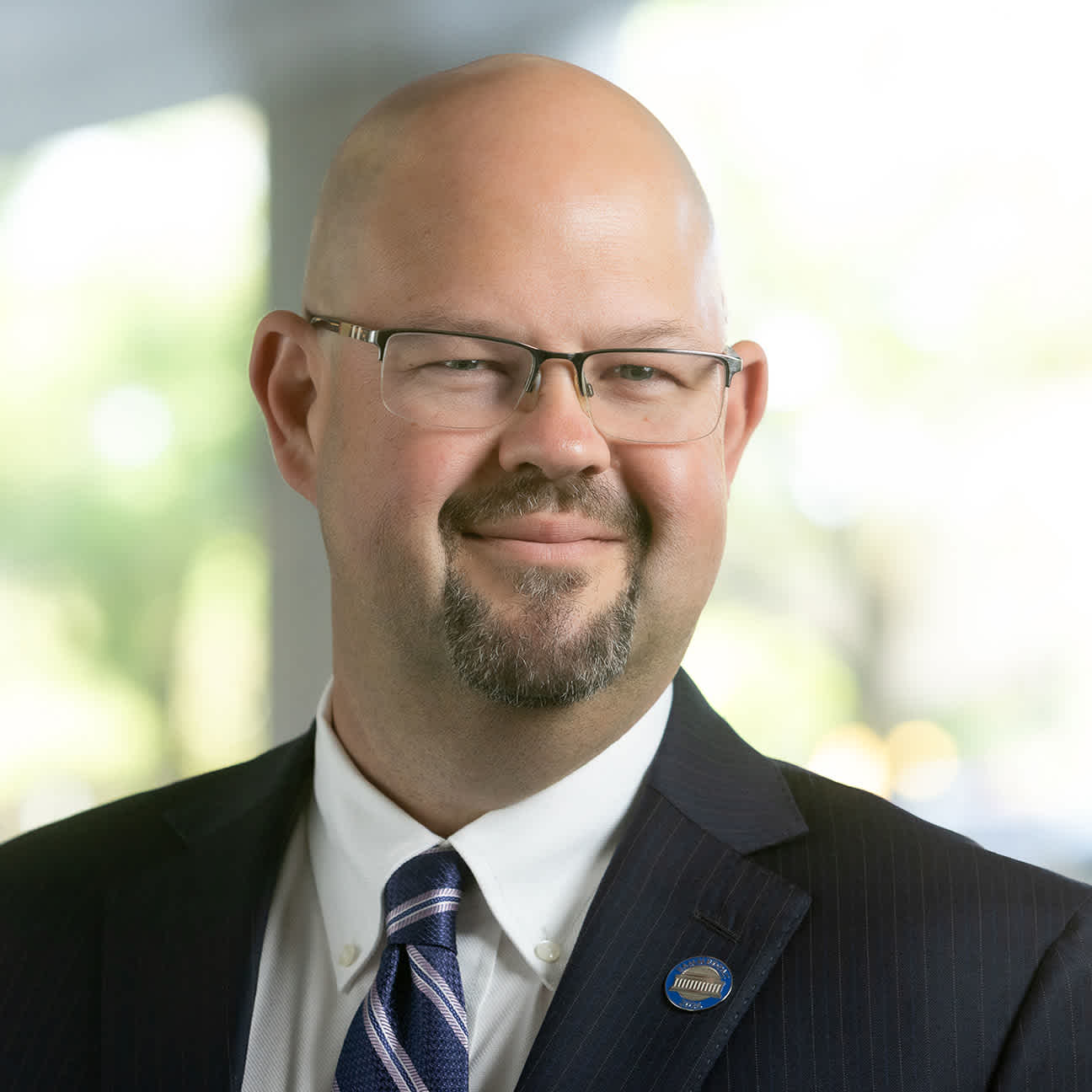
Daniel Lewis, MD, CPE, CAQSM, FAAFP
Candidate for vice speaker
Personal statement
As I evaluate my reasons for desiring to serve our Academy and how I want my AAFP colleagues to consider my candidacy for vice speaker of the Congress of Delegates, three words come into focus: advocacy, community and fidelity.
Advocacy
Medicine is at a crossroads in this country. Medicine, and family medicine in particular, operates on thin margins, straddling the line between access and accounting. We are the most affluent nation in the world, yet medical debt is the single most common cause of bankruptcy and access to health care is still a luxury for some, including our most vulnerable and marginalized. I will advocate passionately for family medicine as the fundamental keystone in healing our broken health care system.
Community
We all seek to belong. We find comfort in community. The AAFP is that community for me. It offered me a safe haven in medical school as someone who desired to be a family physician from the time I (thought I) knew what that entailed. It accompanied me through residency and fellowship as I sought to refine what my future practice would become. It has nurtured me through nearly two decades of medical practice, and given me a space to grow personally and professionally. In particular, the AAFP Congress of Delegates has served as a touchstone to dearly respected friends across the country. It has allowed me to express myself while challenging me with views different than my own, clarifying and sharpening the prism through which I view the world. Now, I want to give back to this esteemed body through service as vice speaker, to provide an efficient environment that welcomes all and encourages diverse voices and ideas while crafting a consensus that will move us as a collective forward. In the words of Henry Ford, “Coming together is a beginning; keeping together is progress; working together is success.” I intend to be a voice to bring and keep us together, working toward success.
Fidelity
We live in a world with conflicting perspectives on fidelity. To most, fidelity is the quality of being faithful or loyal. We can see many positive examples of this loyalty and, unfortunately, troubling instances in which fidelity arises not from a spirit of service to others but from self-interest. Another quality of fidelity is accuracy or truthfulness. We—and our patients—are constantly bombarded with inaccuracies veiled as truth. I promise to serve you, as members of this Congress, and our Academy at large with absolute faithfulness and loyalty to the tenets and policies directed by you, irrespective of my personal perspective, always striving for accuracy in all I represent.
Our chapters have chosen you to represent their perspectives and needs in this exceptionally unique community. We are given a platform within which to amplify their voices, promulgate ideas, and mold and grow them into instruments for advocacy. I would be honored to serve you with fidelity as your vice speaker for the AAFP Congress of Delegates.
Born in Northeast Tennessee, Daniel "Danny" Lewis, MD, FAAFP, grew up in the rural community of Hampton. While a student, he was included in a newspaper feature called "An Ordinary Special Kid," where he proclaimed he wanted to be a "doctor—because they help people." From this day forward, his interest never wavered. As a first-generation college student, Danny was selected for the East Tennessee State University honors program and was also chosen as a member of the ETSU pre-medical/medical program, which provided a pathway to enrollment in the ETSU Quillen College of Medicine as a member of the Class of 2004.
Upon enrolling at Quillen, Danny gravitated toward the specialty of family medicine, the only specialty available that did not, in some form or fashion, limit the role in medicine or the population with which he could interact and treat. Danny joined the Quillen Family Medicine Interest Group, and, as a first-year student, authored the program’s first successful application for an AAFP FMIG Program of Excellence award.
After attending his first AAFP National Conference for Family Medicine Residents and Medical Students (with many more in his FUTURE), Danny was chosen to serve as an FMIG regional coordinator. After this, Danny sought and won election as the FMIG national coordinator, beginning a series of student and resident leadership positions that resulted in Danny serving as AAFP resident board Member in 2007.
After his matriculation from medical school, Danny and his family moved to Greenwood, South Carolina, to join the Self Regional Healthcare Family Medicine Residency program. After this training, Dr. Lewis gained a spot in the primary care sports medicine fellowship at Wake Forest University.
After his fellowship, Dr. Lewis joined an established family medicine practice in Greeneville, Tennessee, while also being granted the opportunity to start the town's first sports medicine clinic.
After four years in practice and service as chief of staff, Dr. Lewis was afforded an opportunity to succeed the inaugural chief medical officer of Takoma Regional Hospital. This began an unexpected but fruitful career in administrative medicine, which has progressed to his current service as the only family medicine-trained regional chief medical officer for Ballad Health, where he has served as many as six facilities, and currently serves three, as their chief physician executive.
Dr. Lewis has also served the Tennessee Academy of Family Physicians in nearly every leadership role, serving as president of the TNAFP in October 2020 following a near-death experience with COVID that spring. He currently serves as senior delegate for the Tennessee chapter to the AAFP Congress of Delegates while serving as the chair of the reinvigorated TNAFP Foundation, an organization now dedicated to advancing family medicine within Tennessee through engaging medical students and residents.
In addition to his administrative role, Dr. Lewis continues to see patients clinically both in outpatient and hospitalist settings, while also serving as team physician for Tusculum University and as medical director for the Greene County Schools athletic training program.
“There go the people. I must follow them, for I am their leader.”
—Alexandre Auguste Ledru-Rollin
Greetings! My name is Danny Lewis, and I’m honored to be nominated for vice speaker of the AAFP Congress of Delegates. The AAFP is my professional home, and I long to serve this esteemed body and Academy.
My platform is simple: Advocacy. Community. Fidelity.
I will advocate for all members of Congress, and our entire diverse membership, to ensure your voice is heard. A speaker serves to amplify; I will amplify your voice in every forum, from local environs to Capitol Hill and everywhere between.
Community binds us. We are strongest when all are seated at the table. My strength is finding common ground and building consensus. Through whatever prism we view family medicine, we share a common goal: the advancement of family medicine for both provider and patient.
The definition of fidelity incorporates truth and trust. I will remain true to directives from the Congress and honor the trust placed in me.
My extensive experience in governance and leadership has equipped me with the required skills to serve as vice speaker. I humbly ask for your support and the opportunity to follow you in servant leadership.

Dr. Lewis combining two loves—family and travel—in Yosemite National Park
Explain how your experiences as a family physician would inform your work on behalf of members as a member of the Board?
Throughout my career I have truly served patients in a wide array of settings and services. My practice began with service to both adolescent and adult patients within the office, hospital, and nursing home settings. As our facility moved toward a hospitalist service, I allowed this service to care for my patients while also maintaining credentials to work on a PRN basis with the service, which I maintain to this day. Additionally, I have and continue to offer sports medicine services, which give me the opportunity to see practice from a “partialist” viewpoint and broadens my overall healthcare perspective. I have also served hospice patients as a medical director for a local hospice service for the last decade. I have worked with EDs ranging in size from 8,000 to 29,000 annual visits. I have worked in urgent care clinics. I have been licensed and credentialed to do Social Security Administration disability exams and have even provided non-operative orthopedic call coverage for a small hospital. While I have not provided pediatric or obstetric services since residency, my chief medical officer role gives me direct insight into the issues facing these service lines. Outside of DPC/concierge medicine, I have practiced within or have had broad exposure to nearly every facet of a family medicine practice.
These broad-based experiences give me a unique understanding of the role that family medicine plays within the larger health care system, which has guided my own growth and development. I also acknowledge that this experience is my own and that there are specific environments and conditions for which I have not provided care, and there are experiences that I, as a cis-gender white male, have not been subject to, as a provider or patient.
Throughout my career, I’ve often been told, “You’re the first doctor that’s actually listened to me.” While I always appreciate the compliment, I know that I’m not alone; respecting the dignity of our patients and their stories is nearly universal within the field of family medicine. I plan to apply that same approach if elected as vice speaker and listen to my constituents, the Delegates of the AAFP Congress of Delegates. My role will be to serve you as I serve my patients, to amplify your voice within our Congress and by representing you as an Officer of the AAFP Board of Directors.
What unique skills and/or experiences do you have that would be valuable to the AAFP membership if you were elected, and why or how would those skills and/or experiences apply to your new role?
My role as a chief medical officer within a highly matrixed health delivery system has given me opportunities to work within multiple organizations governed by bylaws and rules and regulations. Each of the facilities I have directed (at one point, six facilities concurrently) had their own bylaws structure, leading to much learning that would be directly applicable to my role as vice speaker. I led an effort at each of these facilities to standardize these bylaws for system-level continuity, making our facilities up to date with current practice while also building in efficiency for those within the system. This work is directly attributable to the scope of work as vice speaker.
I want to emphasize, however, my commitment to direct patient care within a primary care office. I am the only family doctor serving as CMO within the system overseeing facilities and I continue to work clinically with my own patient panel. I have intentionally remained involved in patient care because it provides an important touchstone to the medical staffs I serve and to you, my fellow family physicians, in ways that fully administrative roles many times cannot.
Within our Academy, I have remained involved for the last two decades. My CV reflects my many leadership roles as both a student and resident, along with my leadership journey within the Tennessee Academy of Family Physicians (TNAFP) and now the TNAFP Foundation. I especially want to note my time on the AAFP Commission on Education, including service on and ultimately chairmanship of the National Conference Planning Subcommittee. This has allowed me to remain engaged with our resident and student members of the AAFP. I have been blessed to attend the (now) FUTURE conference multiple times, as student, resident and attending, and our speaker and vice speaker serve an integral role in successfully assisting the student and resident chairs in directing this vital AAFP offering and mentoring the student and resident leaders, which I very much enjoy doing.
Promoting the value of AAFP membership is an important leadership responsibility. If you were speaking to non-members, what are the top three things the AAFP has done or is doing well that you would highlight, and why?
This question fits in incredibly well within the tenets of my campaign: advocacy, community, fidelity.
- Advocacy—The AAFP is the trusted voice of family medicine on Capitol Hill, with increasing influence across both party lines. Research has shown that family physicians and our FamMedPAC are among the most trusted entities among all lobbies. We must continue to be present to shape and drive conversations; in the words of former President Ted Epperly, “If you’re not at the table, you’re on the menu.” Again and again, we find our reimbursement challenged and/or made more complex, and that is certainly a source of frustration to us all. While we all have idealistic desires, I, at heart, am a pragmatist. To those who are frustrated with the current environment, I would simply ask the question, “Can you imagine where we would be without the advocacy of the AAFP?”
- Fidelity—Increasingly, the AAFP is taking a stand against the misinformation that faces us every day. The actions surrounding the ACIP and the USPSTF should give all who stand for science and evidence-based medicine pause. We need the AAFP to be a beacon for truth and science, combating the continued erroneous opinions of those without our training and experience.
- Community—The AAFP provides a community for us, equipped with the tools we need to succeed. The diversity of our community is our greatest strength, along with the support and unified voice of nearly 130,000 members strong. Participating in the community is a way to amplify your voice and lend your vital perspective. When you disagree with a position, the answer is not to drop membership or disengage. This ensures that your voice will not be heard. Instead, the goal is to present and share your voice, which is accomplished only through engagement. The AAFP provides the professional home, and forums, to do just that.
How would you use your leadership position to address the political divide that is currently happening within our country and in some respects within our community of family physicians? Can you offer an example of a time when you were able to build a consensus or reach a compromise on a contentious issue?
As an individual who strives for harmony in life, the current discordant environment we find ourselves in makes my soul ache. We are increasingly cast onto “one side,” or “the other.” The ability to carry out civil discourse on a topic while maintaining respect for the other party is an endangered skill. As mentioned above, the diversity of our AAFP community is our strength and within this diversity it’s important to define our common ground: We are all family physicians. Our community of family physicians is made of individuals with shared background and training, all desiring to serve the patients with whose care they are entrusted, in the best possible way. While there are certainly scenarios within these worlds that are different, the common goal is universal. I think it is important to, as much as possible, practice by the Henley Standard: Always assume good intent of the one with whom you are speaking. Too often these days, we attempt to crystallize one’s perspective on a particular topic into an assumed perspective of their entire belief system.
As much as possible, I find it helpful to highlight the common ground between parties when attempting to negotiate differences of opinion. There are two examples I can share, which I think reveal my approach in both individual and larger scale scenarios.
In my role, I serve as administrative contact and lead for our contracted medical services, including emergency physician and hospitalist providers. Very often, there is a degree of angst and conflict between these two groups in facilities, as they are working together on most of the patients who enter our hospital doors. In patient care situations, my approach is straightforward: Each of you go see the patient in question, prioritize the patient’s needs in the short term and we will address longer-term issues after the patient is cared for. In one situation, I had two service medical directors who were both well-intentioned but near polar opposites in how they approached personal interaction. This was partly attributable to the cultural differences in their geographical upbringing, as one was from the Northeast U.S., while the other was born and raised in the Southeastern U.S. The simplest communication between them would be ill-received and often adversarial, and this built a sense of animosity between two highly competent physicians. I ultimately brought them together one evening after their shifts and spent 90 minutes with them having them react to simple statements, then facilitating conversation about their most often diametrically opposing views, while reviewing with them the importance of the “5 Cs of Communication” (Clear, Concise, Concrete, Correct, Complete). After this, while these physicians never became dinner partners, their ability to collaborate and work together was much improved.
Another example occurred during our most recent bylaws standardization project. The new bylaws included language regarding the facility/system’s ability to negotiate exclusive contracts when necessary, such as contracted specialty services to meet facility staffing requirements (i.e., radiology services, pathology services where surgery is performed, ED providers in states where direct employment cannot occur, such as Tennessee). A long-term physician member of the medical staff, who performs exclusively outpatient work, had concerns that the system would utilize such services in a way to harm non-employed medical staff members. He attempted to subvert the medical staff meeting where this discussion was being addressed. Rather than act on this issue with incomplete and inaccurate assumptions, I led an effort to table and delay action. This allowed me to time to spend much of my next three weeks having conversations with him and other of our medical staff members to address any concerns and build consensus. The conversations, at least from my end, were always amicable and based in truth about the necessity of such a standard. Ultimately, we were successful in getting the item passed through the bylaws vote with only two dissenting votes.
I share these examples to highlight my approach to conflict, which I feel would also serve us well in our AAFP Congress of Delegates:
- Always assume good intent.
- Directly engage, in a truthful and transparent manner, with all involved.
- Always keep the patient (whether that be an individual, or a system/society) as the focus of the discussion (I’ve gone to the step of setting an empty chair in the room, stating that the direction of the conversation needs to be the same as if the patient was sitting in the room with us).
The success of the AAFP five years from now will be determined by our ability to do—what?
Again, this question can be answered via my campaign platform attributes: advocacy, community, fidelity.
Our U.S. health care system is, in many ways, a broken system. This is most certainly true relative to primary care, which is chronically undervalued and unrecognized for its impact on our population health. There are many efforts underway to add reimbursement for primary care physicians, but these are incremental and often add complexity to an already frustrating reimbursement system. In this vein, there are two advocacy efforts that I feel would be “wins” for the AAFP. The first is easily attainable in the next five years—eliminating prior authorization requirements for Medicare and Medicare Advantage plans. These requirements do not benefit anyone but the insurance company and delay necessary care for our patients. The second is more difficult, but I believe a foundation can clearly be established in the next five years to develop a simplified reimbursement system for primary care providers. We can simultaneously improve payment rates for primary care office visits that factor in the litany of services we already provide (complex care, chronic care management and quality) and simplify the process by removing the need for additional codes (Gs, Qs and the like) that only add complexity.
Second, we all recognize that, beginning with the COVID pandemic and accelerated by our divisive political climate, faith and trust in the public health arena continues eroding. The AAFP has taken bold stands for fidelity and truth on issues such as vaccine effectiveness. We must continue to rebuild the public trust in truth and science, and the country’s family physicians can, and should, lead the way.
Finally, in the sense of community, the AAFP is poised to and should lead the efforts to integrate AI into health care. Our work with Suki and other platforms positions us well to lead the implementation of this tool into our practices. AI has nearly unbridled potential; however, like any other medical instrument, it can be detrimental if not properly applied. The AAFP should be the organization blazing the path of AI utilization within the health care space in a judicious and ethical manner.