
Daron Gersch, MD, FAAFP
Candidate for speaker
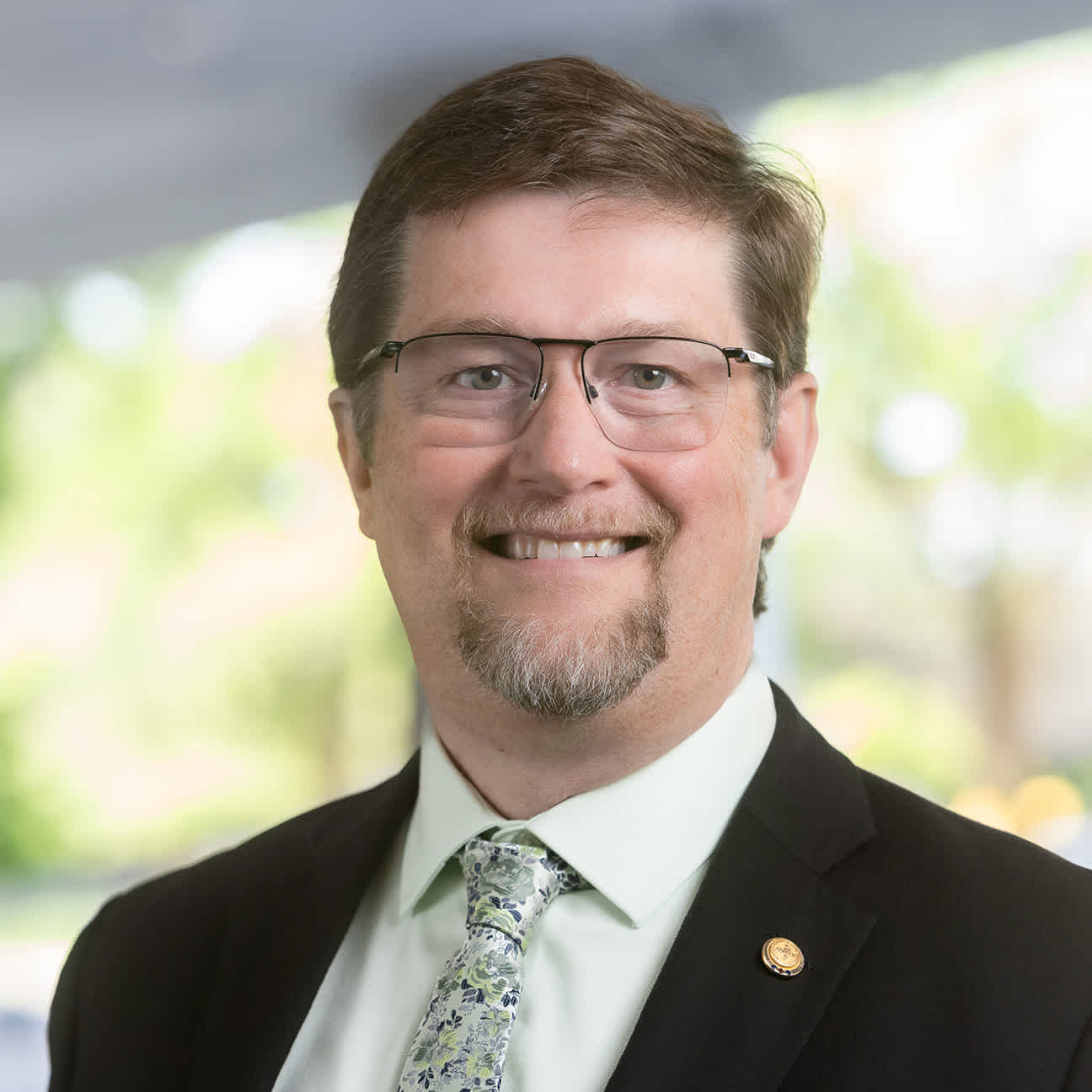
Personal statement
It is a great honor and privilege to be serving as your vice speaker for the Congress of Delegates; words cannot express my gratitude. Likewise, it is an honor to have been nominated as your speaker. Thank you.
Over the last several years, we have worked to try and improve the flow and use of time at the Congress of Delegates. We threw out the bad ideas and kept the good ideas, and I think that overall we have succeeded in that goal. While I feel we have a good system now, there is always room for improvement and I welcome any suggestions. I also look forward to reading your responses to the after-COD survey.
If elected speaker, I promise to continue to make sure that the will of the majority is enacted while the rights of the minority are protected. I will continue to be your voice at the Board of Directors.
I thoroughly enjoy assisting at the National Conference of Constituency Leaders and FUTURE. It is fun to watch the next set of amazing leaders for our Academy grow. I have no doubt they will take family medicine to great heights.
Again, thank you for this opportunity. I look forward to continuing to serve the COD and Academy.
Daron W. Gersch, MD, FAAFP, is a family physician living in Avon, Minnesota. Dr. Gersch is currently serving as the vice speaker for the AAFP Congress of Delegates and is a member of the Minnesota Academy of Family Physicians. He was born and raised in Saint James, Minnesota, and went to college at Augustana University in Sioux Falls, South Dakota. He attended the University of Minnesota medical school and did his family medicine residency at the Cedar Rapids family medicine residency program in Cedar Rapids, Iowa. Out of residency, he went to the Albany Area Hospital and Medical Center in Central Minnesota to start his rural practice. He provided full-spectrum primary care at that facility for 25 years. During that time, Daron taught and mentored multiple college students, medical students, residents, physician assistants and nurse practitioners. When the Albany Area Hospital closed its doors, he decided to take the opportunity to try something different. He now works full-time as the ER medical, trauma and stroke director, as well as providing ER care for Centracare - Western Region (four critical access hospitals). He also currently serves as the medical director at the Mother of Mercy and Long Prairie nursing homes in Albany and Long Prairie, Minnesota. He is on the Protect Project for the CDC and served on the medical review panel for familydoctor.org.
He has previously served as the mayor of Albany, Minnesota, and served eight years on the rural health advisory committee for the Minnesota Department of Health (including as chair for two years). He also serves as a clinical associate professor at the University of Minnesota school of medicine. He has been a Cub Scout and Boy Scout adult leader for 18 years.
He was a member of the Minnesota Army National Guard, serving as a medical platoon leader at a mechanized infantry company and a physician in a battalion hospital. He obtained the rank of captain and was honorably discharged.
He has been married to his wife, Patti, for 35 years and has three amazing children: Nick, 33; Molly, 30; and Anthony, 26. Molly is married to Mitchell and they have a daughter, Gina. Nick is married to Annie.
Along with family time, he enjoys running and has finished 15 marathons. He also enjoys reading, astronomy, fishing and playing his guitar.
It is an honor and privilege to be able to write to you today as a candidate for speaker for the American Academy of Family Physicians.
We cannot ignore the challenges facing family medicine. Administrative complexity, burnout, shifting payment models and AI all place burdens on our time and our well-being, and make the future difficult to predict. However, despite this, one truth remains: Family physicians are the foundation of a healthy society. I will continue to champion family medicine to make it the cornerstone of our medical system.
To the students, residents and members of NCCL, I look forward to working with you at your conferences. It is energizing being around you and listening to your ideas.
To the chapters, I have learned that while each chapter is different, we have a lot more in common. I look forward to talking with all of you and visiting at some of your chapter meetings.
I will strive to be the impartial leader, helping to guide the COD in its deliberations. I will continue to protect the rights of the majority and the rights of the minority. I will continue to be your voice at the Board of Directors.

Dr. Gersch’s family, spring 2026
Explain how your experiences as a family physician would inform your work on behalf of members as a member of the Board?
During the first 25 years of my practice, I was a small town, full-spectrum family physician. I did everything from prenatal care to being a hospice medical director. I feel that this has given me the broad knowledge of family medicine needed to make decisions within the boardroom that are rooted in real life experiences. Over the last six years, I have worked in critical access ERs providing emergency care to small rural communities. I have also been the ER medical director, stroke director and a trauma medical director for these critical access hospitals. This has given me insight in administration and how it can help and a burden to the medical system. Finally, I am also the medical director for two nursing homes. This is given me acute knowledge of how bureaucratic oversight can be damaging to a facility.
What unique skills and/or experiences do you have that would be valuable to the AAFP membership if you were elected, and why or how would those skills and/or experiences apply to your new role?
Of course, the biggest unique skill I have is having the pleasure of being your vice speaker for the last five years. This time has been very valuable for me to learn the information needed as to how our Academy functions and how I can best serve its members. I continue to be a member of two parliamentary associations. I strive to learn about the role of speaker for a society and how I can best serve the Academy.
Promoting the value of AAFP membership is an important leadership responsibility. If you were speaking to non-members, what are the top three things the AAFP has done or is doing well that you would highlight, and why?
I would highlight our wonderful advocacy group and how our presence in Washington, D.C., has made a difference. While things may not be as good as we would like, they would be significantly worse if we were not there. I would highlight our CME program. I do believe that the AAFP has one of the best CME offerings of any group. I would highlight the fact that our CME is now progressed into the digital stage so that you don’t have to do all in person CME and there are amazing opportunities to do CME at home. Finally, I would mention the benefit of being with like-minded people and the ability to learn from each other’s successes and failures. This is an amazing benefit that I have received from belonging to a professional organization that I did not expect when I first started.
How would you use your leadership position to address the political divide that is currently happening within our country and in some respects within our community of family physicians? Can you offer an example of a time when you were able to build a consensus or reach a compromise on a contentious issue?
With the access of 24-hour news and Internet services I do believe that the fire has been turned up way too high. I believe it would be beneficial for everyone to take a step back and a deep breath and realize that most people have goodwill in their hearts. I think once we are able to do that, coming to consensus with each other is much easier. I do believe the way that we have run the COD and other national meetings highlights the fact that we work for consensus.
The success of the AAFP five years from now will be determined by our ability to do—what?
My biggest fear for family medicine is that we are giving up too much territory. Our biggest strength is in our diversity and the fact that we can do practically anything, anywhere. We need to find a way to make sure that we stay relevant and practice as much full-scope medicine as possible. This will look different in different areas of the country, but we need to do more, not less. As far as the academy itself, we need to continue to do what we have been doing. Listening to our members and giving them the support needed to provide the best care possible to their communities.