
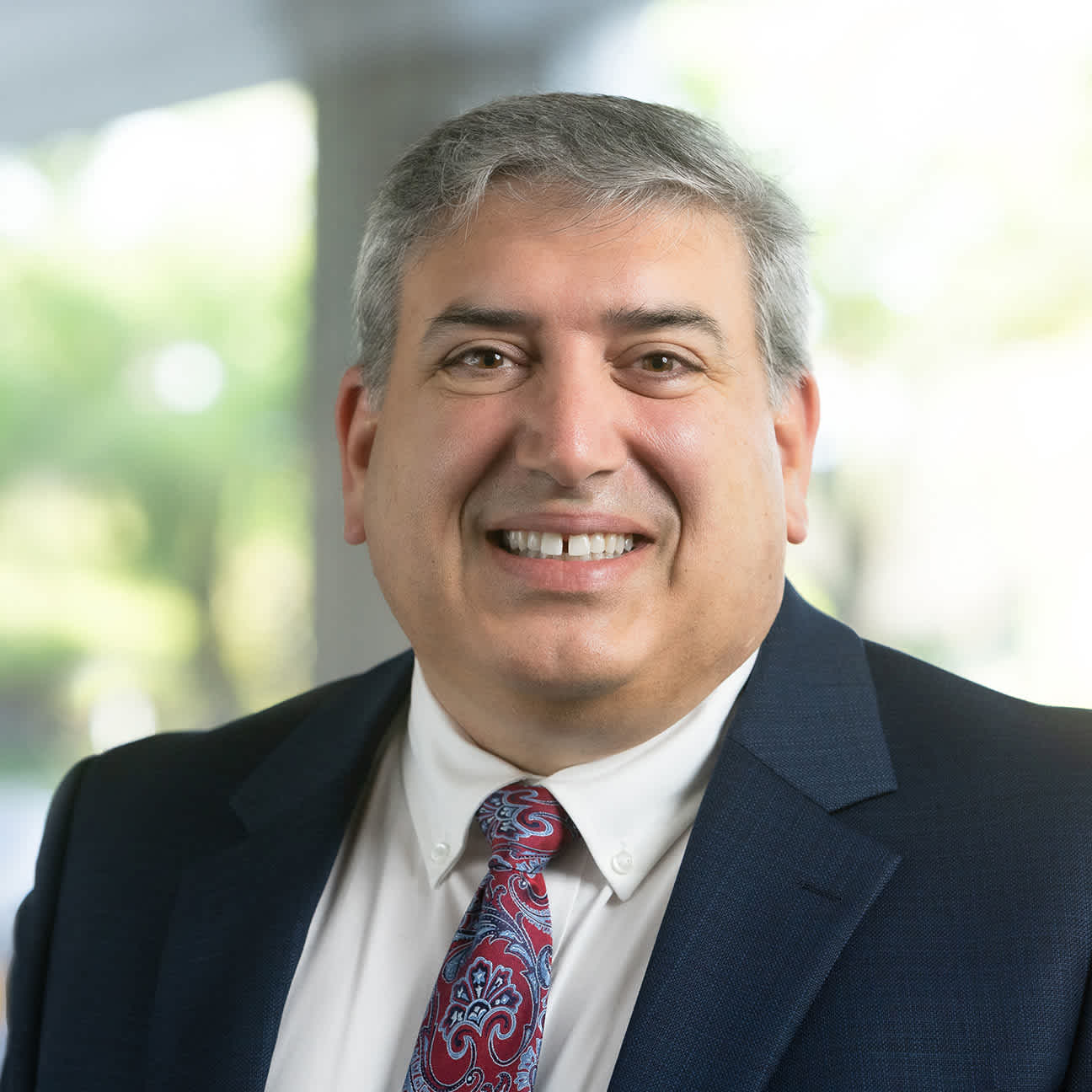
Domenic W. Casablanca, MD, FAAFP, DABFM
Candidate for director
Personal statement
Leadership is about service, not power. Vulnerability and authenticity are profound strengths, not weaknesses. Curiosity rooted in gratitude is the strongest source of innovation and connection. These concepts originate from Ignatius of Loyola (1491-1556), the Spanish mystic who once was a soldier, but became inspired while recovering from a serious battle injury to dedicate his life to faith and service. He became the founder of the Jesuits, a group of missionaries and educators who established, among many other institutions of higher learning, my high school, Fairfield (Connecticut) College Preparatory School, and my undergraduate college, The University of Scranton (Pennsylvania). The core concepts of Jesuit education include cura personalis (care of the individual), magis (the deeper call to strive for excellence grounded in gratitude), and ite inflammate omnia (going forth to “set the world on fire” by service to others). These ideals are taught simultaneously with the training necessary to succeed in one’s chosen field. This combination is intended to teach how to excel at living with purpose and strength, and for me, is the foundation of my gratitude and sense of duty, and dedication to family, patients and community.
Throughout my personal and professional life, including the hard work in training, the successes and setbacks inherent to serving patients, the sometimes nonsensical challenges of our unique health care system and the never-ending quest to achieve work-life balance, the calling to be a leader in our field has allowed me to lend my time and voice to effect positive change for us and our patients. I savor the opportunity not only to be a family physician leader, but also to have learned over time the necessity to cultivate the non-medical parts of my life. Giving back with thanks to my family and community, empathizing with others and seeking to understand the situations in life I am privileged to participate in, every day I realize the joy and rewards that come with putting the needs of others ahead of my own, all while having the best career anyone can have.
I now seek to engage a wider audience to advance our specialty, which itself challenges us to provide comprehensive, quality care with unparalleled patient satisfaction, while containing costs and achieving balance. As you review my credentials and as we meet during the year, I trust you to evaluate me as having the skill, experience and passion to lead at the highest level. I have worked in both inpatient and outpatient settings, in solo, group and residency models, and in rural, suburban and urban environments. Consequently, I understand the challenges faced by most family physicians. I have been involved in our Congress as a delegate for years, and have served on two AAFP commissions, chairing the Commission on Federal and State Policy. I have chaired the FMX subcommittee and the FamMedPAC Advisory Board. Reconciling opposing viewpoints and recognizing the importance of bipartisan advocacy to our mission, I am a careful listener and creative at finding common ground and workable solutions. I humbly ask for your vote for AAFP director.
Domenic W. Casablanca, MD, FAAFP, is a candidate for the AAFP Board of Directors.
Dr. Casablanca was born in Bridgeport, Connecticut, and raised in nearby Shelton, Connecticut. He graduated from The University of Scranton with a B.S. in biochemistry and the University of Connecticut School of Medicine. He completed his family practice residency in 1996 at Hunterdon Medical Center in Flemington, New Jersey. His career started in rural Wellsboro, Pennsylvania, practicing full-scope family medicine with obstetrics for three years. He then spent 17 years in Shelton, the first 10 as sole proprietor in a practice he established in 1999, the next five as a site leader in a private group and the last two employed by a university-owned system, practicing full-scope except obstetrics. He was previously the chair of the Division of Family Medicine at Griffin Hospital in Derby, Connecticut, where he practiced inpatient, outpatient, nursery, nursing home and home-based care in his hometown community.
In 2016, Dr. Casablanca transitioned to core faculty at the Middlesex Health Family Medicine Residency Program, a four-year family medicine residency where he continues to practice full-scope. He is the clinical director of their East Hampton, Connecticut, practice site and teaches the practice management curriculum. He is a well-respected resident advisor and holds teaching appointments at UConn, Yale and the Frank H. Netter/Quinnipiac School of Medicine. Dr. Casablanca remains deeply devoted to his patients, many of whom he has been serving for over 25 years. He has successfully led several community outreach initiatives, including an expansion of the residency’s home-based primary care program, and the establishment of home-based practice sites at a local assisted living facility and a residential care home for patients with serious psychiatric illnesses. He is secretary of the Department of Family Medicine at Middlesex Hospital, Middletown, Connecticut.
Dr. Casablanca has served in multiple roles in both his state and national academies. He joined the Connecticut Academy of Family Physicians (CAFP) Board of Directors in 2002 and served as CAFP president in 2008-09. He is a delegate to the AAFP Congress of Delegates and presently serves as chair of the FamMedPAC Advisory Board. He is a former chair of both the FMX subcommittee of the Commission on Continuing Professional Development and the AAFP Commission on Federal and State Policy. He was twice convener of the AAFP Working Group on Rural Health.
Dr. Casablanca lives in Oxford, Connecticut, with his wife, Donna. They have four adult children. His interests include outdoor cycling, reading, traveling, fantasy sports, and attending live theater and sporting events. He has served his community as a school and sideline physician, youth sports coach, board member of his local health district, officer of the Medical Alumni Council of The University of Scranton and board member of the Queen of Clergy Residence of the Diocese of Bridgeport. He is an active musician and reader at his parish. He lives and serves with a spirit of passion and gratitude, and aspires to be a role model and mentor to students, residents and junior faculty.
Dear fellow family physicians,
Hello! My name is Dom Casablanca, and I am running for AAFP director. I am excited to ask for your support for my candidacy through the summer and at the Congress of Delegates this fall. Thank you for participating in your delegations and for any additional committee work you may be doing. It takes all of us to make the COD and the Academy run smoothly.
The honor and privilege of serving you is indeed special. I find it incredibly rewarding to effectively represent our members in discussions that help shape AAFP policy. I hope to elevate this work on the board. Our shared training and experiences as family physicians, whether in the exam room, within our communities, at AAFP meetings or in Congress, uniquely equip us to build relationships, appreciate nuance and foster respect when engaging with individuals who bring varied perspectives and priorities. Our focus must be on creating mutually beneficial solutions to challenges which affect us and our patients.
If we are just meeting or are long-time friends, please reach out with questions or concerns as you consider your vote. I look forward to sharing ideas during the campaign and seeing everyone in Nashville!
With gratitude,
Dom

We were happy to have everyone together for a Christmas 2025 trip into the city!
Explain how your experiences as a family physician would inform your work on behalf of members as a member of the Board.
Throughout my career, I have learned from many experiences, gaining diverse expertise that members may benefit from. After receiving excellent training at UConn and the Hunterdon Medical Center FPR, I spent three years working in a rural bi-state organization, providing comprehensive patient care with OB and participating on hospital committees.
While loving the overall rural experience, I wanted more autonomy in decision-making at the site level, and with my young family, needed to be closer to additional support. I returned to my hometown and partnered with the local hospital to open a new, independently owned solo practice. It is here that I learned new business skills, from negotiating contracts to budgeting, marketing and customer service. I practiced inpatient and outpatient care in a suburban community hospital, two large urban medical centers, and several nursing homes. I became a school physician and was appointed to the local health district. I started regularly teaching medical and allied health students. While building my new practice, I made it a priority to give presentations and educational programs within my community.
These experiences gave me a deeper appreciation for the patient perspective and shaped my approach to medicine. They reinforced the importance of providing care that is not only grounded in evidence-based medicine, but also centered on the needs, values and experiences of each patient. Patients felt heard and had a stake in their care, and because of their satisfaction and involvement, their health outcomes were better, as evidenced by achieving the lowest rates of both 30-day rehospitalization and mortality at my primary hospital on a consistent basis.
In 2009, I merged my solo practice into a large physician-owned group, where I benefited from economies of scale and learned about value-based care and shared savings, while preserving my broad scope. In 2016, I transitioned to my current role as core faculty in an innovative four-year residency. With many original patients following me, I still practice full scope, admitting adults and newborns with our residents to a medium-sized community hospital, seeing outpatients and precepting in our three offices, which have urban, suburban and semi-rural flavors.
I have used my practice management skills to become director of my primary site and expand the practice management curriculum, allowing us to graduate residents who are educated in the practice and business of medicine. I have started new service lines, acquired teaching, advisory, and presentation skills, and collaborated with others on projects at the local and national level. Throughout my career, I have been honored to hear members’ stories and add them to mine to advocate in my community, within the Academy, at the legislative level in Hartford and on Capitol Hill. I am excited to listen to members and share their stories on the AAFP Board if afforded the opportunity.
What unique skills and/or experiences do you have that would be valuable to the AAFP membership if you were elected, and why or how would those skills and/or experiences apply to your new role?
I have both practiced rural family medicine and served as convener of the AAFP Working Group on Rural Health (WGRH). I understand the threats facing rural practices and communities. I have been a sole proprietor practicing inpatient and outpatient family medicine and understand the challenges of running an independent practice, both in terms of financial and human capital and can be a resource to members who need help in these areas. I have been a site leader in a large practice with ACO and value-based contracts and can speak intelligently on related issues such as EHR interoperability, measuring quality parameters and the included administrative burden and rise in expenditures threatening practice viability and physician well-being. I am involved in staffing and budgeting and understand how to navigate these challenges, which includes managing relationships with all levels of the health care team. I understand the concerns of faculty physicians, including regulatory burden and issues presented by residents as they grow and develop their skills. The art of providing excellent patient care, which is our most important call and responsibility as family physicians, requires the same skill set that I would use to serve members who may be struggling, including listening patiently, brainstorming solutions and thinking “outside the box” to implement a plan of action. All challenges are unique, but solutions can be simplified if the problem-solving approach is consistent. Negotiating with patients to get them to act in their self-interest is akin to negotiating plans with colleagues, like-minded stakeholders and adversaries to achieve professional satisfaction and optimal outcomes, no matter the issue at hand. It is very rewarding to play even a small role in the success of a patient care plan, an office dilemma or a health system challenge.
In addition to these practice-based skills, I have cultivated outside relationships that have been important in leadership development. I have served on community boards whose work is not focused directly on medicine, but where my expertise is desired. Learning always occurs in these settings, as leaders with expertise in other disciplines look at complex situations from many angles and we forge solutions that consider the interests of many different stakeholders. Superficially, it would seem to involve extra work, however, I can attest to how giving to others outside of practice and using our natural abilities as leaders may help us prevent burnout by nurturing those parts of our souls that keep us inquisitive and emotionally fresh. Cultivating family relationships is also important. My wife, Donna, and I work hard to be present for each other and to our children. I could not do anything effectively without their love and support. Likewise, I pass on the same to students, residents and colleagues both inside and outside of medicine so that we can all reach our potential and experience true joy in our lives.
Promoting the value of AAFP membership is an important leadership responsibility. If you were speaking to non-members, what are the top three things the AAFP has done or is doing well that you would highlight, and why?
- Governmental Advocacy. The AAFP and its state chapters maintain a strong presence in both the federal and state government advocacy spaces to stay abreast of proposed changes in health policy, and to advocate for our members and patients. Through the amazing work of our government relations staff, the AAFP Board, the Commission on Federal and State Policy and FamMedPAC, we are the most trusted health organization advising lawmakers in Washington and, by working with our chapters, are involved in state-level advocacy. The AAFP has had eight invitations to testify before Congress since 2023, the most of any medical organization. We achieved this by remaining bipartisan and choosing issues that broadly affect our membership, framing those discussions in terms that can be understood and acted upon by lawmakers of both parties. I have been involved in this work since 2017, as a member and chair of the Commission on Federal and State Policy and as the advisory board chair of FamMedPAC. Although no organization can win every battle, we have been successful in advancing key pieces of legislation and preventing bills that are not in the best interests of our members and patients from passing. FamMedPAC is also on pace to exceed our current cycle goals in dollars raised and new donors cultivated.
- Continuing Medical Education. Many members do not know that only the AMA, the AOA and the AAFP can accredit CME programs exclusively for physicians. They all act under the authority of the ACCME. Our well-rounded offerings allow members to stay current and in compliance with licensing authorities and board certification. Along with state chapter CME, the AAFP offers a variety of live, on-demand, and print resources. Chapter staff assist members with CME reporting and self-reporting is easy on our website. We employ learning specialists and staff who stay current with updating learners’ needs, helping us fill our knowledge gaps so that we can practice state-of-the-art, evidence-based care. Having served on the Commission on Continuing Professional Development, I have seen the accreditation process up close and have been part of the inner workings of FMX, chairing the subcommittee in 2015.
- Member Services. The AAFP provides exceptional support to members across every practice model and at every stage of their career. From programs for medical students and residents, including affordable insurance options through the AAFP Foundation, to opportunities to advance public health, the AAFP offers an unparalleled range of services. These programs help students explore family medicine, cultivate future leaders, support physicians in practice, and extend care and hope to underserved communities. I know of no other professional organization that delivers such a breadth of member services, backed by the dedicated, highly skilled staff whose expertise and commitment make these programs possible.
How would you use your leadership position to address the political divide that is currently happening within our country and in some respects within our community of family physicians? Can you offer a time when you were able to build a consensus or reach a compromise on a contentious issue?
It is unfortunate to see how unrest in society is affecting our families, communities and membership. Polarization has become the norm and there seems to be little room for consensus, no matter the issue or the stakes. The widespread misinformation rampant on social media and AI platforms has made navigating the divide more difficult. Trust in public institutions, the press and professionals, including us, has diminished to the point where people see one another as adversaries rather than collaborators for the common good.
I have learned how to navigate these perilous waters through my experiences at the COD, convening the Working Group on Rural Health and as chair of FamMedPAC. Our state delegation has successfully negotiated at least three contentious resolutions recently at COD. Leading my state delegation, we successfully moved a late resolution onto the agenda of a reference committee, resulting in political risk assessments being added to the background information on all subsequent resolutions. Despite opposition, we successfully explained how this information would ultimately have a positive impact on academy staff, enabling the allocation of limited resources to the most meaningful issues with the highest likelihood of success. Getting the resolution onto the agenda and then subsequently adopted took the ability to make a cogent argument, defend it, and have the COD approve it after open testimony on the floor.
We collaborated two additional times with another state delegation to rewrite extracted resolutions, resulting in both being adopted on reference committee consent calendars. One instance involved our resolution being extracted from the initial consent calendar. We personally approached the extracting delegation, addressed their concerns, rewrote it together, discussed the issue with the reference committee chair, offered collaborative testimony at the onsite hearing, and got favorable results.
The other similar occurrence was at our most recent COD in Anaheim, where our delegation extracted a resolution that was initially thought to be existing AAFP policy. We collaborated with the submitting state chapter delegation to rewrite it and partnered at the on-site reference committee hearing to provide testimony which resulted in passage on the consent calendar. These successes are the direct result of listening carefully to concerns, respectfully problem-solving and developing an improved proposal that was more palatable to the entire group.
While convener of the cross-commission WGRH, I collaborated with members of the AAFP Board and rural family medicine leaders to develop the initial reporting structure for the then-new Rural Health Member Interest Group. As PAC chair, our board has directly addressed political division by supporting candidates from either party who support us. This has allowed us to maintain relationships with leaders of both parties and our staff to build longitudinal relationships. Not every candidate is going to agree with us on every issue, and sometimes our support can come from unusual or unexpected sources, making it mandatory that we use the AAFP policy priorities to dictate to whom we donate.
Strategic decision-making has resulted in an unprecedented number of opportunities to testify before congressional committees, with invitations coming from both parties. Our strength lies in our diverse membership and in staying consistent with our bipartisan messaging. This builds trust among leadership in Congress, who in turn will call us when they have important health policy questions.
The success of the AAFP five years from now will be determined by our ability to do—what?
I believe that we most urgently need to meaningfully address the combined issues of physician autonomy and financial instability. Practice consolidation and economic control exerted by health systems and insurers have severely curtailed ownership potential for family physicians in traditional independent practice. These trends have also limited physician autonomy and scope of practice for employed physicians. We need to continue to work to eliminate or reduce the prior authorization and administrative burden all family physicians face. Our strength lies in our ability to ensure that every member, regardless of scope or practice model, can rely on the AAFP as their primary resource for education, advocacy, leadership development and professional growth. The AAFP already has the resources and infrastructure to serve in this capacity. We are uniquely positioned to meet the diverse needs of all members, whether they are in solo or private traditional practice, employed, DPC, or academics. We need to promote and enhance this message by continuing to develop relationships with residency programs and make sure young physicians completing residency have this important information so we can maintain their membership. We must understand why fewer new physicians do not continue their membership in the academy and develop strategies to counteract this trend. We already know that no other specialty can claim better overall outcomes and decreased cost of care while improving patient satisfaction. Members can achieve these outcomes in large part by relying on the support of the AAFP. If we cannot communicate this value in tangible ways to younger members, the academy may be hindered in advocating for and serving our membership and our patients in the future.
We also have the organizational ability to leverage relationships with medical schools and the American Association of Medical Colleges, as well as with undergraduate universities, to spread the word of the proven value of the work we do as family physicians. The AAFP can get our message to students in earlier stages of their journeys and encourage more of our individual members to do the same, such as the work I am presently doing at The University of Scranton’s Medical Alumni Council. Paving the road to becoming a family physician means having students see what we do up close. Many of us could invite students to observe us in practice, including those in high school or college. Exposure to family physician mentors is needed at multiple touch points, including when a student might be interested in medicine as a career path, or in medical school, while still contemplating their specialty. Once committed to family medicine, medical students and residents need continuing quality learning opportunities and mentorship. Hosting a learner in the office or hospital offers the chance to make a lasting impression, as does participating in other events geared toward disseminating information about what we do with enthusiasm and gratitude.
If we can maximize these opportunities, I see a very bright future for our specialty. We need to remain steadfast in our conviction and approach, knowing that we are the solution to many of the challenges faced by the health care system.