
Jason E. Marker, MD, MPA, FAAFP
Candidate for director
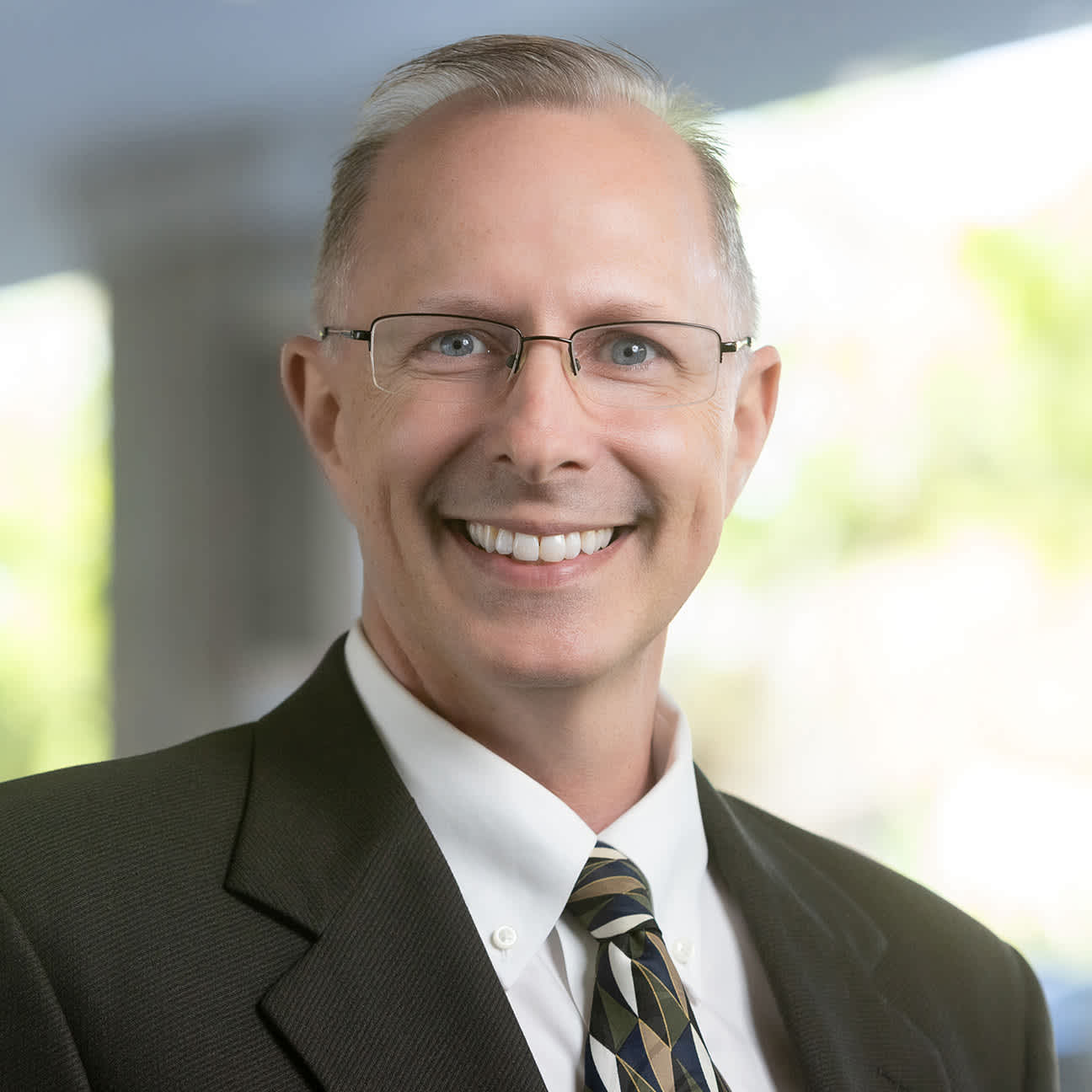
Personal statement
Family medicine's greatest strength is its adaptability—to local standards of care and to the financial, social and political realities of health care. Over time, we each develop a set of core beliefs that shape how we practice medicine. Here are a few of mine:
Physician autonomy and patient-centered care — The sanctity of the doctor-patient relationship must be protected from policies that insert third parties into clinical decision-making. Evidence-based, compassionate care—delivered equitably and without regard to a patient’s standing in society—is the floor, not the ceiling, of what we owe every patient.
Primary care, scope and the care team — Primary care should be liberated from fee-for-service. Only full-spectrum, community-invested family physicians lower the total cost of care, and our residencies should continue to train physicians capable of meeting the needs of any community. Mid-level providers play a valuable supporting role in appropriate, well-supervised settings.
Rural healthcare — Rural family physicians deserve enhanced reimbursement, fewer administrative hurdles and an AAFP that fights for their survival through rural training tracks, community-based medical education and recruiting pathways that bring physicians to the communities that need them most.
Physician well-being and workforce — Burnout is a solvable structural problem. Our future depends on the leadership we bring to making the specialty sustainable, rewarding and visible to the next generation of physicians. I have done this work.
Reproductive and gender-related care — I support unfettered access to all legal health care, including abortion, medical aid in dying and adult gender-affirming care. I also support the upstream investments that reduce their need: accessible contraception, parental leave, enhanced palliative care, and stronger health education for children and adolescents.
Technology and EHRs — Our current electronic health records were built to maximize billing, not to support patient care or physician efficiency. We need portable, standardized, intuitive systems designed around closing care gaps and giving physicians their time back.
Social determinants and population health — Climate, housing, food insecurity, social media misuse and community violence are health issues. Family physicians are often the first to see their effects and should be empowered and paid to address them.
AAFP member engagement — The AAFP should be indispensable to members at every career stage—from medical students discovering the specialty to retired physicians who shaped it. New physicians in particular deserve targeted support for the practical realities of starting and sustaining a practice.
Some of you will agree with many of these, and some of you will disagree with a few. That is as it should be. Every patient deserves a physician whose beliefs are a good fit for them. When a society of physicians is allowed to practice in a plurality of practice styles and scopes, we can then do our best for the communities we serve.
I look forward to conversations with you about these points when we are together in Nashville (or sooner!) Understanding clearly where our beliefs about the practice of medicine intersect and where they diverge creates the space for our specialty to evolve.
For seven generations, the Marker family has called the farming communities of northern Indiana home. During his 15 years in private practice, Jason Marker, MD, FAAFP, drove past the site of his family's original 19th-century homestead on his way to work each morning—and cared for patients whose family trees had been intertwined with his own for all of those generations. That sense of place and purpose has shaped everything about how he practices, leads and serves.
Dr. Marker is an associate director and clinic medical director at the Memorial Hospital Family Medicine Residency Program in South Bend, Indiana—a role he has been in since 2017. Practicing a full breadth of family medicine—including obstetrics, inpatient medicine, nursing home care, colonoscopy, vasectomy and house calls—positioned Dr. Marker well for his transition to residency education. His career included both extensive office precepting and formal teaching, which he has done at the local, state, national and international level.
Dr. Marker holds three degrees from Indiana University—a B.S. in biology (cum laude, '94), an M.D. ('98), and a Master of Public Affairs ('02), the latter completed concurrently with his residency training. That foundation in public policy has informed his approach to organizational leadership ever since.
His engagement in family medicine governance began as a medical student and has never stopped. He has served multiple terms on the Indiana AFP Board of Directors—as a student, resident and at-large member—and is a past president of the IAFP. He currently serves on the IAFP Board of Directors, as IAFP alternate delegate to the AAFP Congress of Delegates, and as treasurer of the IAFP Foundation. He has previously served as the new physician member of the AAFP Board of Directors, and is a past president of the AAFP Foundation.
Dr. Marker has spent the last decade expanding the leadership development and well-being offerings of the AAFP. As architect of both the AAFP Foundation's Family Medicine Leads Emerging Leader Institute and the AAFP's Leading Physician Well-Being Program, he has worked to strengthen and expand the specialty's leadership pathway and to bring physician well-being from conversation to curriculum. When the AAFP sought to enter the CME podcasting space, they reached out to Dr. Marker to help build the concept behind Inside Family Medicine’s top-ranked CME On the Go podcast, which he has co-hosted since its first episode.
Dr. Marker is an AAFP Advocacy Ambassador, a contributor to the IAFP and AAFP PACs, and a regular presence at the Indiana General Assembly. He and his wife have endowed a scholarship within the AAFP Foundation's Emerging Leader Institute and are active philanthropists across the arts, education, food insecurity and environmental conservation.
Few family physicians have made such rich investments in clinical, educational, philanthropic and organizational leadership. Dr. Marker has sustained this work for 25 years by never losing sight of what matters most—the patients he serves in a community that has made him who he is.
Explain how your experiences as a family physician would inform your work on behalf of members as a member of the Board?
- Until a physician has practiced medicine in a rural community, it is impossible to grasp both the profound challenges and sheer joy that exist there. My 15 years owning and managing a private practice providing full-scope, fully integrated care in my home community taught me that rural physicians are the “canaries in the coal mine” of health care. As goes rural medicine, so goes the health of the country. Spending that time as a medical business owner gives me an entirely different perspective on advocacy, scope, medical education priorities, payment reform and our relationship with our sub-specialty peers.
- Working as a residency faculty member puts me on the front lines of the future of our specialty. Tomorrow’s family physicians have different needs, expectations, and skills in clinical care, community engagement and well-being. The more open I am to being both a learner and a teacher with them, the more optimistic I am about the future of our specialty. Teaching and mentoring about legislative advocacy, practice improvement and engagement with professional societies is one of the most important ways I am shaping the future of family medicine.
- I have spent the last decade expanding the leadership pathway for the AAFP. Between the Foundation’s Emerging Leader Institute and the Academy’s Leading Physician Well-being Certificate Program, I have written the curriculum for and overseen the training of almost 700 present and future leaders in our organization. I didn’t do this work alone—shout-out to the many co-leaders and faculty colleagues I’ve worked with, many serving roles in the Congress of Delegates.
- I developed a knowledge base around physician well-being through my leadership development work and have come to know that these two areas work best in symbiosis. The best solutions for our toughest issues are discovered when practice management problems are solved through a well-being lens, and when well-being problems are solved by the kinds of leadership I’ve spent 25 years doing and teaching.
What unique skills and/or experiences do you have that would be valuable to the AAFP membership if you were elected, and why or how would those skills and/or experiences apply to your new role?
- I have been asked by the AAFP to create two world-class leadership development programs from the ground up (and one launched successfully during COVID!) In doing this work I have fine-tuned my ability to imagine, consider, develop, implement, evaluate, adjust, and sunset programming that works for our members.
- As an inaugural co-host of the Inside Family Medicine CME On the Go podcast, I have learned just how critical translating complex material into actionable information is. When done with fun and joy for our specialty, effective medical communication enlivens our members and draws new learners to the field.
- I am an introvert and a thinker, and I have leveraged those skills into opportunities to support Board leadership in unique ways. I actually enjoy complex strategic planning processes, bylaws re-writes, policy reviews and governance restructuring projects. Can these sometimes be boring? YES. Do they make for better organizations when done well? ALSO, YES! I’ve enjoyed doing this work for the Academy at the state and national levels, for my local hospital as chief of the medical staff, and as a team leader for the Family Medicine for America’s Health initiative.
- Philanthropy is in my bones. What I have learned from leaning deeply into how I use my time, talents and treasure has defined who I am as a family doctor like no other pursuit. From my presidency of the AAFP Foundation (and involvement with the Foundations of the Indiana AFP and STFM) to being an “Art Smart” dad in my daughters’ elementary school, I measure a portion of my value as a family doc from what I’ve given, not from what I’ve received in return.
Promoting the value of AAFP membership is an important leadership responsibility. If you were speaking to non-members, what are the top three things the AAFP has done or is doing well that you would highlight, and why?
- I want to see transformative change in health care as much as anyone, but I am proud of the AAFP for finding ways to remain in important national conversations even when little short-term action seems to be happening. We’ve said hard things with curiosity and kindness, and without selling out what we believe in. We’ve stayed focused on the long-term needs of our patients and members by building relationships and not tearing then down. We all want change to happen faster, but sometimes the changes that happen slowly—the ones that may benefit the next generation of doctors more than my own—are the ones with the greatest impact.
- It’s no secret that inside the AAFP there have been a lot of changes in the last few years—and not all of it has felt like puppies and rainbows. But I’ve chosen to see these changes through a leadership lens. Smart organizations looking for long-term success must do hard things, and either evolve or fade into irrelevance. The AAFP has evaluated its work carefully, pruned what wasn’t working, fertilized areas for future innovation and watered the deep roots of successful ventures. I’m not such an apologist as to believe they’ve gotten it all right, or that the work is all done… but I respect the process and look forward to being a part of it as a member of the Board of Directors.
- The AAFP is a huge membership organization that cannot hope to be everything to everyone. But it can do a lot for those member segments most in need—and make sure that this focus shifts with the times. Historic investments in DPC support and student interest have yielded significant dividends for those groups. I am excited to see the emerging focus on support for rural docs and physicians in traditional private practice, and the attention being paid to new physician needs (including the transition out of residency). The AAFP’s work in the medical technology sector is often unsung, but of critical importance to all member segments.
How would you use your leadership position to address the political divide that is currently happening within our country and in some respects within our community of family physicians? Can you offer an example of a time when you were able to build a consensus or reach a compromise on a contentious issue?
We tend to overvalue the opinions of the voices on the fringe that distract us from understanding the needs of the many in the middle. It is neglectful not to proactively seek moderate opinions, and it is irrational to expect compromise from the extremes. My leadership stance has always been to seek out diverse opinions—left, right, and center—and to respectfully weigh those inputs against the strategic direction of the organization and its mission, vision and values. For a large organization like the AAFP, we must remember that our rank-and-file members mostly want help just getting through their day. Once basic needs around reducing administrative burdens, patient-focused EHR re-design, rebalancing national pay inequity for primary care, restricting onerous insurance requirements, etc. are met, then we can begin to consider initiatives on the extremes.
A few years into my rural private practice, our little town was notified by the state of Indiana that due to sewage management problems we would need to find a solution or be evicted from our homes and businesses. This was unthinkable for my practice, my patients and our community. There were those who advocated for letting others fix the problem their way and at great cost… and those willing to force the state to evict us on principal. I approached the county about a middle ground—could we establish a new governmental entity to fix this problem “the right way” and on our terms. I spent several years as a leader on this project until we had a low-cost solution that could be supported by those across the political spectrum. I spent a lot of time during office visits (and outside of office hours) collecting opinions in our community! In the end we leveraged federal loan/grant dollars to build our own sewage treatment facility at a cost that was rate-stabilized by a nearby major customer and partially paid for by an on-site wind turbine. Patience, listening, communication, a willingness to learn new things, thoughtful compromise, no surprises, a posture of open-mindedness—these skills served me well developing a sewer project that saved my practice… and will also serve me on the AAFP Board of Directors.
The success of the AAFP five years from now will be determined by our ability to do—what?
We must show medical students that family medicine is the only specialty that is resourced to support the flourishing of both patients and doctors. We can’t do this by just wishing it were true. When my AI scribe works well and the things I need from my EHR are served up to me proactively, we’ll be closer. When I get paid prospectively (and well) based on my history of high-quality evidence-based patient care, we’ll be closer. When we radically de-burden the administrative hassles of primary care because, well, we’re actually seen as primary, we’ll be closer! All of these things are possible today, we just need to use our collective power to make them a reality for all of us, not just small pockets of us here and there.
The AAFP Board of Directors can take the lead in tackling the day-to-day problems that perpetually prevent us from being able to advocate for ourselves. We need work environments where all family physicians can see that they still have a voice… and that it is still possible to be the family doctor they wrote about in their personal statement for medical school.
Whether they use that voice through the Foundation, FamMedPAC, their state chapters or the rest of the acronyms of AAFP-adjacent family medicine membership organizations, that voice has never been more important. Medical students, residents, and new physicians are watching us closely. How will we use our voice?
With our voices heard, and the ability to provide the best care to our patients fully supported, it will be easy when a medical student asks why I’m so happy at work, to say, “because I’m a family doctor!”
Hello! Whether we’re colleagues from Congress of Delegates, peers in AAFP teaching and leadership development spaces, or meeting for the first time—I'd love for you to read on, then visit my campaign website. Here’s a snapshot of my core beliefs:
- Physician autonomy & the doctor-patient relationship — Our relationship with our patients should be defended from uncaring insurers, unhelpful technology, irrational administrative hurdles and political gamesmanship. I've fought these battles in Indiana and nationally, and I’ll continue this advocacy on the AAFP Board.
- Physician well-being & leadership development — Expanding the AAFP’s leadership pathway for new leaders with a vision of a “well” workforce creates healthier communities for everyone. I built the AAFP's Leading Physician Well-Being Program and the Foundation’s Emerging Leader Institute. There's more work to do.
- Protecting & strengthening our specialty — Family medicine should be paid differently because of the value only we can bring to our patients’ health. Rural and new physicians are especially vulnerable. I've “lived” rural medicine, teach career planning at our residency program and have supported these groups at multiple levels. I know what's at stake.
I hope you are taking good care of yourself and finding moments of rest. See you in Nashville!

Dr. Marker and the other Memorial Residency faculty at their “Second Look” bowling activity