
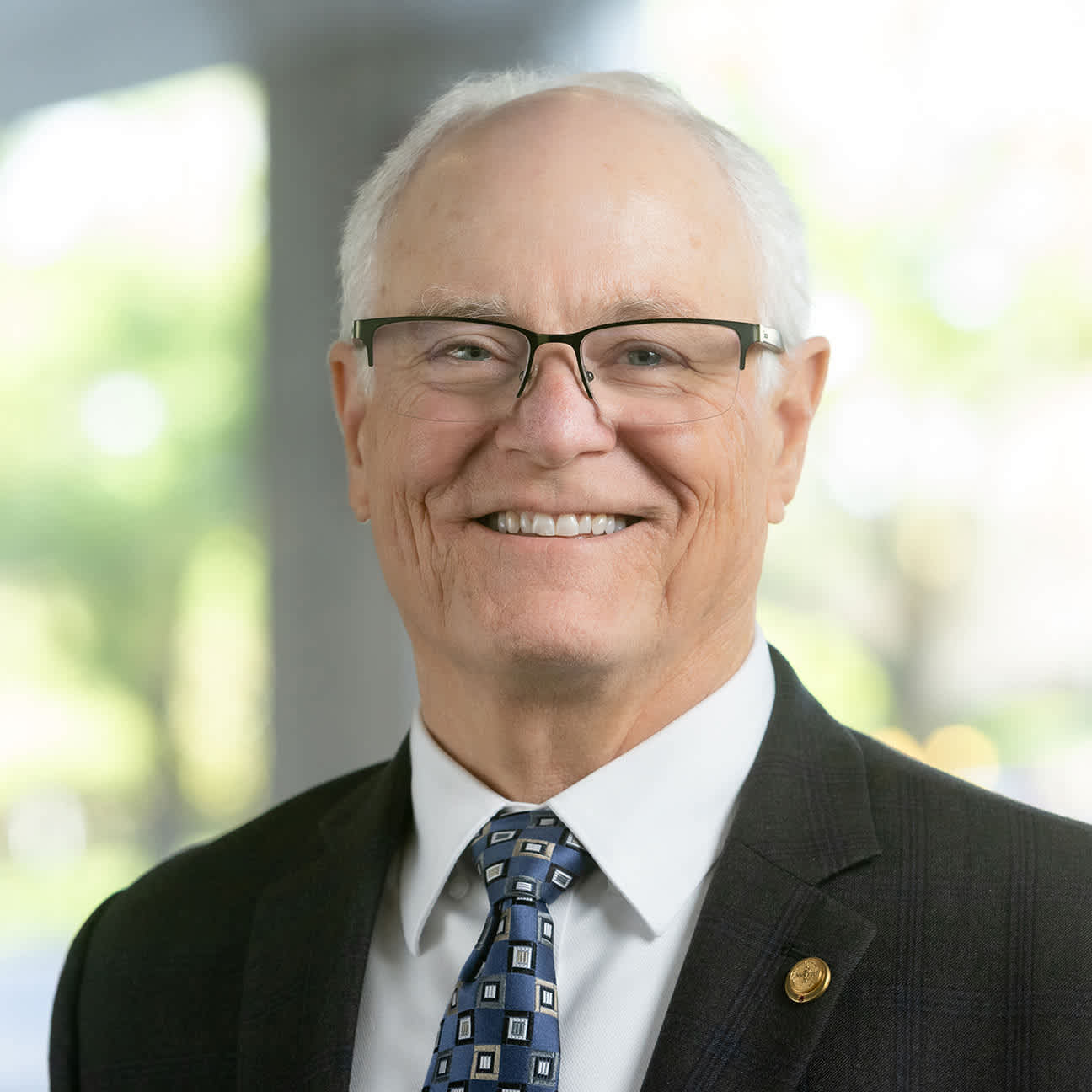
Jeffrey Zavala, MD, FAAFP
Candidate for president-elect
Personal statement
I have a strong interest in serving the AAFP as president-elect. Family medicine is the foundation of our health care system, and I am committed to strengthening its future. My interest in this position is to continue recruiting medical students and removing the burdens of practice to improve the health of all people.
My career reflects a broad range of clinical and leadership experience. I practiced full-spectrum family medicine in rural Montana for 17 years in a community of 1,500 people, including surgical obstetrics, endoscopy, ER, LTC and inpatient care. I then joined a multispecialty private practice, where I gained valuable insights into practice operations and physician leadership in a private practice model.
I returned to Montana to serve as CMO for a regional multispecialty group in Billings. After four years of leadership, I became the CMO of the medical group for Montana and Northern Wyoming. I had the honor of leading a 350-plus-member group of physicians and APPs across 42 clinics and three hospitals, including inpatient and outpatient specialties.
Currently, I teach at Rocky Vista University—Montana College of Osteopathic Medicine. I teach health systems science, ethics and clinical medicine. I am co-director of the first-year clinical sciences curriculum and contribute to leadership development. Drawing on my family medicine experience, I collaborate with colleagues across the curriculum and support teaching wherever needed. This allows me to expose students to family medicine and inspire interest in our specialty.
Through these experiences, I have had the honor to grow my leadership skills and advocate for the physicians I serve. This helped me to understand medical practice from rural to urban and inpatient to outpatient. It has provided me with the skills to advocate for family medicine as an absolute necessity for health care.
Leadership is essential to the future of our field, and the AAFP is fortunate to have an extraordinary leadership team guiding that path. Through my own leadership experience, I have developed skills in finance, strategy, policy, governance, performance management and team building. I would be honored to continue working alongside this team to help reduce the burdens of practice, so our members can focus on what matters most: patient care.
In conclusion, I am interested in being president-elect of the AAFP to continue supporting family physicians in delivering the best evidence-based health care. I also want to continue the current efforts to grow the family medicine specialty. My goal is to serve our members, improve their practice environment and help them deliver the best care. I believe my practice experience and leadership opportunities have prepared me for the work needed as president-elect.
Jeff Zavala, MD, FAAFP’s, background in family medicine, health care administration and teaching has uniquely prepared him for leadership as the AAFP president-elect.
His childhood taught him about urban and rural life, with a mix of school years in Denver and summers on his grandfather’s farm in Iowa. At the University of Denver, he was a sports science major, and exercise physiology and anatomy stirred his interest in medicine. At the University of Colorado School of Medicine, he was mentored by Larry Green, MD, who convinced him to be a family physician.
Residency at Phoenix Baptist provided him with exceptional mentors, Edward Paul, MD, and Greg Vandekieft, MD. Upon finishing, he wanted to work and ski, so he highlighted all the ski areas on a map of the Rocky Mountains and landed in Red Lodge, Montana. After three years, he realized his residency training was strong in clinical medicine, but he needed more procedural training. He applied for a faculty/fellowship in Memphis. After being trained in C-sections, ultrasound and endoscopy, he returned to Red Lodge. In Memphis, he was mentored by Mark Deutchman, MD, and William Rodney, MD. He also learned how much he loved teaching. On returning to Red Lodge, he started teaching students and residents, and volunteering at the Billings family medicine residency.
After 17 years in Red Lodge, the hospital stated it would discontinue OB. At that time, his youngest daughter wanted to attend a ski academy. He took this opportunity to join a multispecialty private practice in Utah, where he learned about private practice operations and leadership.
After four years in Utah, a CMO position in Billings was open. He was excited to move back to Montana, so he applied for the position. Upon returning, he practiced while being the CMO. After two months, he realized it was not good for his patients, so he stopped clinical practice. Initially, he led clinics in the Billings region. After four years, he was asked to take on all the employed physicians and APPs in Montana and Northern Wyoming. The group grew from 130 to 350-plus members, 42 clinics and hospital specialist groups.
Jeff has been active in the AAFP since medical school. He served on the Commission on Membership and Member Services as a student and resident. He was also on the Rural Health Committee as both a member and the committee chair. He wanted to run for the Board of Directors but was too busy. His best friend, Dennis Salisbury, MD, ran for the BOD, and Jeff supported him as he knew Dennis would be a great leader. The year Dennis ran for the BOD he was diagnosed with melanoma. Unfortunately, the AAFP never had Dennis as a leader, as he died from melanoma. This loss reinvigorated Jeff to run, as rural medicine needed more representation. His time on the BOD has been an incredible experience, which is why he chose to run for president.
Currently, he teaches medical students and enjoys giving back to the profession.
Explain how your experiences as a family physician would inform your work on behalf of members as president-elect?
I have experience across multiple domains of family medicine. I practiced full-scope family medicine in a small town, including surgical obstetrics, endoscopy, emergency department care and sports medicine. I also worked in a multispecialty private group where I held a leadership role, giving me direct insight into private practice. Later, I served as regional CMO for a large medical organization with both rural and urban practices. I have taught residents and now work at an osteopathic medical school. This breadth of experience has given me a practical understanding of family medicine across the full continuum—from medical education to frontline clinical practice—and equips me to advocate for family medicine as the foundation of health care.
What unique skills and/or experiences do you have that would be valuable to the AAFP membership if you were elected, and why or how would those skills and/or experiences apply to your new role?
I have intentionally developed a leadership style grounded in listening, trust-building and translating members’ concerns into clear priorities. I would use that approach to help prioritize the work of the AAFP president, strengthen family medicine and advocate for the needs that advance family medicine as a leader in improving health for all people while restoring joy in practice for physicians.
Promoting the value of AAFP membership is an important leadership responsibility. If you were speaking to non-members, what are the top three things AAFP has done or is doing well that you would highlight, and why?
The AAFP has been a consistent, credible voice for evidence-based public health, especially during periods of confusion and misinformation around vaccination, and it continues to advocate for policies that protect the health of the public.
The AAFP continues to work to reduce corporate and governmental burdens in practice. Although meaningful work remains, the AAFP is a strong advocate for protecting the conditions that allow family physicians to deliver excellent care and experience greater joy in practice.
AAFP membership provides strong value through high-quality journals, continuing medical education and practice-enhancement tools that support excellent patient care. In addition, the AAFP gives members a strong advocacy voice with government, payers and corporate medicine.
How would you use your leadership position to address the political divide that is currently happening within our country and in some respects within our community of family physicians? Can you offer an example of a time when you were able to build a consensus or reach a compromise on a contentious issue?
The political divide in our country is significant, and one of the most effective ways to bridge it is to listen respectfully to all sides while focusing on shared goals rather than personal attacks. In medicine, we will always have differing opinions on some issues, but there are also areas where we can find common ground and improve care regardless of personal beliefs. One example from my leadership experience involved quality metrics. One year, several insurance companies and the government required our primary care physicians to report on 35 quality metrics, and even the physicians disagreed about which measures were most appropriate. Through careful evaluation, repeated physician engagement and sustained dialogue, we reduced 35 required quality metrics to five measures that physicians could support. Using evidence from our evaluation and a clear explanation of how the measures would improve patient care, we were able to align payers and government stakeholders around those five metrics. That same approach—listening, identifying shared priorities and grounding decisions in patient care—can help address many of the disagreements within our profession.
The success of the AAFP five years from now will be determined by our ability to do—what?
Strengthen the foundation of medicine by inspiring more students to choose family medicine.
Help the public understand that family medicine delivers high-value, cost-effective care across every practice environment, from frontier and rural communities to urban settings.
Focus on the priorities that unite us as family physicians, especially those that improve patient care, strengthen care delivery and increase the joy of serving our patients.
Ensure that AAFP leadership actively listens to the full breadth of its membership—not only the most visible or vocal voices.
Hello, I am Jeff Zavala, candidate for the AAFP president-elect.
I am honored to have the opportunity to run. I have been active in the state and national AAFP since my second year of medical school. I will continue the work to eliminate practice burden, burnout and, most importantly, make sure everyone knows how vital family medicine is for the health of all people in decreasing chronic illness and lowering the overall cost of health care.
I want to thank you for the work that you are doing through your activity with your state Academy, the AAFP and the Congress of Delegates to help address these issues. The direction that the Congress of Delegates takes helps the AAFP leadership move in the right direction. As a professional organization, we will continue to be successful in improving the health of our patients if we stay focused on what it means to be a family physician, providing the best evidence-based care to our patients. Thanks for your commitment and leadership in improving the AAFP, our members and our patients’ health.
Thanks for your support.
Jeff Zavala, MD

My family and I backpacking close to our home in Montana.