
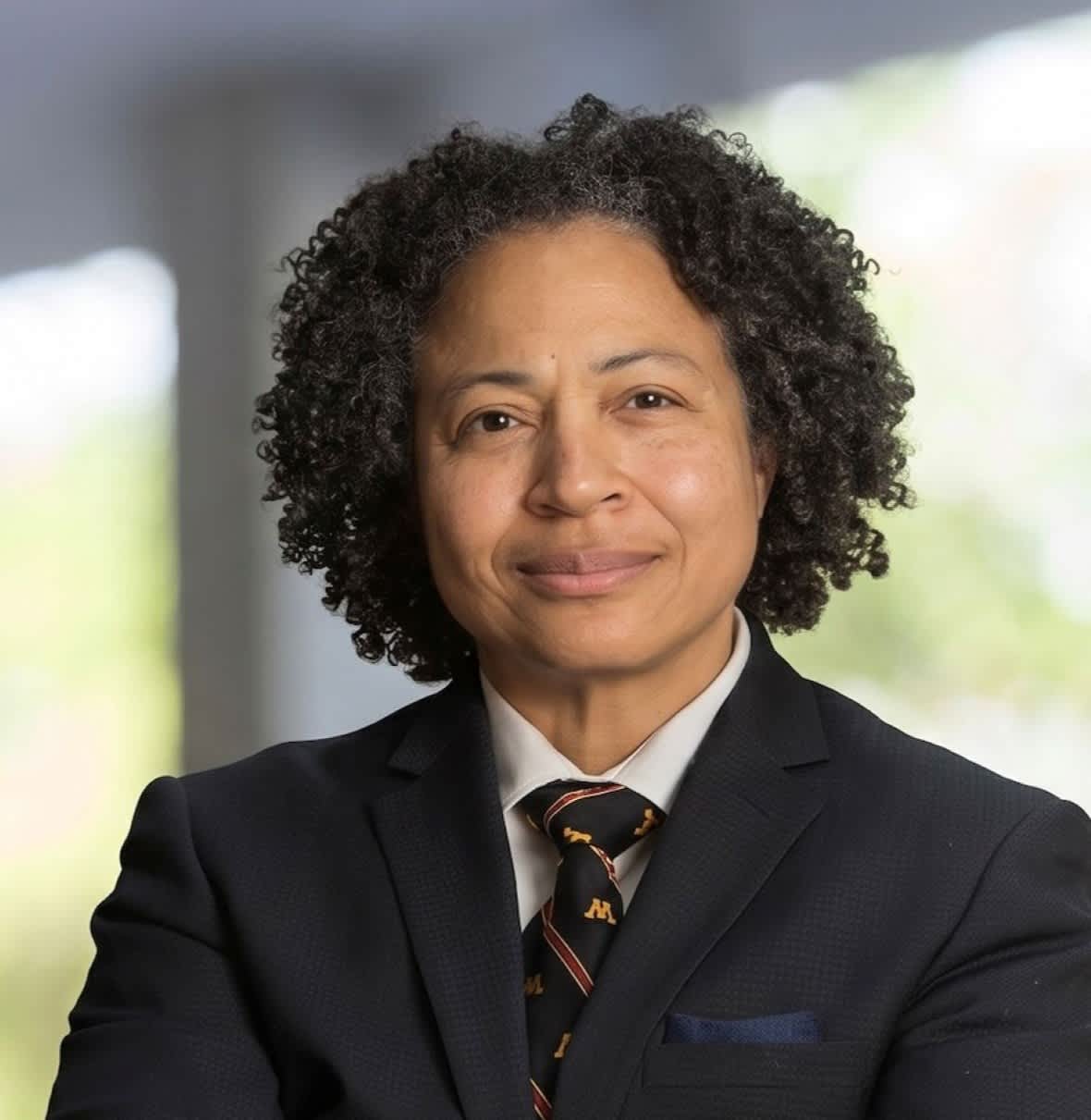
Renee Crichlow, MD, FAAFP
Candidate for director
Personal statement
I am a family physician. I have delivered babies in rural Montana, led campaigns for legislation in Minnesota and managed chronic disease in urban Boston. I have driven 60 miles to work through snow and smoke. I have run a safety-net health center where the budget is tight and the patients are complex and the mission is non-negotiable.
I am running for the AAFP Board of Directors because family medicine needs leaders who have done the work at every level. I have done it in the exam room, the boardroom, the halls of Congress and HHS.
I know what it takes to keep a community health center open. As CMO at Codman Square Health Center in Boston, I balance a budget, recruit and retain a workforce, and make sure every patient who walks through our doors gets the care they deserve. This is not theoretical for me. It is Tuesday.
I know what it takes to build a workforce pipeline. As vice chair of health equity at Boston University School of Medicine and past president of the Society of Teachers of Family Medicine, I have led national efforts to train the next generation of family physicians. I founded The Ladder, a mentorship program that inspires youth from underserved communities to pursue careers in health care. If we do not build the pipeline, there will be no one to do this work after us.
I know what it takes to shape policy. I chaired the AAFP Commission on Federal and State Policy. I served as the Commission’s national liaison to the FamMedPAC Board. I spent three years on the Academic Family Medicine Advocacy Committee, building consensus across STFM, AAFP, ADFM, AFMRD and ABFM. I completed a DHHS Primary Care Health Policy Fellowship. I have been in the rooms where decisions are made and brought the perspective of my patients into those rooms.
I know where health care is going and engaging responsibly with new technologies is paramount. I hold a Harvard Executive Certificate in AI in Healthcare. I am nationally recognized as an expert in the equitable application of AI in medicine. Technology will transform family medicine. The question is whether that transformation serves all of our patients or only some of them. I intend to make sure it serves all of them.
My platform is built on three pillars: primary care payment reform, because our practices cannot survive without it; building a strong workforce pipeline, because our profession cannot grow without it; and responsible engagement with AI, because our future depends on getting it right.
I have practiced in towns where the nearest hospital is 60 miles away and in cities where patients ride three buses to see their doctor. I have seen what works and what fails. Family medicine is strongest when every community has access to a family physician, every practice can sustain itself and every voice is heard.
I am asking for your vote. I will stand up for family medicine. I have done it my whole career. I will not stop now.
Renee Crichlow, MD, FAAFP, is a distinguished health care leader serving as Chief Medical Officer at Codman Square Health Center in Boston and vice chair for health equity at Boston University's Department of Family Medicine. With over 20 years of experience in family medicine and obstetrics, she has emerged as a national expert in health equity and the intersection of artificial intelligence with health care delivery. She additionally serves as a lecturer at the Harvard T.H. Chan School of Public Health, teaching leadership in health equity and health policy to health system executives.
As medical editor for diversity, equity and inclusion at the American Family Physician journal and past president of the Society of Teachers of Family Medicine, Dr. Crichlow continues to influence medical education and practice nationally. She is also the past chair of the AAFP Commission on Federal and State Policy, where she guided the Academy's federal advocacy program and supported constituent chapters in their state-level advocacy efforts.
In 2011, Dr. Crichlow founded The Ladder, an innovative program providing cascading mentorship to students from underrepresented groups interested in health care careers. The program creates a structured environment for service learning and leadership development, connecting students from fourth grade through practicing physicians.
A graduate of the University of California, Davis, School of Medicine, Dr. Crichlow's career has included roles as associate medical director at Riverstone Community Health Center, Billings, Montana, and vice chair of Advocacy and Policy at the University of Minnesota's Department of Family and Community Medicine. She held the inaugural Mac Baird Endowed Chair for Family Medicine Advocacy and Policy, and completed specialized training through Harvard's Crisis Leadership Higher Education program.
Throughout her career, Dr. Crichlow has focused on practice redesign, payment reform and building primary care workforce capacity, particularly emphasizing providing comprehensive health services to underserved communities. Her expertise in equity in artificial intelligence has positioned her as a leading voice in health care's technological transformation.
"If the wind changes direction, we may lose the town."
I heard those words over the phone in the middle of a clinic day in Montana. My neighbors were already out on the fire line, protecting the homes where our children would sleep. I drove toward the smoke and went on call, ready for whoever came through the door.
That is what family medicine has always meant to me. We stand the line for the people who count on us.
I'm Dr. Renée Crichlow, and I would be honored to have your vote for the AAFP Board of Directors.
These days, I serve as chief medical officer of a safety-net health center in Boston. I have cared for patients in rural and urban clinics, worked in state and federal policy, and mentored young people who look like the families we serve. I also hold formal training in AI in health care.
Primary care is under strain.
Payment is broken.
The workforce is thin.
New technology outpaces our guardrails.
I have spent my career on all three.
Let's keep our practices strong and our patients cared for.
I am asking for your support, and I am grateful for it.
I am Renee Crichlow, MD, FAAFP, and proudly a family physician.

Mentoring the next generation: my daughter and her friend shadowing hospital rounds with me.
Explain how your experiences as a family physician would inform your work on behalf of members as a member of the Board?
I have lived and practiced family medicine across the full American landscape. I have lived in a town of 3,000. I have practiced medicine in towns of 900 people and in cities of more than a million. Rural and urban. Today I see patients and serve as chief medical officer at Codman Square Health Center, a community health center in Dorchester, Boston, where our patients carry some of the heaviest chronic disease burdens in Massachusetts.
That range matters, because our members practice everywhere. Every day I see what they see. Prior authorization delays that put patients at risk. Staffing shortages that stretch teams past their limits. Payment that does not cover the cost of good care. I have watched those same problems play out in a 900 -person town and in a major city. The details change. The fight is the same.
I learned early to pair practice with policy. In 2005 I was the National Rural Health Association's Department of Health and Human Services Primary Care Health Policy Fellow, trained through that longitudinal health policy fellowship in Washington, D.C. That training taught me how decisions made far from the exam room land inside it.
Board work is fiduciary work. It is also representation. My job would be to carry the exam room into the boardroom. When the Board weighs a policy, I would ask the questions members would ask. Does this help the physician seeing 30 patients tomorrow? Does it help the resident deciding whether to stay in this specialty? Does it help the patient waiting three months for an appointment, whether that patient lives in a small town or a big city?
I also serve as a vice chair of the Department of Family Medicine at Boston University, where I have trained residents, mentored students and led clinical teams. As chief medical officer I manage budgets, quality programs and clinical operations. I know what it costs to run a practice and where the margins break.
Family medicine gave me my career and my purpose. Members deserve a board that knows their work from the inside, in every setting where family physicians serve. I do.
What unique skills and/or experiences do you have that would be valuable to the AAFP membership if you were elected, and why or how would those skills and/or experiences apply to your new role?
Three experiences set me apart.
First, I have led through both ends of the pandemic. I was president of the Minnesota Academy of Family Physicians when COVID-19 arrived. Guidance changed daily. Fear ran high. We launched a statewide COVID-19 Project ECHO that gave family physicians clear, current, usable clinical guidance week after week. Then, as president of the Society of Teachers of Family Medicine, I led that society as we rebuilt and emerged from the pandemic. I know how to lead into a crisis and how to lead out of one. Boards face uncertainty. I have governed through the worst of it.
Second, I know the policy machinery. I chaired the AAFP Commission on Federal and State Policy. This year I co-authored a JAMA paper proposing that primary care be treated as a public utility, with funding and accountability to match. In Massachusetts I have worked on primary care payment legislation and prior authorization reform. I know how a bill becomes law, and I know how often it does not. Advocacy takes persistence and relationships. I bring both.
Third, I run things. I am chief medical officer of a federally qualified health center and I am completing an MBA at Boston University. I manage clinical operations, quality incentive programs and financial performance. I can read a balance sheet and pressure-test a strategic plan. Boards govern organizations. Governance requires financial and operational literacy.
Two more things. I founded The Ladder, a mentorship program that connects young people from underserved communities to healthcare careers, one hands-on session at a time. Pipeline work is slow and it is essential, and I have done it for years with my own hands. And I have become a national voice on equity in artificial intelligence in healthcare. AI will reshape our specialty within this board term. Members need leaders who understand its promise and its risks, and who will make sure the technology serves patients and physicians rather than the other way around.
Chapter president. Society president. Commission chair. Health center executive. Mentor. Every role taught me the same lesson. Show up, listen hard, do the work.
Promoting the value of AAFP membership is an important leadership responsibility. If you were speaking to non-members, what are the top three things the AAFP has done or is doing well that you would highlight, and why?
I would tell a non-member three things.
First, the Academy fights for you. It is family medicine's full-time advocate in Washington and in every state. Medicare payment. Prior authorization reform. Administrative burden. Training standards. No employer will fight those fights for you. The Academy does, every day, with a professional advocacy team and the credibility of more than 120,000 members behind it. Your dues buy a seat at tables you will never have time to sit at yourself.
Second, the Academy respects your time. American Family Physician is one of the most read journals in medicine because it answers clinical questions quickly and well. AAFP CME is practical, evidence-based and built by family physicians for family physicians. I served as a medical editor at AFP, and I saw the rigor from the inside. I am stepping down from that role now to make space, which is what leaders should do. For a working physician, the right answer in five minutes is worth more than the perfect answer in an hour.
Third, the Academy is where you find your people. Chapters. Member constituencies. Special interest groups. Family medicine can be isolating, in small practices and in large systems alike. The Academy connects you to colleagues who share your work and your values. Careers grow there. Leaders grow there. Mine did. I walked into a chapter meeting years ago as a member looking for community. The Academy handed me a ladder, and I have spent my career extending it to others.
How would you use your leadership position to address the political divide that is currently happening within our country and in some respects within our community of family physicians? Can you offer an example of a time when you were able to build a consensus or reach a compromise on a contentious issue?
Patients do not come to clinic as Democrats or Republicans. They come as people who are sick, scared or trying to stay well. Family medicine trains us to meet people where they are. That training is my answer to this question.
Our members disagree with each other on real issues. That is normal in an organization of more than 120,000 physicians. A leader's job is to keep disagreement from becoming division. I do that the way I have always done it. Listen first. Anchor every discussion in evidence and in patients. Keep the language clinical. Assume good faith. Protect the relationships, because we will need each other for the next fight.
Here is an example. In March 2020 I was president of the Minnesota Academy of Family Physicians when the pandemic hit. Within weeks, basic public health measures became political flashpoints. Our members spanned the full spectrum. Rural solo physicians and metro employed physicians. Every political view in the state. Some faced patients angry about masks. Others faced practices collapsing under canceled visits. Emotion ran high on every side.
We could have issued statements and let the chips fall. Instead we built our response around what every member needed regardless of politics. In spring 2020 we launched the MAFP COVID-19 ECHO, a virtual telementoring and CME series built with partners at the University of Minnesota and Hennepin Healthcare. Each session covered what frontline physicians needed that week. Evolving testing guidance. PPE distribution. State protocols, with Minnesota Department of Health leadership at the table. The overnight shift to telemedicine while keeping ambulatory care safe. And health equity, because communities of color were carrying a disproportionate burden of the pandemic and our members needed the facts and the tools to respond.
The equity sessions could have split the room. They did not. We kept every session clinical, practical and grounded in what physicians were seeing in their own exam rooms. We held listening calls and took notes while members vented. When we spoke publicly, we spoke about patients and evidence. Physicians who disagreed about masks and mandates kept showing up week after week, because the ECHO was useful to all of them and respectful to all of them. The chapter stayed unified through the most divisive period in modern medicine.
The lesson I carry: Consensus is built on usefulness and respect before it is built on agreement. As a Board member I would apply that discipline to every contentious issue in front of the Academy. Start with what members share. The exam room. The patients. The fight to keep this specialty strong. That common ground is bigger than anything dividing us.
The success of the AAFP five years from now will be determined by our ability to do—what?
Our ability to change how primary care is paid.
Everything the Academy wants for its members follows from payment. Payment determines whether a medical student can afford to choose family medicine. It determines whether an independent practice survives, whether an employed physician gets enough time with patients and whether a community health center keeps its doors open. Payment determines joy in practice, because burnout is what happens when the work you are asked to do exceeds the resources you are given to do it.
This year I co-authored a JAMA paper arguing that primary care should be treated as a public utility. Essential infrastructure, funded like infrastructure, accountable like infrastructure. The evidence is settled. More primary care means longer lives, lower costs, and less inequity. No other part of the health system can make that claim. Yet the United States spends roughly five cents of every health care dollar on primary care, and the share has been falling.
Five years from now, success looks like this. Hybrid and prospective payment models that fund whole teams and whole relationships. Medicare payment reform that ends the annual cuts. States with primary care spending targets that have teeth. Practices with the margin to breathe. Margin is sovereignty. When a practice controls its finances, it controls its future.
If we get payment right, the pipeline follows. Students choose specialties with viable futures. The Ladder taught me that young people from every community will reach for medicine when they can see a path. Our job is to make family medicine a path worth reaching for.
The Academy has the members, the evidence, and the credibility to lead this. What it requires from the Board is focus. Payment is the lever. I am asking for the chance to help pull it.