
Terry "Lee" Mills, Jr., MD, MMM, CPE, FAAFP, FACHE
Candidate for director
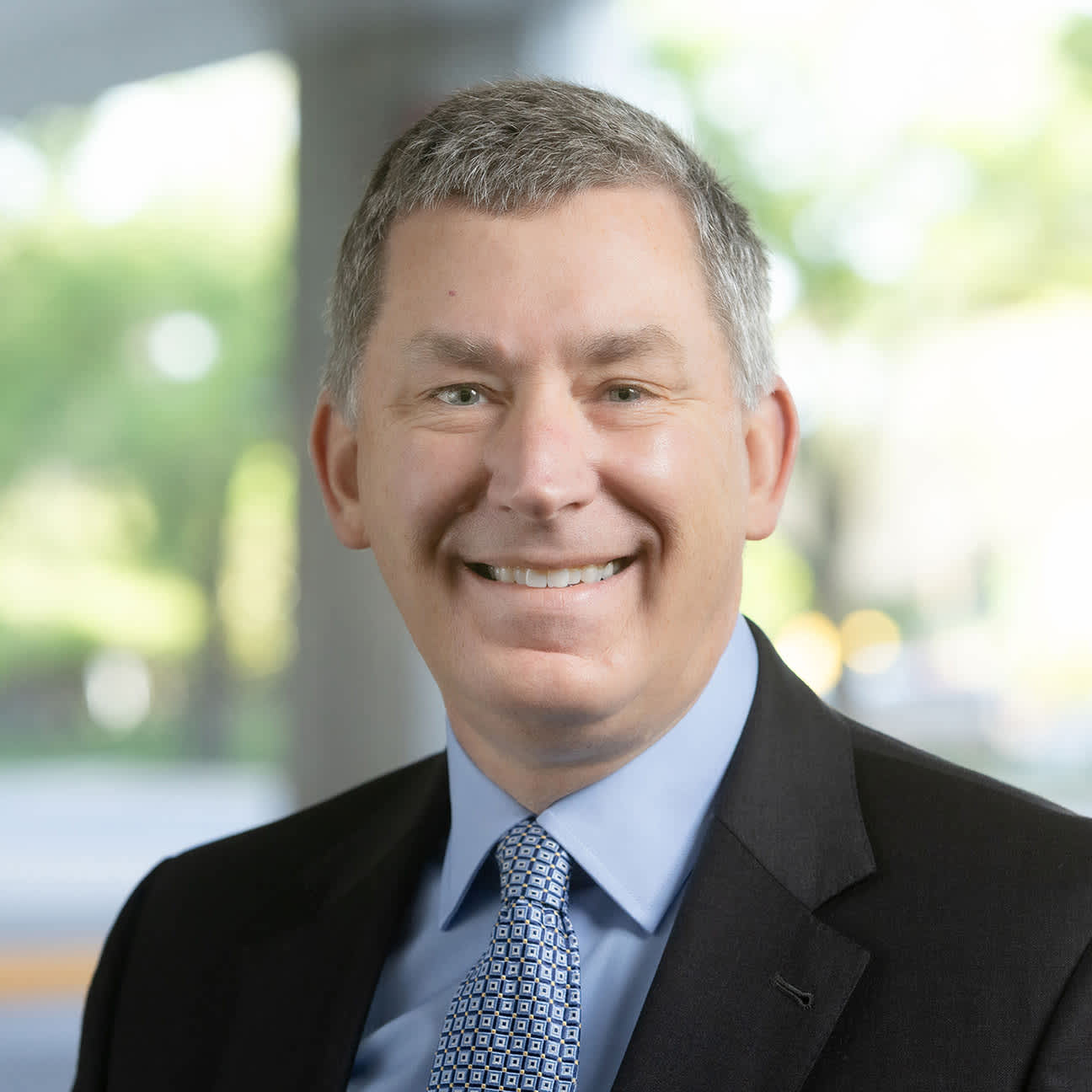
Personal statement
The AAFP has been my professional home since I was a medical student. I was welcomed by my state chapter, appointed to an AAFP committee, elected convener of the National Conference of Student Members and ultimately served as student member of the AAFP Board of Directors.
Through those early experiences, I found my people. I found colleagues who shared my aspirations and worries: friends, mentors, supporters of dreams and scholar-warriors. I had wanted to be a family physician since I was 6 years old, and the AAFP made that dream feel real, knowable, achievable and honorable.
I also had the extraordinary fortune to be mentored by future AAFP presidents and legends of our specialty. I saw firsthand the dedication of AAFP’s volunteer leaders and professional staff, and I came to understand family medicine as both a calling and a force for better health in America. Those experiences have shaped how I have practiced, led and served ever since.
I am seeking to serve on the AAFP Board of Directors because I love family medicine, believe deeply in its future, and want to give back to the profession and organization that have given me so much. At every stage of my career, the AAFP has been there—advocating for members, equipping physicians and championing the essential role of family medicine in the lives of our patients and communities. I am eager to help carry that mission forward.
My career has taken me across the full breadth of family medicine: hospital and ICU care, ambulatory practice, maternal-child care, home visits and nursing homes, gritty trauma bays in Iraq, and end-of-life care. I have practiced and led in rural and urban communities, physician-owned and employed practices, medical groups and health systems, and health plans. Those experiences have given me deep insight into the many ways family physicians serve and the many challenges we face.
Today, I serve as chief medical officer of Aetna Better Health of Oklahoma, working to improve care for our Medicaid members while actively reducing administrative burden on clinicians. I remain involved in patient care as a hospice medical director, supporting patients and families through some of life’s most difficult moments. This keeps me grounded in both the systems that shape care and the relationships at its heart.
Over the years, I have served family medicine through the AAFP, two state chapters and multiple national leadership roles. Those experiences have taught me to listen well, build trust and bring people together around shared purpose. We are indeed better together.
This is a pivotal moment. Care delivery, payment systems and technology are changing at a breathtaking pace, and family medicine has never been more essential. I would be honored to bring my experience and relentless drive to serve you on the AAFP Board of Directors—and to work with colleagues across the country to strengthen our specialty, support our members, advocate for meaningful change, and improve care for the people we love and the communities we call home.
Terry “Lee” Mills Jr., MD, MMM, CPE, FAAFP, FACHE, is a family physician, physician executive and long-standing leader in organized family medicine whose career spans full-scope rural practice, medical group and health system leadership, health plan executive leadership, and national payment policy and innovation.
Dr. Mills brings broad experience across the full breadth of family medicine. Over his career, he has cared for patients in ambulatory practice, hospitals and ICUs, skilled nursing facilities and nursing homes, and across the life continuum from maternity to end-of-life care. He has practiced in physician-owned, employed and military settings and led in medical groups, hospitals, health systems and health plans. He has mentored medical students and residents as a clinical associate professor at the University of Kansas School of Medicine–Wichita and authored articles for Family Practice Management. He has led through accreditations, EMR implementations, informatics challenges and practice transformations. These experiences have given him detailed, granular insight into the daily challenges facing family physicians and the patients they serve.
A former student member of the AAFP Board of Directors, Dr. Mills currently serves as a delegate to the AAFP Congress of Delegates from Oklahoma, having previously served as delegate from Kansas. His Academy service includes chairing the Commission on Finance and Insurance, the Commission on Quality and Practice, and the Commission on Practice Enhancement, as well as service on multiple other commissions and Congress committees. He has served on the boards of both the Oklahoma and Kansas chapters, including as president and board chair of the Kansas Academy of Family Physicians. He also represented the AAFP on the AMA RUC for 11 years, fighting for economic equity and fair payment for family physicians.
Dr. Mills currently serves as chief medical officer of Aetna Better Health of Oklahoma, leading clinical strategy and operations for a 190,000-member managed Medicaid plan. In that role, he works to support family physicians and patient care by reducing administrative barriers, increasing resources and payment for primary care and advancing practical alternative payment models. He also remains involved in direct patient care as a hospice medical director, supporting patients and families through serious illness and end-of-life care. In addition, he chairs the U.S. Department of Health and Human Services’ Physician-Focused Payment Model Technical Advisory Committee, advising the secretary of HHS on physician-focused payment models and value-based care.
Throughout his career, Dr. Mills has pursued a single-minded purpose: to improve the health of the people we love and the communities we call home by making care better for patients, caregivers and clinicians.
Lee and his wife, Dianna Mills, PsyD, are high school sweethearts and live in Tulsa, Oklahoma. They have three adult sons and two daughters-in-law: Matthew and Noelle, Mark and Katie, and Micah. They enjoy family and friends, three grand puppies, serving RiverOaks Presbyterian Church, reading and British TV murder mysteries, backpacking and camping, and travel of all kinds, including recent adventures hut-hiking Iceland’s Laugavegur Trail and sailing in the Caribbean.
Dear delegates, alternate delegates, colleagues and friends,
I am Lee Mills, and I am grateful for the opportunity to seek your support to serve on the AAFP Board of Directors.
The AAFP has been my professional home since medical school. Through the Academy, I found mentors, friends and a community that helped make my childhood dream of becoming a family physician come true. My vision for the AAFP remains clear: an Academy that is not only essential, but indispensable, to each of us.
My career has adapted and grown with the needs of my family and community. At each step—as a rural and military family physician, hospice and nursing home medical director, health system and health plan leader, chapter president, AAFP commission chair, and national payment policy advocate—I have tried to serve patients and family medicine with gratitude, humility and purpose. I remain driven to improve care for the people we love and the communities we call home.
This is a pivotal moment. Care delivery, payment, technology and workforce expectations are changing rapidly, and family medicine must lead to what comes next.
I hope you will take a few minutes to learn more.
I would truly welcome your questions, thoughts, or conversation anytime.
Cordially,
Lee
Terry “Lee” Mills, MD, MMM, CPE, FACHE, FAAFP

Mills family, Glacier National Park, August 2021
Explain how your experiences as a family physician would inform your work on behalf of AAFP members as a member of the Board?
My work on the AAFP Board would begin where my career began: in the exam room of a rural family practice. In a small community, your practice becomes whatever your community needs, and the hopes, fears, struggles, and aspirations of patients and families arrive in your office every day. In just such a place, I cared for patients across the full span of our profession, from maternity care and deliveries through hospital and ICU care, office practice, home visits, nursing-home care and the end of life.
Those years brought a bedrock truth to life: Family medicine is more than a collection of services. It is a relationship, a responsibility, and a promise to remain present and authentic alongside your patients.
In the midst of a wonderful practice, I also remember the daily frustrations of practice: the thousand small cuts that consume time, drain energy and steal joy from the work we love. Those experiences became a powerful motivation for me to seek solutions—not only for my own practice, but for all of us. As a practice owner, clinic leader and medical group executive, I learned how staffing, technology, regulation, poorly designed systems and payment policy can either support family physicians or make excellent care unnecessarily difficult.
My career later expanded into health-system strategy, practice transformation, primary care operations and health-plan leadership. I have practiced and led in physician-owned and employed settings, medical groups, hospitals and health systems, the military, and health plans across both fee-for-service and value-based models. This breadth has taught me that no single practice model encompasses all of family medicine and that one-size-fits-all solutions rarely serve our members or patients well.
It has also allowed me to see health care from both the delivery and payer perspectives and to understand how decisions made far from the exam room ultimately reach the physician and patient. I know that a policy is not successful simply because it is well-intentioned; it must work for the family physician caring for a patient on a busy Tuesday afternoon.
My service within the AAFP has deepened that perspective. I have chaired three commissions focused on health care services, practice enhancement and finance; served in the Congress of Delegates representing two states; represented family medicine in national payment-policy forums; and previously served on the AAFP Board as a medical student. These roles have taught me to listen across differences, translate frontline experience into policy, and advocate with both credibility and persistence.
As a member of the Board, I will bring the breadth of my experience, as well as the memory of sitting with a worried family, struggling to make an unworkable system work, and still trying to do the right thing for the patient in front of me. I will work to ensure that the AAFP remains not merely essential, but indispensable across the full diversity of our members’ careers—helping us do better today while building a better future for family medicine.
What unique skills and/or experiences do you have that would be valuable to the AAFP membership if you were elected, and why or how would those skills and/or experiences apply to your new role?
I would bring to the AAFP Board a combination of experiences that is unusual in breadth and especially relevant to the challenges ahead for family medicine.
My career has been spent building, operating and leading the organizations where physicians care for patients every day. I began in full-scope, physician-owned rural private practice and later served as a clinic leader, medical group executive, primary care operational leader, health system strategist, and health plan chief medical officer. Although I have greatly enjoyed teaching and precepting in my practice as a volunteer clinical associate professor, my perspective has been shaped primarily by the practical realities of practice: recruiting and supporting staff, meeting financial obligations, selecting technology, improving access and quality, responding to regulation, and preserving time and joy for patient care.
I also bring an uncommon ability to bridge care delivery, financing and technology. I have led practice transformation and clinical informatics in a medical group, directed population health and quality work in health systems, sat at the AMA RUC table where relative values are developed, and now lead clinical strategy for a 190,000-member Medicaid plan. This experience connects what too often remains separate: how care is delivered, valued, financed and experienced by a busy physician.
Across more than two decades of payment-policy work and health plan leadership, I have learned how policy decisions are made—and how they ultimately land on a physician’s schedule, inbox, payroll and patient. I also understand both the legitimate responsibilities of payers and the friction their tools can create. As a family physician and health plan chief medical officer, I have brought physician and patient realities into those decisions and helped substantially reduce prior-authorization requirements in my plan.
Few leaders have stood on all four sides of that table—delivery, technology, valuation and financing—and that vantage point is exactly what the Board needs as value-based payment, AI-enabled tools, and administrative complexity all accelerate at once. That perspective would help the Board move past abstraction and ask sharper questions, anticipate unintended consequences, distinguish promising innovation from added burden and develop practical tools.
Having lived and led across many parts of health care, I can see most issues from multiple interlocking perspectives. That breadth gives me not only practical insight but also genuine empathy for our members, colleagues and partners whose experiences may differ from my own. I understand that no single practice model or career path represents all of family medicine, and that effective solutions must respect the diverse realities in which our members serve.
My 24 years in the U.S. Army Reserve Medical Corps, including multiple active-duty deployments, also strongly shaped my understanding of mission and service. Deployment means putting your normal life and practice on hold, leaving your family, and focusing completely on work that needs to be done for others. Family physicians live out that same spirit of mission every day—in exam rooms, hospitals, FQHCs, classrooms and practices across the country.
My distinctive contribution would be the ability to connect vision with execution, policy with practice, and strategy with the breathtaking pace of change in our members' lived experiences. I would bring broad expertise, practical judgment, proven ability to implement solutions at scale, and deep respect for the work our members and their teams do every day, along with a determination to ensure the AAFP helps them succeed in that mission.
Promoting the value of AAFP membership is an important leadership responsibility. If you were speaking to non-members, what are the top three things the AAFP has done or is doing well that you would highlight, and why?
When speaking with family physicians who are not currently members, I would highlight three ways the AAFP makes membership matter.
First, the AAFP creates genuine opportunities for connection, influence and leadership. Through Member Interest Groups, meetings such as FUTURE and the National Conference of Constituency Leaders, commissions and the Congress of Delegates, members find colleagues who share their interests and experiences, as well as others who broaden their perspective. Through such avenues, the Academy provides clear pathways for students, residents, new physicians, constituency leaders and practicing family physicians to move from local and state involvement into national policy and leadership. Across all these avenues for engagement and growth, the AAFP lives out an important truth: Far more unites and binds us as family physicians than divides us.
Second, the AAFP produces resources that help practicing physicians every day. Our educational offerings are much more than a journal or an occasional meeting. The Academy has built a broad ecosystem of clinically credible, immediately useful education that connects patient care with practice operations and management. Members learn not only what to do clinically, but also how to make it work through better coding, billing, documentation and practice systems. The Family Medicine Career Benchmark Dashboard is another excellent example. This new resource provides invaluable information about compensation and career trends for any member negotiating employment agreements, renewing contracts, discussing leadership compensation, considering a career change or evaluating practice models.
Third, the AAFP converts advocacy into meaningful improvements in policy, practice and payment. Much of this work happens behind the scenes, but the Academy has earned tremendous credibility and access with policymakers, regulators, and other national organizations. Recent examples include the 2021 revision of office and outpatient E/M code values through the AMA RUC process, implementation of the G2211 longitudinal complexity add-on code in 2024 and its subsequent expansion by CMS, Medicare Advantage prior-authorization reforms and support for the growing movement among states to devote a greater share of healthcare spending to primary care. These efforts affect the daily realities of practice by improving recognition and payment for the comprehensive, continuous care we provide while also reducing barriers that frustrate physicians and patients alike.
We still have much more work to do, and we have not achieved everything we hoped for in every situation. But day in and day out, the AAFP is in the conversations that matter to our practices and our patients. It has delivered tangible results today while continuing to work toward the better future our patients deserve.
For me, the value of membership comes down to this: stronger connections, stronger practices, and stronger voices. The AAFP helps us find our people, equips us to provide better care and build better careers, and amplifies our collective voice. It reminds us that no family physician has to do this work alone.
How would you use your leadership position to address the political divide that is currently happening within our country and in some respects within our community of family physicians? Can you offer an example of a time when you were able to build a consensus or reach a compromise on a contentious issue?
I will use my leadership position to show that we can lower the temperature without lowering our principles and seek common ground without settling for the lowest common denominator.
Political division becomes most damaging when people stop listening, assume the worst of one another, or believe that disagreement means someone no longer belongs. I would work to ensure the AAFP remains a place where disagreement does not become disrespect, where every member feels heard and where our shared calling remains larger than any single issue that divides us.
My leadership style is inclusive and collaborative, grounded in humility, mutual respect, accountability and the recognition that we depend on one another. In difficult conversations, I try to remain curious, assume positive intent, listen to understand, and remain grounded in the values and commitments we share.
I believe leaders have a responsibility to surface disagreement rather than allow it to remain hidden. Issues left unspoken rarely disappear; more often, they harden into mistrust. Bringing them into the light through a fair process and with a genuine willingness to learn creates the possibility of progress.
I have learned (sometimes by falling into the trap myself) that contentious issues are often framed as binary choices: One side wins, and the other loses. Usually, there are more possibilities than we initially see. Leadership requires keeping the conversation open long enough to discover them.
I experienced this as chief medical officer when my organization and its health system owners faced an important strategic decision. I advocated for a multimillion-dollar investment in an integrated patient-relationship platform that would give every employee serving a patient the same up-to-date view of communications, clinical needs, care gaps, authorizations and billing. I believed it would improve service, quality of care and coordination while keeping us true to our mission of serving every patient as if they were family.
Other leaders favored different paths, including reducing the clinical footprint, emphasizing sales and marketing, or narrowing the network. Rather than allowing the discussion to divide us, I listened for the legitimate needs beneath each proposal and worked to keep the team engaged with one another. Through exploration and discovery, we found that the new platform could address important elements of the competing strategies while opening opportunities for strategic growth that none of us had initially recognized. By committing to our shared values and goals and remaining open to exploring together, we reached consensus on a path that was stronger than any of our original positions.
Unanimity is not always possible, nor should it be the measure of good leadership. The goal is understanding, trust, and forward movement rooted in the best of what we hold together. I believe in progress over positions and relationships over being right. In this way, I could help the AAFP remain a professional home where family physicians with different experiences and convictions can continue working together for the mutual benefit of our patients, our communities and our specialty.
The success of the AAFP five years from now will be determined by our ability to do—what?
The AAFP’s success five years from now will be determined by our ability to do two things: Help family physicians lead the economic reorganization of medicine, and remain true to the heart of Family Medicine while adapting and growing to meet a changing world.
First, we must help family physicians lead the transformation of payment and practice models. The health care system is moving, slowly but inexorably, from volume-based fee-for-service toward value-based payment. That long-awaited change represents both a tremendous opportunity and a genuine threat to our specialty.
In a value-based system, family physicians should be the keystone of care. We know our patients, understand our communities, coordinate care across settings, and prevent fragmentation and unnecessary expense. But we can fulfill that role only if we are properly paid, adequately supported and structurally empowered. The AAFP must help define how primary care is valued and reimbursed, guard against models that commoditize family physicians, and provide members with the education, tools and practical models they need to thrive. The pace of change is accelerating, and simply surviving will not be enough. We must help our members understand what is coming, approach it with confidence and lead through it with purpose.
Second, we must modernize family medicine without losing what makes it indispensable. Patient expectations, new care models, changing workforce realities and technologies such as artificial intelligence are transforming healthcare faster than our culture, payment systems and regulations can adapt. Patients increasingly expect care on their terms and on their time. We must respond constructively while protecting the comprehensive, continuous, whole-person relationships at the heart of our specialty.
That will require us to rethink how we collaborate with other health care professionals at times, including nurse practitioners and physician assistants. They are not family physicians and cannot replace the breadth of our training, clinical judgment or accountability. Yet they are essential members of today’s workforce and valuable partners in addressing the growing crisis in access to primary care.
Whenever possible, the AAFP should champion well-designed, physician-led teams in which every professional contributes fully within the scope of their training, roles are clearly defined and each team member’s expertise is respected. The family physician remains responsible and accountable for integrating and leading comprehensive, whole-person care, while each team member brings their skills, commitment and caring heart to serving their community.
We will not always agree, and there will be times when the AAFP must take a firm stand. But we should be known not only for what we oppose, but for what we affirm: accessible, relationship-based, physician-led care for every patient. We must also race to embrace technology that reduces burden, improves access, and gives family physicians more time to listen, understand and care.
The challenge of our time is clear: to shape change rather than merely endure it, to embrace innovation without surrendering our identity, and to lead family medicine forward without leaving its heart behind.