

As the recent Ebola epidemic demonstrated, the world is not only smaller than ever, but it is also more intricately connected. Exotic diseases once confined to the third or developing world are now everyone's concern. Global has truly become local.
Having some knowledge of and competencies in global health is not only relevant, but also essential, for every family physician. Many family physicians work in remote areas of the world delivering direct patient care, teaching, promoting the specialty of family medicine, and designing regional and national health care systems. Many more work at home with multicultural, socioeconomically diverse patient populations. A survey of U.S. clinicians in various specialties noted respondents' beliefs that global health work is “synergistic with physicians' work in the United States,” and can inform and enhance their work domestically.1 Table 1 provides resources for opportunities in global health. Family physicians may also want to consider attending a global health conference or meeting for networking purposes; resources are provided in Table 2. Table 3 lists nongovernmental and other organizations that offer service trips or networking opportunities.
Table 1. Resources for Opportunities in Global Health
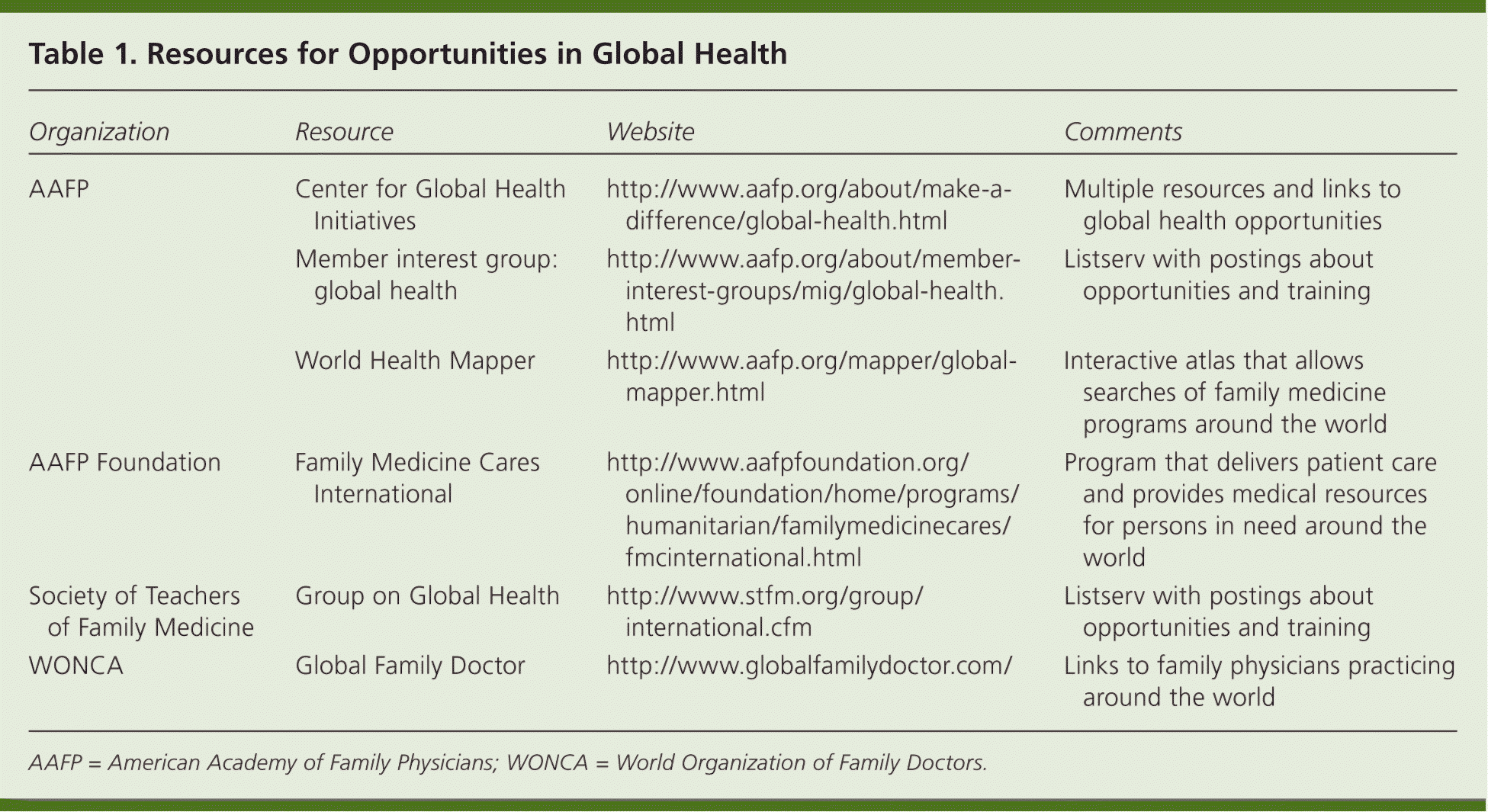
| Organization | Resource | Website | Comments |
|---|---|---|---|
| AAFP | Center for Global Health Initiatives | https://www.aafp.org/about/make-a-difference/global-health.html | Multiple resources and links to global health opportunities |
| Member interest group: global health | https://www.aafp.org/about/member-interest-groups/mig/global-health.html | Listserv with postings about opportunities and training | |
| World Health Mapper | https://www.aafp.org/mapper/global-mapper.html | Interactive atlas that allows searches of family medicine programs around the world | |
| AAFP Foundation | Family Medicine Cares International | https://www.aafpfoundation.org/online/foundation/home/programs/humanitarian/familymedicinecares/fmcinternational.html | Program that delivers patient care and provides medical resources for persons in need around the world |
| Society of Teachers of Family Medicine | Group on Global Health | http://www.stfm.org/group/international.cfm | Listserv with postings about opportunities and training |
| WONCA | Global Family Doctor | http://www.globalfamilydoctor.com/ | Links to family physicians practicing around the world |
AAFP = American Academy of Family Physicians; WONCA = World Organization of Family Doctors.
Table 2. Annual Global Health Conferences and Meetings
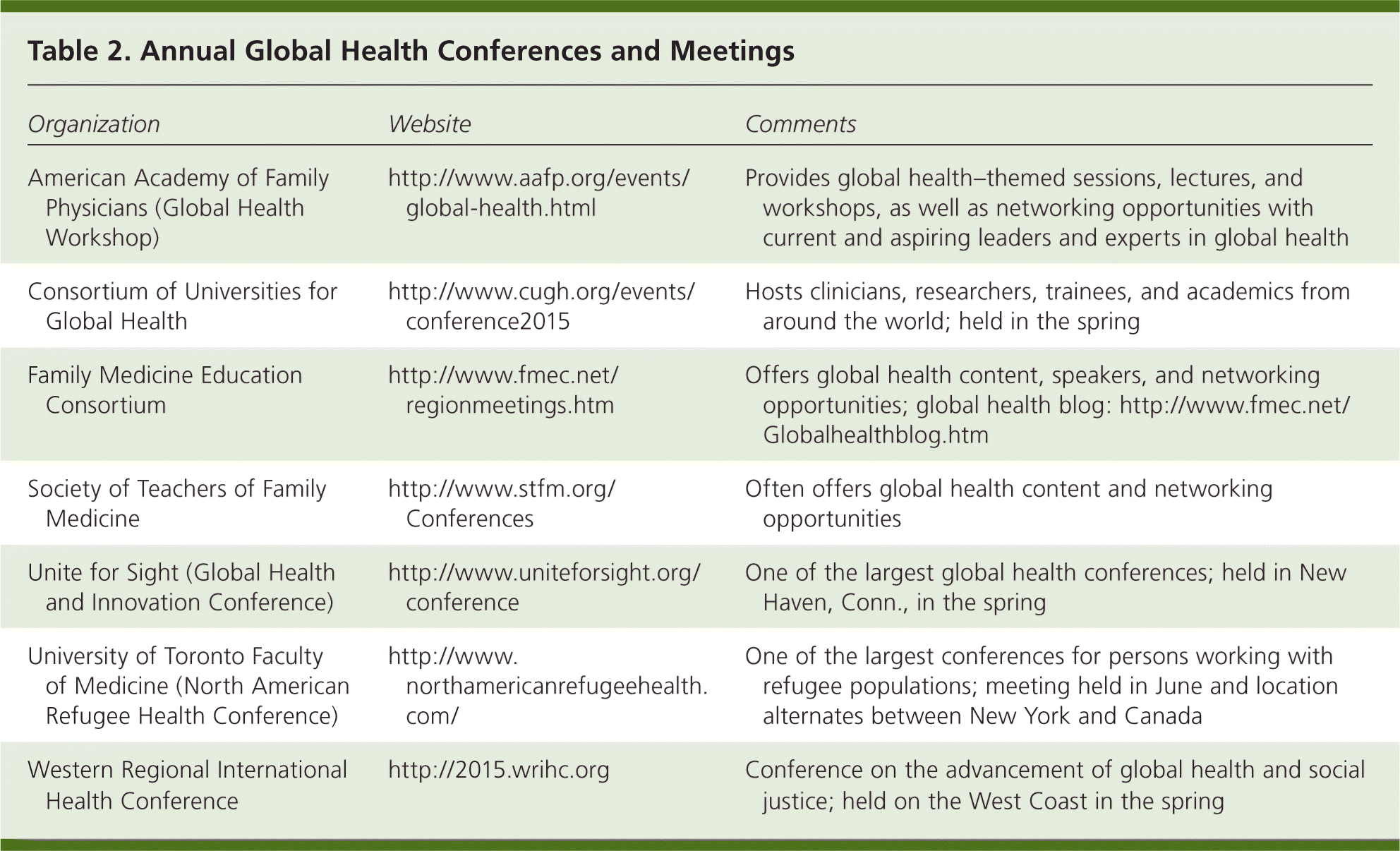
| Organization | Website | Comments |
|---|---|---|
| American Academy of Family Physicians (Global Health Workshop) | https://www.aafp.org/events/global-health.html | Provides global health–themed sessions, lectures, and workshops, as well as networking opportunities with current and aspiring leaders and experts in global health |
| Consortium of Universities for Global Health | http://www.cugh.org/events/conference2015 | Hosts clinicians, researchers, trainees, and academics from around the world; held in the spring |
| Family Medicine Education Consortium | http://www.fmec.net/regionmeetings.htm | Offers global health content, speakers, and networking opportunities; global health blog: http://www.fmec.net/Globalhealthblog.htm |
| Society of Teachers of Family Medicine | http://www.stfm.org/Conferences | Often offers global health content and networking opportunities |
| Unite for Sight (Global Health and Innovation Conference) | http://www.uniteforsight.org/conference | One of the largest global health conferences; held in New Haven, Conn., in the spring |
| University of Toronto Faculty of Medicine (North American Refugee Health Conference) | http://www.northamericanrefugeehealth.com/ | One of the largest conferences for persons working with refugee populations; meeting held in June and location alternates between New York and Canada |
| Western Regional International Health Conference | http://2015.wrihc.org | Conference on the advancement of global health and social justice; held on the West Coast in the spring |
Table 3. Organizations That Offer International Service Trips or Networking Opportunities
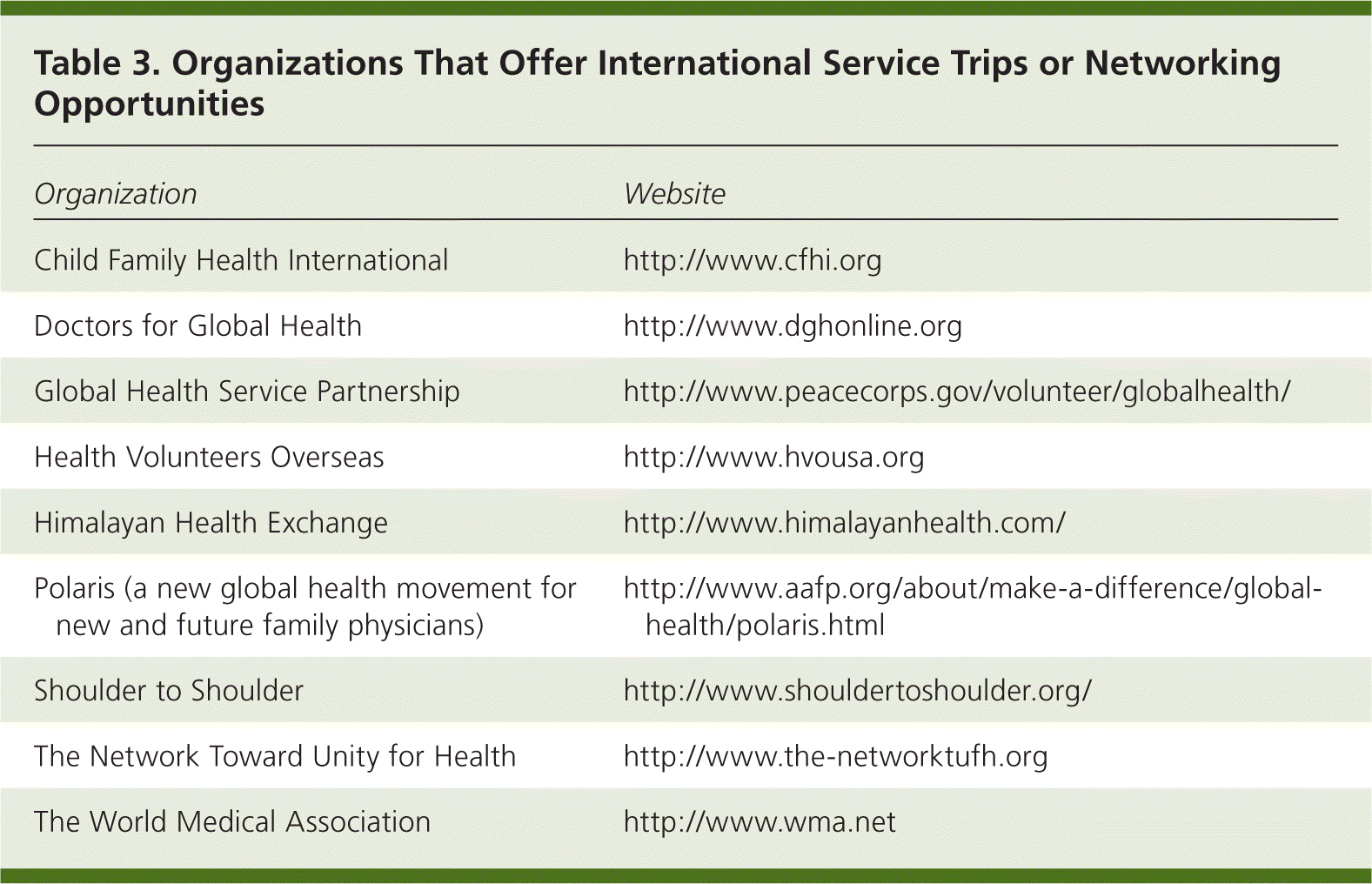
| Organization | Website |
|---|---|
| Child Family Health International | http://www.cfhi.org |
| Doctors for Global Health | http://www.dghonline.org |
| Global Health Service Partnership | http://www.peacecorps.gov/volunteer/globalhealth/ |
| Health Volunteers Overseas | http://www.hvousa.org |
| Himalayan Health Exchange | http://www.himalayanhealth.com/ |
| Polaris (a new global health movement for new and future family physicians) | https://www.aafp.org/about/make-a-difference/global-health/polaris.html |
| Shoulder to Shoulder | http://www.shouldertoshoulder.org/ |
| The Network Toward Unity for Health | http://www.the-networktufh.org |
| The World Medical Association | http://www.wma.net |
More than 40 million immigrants have made the United States their home for a variety of reasons, including those that are economic- and education-based.2 More than 3 million refugees have arrived in the United States since 1975,3 with nearly 90,000 persons seeking asylum in 2012 alone,4 and almost 70,000 new refugees arriving in 2013 as part of the U.S. Department of State's resettlement program.5 Family physicians and family medicine residents will encounter persons from these international populations who bring with them a wide variety of health practices, risks, and conditions, similar to those that their colleagues are seeing in other parts of the world, such as Africa, Asia, or the Middle East. Table 4 provides resources for working with international populations domestically. Moreover, Americans, numbering in the tens of millions, travel overseas every year for business, pleasure, or to visit family and friends, potentially being exposed to endemic infectious diseases.6
Table 4. Resources for Working with International Populations Domestically
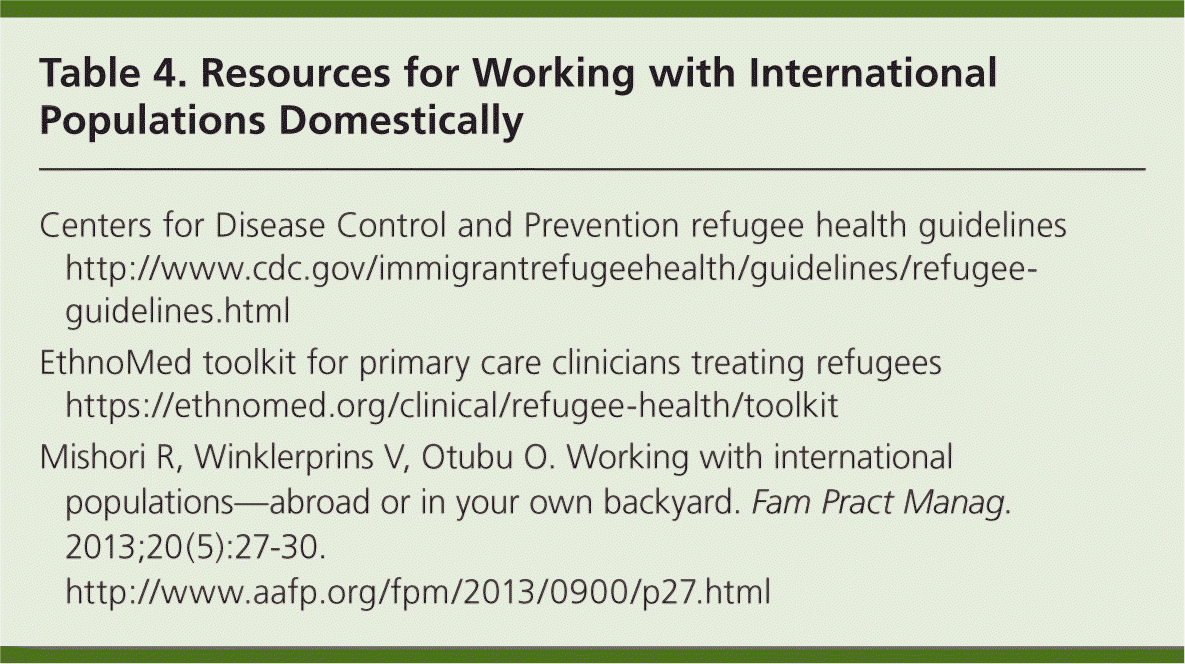
| Centers for Disease Control and Prevention refugee health guidelines | |
| http://www.cdc.gov/immigrantrefugeehealth/guidelines/refugee-guidelines.html | |
| EthnoMed toolkit for primary care clinicians treating refugees | |
| https://ethnomed.org/clinical/refugee-health/toolkit | |
| Mishori R, Winklerprins V, Otubu O. Working with international populations—abroad or in your own backyard. Fam Pract Manag. 2013;20(5):27–30. | |
| https://www.aafp.org/fpm/2013/0900/p27.html | |
Global health exposure internationally and locally helps develop a broader health system perspective, greater attention to the social determinants of health, and an understanding of population health concepts. Engaging in global health can bolster cross-cultural competencies, along with the desire to work in resource-poor settings. Additionally, it can strengthen skills and passion to care for underserved populations domestically.7–11 A few studies have even suggested an association between global health experiences and an increased interest in primary care.12,13
According to some surveys, volunteering overseas may offer additional benefits. A Scandinavian study documented several themes for clinicians' motivation to work globally, which included a desire to contribute, and a search for personal development and self-knowledge, new experiences, and more satisfying and stimulating work compared with their routine jobs.14 Similar sentiments related to giving back to the world have been noted in other articles and include sharing skills and knowledge, learning about different cultures, addressing job dissatisfaction, providing opportunities for charity work, and increasing personal growth. The rewards of volunteering in these settings have often been described as “gaining more than giving.”15–21
Interest in global health has been increasing steadily among family physicians and family medicine trainees. There is a growing realization among family medicine leaders and colleagues that family physicians are uniquely poised to contribute to health access, equity, and capacity building. Family physicians' broad skill set, community orientation, focus on prevention, and education that stresses the incorporation of social determinants and community health into clinical decision making give them an advantage in global health efforts at home and abroad.22 From a systems perspective, family medicine's emphasis on team models of care, integration of population health with individual clinical care, and increasing access and cost-effectiveness are exemplary of global health in action.22
Another area in which family medicine is uniquely positioned to contribute globally is advocacy. The professional identity of family physicians makes them champions of international health policy reform, of global workforce enhancements, and of shifting research agendas and practice models that put the well-being of all patients and communities first. Family physicians provide a focus on the whole patient within the context of family, community, and, ultimately, the world.
These are among the key features that make family medicine stand out on the global stage, as highlighted in 2013 by Dr. Margaret Chan, general director of the World Health Organization. In her keynote address at World Organization of Family Doctors' (WONCA's) 2013 annual meeting in Prague, Chan declared, “Primary care is our best hope for the future. Family doctors are our rising stars for the future.”23 For many, the future is already here.
