

After the initial approval of pneumococcal conjugate vaccines for adults, pneumococcal immunization recommendations became increasingly complex.1,2 In 2015, the Advisory Committee on Immunization Practices (ACIP) recommended that all individuals 65 years or older receive the 13-valent pneumococcal conjugate vaccine (PCV13; Prevnar 13) followed by the 23-valent pneumococcal polysaccharide vaccine (PPSV23; Pneumovax 23). However, subsequent analysis showed that herd immunity from childhood PCV13 vaccination made the vaccine less necessary in older adults.2 As a result, the 2019 guidelines recommended shared decision-making about PCV13 for patients 65 years or older followed by PPSV23.2
Many primary care physicians may find it impractical to have this nuanced discussion with so many other preventive care and chronic disease management topics to address in a typical office visit. In addition, risk-based approaches to pneumococcal vaccination in younger adults have been complex and may be a contributing factor to suboptimal uptake in this population. Prior risk-based approaches included different recommendations for patients with immunosuppressing or chronic medical conditions. With the 2021 approval of PCV15 (Vaxneuvance) and PCV20 (Prevnar 20), the ACIP has greatly simplified pneumococcal vaccination recommendations.
PCV15 and PCV20 are conjugate vaccines that provide durable protection because of a T cell–dependent mechanism of action and resulting memory B cell formation that provide mucosal immunity. In contrast, PPSV23, a capsular polysaccharide vaccine that induces an immune response via release of immunoglobulin from B cells, does not result in mucosal immunity, and protection wanes over five to six years. Compared with the PCV13 vaccine, the PCV15 and PCV20 vaccines cover additional strains that cause about 15% and 27% of invasive pneumococcal disease in patients 65 years or older and 13% and 28% of disease in patients 19 to 64 years of age with underlying conditions, repectively.3 Studies have shown that overall immunogenicity of PCV20 alone or PCV15 plus PPSV23 is similar to PCV13 plus PPSV23.3 Both PCV15 and PCV20 are expected to be safe and well-tolerated, with no serious adverse events noted in clinical trials.3
New Recommendations for Pneumococcal Vaccination in Adults
AGE-BASED RECOMMENDATION
All patients 65 years or older should be given either PCV20 once or PCV15 followed by PPSV23 at least one year later.
SIMPLIFIED RISK-BASED RECOMMENDATIONS
The ACIP has removed distinctions among people with chronic medical conditions, immunocompromising conditions, or underlying conditions (e.g., cochlear implants, cerebrospinal fluid leaks). Patients with a high-risk condition (Table 13) should receive one dose of PCV20 or a combination of PCV15 and PPSV23. The only difference is that for the combination regimen, clinicians may shorten the interval between doses to eight weeks when a patient has an immunocompromising condition. For adults who are not immunocompromised, waiting for at least one year is preferred because of improved immunogenicity.4
TABLE 1. High-Risk Conditions for Invasive Pneumococcal Disease
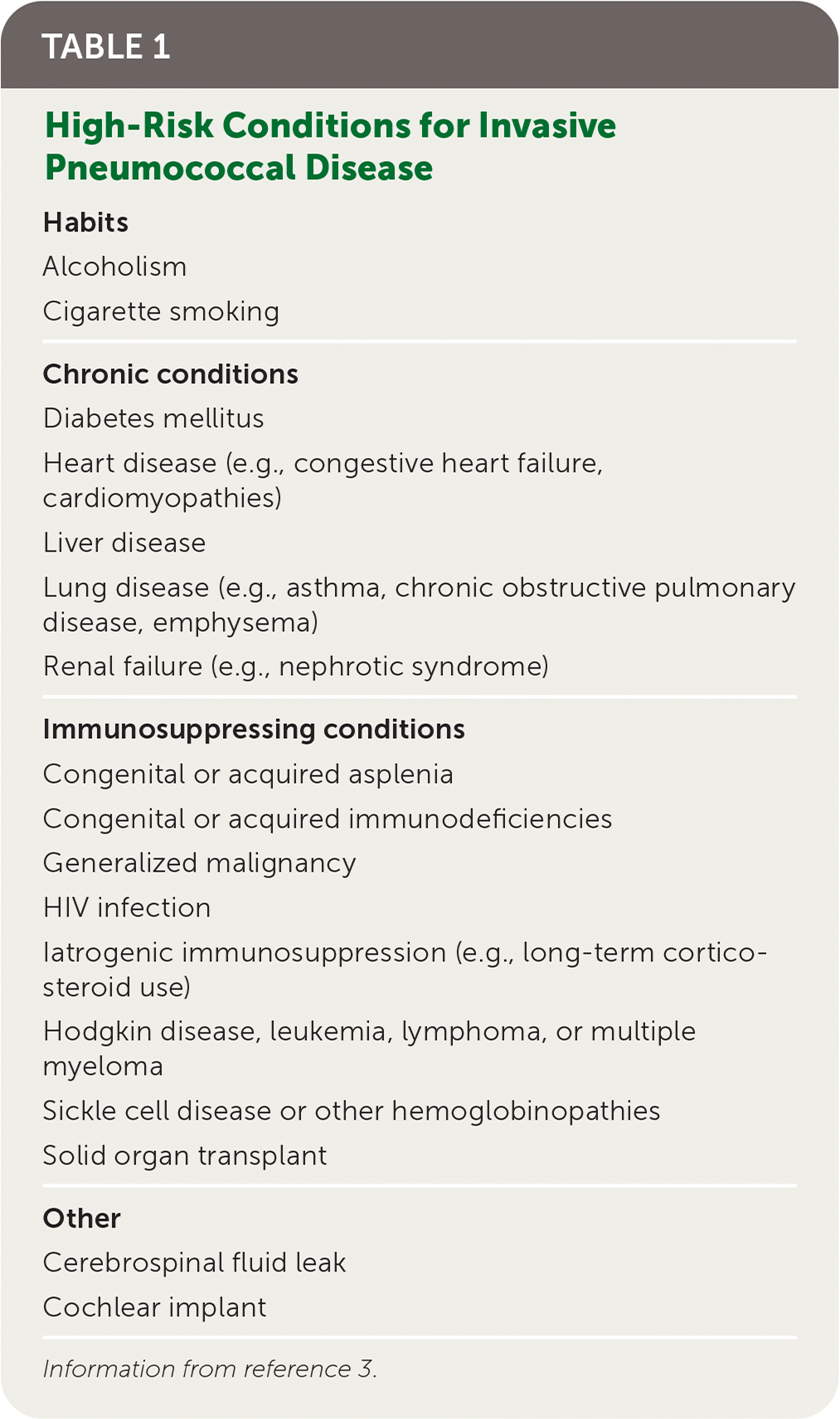
| Habits |
| Alcoholism |
| Cigarette smoking |
| Chronic conditions |
| Diabetes mellitus |
| Heart disease (e.g., congestive heart failure, cardiomyopathies) |
| Liver disease |
| Lung disease (e.g., asthma, chronic obstructive pulmonary disease, emphysema) |
| Renal failure (e.g., nephrotic syndrome) |
| Immunosuppressing conditions |
| Congenital or acquired asplenia |
| Congenital or acquired immunodeficiencies |
| Generalized malignancy |
| HIV infection |
| Iatrogenic immunosuppression (e.g., long-term corticosteroid use) |
| Hodgkin disease, leukemia, lymphoma, or multiple myeloma |
| Sickle cell disease or other hemoglobinopathies |
| Solid organ transplant |
| Other |
| Cerebrospinal fluid leak |
| Cochlear implant |
Information from reference 3.
RECOMMENDATIONS FOR PATIENTS WHO HAVE ALREADY RECEIVED ONE PNEUMOCOCCAL VACCINE
Adults who have received PPSV23 alone may be given PCV20 or PCV15 after at least one year. PPSV23 is not administered again for those given PCV15 after initially receiving PPSV23. Patients who received only PCV13 should complete the series with PPSV23; however, it is acceptable to use PCV20 if PPSV23 is not available.3 Patients who have completed the PCV13 plus PPSV23 series do not need additional vaccination with PCV15 or PCV20.
WHAT SEROTYPE COVERAGE IS LOST BY USING PCV20 ONLY VS. PCV15 PLUS PPSV23?
About 8% of invasive pneumococcal disease in adults 65 years or older is caused by strains that are not covered by PCV20 but are covered by PPSV23. For those 19 to 64 years of age with high-risk conditions, the percentage rises to 15% of strains. This omission may not be clinically meaningful because the conjugate vaccine has superior immunogenicity to the polysaccharide vaccine, but this consideration might lead a clinician to recommend the PCV15 plus PPSV23 option for certain patients.5
WHY NOT START PNEUMOCOCCAL VACCINATION FOR ADULTS AT 50 YEARS OF AGE?
After considering the evidence and cost-effectiveness data, the ACIP voted 11 to 4 against lowering the universal vaccination age from 65 to 50 years. The rationale was that adults 65 years or older and high-risk adults 19 to 64 years of age account for more than 90% of adults with invasive pneumococcal disease. In addition, it is not known how quickly immunity will wane, which is a potential concern if the vaccine is given at age 50.5
Future Considerations
PCV15 and PCV20 are expected to be approved for use in children within the next year or so. As increasing numbers of children are vaccinated, herd immunity may result in diminished need for adult pneumococcal immunization and perhaps a return to a shared decision-making approach. More research is needed to determine whether people with other conditions, such as obesity, should be added to high-risk groups for pneumococcal vaccination.
Simplicity at Last
Although we have not yet achieved the relative simplicity of the 1980s and 1990s when PPSV23 was the only pneumococcal vaccine available for adults, the new guidelines come close. Indeed, if a clinic wants to stock only one pneumococcal vaccine for adults, the PCV20 vaccine could meet the needs of all adult patients. These new straightforward guidelines will hopefully help increase suboptimal pneumococcal vaccination rates, which remain around 70% for patients 65 years or older and less than 25% for individuals with high-risk conditions.6
