

For the past 27 years I have been editing American Family Physician (AFP) in some role or another, but the experience of editing the journal these past two years has been like no other. Although the pandemic posed significant challenges, there were some positive outcomes during this time too. For example, the editing team seamlessly transitioned to working virtually. An online section called COVID-19 Daily Research Briefs was developed to regularly summarize key studies.1 October 2020 was the first time we published an article that has been updated twice to keep up with the changing literature on outpatient COVID management, and another update is underway.2 We revived Diary of a Family Physician to foster a sense of camaraderie and pride in our specialty.3 Most importantly, we committed to enhancing our content and processes to confront systemic racism and health inequities, and we continue to collaborate with other journals in doing so.4
The purpose of this annual editorial is to introduce new members of our editing team, highlight the top 20 articles from the previous year, provide print circulation and website statistics, and thank our peer reviewers.5–8
Medical Editing Fellow and Resident and Student Representatives
The AFP team welcomes Dr. Jarrett Sell as the 2022–2023 Jay Siwek Medical Editing Fellow. Dr. Sell is an associate professor in the Department of Family and Community Medicine at Penn State Hershey Medical Center. Since 2014, he has also served as the medical director of Alder Health Services, a health center dedicated to caring for individuals living with HIV/AIDS and members of the LGBTQ+ community in South Central Pennsylvania. He is a seasoned author and has been published in several journals, including AFP. He is now learning the behind-the-scenes editing processes. You can read more about his background and interests in the AFP Community Blog at https://afpjournal.blogspot.com/2022/04/introducing-2022-23-afp-jay-siwek.html.
In addition to a fellow, AFP also has resident and student representatives who assist with various projects throughout the year. They typically serve annual terms from January through December. This year we have two resident representatives: Dr. Erin Fredrickson from the University of Washington Family Medicine Residency Program, Seattle, and Dr. Lilian White from the Cleveland Clinic Family Medicine Residency Program, Ohio. Our student representative is Jack Kennady from the University of the Incarnate Word School of Osteopathic Medicine, San Antonio, Tex. More information about these positions is available at https://www.aafp.org/afp/residentrep and https://www.aafp.org/afp/studentrep.
The AFP Photo Contest is a new project that last year's resident and student representatives created. Residents and students were encouraged to share their stories about how they use AFP through photographs. In the November 2021 issue, we published the photos of three winners with very creative submissions (https://www.aafp.org/afp/2021/1100/p442.html). We also posted several honorable mentions online and on social media. We will welcome submissions for this year's contest in July, so stay tuned for the announcement.
AFP's Top 20 Articles of 2021
Do not miss the top 20 AFP articles that were most viewed by readers online last year (https://www.aafp.org/journals/afp/content/top-articles.html). Popular article topics include hip pain in adults, onychomycosis, irritable bowel syndrome, home blood pressure monitoring, care of the college student, eating disorders, health maintenance for women, alcohol withdrawal, telemedicine management of musculoskeletal issues, and several more.
The top 10 AFP Community Blog posts of 2021 were highlighted in the December 27, 2021, post (http://afpjournal.blogspot.com/2021/12/the-top-ten-afp-community-blog-posts-of.html). Topics include patient-centered discussions on COVID-19 disease and vaccines, interpretation of COVID-19 diagnostic tests, long COVID, low back pain, angiotensin II receptor blockers and angiotensin-converting enzyme inhibitors for hypertension, and pharmacogenetics.
Our article on the top research studies of 2021 for primary care physicians will be published in the July 2022 issue. Until then, it can be viewed online at https://www.aafp.org/afp/ebell2.html. A collection of POEMs and the top 20 research studies for primary care physicians that have been published in AFP is available at https://www.aafp.org/journals/afp/content/top-poems.html.
Circulation and Website Statistics
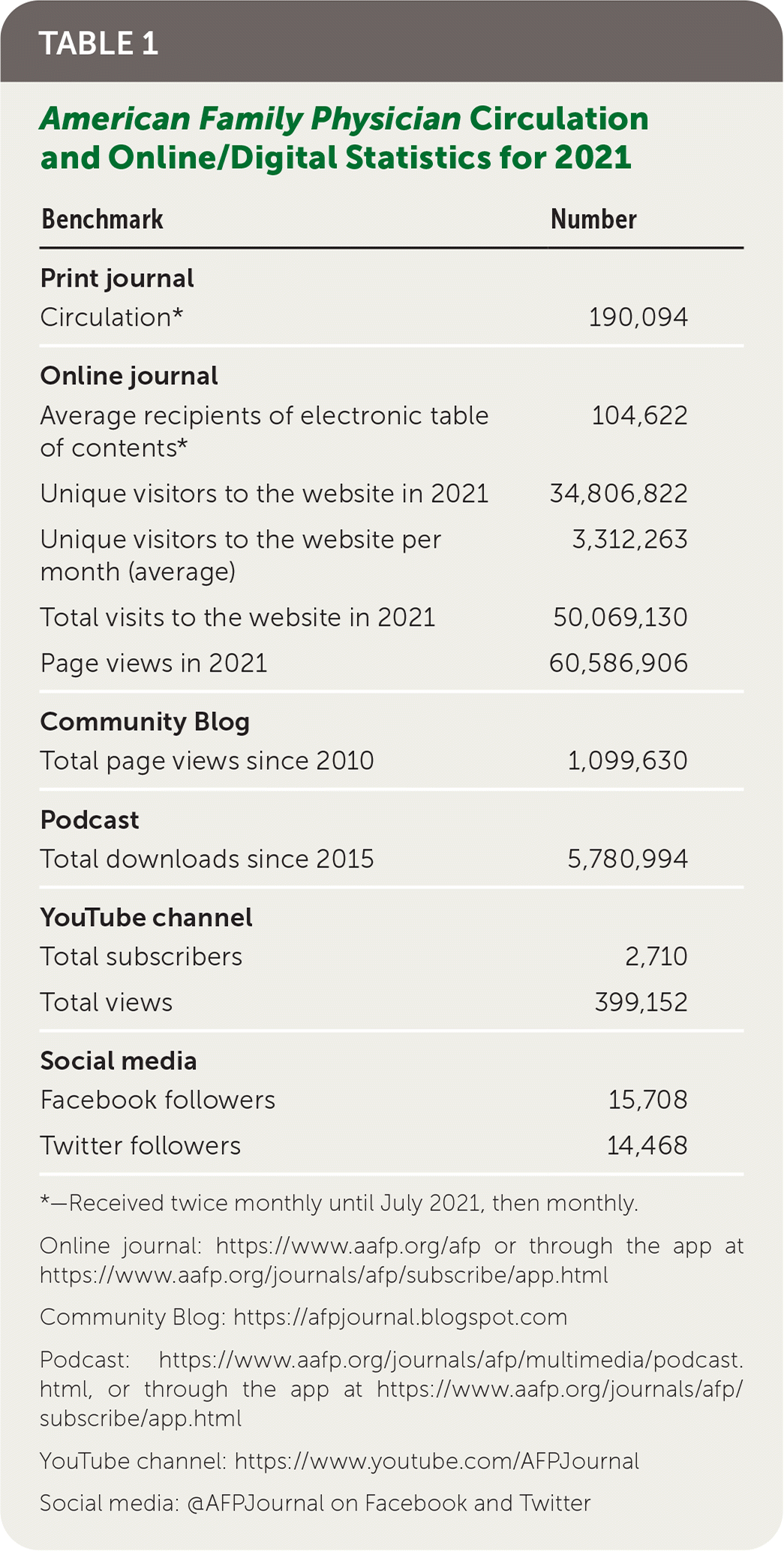
The circulation of AFP's print journal is more than 190,000 (Table 1). To the best of our knowledge, it is the second-largest circulation of any medical journal, based on an independent publication auditing firm.9 As of July 2021, the journal has been published once monthly instead of twice monthly. AFP has consistently been rated the number one journal among primary care physicians.6
TABLE 1. American Family Physician Circulation and Online/Digital Statistics for 2021
| Benchmark | Number |
|---|---|
| Print journal | |
| Circulation* | 190,094 |
| Online journal | |
| Average recipients of electronic table of contents* | 104,622 |
| Unique visitors to the website in 2021 | 34,806,822 |
| Unique visitors to the website per month (average) | 3,312,263 |
| Total visits to the website in 2021 | 50,069,130 |
| Page views in 2021 | 60,586,906 |
| Community Blog | |
| Total page views since 2010 | 1,099,630 |
| Podcast | |
| Total downloads since 2015 | 5,780,994 |
| YouTube channel | |
| Total subscribers | 2,710 |
| Total views | 399,152 |
| Social media | |
| Facebook followers | 15,708 |
| Twitter followers | 14,468 |
*—Received twice monthly until July 2021, then monthly.
Online journal: https://www.aafp.org/afp or through the app at https://www.aafp.org/journals/afp/subscribe/app.html
Community Blog: https://afpjournal.blogspot.com
Podcast: https://www.aafp.org/journals/afp/multimedia/podcast.html, or through the app at https://www.aafp.org/journals/afp/subscribe/app.html
YouTube channel: https://www.youtube.com/AFPJournal
Social media: @AFPJournal on Facebook and Twitter
The AFP website received an average of 3.3 million unique visitors per month (attributable to a unique browser or device) in 2021, making it one of the most popular online medical publications. This means that in addition to visits by almost all AAFP members, the website is viewed by millions of other health care professionals and others who presumably are seeking information about various clinical conditions. Additionally, about 460,000 of the journal's CME quizzes have been taken annually since 2017, and approximately 2.6 million credits were awarded in 2021.
Publication Timelines and Acceptance Rates
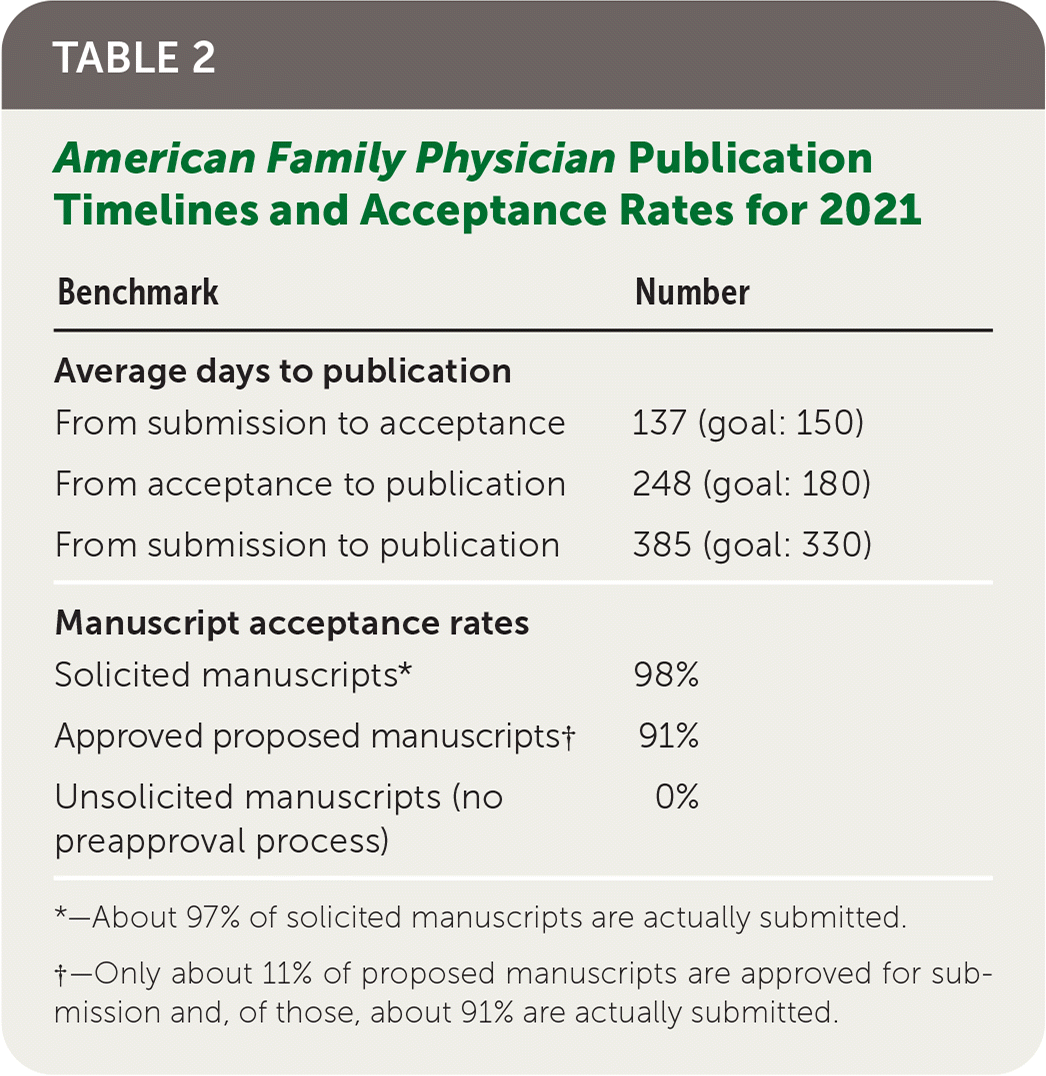
On average, review articles are accepted a little under five months after they are submitted, which allows time for peer review, author revisions, and medical editing (Table 2). Articles are typically published eight to nine months after acceptance. A lot goes into the selection of articles for each issue to provide readers with a mix of topics. Articles that go online ahead of print are typically published online within four months of acceptance. In 2021, we published six articles online ahead of print. So far in 2022, we have published three articles online ahead.
TABLE 2. American Family Physician Publication Timelines and Acceptance Rates for 2021
| Benchmark | Number |
|---|---|
| Average days to publication | |
| From submission to acceptance | 137 (goal: 150) |
| From acceptance to publication | 248 (goal: 180) |
| From submission to publication | 385 (goal: 330) |
| Manuscript acceptance rates | |
| Solicited manuscripts* | 98% |
| Approved proposed manuscripts† | 91% |
| Unsolicited manuscripts (no preapproval process) | 0% |
*—About 97% of solicited manuscripts are actually submitted.
†—Only about 11% of proposed manuscripts are approved for submission and, of those, about 91% are actually submitted.
To ensure comprehensive coverage of a curriculum of topics, we solicit most of the articles that are published. We may ask previous authors to update their articles, and we also circulate a “call for papers” through multiple family medicine communication platforms. Our preference is for the first author to be an experienced clinician and writer because our readership largely consists of busy physicians who rely on AFP for practical, evidence-based content and CME. However, we encourage experienced authors to mentor coauthors, especially those from groups that are underrepresented in medicine to increase diverse authorship.
Authors who propose unsolicited topics go through a formal approval process before submitting a manuscript for consideration. They are strongly encouraged to read the AFP Authors' Guide (https://www.aafp.org/afp/authors) before contacting us.
Roughly 11% of proposed topics are approved. When they are not approved, it is often because the topic has already been covered or does not fit the AFP curriculum. For solicited and approved proposed topics, AFP editors provide authors with detailed guidance on the focus of the article. For these reasons, the acceptance rate for solicited manuscripts and approved proposals is high at 96%.
Acknowledging Peer Reviewers
Peer review continues to be an essential and valuable process for the journal, and we are very appreciative of the work reviewers do in helping us develop sound content for AFP. This is the fourth year that we are recognizing all peer reviewers for volunteering their time in addition to highlighting reviewers who provided exceptional feedback (https://www.aafp.org/journals/afp/reviewers/peer-reviewers/2021.html). An archive of past AFP peer reviewers is available at https://www.aafp.org/journals/afp/reviewers/peer-reviewers.html.
If you are interested in reviewing for AFP, read the Reviewers' Guide (https://www.aafp.org/journals/afp/reviewers.html), and complete a reviewer profile. For new reviewers, we highly recommend that you find a mentor for your first review, which could include senior physicians with authorship experience, department chairs and faculty, and residency directors. The AAFP has authorized CME credit for AAFP members who peer review manuscripts for journals (https://www.aafp.org/credit-reporting/reporting/claim-credit).
We are so thankful for the authors, editors, and reviewers who have dedicated their time to make AFP the best-read journal in primary care. We are also grateful for our loyal readership, and we continue to welcome reader feedback to help us better meet your needs. Please send comments to afpjournal@aafp.org.
Editor's Note: Dr. Sexton is editor-in-chief of AFP.
