

Key Clinical Issue
What are the results of the use of postpartum care and the clinical outcomes of that care up to one year after pregnancy that was affected by alternative strategies for postpartum health care delivery and extension of postpartum health insurance coverage?
Evidence-Based Answer
More comprehensive insurance is probably associated with increased postpartum care–visit attendance. (Strength of Recommendation [SOR]: B, inconsistent or limited-quality patient-oriented outcomes.) More comprehensive insurance, including during the postpartum period, may be associated with fewer preventable emergency department visits and hospital readmissions. (SOR: B, inconsistent or limited-quality patient-oriented outcomes.) The way that postpartum care is delivered—at home or via telephone—may not affect depression and anxiety symptoms compared with visits in the clinic. (SOR: B, inconsistent or limited-quality patient-oriented outcomes.) Breastfeeding support delivered in the patient's home vs. the pediatrics clinic may not affect depression and anxiety symptoms, hospital readmission rates, and use of unplanned care. (SOR: B, inconsistent or limited-quality patient-oriented outcomes.) Regarding timing of care, earlier vs. later postpartum contraceptive care probably results in similar intrauterine device continuation rates at three and six months and greater implant use at six months. (SOR: B, inconsistent or limited-quality patient-oriented outcomes.) Peer support and lactation consultant care for breastfeeding probably enhance breastfeeding rates in the first six months postpartum, but there was insufficient evidence regarding the impact of who provides care on other clinical outcomes or use of care. (SOR: B, inconsistent or limited-quality patient-oriented outcomes.) Completion reminders probably increase adherence rates to oral glucose tolerance testing.1 (SOR: B, inconsistent or limited-quality patient-oriented outcomes.)
CLINICAL BOTTOM LINE
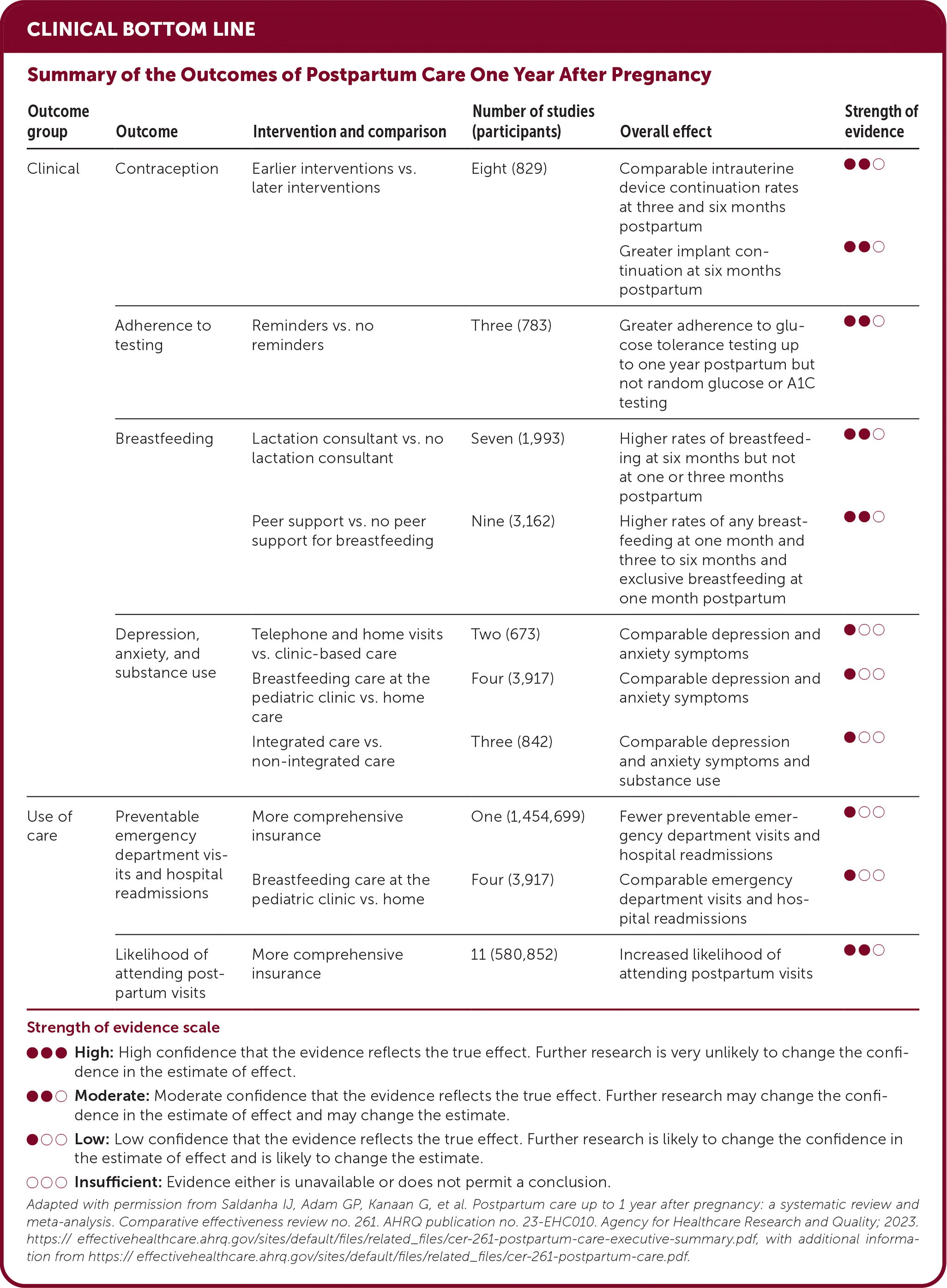
| Outcome group | Outcome | Intervention and comparison | Number of studies (participants) | Overall effect | Strength of evidence |
|---|---|---|---|---|---|
| Clinical | Contraception | Earlier interventions vs. later interventions | Eight (829) | Comparable intrauterine device continuation rates at three and six months postpartum Greater implant continuation at six months postpartum | • • ○ • • ○ |
| Adherence to testing | Reminders vs. no reminders | Three (783) | Greater adherence to glucose tolerance testing up to one year postpartum but not random glucose or A1C testing | • • ○ | |
| Breastfeeding | Lactation consultant vs. no lactation consultant | Seven (1,993) | Higher rates of breastfeeding at six months but not at one or three months postpartum | • • ○ | |
| Peer support vs. no peer support for breastfeeding | Nine (3,162) | Higher rates of any breastfeeding at one month and three to six months and exclusive breastfeeding at one month postpartum | • • ○ | ||
| Depression, anxiety, and substance use | Telephone and home visits vs. clinic-based care | Two (673) | Comparable depression and anxiety symptoms | • ○ ○ | |
| Breastfeeding care at the pediatric clinic vs. home care | Four (3,917) | Comparable depression and anxiety symptoms | • ○ ○ | ||
| Integrated care vs. non-integrated care | Three (842) | Comparable depression and anxiety symptoms and substance use | • ○ ○ | ||
| Use of care | Preventable emergency department visits and hospital readmissions | More comprehensive insurance | One (1,454,699) | Fewer preventable emergency department visits and hospital readmissions | • ○ ○ |
| Breastfeeding care at the pediatric clinic vs. home | Four (3,917) | Comparable emergency department visits and hospital readmissions | • ○ ○ | ||
| Likelihood of attending postpartum visits | More comprehensive insurance | 11 (580,852) | Increased likelihood of attending postpartum visits | • • ○ |
Strength of evidence scale
• • • High: High confidence that the evidence reflects the true effect. Further research is very unlikely to change the confidence in the estimate of effect.
• • ○ Moderate: Moderate confidence that the evidence reflects the true effect. Further research may change the confidence in the estimate of effect and may change the estimate.
• ○ ○ Low: Low confidence that the evidence reflects the true effect. Further research is likely to change the confidence in the estimate of effect and is likely to change the estimate.
○ ○ ○ Insufficient: Evidence either is unavailable or does not permit a conclusion.
Adapted with permission from Saldanha IJ, Adam GP, Kanaan G, et al. Postpartum care up to 1 year after pregnancy: a systematic review and meta-analysis. Comparative effectiveness review no. 261. AHRQ publication no. 23-EHC010. Agency for Healthcare Research and Quality; 2023. https://effectivehealthcare.ahrq.gov/sites/default/files/related_files/cer-261-postpartum-care-executive-summary.pdf, with additional information from https://effectivehealthcare.ahrq.gov/sites/default/files/related_files/cer-261-postpartum-care.pdf.
Read the full article
Get immediate access, anytime, anywhere.
Choose a single article, issue, or full-access subscription.
Earn up to 14 CME credits per issue.
