

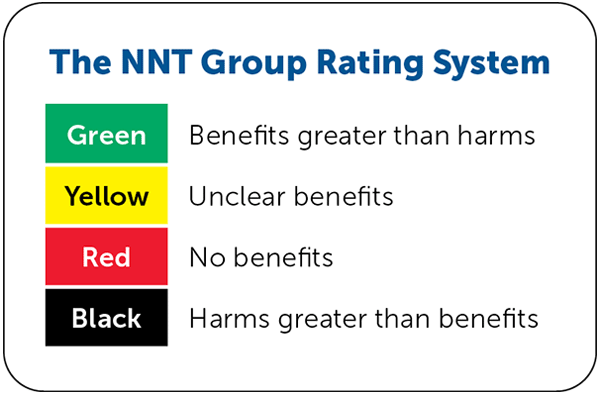
Details for This Review
Study Population: Adults 18 years and older with chronic pain (e.g., musculoskeletal, neuropathic) from nine countries, including six studies from the United States; patients with cancer, headaches, or migraines were excluded
Efficacy End Points: Pain intensity, functional disability, quality of life
Harm End Points: Adverse events
THE NUMBERS
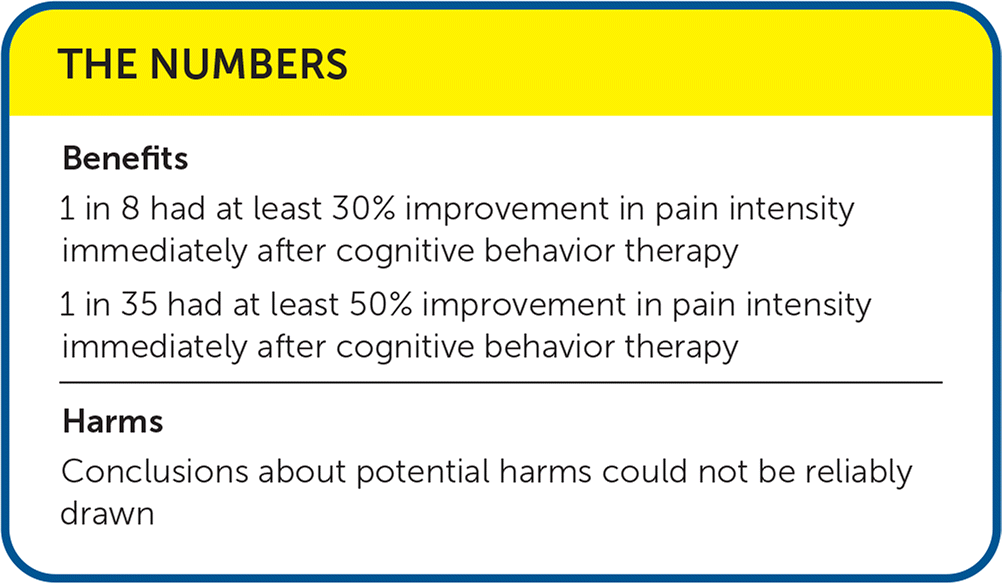
| Benefits |
| 1 in 8 had at least 30% improvement in pain intensity immediately after cognitive behavior therapy |
| 1 in 35 had at least 50% improvement in pain intensity immediately after cognitive behavior therapy |
| Harms |
| Conclusions about potential harms could not be reliably drawn |
Narrative: Chronic pain, with or without tissue damage, is an unpleasant sensory and emotional experience that lasts for more than three months. It disrupts an individual's ability to engage in their everyday life, occupation, and social relationships, with a resultant reduction in overall quality of life.1 The estimated prevalence of chronic pain in the United States is 18% to 35%, and it increases with age.2,3 Psychological therapies are a key component of chronic pain treatment; however, there are multiple barriers to receiving face-to-face psychological therapies, including geographic restrictions, scarcity of resources, and cost. Remotely delivered psychological therapies (i.e., internet or smartphone apps based on psychological theory or with recognizable psychotherapeutic content) may increase patient access, reduce costs, and improve patient outcomes.4,5
A 2023 Cochrane review evaluated the effectiveness of technology-based delivery of psychological therapies compared with usual treatment (i.e., the standard support typically available) or active control (e.g., education, online discussion boards) for the management of chronic pain in adults.6 The review included 32 randomized controlled trials (nine countries, including six studies in the United States) with 4,924 adult participants (average age of 48 years). Primary outcomes were pain intensity, functional disability, quality of life, and adverse events. The review included 25 studies of technology-based cognitive behavior therapy (CBT) and seven studies of technology-based acceptance and commitment therapy delivered by a clinically trained psychologist.6 Mindfulness-based and relaxation-based interventions were not included. Studies involving more than 30% direct contact time with a clinician were also excluded.
Moderate-certainty evidence in the Cochrane review showed that participants receiving remote CBT were more likely to have reduced pain intensity immediately after treatment compared with treatment as usual (standardized mean difference = −0.28; 95% CI, −0.39 to −0.16) or active control (standardized mean difference = −0.28; 95% CI, −0.52 to −0.04). Moderate-certainty evidence demonstrated that participants receiving CBT were more likely to achieve a 30% improvement in pain intensity immediately after treatment compared with treatment as usual (risk ratio [RR] = 2.15; 95% CI, 1.62 to 2.85; absolute risk difference = 13%; number needed to treat = 8). Low-certainty evidence showed that patients receiving CBT may be more likely to achieve a 50% improvement in pain intensity immediately after treatment compared with usual treatment (RR = 2.31; 95% CI, 1.14 to 4.66; absolute risk difference = 3%; number needed to treat = 35).
The review reported with low-certainty evidence that CBT may demonstrate a small beneficial improvement in functional disability compared with treatment as usual (standardized mean difference = −0.38; 95% CI, −0.53 to −0.22) immediately after treatment. No significant improvement in functional disability was seen when comparing CBT with active control immediately; significant improvement in functional disability was also not seen at follow-up when comparing CBT with treatment as usual.
Read the full article
Get immediate access, anytime, anywhere.
Choose a single article, issue, or full-access subscription.
Earn up to 14 CME credits per issue.
