

No: Other Drugs Have Stronger Evidence of Benefit
Clinicians and patients were excited when research showed that metformin reduces mortality and decreases complications associated with type 2 diabetes mellitus. However, the initial enthusiasm has been tempered by further research that has yet to support these claims and by new medication options with greater promise.
Metformin quickly became the cornerstone of treatment following reports from the United Kingdom Prospective Diabetes Study (UKPDS) that stated that metformin decreased several outcomes (e.g., overall mortality, stroke), independent of its effect on serum blood glucose levels, compared with dietary advice alone.1 The mortality benefit was found only in patients who were overweight.2
The UKPDS was the first to show the benefit of medication treatment on important clinical outcomes. However, the UKPDS has been criticized for its shortcomings.3 The study began in 1977 with a small grant and later burgeoned into a 20-year study enrolling 5,102 people with newly diagnosed type 2 diabetes identified throughout the United Kingdom.4 The study protocol was adjusted multiple times, including the addition of metformin after the trial was underway. The study was unblinded and did not have a control group. Only 342 adults who were overweight received metformin.2
The results of the UKPDS have not been reproduced. Several meta-analyses have not found metformin to be more effective than any other comparison in decreasing clinically important outcomes such as all-cause or cardiovascular mortality (Table 1).5–8 One of the analyses found that adding metformin to sulfonylureas increased all-cause mortality compared with sulfonylurea monotherapy.5 A 2023 network meta-analysis of 816 randomized trials found that metformin is not convincingly different than standard treatments in decreasing mortality in patients with an average body mass index of 29.5 kg per m2 or greater, with three or fewer cardiovascular risk factors, with more than three risk factors, or who are already diagnosed with cardiovascular disease.8 Better options exist. This meta-analysis also found that sodium-glucose cotransporter-2 inhibitors and glucagon-like peptide-1 receptor agonists are most effective at reducing all-cause and cardiovascular mortality and other cardiac-related problems in patients with pre-existing cardiovascular disease. However, they were less effective in patients at lower risk.8
TABLE 1. Comparison of Mortality Outcomes for Type 2 Diabetes Mellitus Treatments
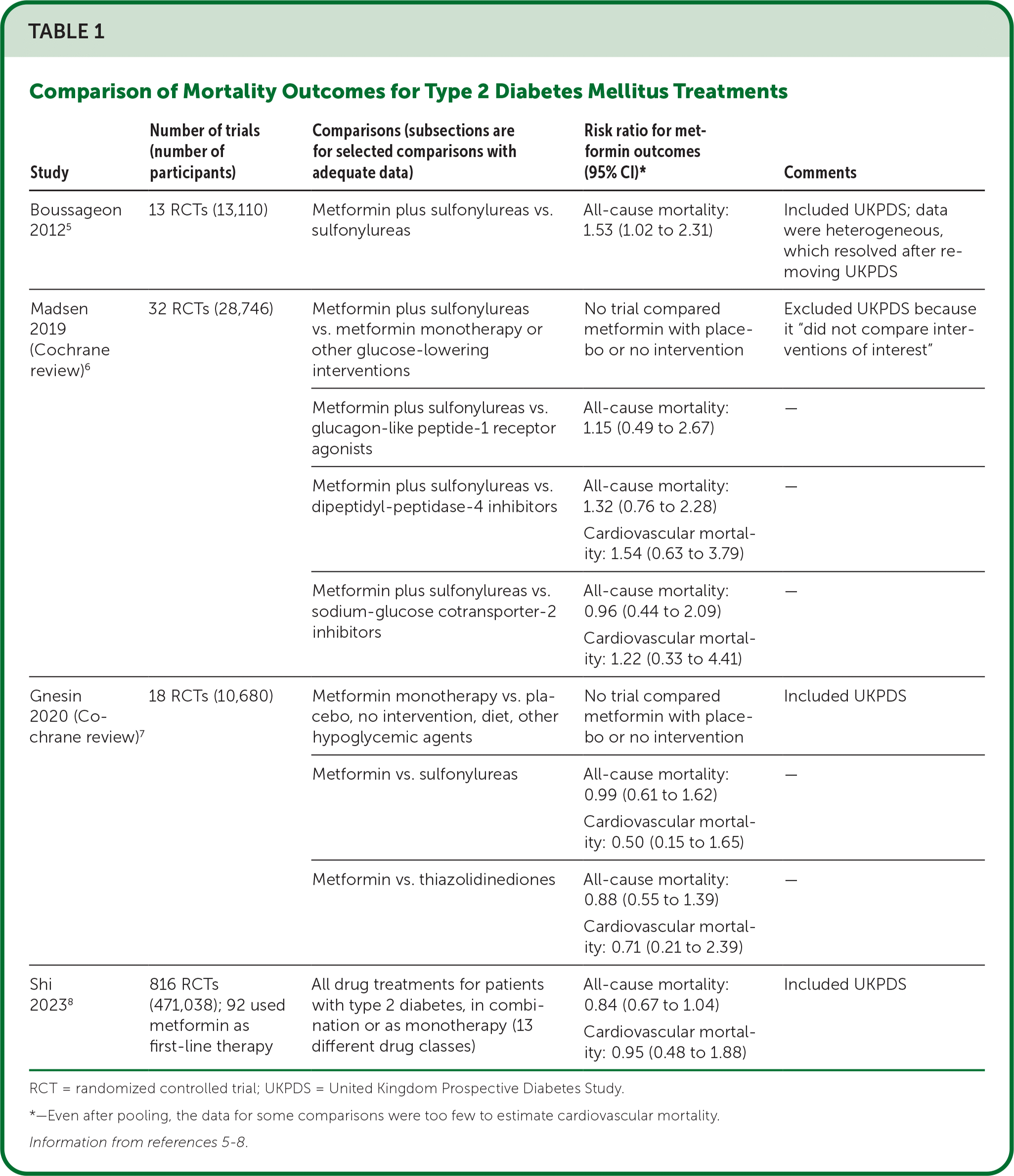
| Study | Number of trials (number of participants) | Comparisons (subsections are for selected comparisons with adequate data) | Risk ratio for metformin outcomes (95% CI)* | Comments |
|---|---|---|---|---|
| Boussageon 20125 | 13 RCTs (13,110) | Metformin plus sulfonylureas vs. sulfonylureas | All-cause mortality: 1.53 (1.02 to 2.31) | Included UKPDS; data were heterogeneous, which resolved after removing UKPDS |
| Madsen 2019 (Cochrane review)6 | 32 RCTs (28,746) | Metformin plus sulfonylureas vs. metformin monotherapy or other glucose-lowering interventions | No trial compared metformin with placebo or no intervention | Excluded UKPDS because it “did not compare interventions of interest” |
| Metformin plus sulfonylureas vs. glucagon-like peptide-1 receptor agonists | All-cause mortality: 1.15 (0.49 to 2.67) | — | ||
| Metformin plus sulfonylureas vs. dipeptidyl-peptidase-4 inhibitors | All-cause mortality: 1.32 (0.76 to 2.28) Cardiovascular mortality: 1.54 (0.63 to 3.79) | — | ||
| Metformin plus sulfonylureas vs. sodium-glucose cotransporter-2 inhibitors | All-cause mortality: 0.96 (0.44 to 2.09) Cardiovascular mortality: 1.22 (0.33 to 4.41) | — | ||
| Gnesin 2020 (Cochrane review)7 | 18 RCTs (10,680) | Metformin monotherapy vs. placebo, no intervention, diet, other hypoglycemic agents | No trial compared metformin with placebo or no intervention | Included UKPDS |
| Metformin vs. sulfonylureas | All-cause mortality: 0.99 (0.61 to 1.62) Cardiovascular mortality: 0.50 (0.15 to 1.65) | — | ||
| Metformin vs. thiazolidinediones | All-cause mortality: 0.88 (0.55 to 1.39) Cardiovascular mortality: 0.71 (0.21 to 2.39) | — | ||
| Shi 20238 | 816 RCTs (471,038); 92 used metformin as first-line therapy | All drug treatments for patients with type 2 diabetes, in combination or as monotherapy (13 different drug classes) | All-cause mortality: 0.84 (0.67 to 1.04) Cardiovascular mortality: 0.95 (0.48 to 1.88) | Included UKPDS |
RCT = randomized controlled trial; UKPDS = United Kingdom Prospective Diabetes Study.
*—Even after pooling, the data for some comparisons were too few to estimate cardiovascular mortality.
We now have a robust database, which has evolved over the past 20 years. The medical literature comprises at least four meta-analyses and many unique randomized trials. The evidence accumulated since the initial UKPDS does not show a clear advantage of using metformin to treat patients with type 2 diabetes.
As is common in medicine, guidelines have been slow to change. The 2023 American Diabetes Association guidelines on the treatment of type 2 diabetes continue to recommend metformin as first-line therapy. Previous versions of the guidelines have cited the UKPDS; however, the 2024 guideline released in January no longer recognizes the UKPDS but also does not mention the more recent meta-analysis.9,10
We are equally concerned about the overzealous extrapolation of research findings to include patients who differ from the original study populations. We have already seen this with metformin and caution against prematurely recommending the newer agents, which have been primarily studied in patients with preexisting cardiovascular disease, to all patients with type 2 diabetes.
Unfortunately, metformin, a safe, tolerable, inexpensive, and easy-to-use treatment, does not offer the benefits the UKPDS initially suggested. However, sodium-glucose cotransporter-2 inhibitors and glucagon-like peptide-1 receptor agonists have demonstrated benefit, especially in patients with established cardiovascular disease.6 Tools are available to determine the benefits and harms (https://matchit.magicevidence.org/230125dist-diabetes1/#!/). Although these newer drug classes are not as well tolerated, easy to use, and affordable, the science supporting them is stronger, albeit in patients not representative of those we see in primary care. Clinicians need to exercise judgment in the care of patients: we should follow the evidence, balance benefits and harms, weigh the economic and implementation costs, and change practices when better and more relevant data are presented.
Editor's Note: Dr. Shaughnessy is an assistant medical editor for AFP.
