

A 9-year-old girl presented to urgent care with acute painful irritation in her genital and anal area. She had been asleep for approximately two hours before awakening due to this sudden discomfort. Her parents reported that she had been scratching her vaginal area and walking with an altered gait over the previous three days. The patient reported that her vagina and anus had been painful and itchy at night during this time. Her medical history was only remarkable for intermittent constipation, and she did not have recent nausea, vomiting, or diarrhea. She had passed a formed bowel movement earlier that day. The patient was fully immunized and had no recent travel history.
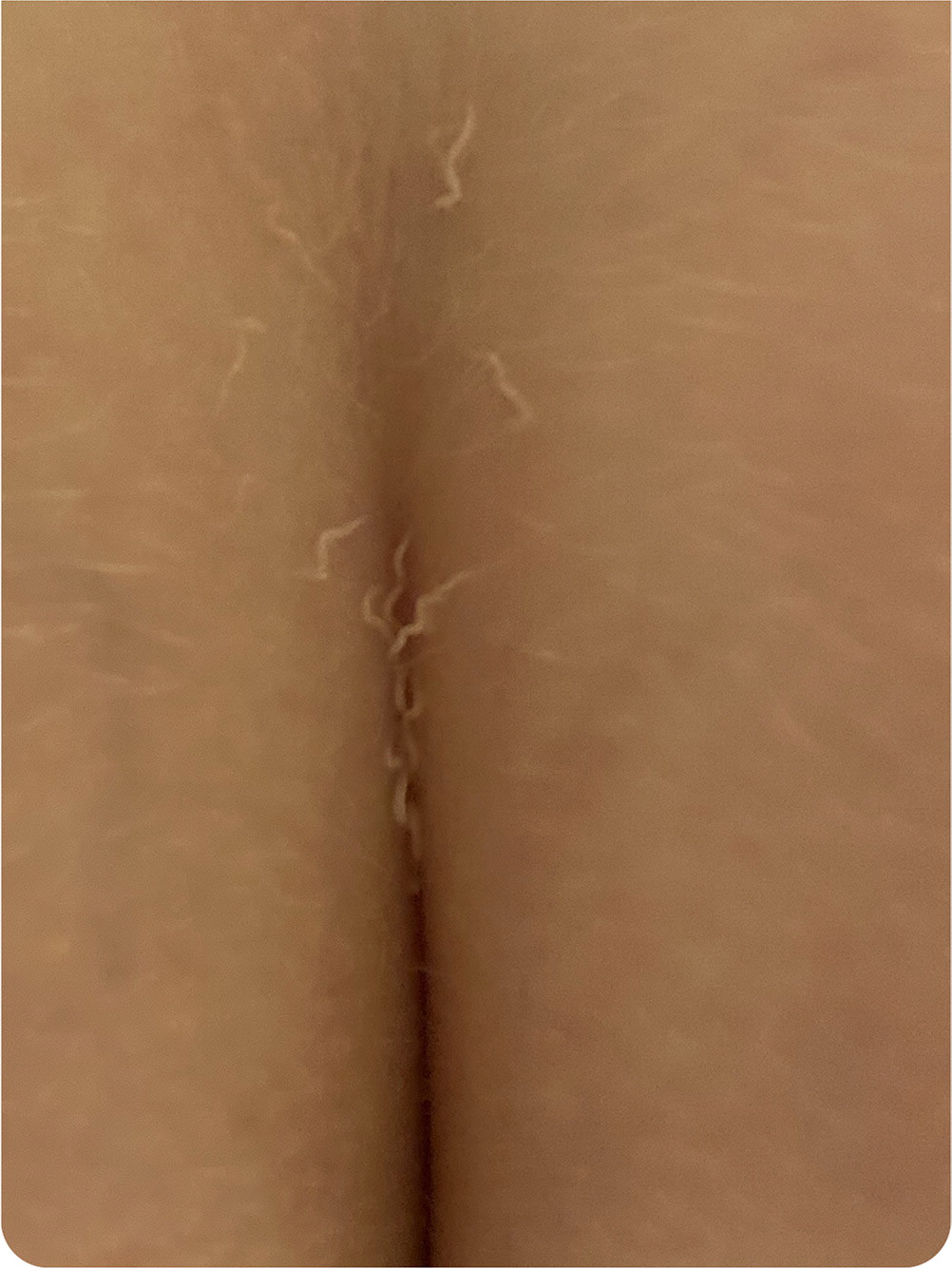
Physical examination of the vagina revealed a live 1-cm, white worm wiggling in the introitus. Similar worms were observed in the anal area and moving along the intergluteal cleft (Figure 1). No blood or other abnormality was observed in the genital or anal area.
FIGURE 1
Question
Based on the patient's history and physical examination, which one of the following infections is the most likely diagnosis?
- A. Dientamoeba fragilis.
- B. Enterobius vermicularis (pinworm).
- C. Necator americanus (hookworm).
- D. Strongyloides stercoralis (threadworm).
- E. Trichuris trichiura (whipworm).
Discussion
The answer is B: Enterobius vermicularis, also known as pinworm. It is the most common helminth infection in the United States, especially in school-aged children. Humans are the only known host, and it infects 30% of children worldwide.1 Infection is fecal-oral through ingestion of eggs. Female worms, which are cylindrical and approximately 1 cm long, migrate at night from the anus to the perianal and perineal regions to deposit eggs.2 Patients experience pain and pruritus, which is worse at night. Scratching the area transfers eggs to hands, clothing, and bedding. Placing infected fingers into the mouth results in autoinoculation.2
Diagnosis is typically made by identifying eggs captured via the “cellophane tape test.” Pharmacotherapy is indicated for the entire family because the infection easily spreads to other family members. Hand hygiene is the best method of prevention. Laundering clothes and linens is sufficient for disinfection.2
Dientamoeba fragilis has a worldwide distribution and is the most common protozoan found in many industrialized countries. It is spread by fecal-oral transmission and is often associated with pruritus ani, diarrhea, abdominal pain, and nausea, among other symptoms.3 Diagnosis is typically made by examining stool for ova and parasites using microscopy.4
In its adult stage, Necator americanus, also known as hookworm, is a cylindrical, white, 1-cm intestinal nematode that does not migrate out of the anus.4 It is often found in conditions of poor sanitation and extreme poverty. Hook-worm causes hypochromic microcytic anemia, leading to malnutrition and developmental delays.5 Infection occurs when skin contacts the larval form in contaminated soil. Common entry points are the hands, buttocks, legs, and feet.4 Penetration is usually associated with intense pruritus referred to as “ground itch.”5 The larvae migrate to the lungs via venous circulation and are then coughed up and swallowed. They develop into the adult form in the small intestine. Eggs are passed in stools back into the soil.4
Read the full article
Get immediate access, anytime, anywhere.
Choose a single article, issue, or full-access subscription.
Earn up to 14 CME credits per issue.
