

Resmetirom (Rezdiffra), a thyroid hormone receptor-beta agonist, is conditionally approved for use in adults with noncirrhotic nonalcoholic steatohepatitis (NASH) with moderate to advanced fibrosis (stages F2 to F3) to reduce liver fat accumulation and to prevent progression of and reverse fibrosis when combined with diet and exercise.1 Resmetirom was approved using the U.S. Food and Drug Administration accelerated approval pathway on the basis of histologic data and may be granted final, traditional approval if the ongoing confirmatory trial verifies clinical outcome benefit.2
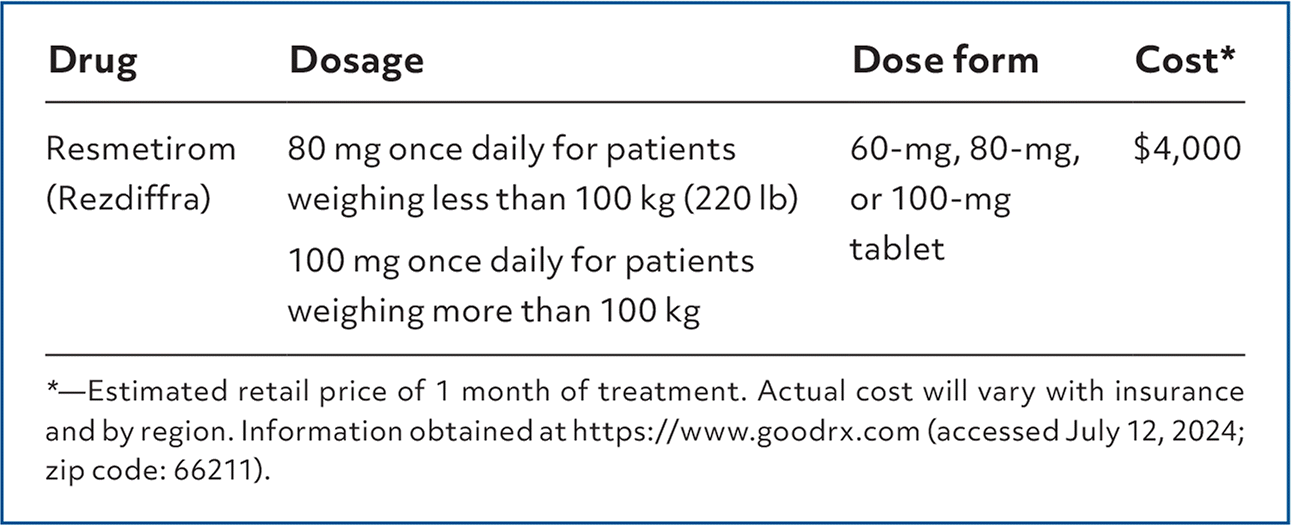
| Drug | Dosage | Dose form | Cost* |
|---|---|---|---|
| Resmetirom (Rezdiffra) | 80 mg once daily for patients weighing less than 100 kg (220 lb) 100 mg once daily for patients weighing more than 100 kg | 60-mg, 80-mg, or 100-mg tablet | $4,000 |
*—Estimated retail price of 1 month of treatment. Actual cost will vary with insurance and by region. Information obtained at https://www.goodrx.com (accessed July 12, 2024; zip code: 66211).
The American Association for the Study of Liver Diseases and other international liver societies have adopted new nomenclature for nonalcoholic fatty liver disease. NASH has been renamed MASH (metabolic dysfunction–associated steatohepatitis). The term NASH is used in this article to reflect consistency with the trial data and drug package labeling.
SAFETY
Resmetirom has been evaluated in 645 patients.1 Nearly 90% of these patients were White, and safety issues may develop with wider use. The major safety concern of resmetirom is the theoretical potential for liver injury given the finding of presumed drug-induced hepatotoxicity in one patient with elevated liver function tests. The manufacturer suggests monitoring liver enzymes and for signs and symptoms of hepatotoxicity (i.e., fever, fatigue, nausea, vomiting, right upper quadrant pain, jaundice, rash, or eosinophilia [greater than 5%]). Therapy should be discontinued if hepatotoxicity is suspected. If laboratory values normalize after repeat monitoring, the risks vs. benefits of taking resmetirom should be considered before resuming treatment. Cholelithiasis, acute cholecystitis, and obstructive pancreatitis due to gallstones are observed more often in patients treated with resmetirom compared with placebo. If an acute gallbladder event is suspected, therapy should be discontinued until resolution of the event.1
Important drug interactions should be considered when taking resmetirom. Concomitant use with moderate or strong cytochrome P450 (CYP) 2C8 inhibitors or inhibitors of OATP1B1 or OATP1B3 may increase the likelihood of adverse reactions caused by resmetirom. When used concomitantly with a moderate CYP2C8 inhibitor (e.g., clopidogrel), the dose of resmetirom should be limited to 60 mg in patients weighing less than 100 kg (220 lb) and 80 mg in patients weighing more than 100 kg. Resmetirom should not be used in patients taking strong CYP2C8 inhibitors (e.g., gemfibrozil) or with OATP1B1 or OATP1B3 inhibitors (e.g., cyclosporine). Resmetirom increases the plasma concentrations of atorvastatin, pravastatin, rosuvastatin, and simvastatin. When co-administering resmetirom, daily statin doses should be limited accordingly (20-mg maximum doses of rosuvastatin andsimvastatin; 40-mg maximum doses of pravastatin and atorvastatin). Patients with decompensated cirrhosis or moderate to severe hepatic impairment (Child-Pugh class B or C) should not take resmetirom.2 There are no available data for use in children or in pregnant or lactating patients.1
Read the full article
Get immediate access, anytime, anywhere.
Choose a single article, issue, or full-access subscription.
Earn up to 14 CME credits per issue.
