

Patients commonly present to family physicians with skin findings, and distinguishing common benign skin tumors from potentially malignant tumors is important. Benign skin tumors can often be diagnosed by their history, distribution, and characteristic morphology. A biopsy or excision is indicated if there is diagnostic uncertainty or the lesion undergoes uncharacteristic or rapid change. A keratoacanthoma is a dome-shaped nodule with a central crater and can be difficult to distinguish from squamous cell carcinomas even with dermoscopy. Pilar cysts are typically benign, but rapidly growing types could have malignant qualities. Dermoid cysts, depending on their location, can have intracranial extension if untreated. Although dermatofibromas and seborrheic keratoses are benign, atypical presentations must be differentiated from melanomas. Sebaceous hyperplasia can mimic early basal cell carcinoma. Treatment options for cherry angiomas, acrochordons, slow-growing pilar cysts, and dermatofibromas should be individualized to skin type, lesion characteristics, and the patient's cosmetic preference. Generally, excision is the treatment of choice for keratoacanthomas, rapidly proliferating pilar cysts, and dermoid cysts. Cherry angiomas are treated with laser therapy and sebaceous hyperplasia with electrodesiccation. Common treatments for acrochordons and seborrheic keratoses are shave excision and cryotherapy. Pyogenic granulomas sometimes self-involute but bleed easily and often recur at the original site. They generally respond to shave excision and electrodesiccation. In patients with darker skin, treatment with cryotherapy and laser therapy should include discussions about hypopigmentation risk.
Family physicians often must identify and manage dermatologic diseases. A retrospective chart review over 2 years showed that about 36% of patients presenting to their primary care physician had at least one skin problem.1 Family physicians should be familiar with characteristics of common benign skin tumors and their diagnosis, including obtaining diagnostic skin biopsies. Table 1 summarizes some of the most common benign skin lesions.2–7
SORT: KEY RECOMMENDATIONS FOR PRACTICE
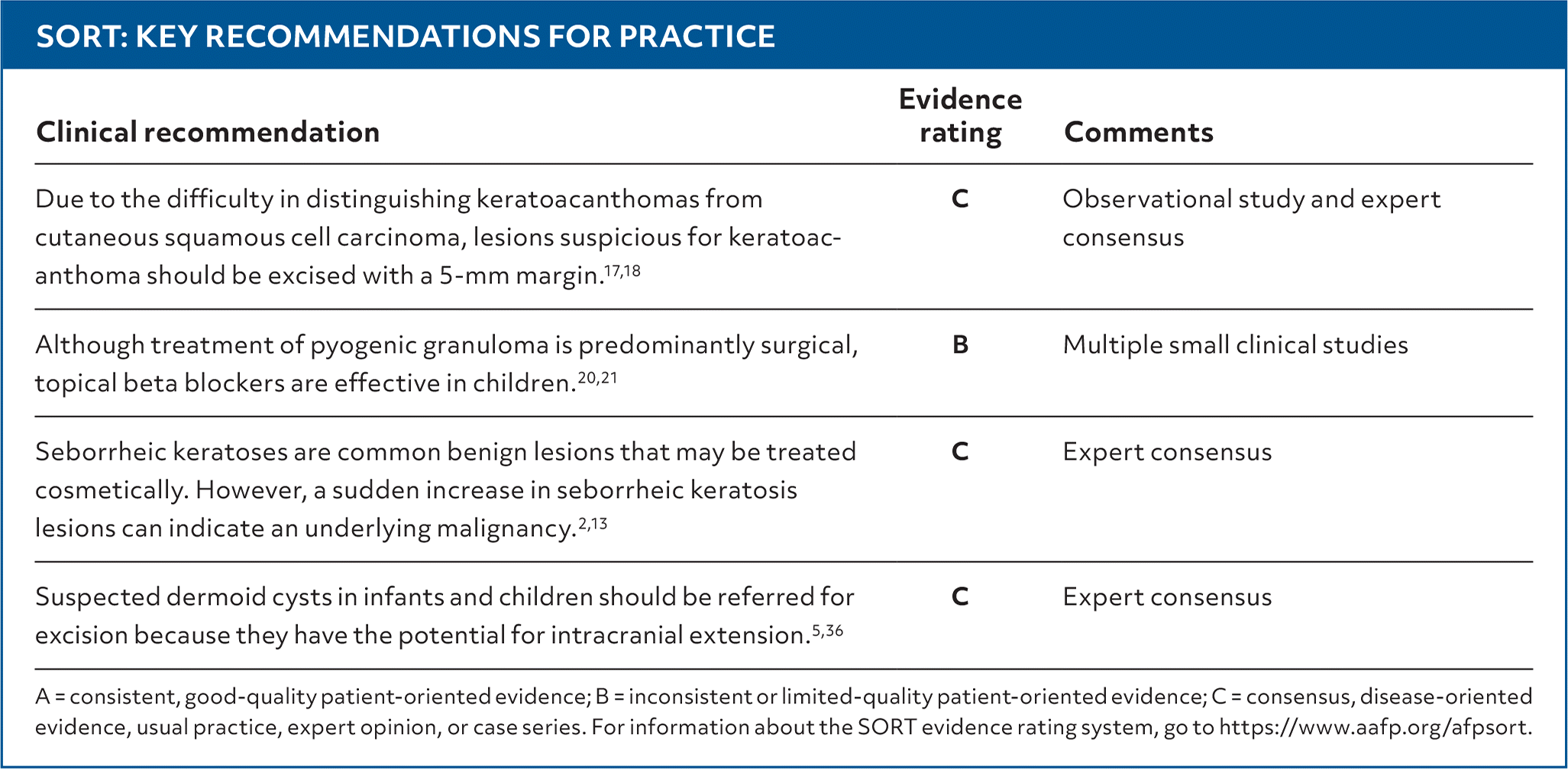
| Clinical recommendation | Evidence rating | Comments |
|---|---|---|
| Due to the difficulty in distinguishing keratoacanthomas from cutaneous squamous cell carcinoma, lesions suspicious for keratoacanthoma should be excised with a 5-mm margin.17,18 | C | Observational study and expert consensus |
| Although treatment of pyogenic granuloma is predominantly surgical, topical beta blockers are effective in children.20,21 | B | Multiple small clinical studies |
| Seborrheic keratoses are common benign lesions that may be treated cosmetically. However, a sudden increase in seborrheic keratosis lesions can indicate an underlying malignancy.2,13 | C | Expert consensus |
| Suspected dermoid cysts in infants and children should be referred for excision because they have the potential for intracranial extension.5,36 | C | Expert consensus |
A = consistent, good-quality patient-oriented evidence; B = inconsistent or limited-quality patient-oriented evidence; C = consensus, disease-oriented evidence, usual practice, expert opinion, or case series. For information about the SORT evidence rating system, go to https://www.aafp.org/afpsort.
TABLE 1. Comparison of Common Benign Skin Tumors
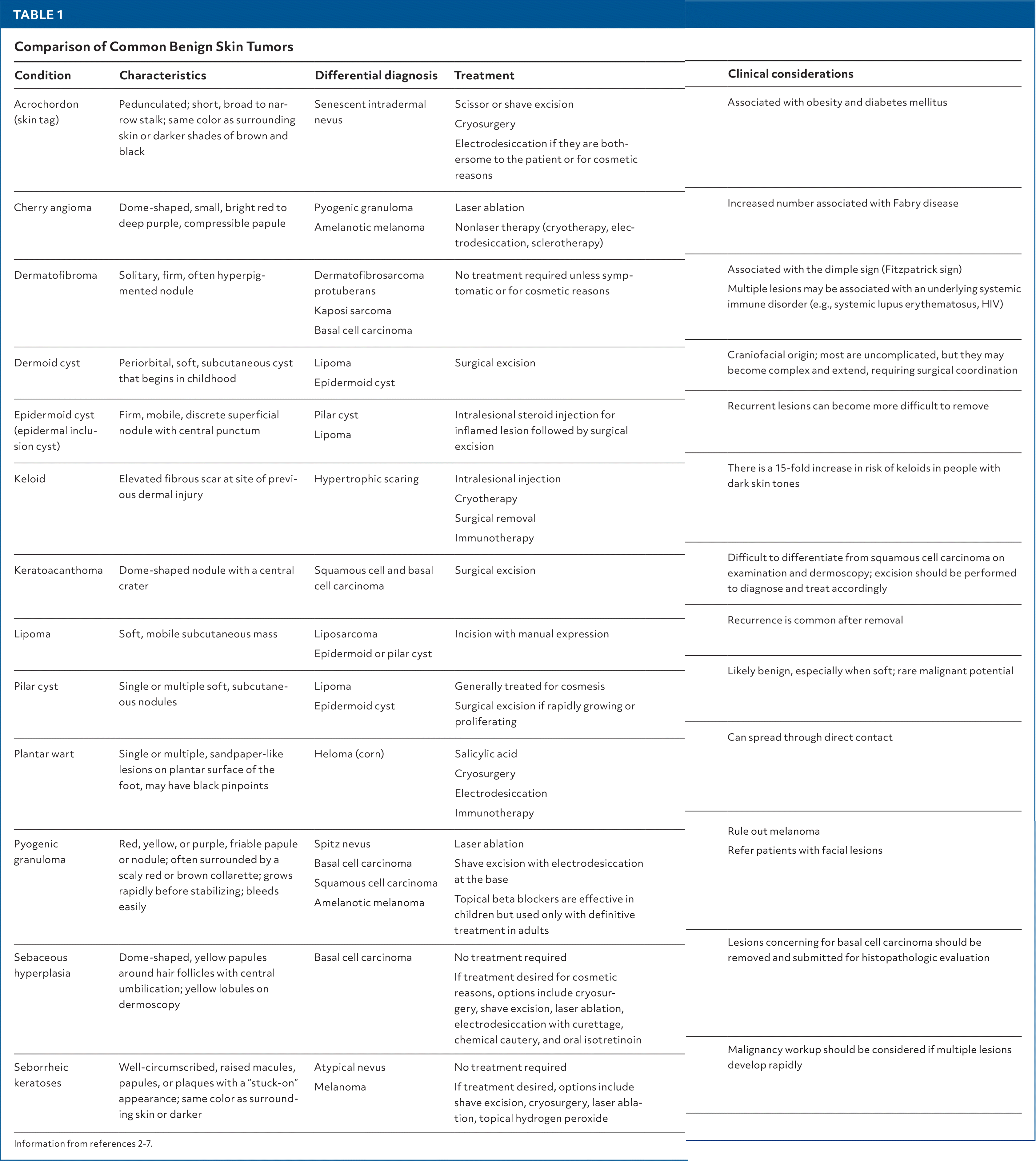
| Condition | Characteristics | Differential diagnosis | Treatment | Clinical considerations |
|---|---|---|---|---|
| Acrochordon (skin tag) | Pedunculated; short, broad to narrow stalk; same color as surrounding skin or darker shades of brown and black | Senescent intradermal nevus | Scissor or shave excision Cryosurgery Electrodesiccation if they are bothersome to the patient or for cosmetic reasons | Associated with obesity and diabetes mellitus |
| Cherry angioma | Dome-shaped, small, bright red to deep purple, compressible papule | Pyogenic granuloma Amelanotic melanoma | Laser ablation Nonlaser therapy (cryotherapy, electrodesiccation, sclerotherapy) | Increased number associated with Fabry disease |
| Dermatofibroma | Solitary, firm, often hyperpigmented nodule | Dermatofibrosarcoma protuberans Kaposi sarcoma Basal cell carcinoma | No treatment required unless symptomatic or for cosmetic reasons | Associated with the dimple sign (Fitzpatrick sign) Multiple lesions may be associated with an underlying systemic immune disorder (e.g., systemic lupus erythematosus, HIV) |
| Dermoid cyst | Periorbital, soft, subcutaneous cyst that begins in childhood | Lipoma Epidermoid cyst | Surgical excision | Craniofacial origin; most are uncomplicated, but they may become complex and extend, requiring surgical coordination |
| Epidermoid cyst (epidermal inclusion cyst) | Firm, mobile, discrete superficial nodule with central punctum | Pilar cyst Lipoma | Intralesional steroid injection for inflamed lesion followed by surgical excision | Recurrent lesions can become more difficult to remove |
| Keloid | Elevated fibrous scar at site of previous dermal injury | Hypertrophic scaring | Intralesional injection Cryotherapy Surgical removal Immunotherapy | There is a 15-fold increase in risk of keloids in people with dark skin tones |
| Keratoacanthoma | Dome-shaped nodule with a central crater | Squamous cell and basal cell carcinoma | Surgical excision | Difficult to differentiate from squamous cell carcinoma on examination and dermoscopy; excision should be performed to diagnose and treat accordingly |
| Lipoma | Soft, mobile subcutaneous mass | Liposarcoma Epidermoid or pilar cyst | Incision with manual expression | Recurrence is common after removal |
| Pilar cyst | Single or multiple soft, subcutaneous nodules | Lipoma Epidermoid cyst | Generally treated for cosmesis Surgical excision if rapidly growing or proliferating | Likely benign, especially when soft; rare malignant potential |
| Plantar wart | Single or multiple, sandpaper-like lesions on plantar surface of the foot, may have black pinpoints | Heloma (corn) | Salicylic acid Cryosurgery Electrodesiccation Immunotherapy | Can spread through direct contact |
| Pyogenic granuloma | Red, yellow, or purple, friable papule or nodule; often surrounded by a scaly red or brown collarette; grows rapidly before stabilizing; bleeds easily | Spitz nevus Basal cell carcinoma Squamous cell carcinoma Amelanotic melanoma | Laser ablation Shave excision with electrodesiccation at the base Topical beta blockers are effective in children but used only with definitive treatment in adults | Rule out melanoma Refer patients with facial lesions |
| Sebaceous hyperplasia | Dome-shaped, yellow papules around hair follicles with central umbilication; yellow lobules on dermoscopy | Basal cell carcinoma | No treatment required If treatment desired for cosmetic reasons, options include cryosurgery, shave excision, laser ablation, electrodesiccation with curettage, chemical cautery, and oral isotretinoin | Lesions concerning for basal cell carcinoma should be removed and submitted for histopathologic evaluation |
| Seborrheic keratoses | Well-circumscribed, raised macules, papules, or plaques with a “stuck-on” appearance; same color as surrounding skin or darker | Atypical nevus Melanoma | No treatment required If treatment desired, options include shave excision, cryosurgery, laser ablation, topical hydrogen peroxide | Malignancy workup should be considered if multiple lesions develop rapidly |
Read the full article
Get immediate access, anytime, anywhere.
Choose a single article, issue, or full-access subscription.
Earn up to 14 CME credits per issue.
