

DETAILS FOR THIS REVIEW
Study Population: Total of 873 participants (mean age ranged from 70 to 85 years) enrolled in 19 trials in long-term care facilities
Efficacy End Points: Primary: depressive symptomology; secondary: depression remission, quality of life or psychological well-being, anxious symptomatology, physical functioning
Harm End Points: Treatment nonacceptability, agitation, adverse effects
THE NUMBERS
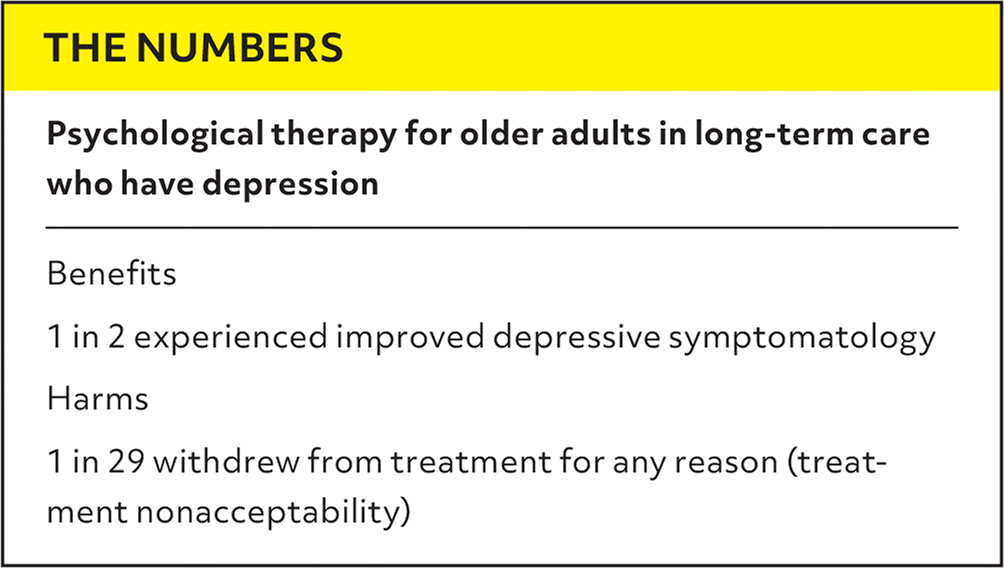
| Psychological therapy for older adults in long-term care who have depression |
|---|
| Benefits |
| 1 in 2 experienced improved depressive symptomatology |
| Harms |
| 1 in 29 withdrew from treatment for any reason (treatment nonacceptability) |
Narrative: Depression in older adults in long-term care is especially common and can significantly affect quality of life and mental and physical well-being. Pharmacologic treatment for depression in older adults is often limited by an increased risk of adverse effects. Psychological therapy is a potentially safe means of addressing depression and mood disorders in this patient population.1
The Cochrane review discussed here compared psychological therapies with usual care, nonspecific attentional controls, or a wait-list in patients in long-term care who have depression.2 A total of 873 participants (mean age ranged from 70 to 85 years) were enrolled in 19 trials in long-term care facilities. The trials included 16 parallel group randomized controlled trials (RCTs) and three cluster RCTs. The meta-analysis included 18 studies, and one study was described narratively. Baseline depression and mood disorder symptoms and subsequent assessments varied across studies. Some studies excluded patients with neurocognitive disorders. Studies were conducted in the United States (11), Taiwan (2), Iran (2), Australia, Hong Kong, the Netherlands, and Spain.2
Psychological therapies included cognitive behavior therapy, behavior therapy, reminiscence therapy, or a combination of those performed by trained professionals. Usual care included pharmacologic interventions; social visits from staff, family, and friends; and normal facility activities.
Depressive symptomatology was measured using a variety of validated instruments, including those administered through self-report, structured clinical interview, or informant report, with the informant being a long-term care facility staff member or a family member. Commonly used scales in long-term care settings include the self-rated Geriatric Depression Scale—Short Form, Beck Depression Inventory, Zung Self-Rating Depression Scale, and Hamilton Depression Rating Scale.
Very low-certainty evidence demonstrated an improvement in depressive symptomatology vs. nontherapy comparators (standard mean difference [MD] = −1.04; 95% CI, −1.49 to −0.58; number needed to treat = 2; 18 RCTs; n = 644) at the end of intervention over 2 to 24 weeks of follow-up.
Very low-certainty evidence also demonstrated a higher likelihood of withdrawing from treatment (treatment non-acceptability) with psychological therapies vs. nontherapy comparators (odds ratio = 3.44; 95% CI, 1.19 to 9.93; number needed to harm = 29; 5 RCTs; n = 313) over 4 to 13 weeks of follow-up. Treatment nonacceptability was defined as dropping out of psychological therapy for any non–health-related reason.
Very low-certainty evidence demonstrated little to no difference between the groups for anxious symptomatology, quality of life, or psychological well-being. The other stated outcomes were not analyzed because of a paucity of data.
Caveats: Small sample sizes are a significant challenge in this and other psychological research. The mean sample size across trials included in the Cochrane review was 46. There was also a wide variability in what was considered long-term care. This factor was largely unavoidable because the review included studies conducted over a 42-year period in an ever-changing industry. Most studies focused only on short-term follow-up between 2 and 12 weeks. Given the varied cognitive behavior therapy, behavior therapy, and reminiscence therapy interventions included in this review, it is difficult to favor one psychological therapy over another in the short term.
Read the full article
Get immediate access, anytime, anywhere.
Choose a single article, issue, or full-access subscription.
Earn up to 14 CME credits per issue.
