Prostate Cancer Screening: Common Questions and Answers

Jinping Xu, MD, MS
Samantha McPharlin, MD
Elie Mulhem, MD

American Family Physician. 2024;110(5):493-499.

Author disclosure: No relevant financial relationships.

This clinical content conforms to AAFP criteria for CME.

Patient information: See related handout on prostate cancer screening.

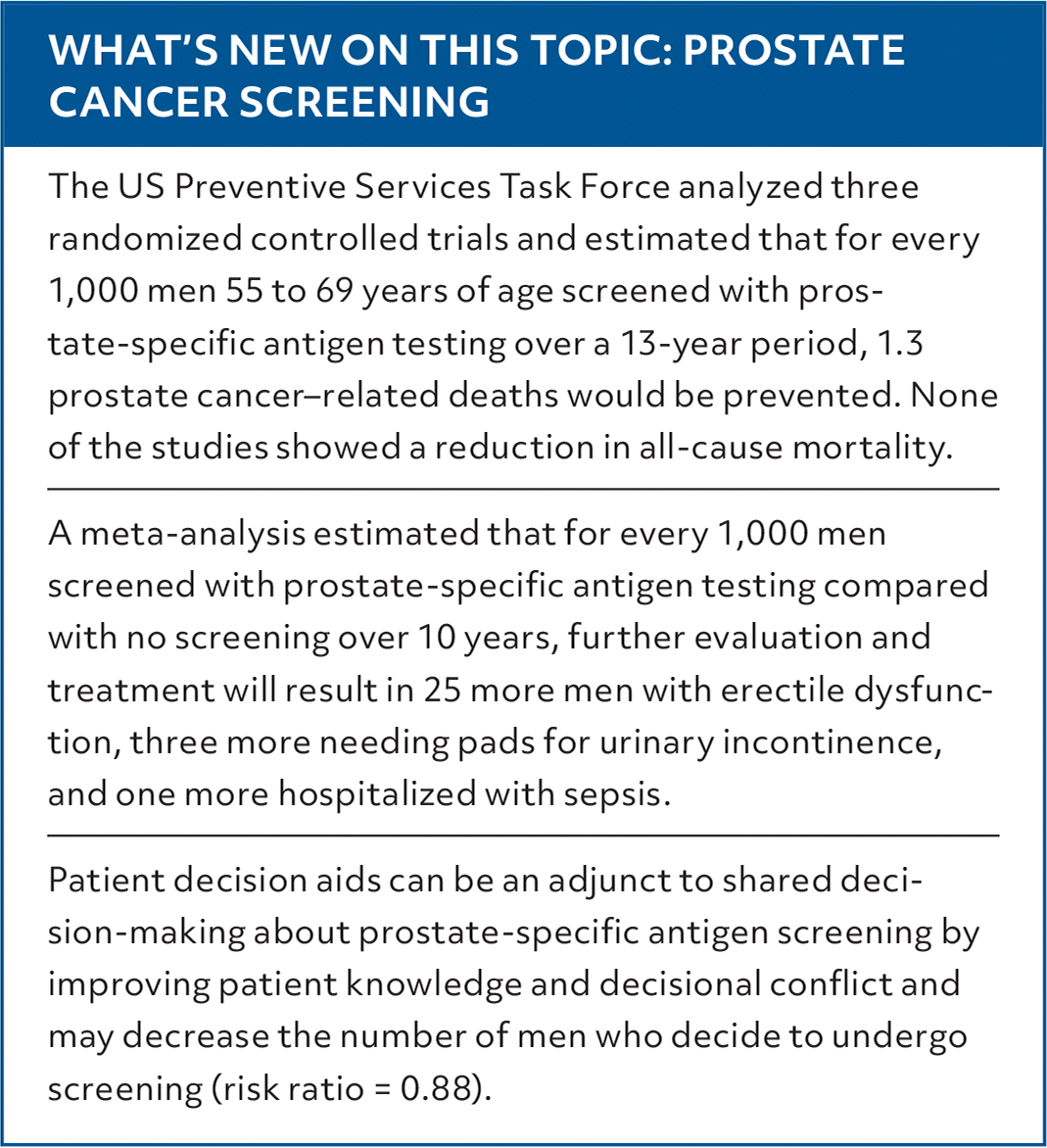
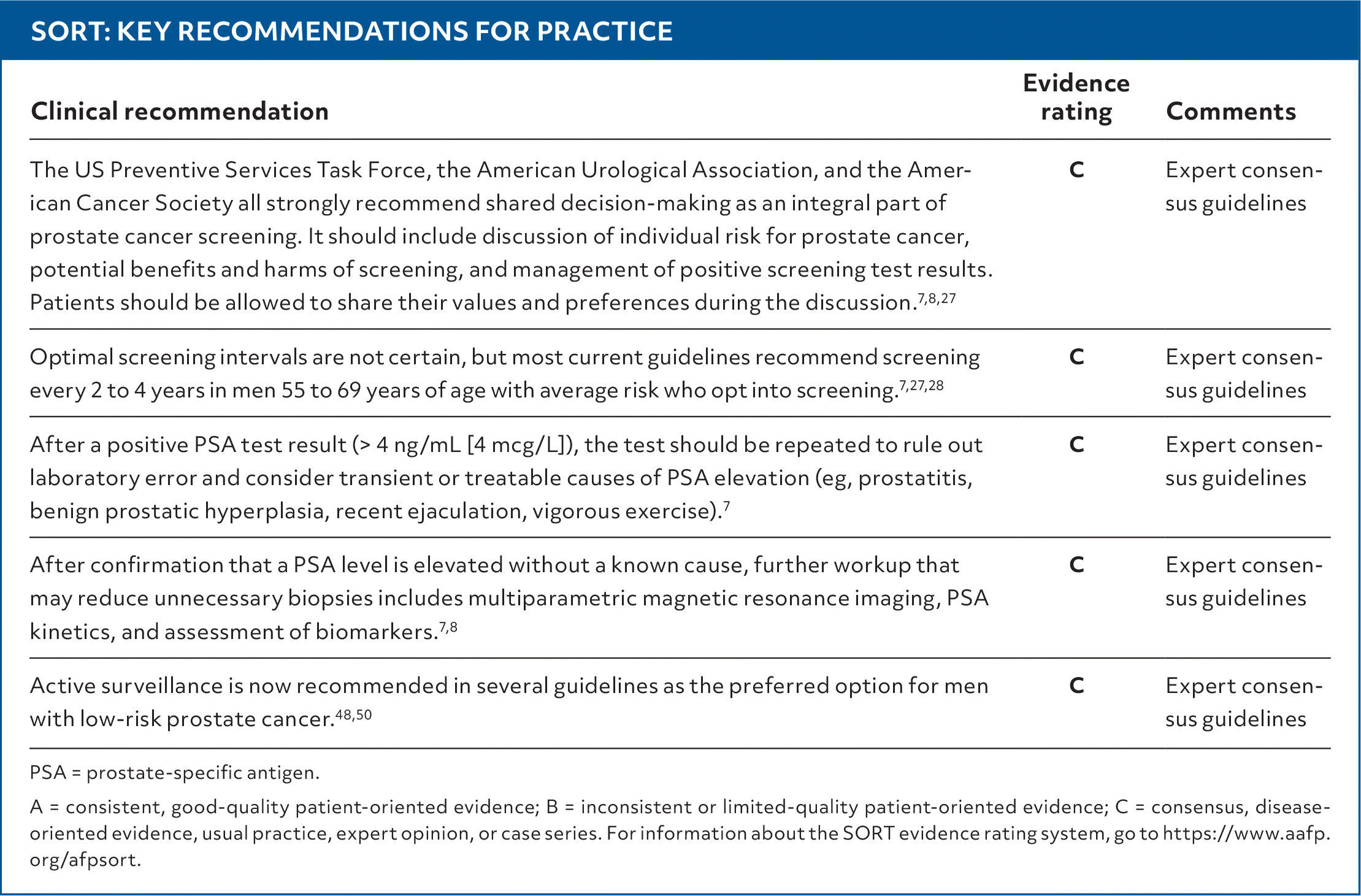
Prostate cancer is the most diagnosed noncutaneous malignancy and the second most common cause of cancer death among men in the United States. Risk factors include older age, family history of prostate cancer, and Black race. Screening via prostate-specific antigen testing may lead to a small reduction in prostate cancer–specific mortality, with no reduction in all-cause mortality, but it can cause significant harms related to false-positive test results, unnecessary biopsies, overdiagnosis, and overtreatment. Shared decision-making is strongly recommended by all national guidelines before initiating screening. Most guidelines recommend screening every 2 to 4 years in men 55 to 69 years of age at average risk. After a positive prostate-specific antigen test result (more than 4 ng/mL), the test should be repeated. If the prostate-specific antigen level is still elevated, next steps include multiparametric magnetic resonance imaging, assessment of urine or blood biomarkers, and referral to urology. Active surveillance is increasingly accepted as the preferred standard of care for patients with newly diagnosed low-risk prostate cancer, because it is associated with similar long-term survival and better quality of life than curative treatment. The primary intent of screening is to identify patients with clinically significant prostate cancer who may benefit from curative treatment while minimizing the detection of clinically insignificant cancer.

JINPING XU, MD, MS, is a professor in and chair of the Department of Family Medicine and Public Health Sciences at Wayne State University School of Medicine, Detroit, Mich.

SAMANTHA MCPHARLIN, MD, is a family physician in the Department of Family Medicine and Public Health Sciences at Wayne State University School of Medicine.

ELIE MULHEM, MD, is a professor in the Department of Family Medicine and Community Health at Oakland University William Beaumont School of Medicine, Rochester, Mich.

Address correspondence to Jinping Xu, MD, MS, at jxu@med.wayne.edu.

Author disclosure: No relevant financial relationships.

  1. 1.Siegel RL, Giaquinto AN, Jemal A. Cancer statistics, 2024. CA Cancer J Clin. 2024;74(1):12-49.
  2. 2.Jemal A, Fedewa SA, Ma J, et al. Prostate cancer incidence and PSA testing patterns in relation to USPSTF screening recommendations. JAMA. 2015;314(19):2054-2061.
  3. 3.Kearns JT, Holt SK, Wright JL, et al. PSA screening, prostate biopsy, and treatment of prostate cancer in the years surrounding the USPSTF recommendation against prostate cancer screening. Cancer. 2018;124(13):2733-2739.
  4. 4.Leapman MS, Wang R, Park H, et al. Changes in prostate-specific antigen testing relative to the revised US Preventive Services Task Force recommendation on prostate cancer screening. JAMA Oncol. 2022;8(1):41-47.
  5. 5.D’Amico AV, Whittington R, Malkowicz SB, et al. Pretreatment nomogram for prostate-specific antigen recurrence after radical prostatectomy or external-beam radiation therapy for clinically localized prostate cancer. J Clin Oncol. 1999;17(1):168-172.
  6. 6.Pierorazio PM, Walsh PC, Partin AW, et al. Prognostic Gleason grade grouping: data based on the modified Gleason scoring system. BJU Int. 2013;111(5):753-760.
  7. 7.Wei JT, Barocas D, Carlsson S, et al. Early detection of prostate cancer: AUA/SUO guideline part I: prostate cancer screening. J Urol. 2023;210(1):46-53.
  8. 8.Grossman DC, Curry SJ, Owens DK, et al.; US Preventive Services Task Force. Screening for prostate cancer: US Preventive Services Task Force recommendation statement. JAMA. 2018;319(18):1901-1913.
  9. 9.Fenton JJ, Weyrich MS, Durbin S, et al. Prostate-specific antigen-based screening for prostate cancer: evidence report and systematic review for the US Preventive Services Task Force. JAMA. 2018;319(18):1914-1931.
  10. 10.Ilic D, Djulbegovic M, Jung JH, et al. Prostate cancer screening with prostate-specific antigen (PSA) test: a systematic review and meta-analysis. BMJ. 2018;362:k3519.
  11. 11.Schröder FH, Hugosson J, Roobol MJ, et al.; ERSPC Investigators. Screening and prostate-cancer mortality in a randomized European study. N Engl J Med. 2009;360(13):1320-1328.
  12. 12.Schröder FH, Hugosson J, Roobol MJ, et al.; ERSPC Investigators. Screening and prostate cancer mortality: results of the European Randomised Study of Screening for Prostate Cancer (ERSPC) at 13 years of follow-up. Lancet. 2014;384(9959):2027-2035.
  13. 13.Andriole GL, Crawford ED, Grubb RL, et al.; PLCO Project Team. Prostate cancer screening in the randomized Prostate, Lung, Colorectal, and Ovarian Cancer Screening Trial: mortality results after 13 years of follow-up. J Natl Cancer Inst. 2012;104(2):125-132.
  14. 14.Martin RM, Turner EL, Young GJ, et al.; CAP Trial Group. Prostate-specific antigen screening and 15-year prostate cancer mortality: a secondary analysis of the CAP Randomized Clinical Trial. JAMA. 2024;331(17):1460-1470.
  15. 15.de Vos II, Meertens A, Hogenhout R, et al.; ERSPC Rotterdam Study Group. A detailed evaluation of the effect of prostate-specific antigen–based screening on morbidity and mortality of prostate cancer: 21-year follow-up results of the Rotterdam section of the European Randomised Study of Screening for Prostate Cancer. Eur Urol. 2023;84(4):426-434.
  16. 16.Andriole GL, Crawford ED, Grubb RL, et al.; PLCO Project Team. Mortality results from a randomized prostate-cancer screening trial. N Engl J Med. 2009;360(13):1310-1319.
  17. 17.Pinsky PF, Prorok PC, Yu K, et al. Extended mortality results for prostate cancer screening in the PLCO trial with median follow-up of 15 years. Cancer. 2017;123(4):592-599.
  18. 18.Schröder FH, Hugosson J, Carlsson S, et al. Screening for prostate cancer decreases the risk of developing metastatic disease: findings from the European Randomized Study of Screening for Prostate Cancer (ERSPC). Eur Urol. 2012;62(5):745-752.
  19. 19.Tidd-Johnson A, Sebastian SA, Co EL, et al. Prostate cancer screening: continued controversies and novel biomarker advancements. Curr Urol. 2022;16(4):197-206.
  20. 20.Draisma G, Etzioni R, Tsodikov A, et al. Lead time and overdiagnosis in prostate-specific antigen screening: importance of methods and context. J Natl Cancer Inst. 2009;101(6):374-383.
  21. 21.Pinsky PF, Parnes H. Screening for prostate cancer. N Engl J Med. 2023;388(15):1405-1414.
  22. 22.Wilt TJ, Jones KM, Barry MJ, et al. Follow-up of prostatectomy versus observation for early prostate cancer. N Engl J Med. 2017;377(2):132-142.
  23. 23.Donovan JL, Hamdy FC, Lane JA, et al.; ProtecT Study Group. Patient-reported outcomes after monitoring, surgery, or radiotherapy for prostate cancer. N Engl J Med. 2016;375(15):1425-1437.
  24. 24.Naji L, Randhawa H, Sohani Z, et al. Digital rectal examination for prostate cancer screening in primary care: a systematic review and meta-analysis. Ann Fam Med. 2018;16(2):149-154.
  25. 25.Arsov C, Albers P, Herkommer K, et al. A randomized trial of risk-adapted screening for prostate cancer in young men–results of the first screening round of the PROBASE trial. Int J Cancer. 2022;150(11):1861-1869.
  26. 26.Halpern JA, Oromendia C, Shoag JE, et al. Use of digital rectal examination as an adjunct to prostate specific antigen in the detection of clinically significant prostate cancer. J Urol. 2018;199(4):947-953.
  27. 27.American Cancer Society. American Cancer Society recommendations for prostate cancer early detection. Updated November 22, 2023. https://www.cancer.org/cancer/types/prostate-cancer/detection-diagnosis-staging/acs-recommendations.html
  28. 28.American Academy of Family Physicians. Clinical preventive service recommendation–prostate cancer. https://www.aafp.org/family-physician/patient-care/clinical-recommendations/all-clinical-recommendations/prostate-cancer.html
  29. 29.Fedewa SA, Gansler T, Smith R, et al. Recent patterns in shared decision making for prostate-specific antigen testing in the United States. Ann Fam Med. 2018;16(2):139-144.
  30. 30.Pekala KR, Shill DK, Austria M, et al. Shared decision-making before prostate cancer screening decisions. Nat Rev Urol. 2024;21(6):329-338.
  31. 31.Ivlev I, Jerabkova S, Mishra M, et al. Prostate cancer screening patient decision aids: a systematic review and meta-analysis. Am J Prev Med. 2018;55(6):896-907.
  32. 32.Riikonen JM, Guyatt GH, Kilpeläinen TP, et al. Decision aids for prostate cancer screening choice: a systematic review and meta-analysis. JAMA Intern Med. 2019;179(8):1072-1082.
  33. 33.Paschen U, Sturtz S, Fleer D, et al. Assessment of prostate-specific antigen screening: an evidence-based report by the German Institute for Quality and Efficiency in Health Care. BJU Int. 2022;129(3):280-289.
  34. 34.Thompson IM, Goodman PJ, Tangen CM, et al. The influence of finasteride on the development of prostate cancer. N Engl J Med. 2003;349(3):215-224.
  35. 35.Eastham JA, Riedel E, Scardino PT, et al.; Polyp Prevention Trial Study Group. Variation of serum prostate-specific antigen levels: an evaluation of year-to-year fluctuations. JAMA. 2003;289(20):2695-2700.
  36. 36.Lavallée LT, Binette A, Witiuk K, et al. Reducing the harm of prostate cancer screening: repeated prostate-specific antigen testing. Mayo Clin Proc. 2016;91(1):17-22.
  37. 37.Bryce C, Rapp A. Multiparametric MRI for the evaluation of prostate cancer. Am Fam Physician. 2022;105(6):665-666.
  38. 38.Balloga SM, Chang JG. MyProstateScore for predicting high-grade prostate cancer. Am Fam Physician. 2022;105(5):542-543.
  39. 39.Farha MW, Salami SS. Biomarkers for prostate cancer detection and risk stratification. Ther Adv Urol. 2022;14 : 17562872221103988.
  40. 40.Schröder FH, Hugosson J, Roobol MJ, et al.; ERSPC Investigators. Prostate-cancer mortality at 11 years of follow-up. N Engl J Med. 2012;366(11):981-990.
  41. 41.Wilt TJ, Vo TN, Langsetmo L, et al. Radical prostatectomy or observation for clinically localized prostate cancer: extended follow-up of the Prostate Cancer Intervention Versus Observation Trial (PIVOT). Eur Urol. 2020;77(6):713-724.
  42. 42.Clements MB, Vertosick EA, Guerrios-Rivera L, et al. Defining the impact of family history on detection of high-grade prostate cancer in a large multi-institutional cohort. Eur Urol. 2022;82(2):163-169.
  43. 43.Shenoy D, Packianathan S, Chen AM, et al. Do African-American men need separate prostate cancer screening guidelines?. BMC Urol. 2016;16(1):19.
  44. 44.Tsodikov A, Gulati R, de Carvalho TM, et al. Is prostate cancer different in Black men? Answers from 3 natural history models. Cancer. 2017;123(12):2312-2319.
  45. 45.Kasivisvanathan V, Rannikko AS, Borghi M, et al.; PRECISION Study Group Collaborators. MRI-targeted or standard biopsy for prostate-cancer diagnosis. N Engl J Med. 2018;378(19):1767-1777.
  46. 46.Drost FJH, Osses DF, Nieboer D, et al. Prostate MRI, with or without MRI-targeted biopsy, and systematic biopsy for detecting prostate cancer. Cochrane Database Syst Rev. 2019(4):CD012663.
  47. 47.Hugosson J, Månsson M, Wallström J, et al.; GÖTEBORG-2 trial investigators. Prostate cancer screening with PSA and MRI followed by targeted biopsy only. N Engl J Med. 2022;387(23):2126-2137.
  48. 48.National Comprehensive Cancer Network. NCCN guidelines version 2.2024 prostate cancer early detection. March 6, 2024. https://www.nccn.org/professionals/physician_gls/pdf/prostate_detection.pdf
  49. 49.Hamdy FC, Donovan JL, Lane JA, et al.; ProtecT Study Group. Fifteen-year outcomes after monitoring, surgery, or radiotherapy for prostate cancer. N Engl J Med. 2023;388(17):1547-1558.
  50. 50.Eastham JA, Auffenberg GB, Barocas DA, et al. Clinically localized prostate cancer: AUA/ASTRO guideline, part I: introduction, risk assessment, staging, and risk-based management. J Urol. 2022;208(1):10-18.
  51. 51.Cooperberg MR, Carroll PR. Trends in management for patients with localized prostate cancer, 1990–2013. JAMA. 2015;314(1):80-82.
  52. 52.Xu J, Bock CH, Janisse J, et al. Determinants of active surveillance uptake in a diverse population-based cohort of men with low-risk prostate cancer: The Treatment Options in Prostate Cancer Study (TOPCS). Cancer. 2024;130(10):1797-1806.
  53. 53.Mulhem E, Fulbright N, Duncan N. Prostate cancer screening. Am Fam Physician. 2015;92(8):683-688.
  54. 54.Wilbur J. Prostate cancer screening: the continuing controversy. Am Fam Physician. 2008;78(12):1377-1384.
  55. 55.Lefevre ML. Prostate cancer screening: more harm than good?. Am Fam Physician. 1998;58(2):432-438.

Copyright © 2026 by the American Academy of Family Physicians.

This content is owned by the AAFP. A person viewing it online may make one printout of the material and may use that printout only for his or her personal, non-commercial reference. This material may not otherwise be downloaded, copied, printed, stored, transmitted or reproduced in any medium, whether now known or later invented, except as authorized in writing by the AAFP. See permissions for copyright questions and/or permission requests.