

Faith M. Butler, MD
Deborah Rivera Hernandez, MD

American Family Physician. 2025;111(1):47-53.

Author disclosure: No relevant financial relationships.

This clinical content conforms to AAFP criteria for CME.

Acute rhinosinusitis causes more than 30 million patients to seek health care per year in the United States. Respiratory tract infections, including bronchitis and sinusitis, account for 75% of outpatient antibiotic prescriptions in primary care. Sinusitis is a clinical diagnosis; the challenge lies in distinguishing between the symptoms of bacterial and viral sinusitis. Cardinal features of acute bacterial rhinosinusitis are unilateral facial pain or pressure, fever greater than 102°F (39°C), and purulent nasal discharge with obstruction of the nasal passages. Antibiotics should be considered for patients with 3 or more days of severe symptoms, significant worsening after 3 to 5 days of symptoms, or 7 or more days of symptoms. Diagnostic testing for acute rhinosinusitis with antral puncture is impractical because of its invasiveness. Point-of-care testing for elevated C-reactive protein may be helpful, but it is not widely available. Studies have shown that amoxicillin is as effective as amoxicillin-clavulanate as a first-line treatment for acute bacterial rhinosinusitis for those without a beta-lactam allergy. For patients with a beta-lactam allergy, appropriate antibiotics include doxycycline or a respiratory fluoroquinolone; clindamycin plus a third-generation cephalosporin is an option for children with non-type I hypersensitivity to beta-lactam antibiotics. Supportive care for rhinosinusitis, including use of saline irrigation, nasal steroids or antihistamines, and decongestants, may help reduce the severity of symptoms. Most episodes of rhinosinusitis are self-limited, lasting 7 to 10 days. Complications of rhinosinusitis are rare but may include orbital cellulitis, meningitis, and abscess. Computed tomography and referral to an otolaryngologist should be considered for patients with recurrent rhinosinusitis or concern about complications.

Acute rhinosinusitis is defined by the Infectious Diseases Society of America (IDSA) as “inflammation of the mucosal lining of the nasal passage and paranasal sinuses lasting up to 4 weeks.”1 It is caused by a bacterial or viral pathogen triggering inflammation of the mucosal lining in the nasal passages and sinuses. A brief review of the epidemiology, diagnosis, and evidence-based treatment of acute rhinosinusitis in adults and children is presented here.

WHAT'S NEW ON THIS TOPIC
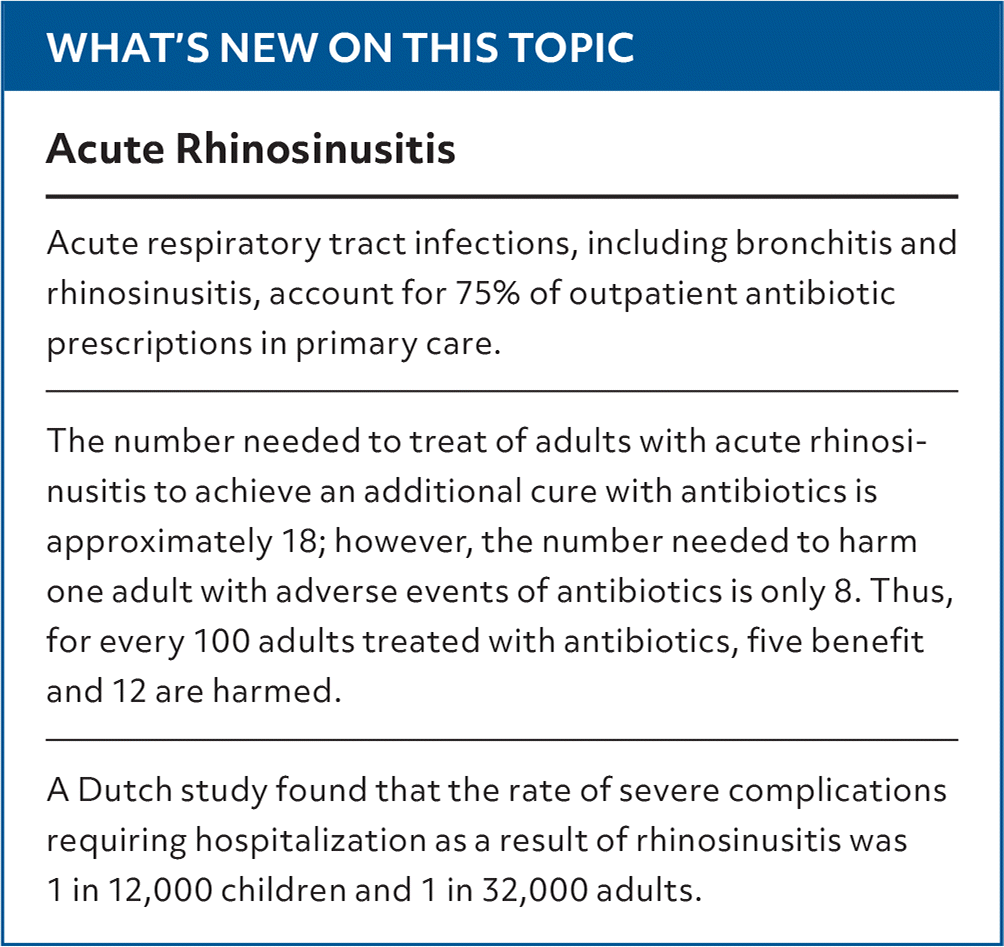
Acute Rhinosinusitis
Acute respiratory tract infections, including bronchitis and rhinosinusitis, account for 75% of outpatient antibiotic prescriptions in primary care.
The number needed to treat of adults with acute rhinosinusitis to achieve an additional cure with antibiotics is approximately 18; however, the number needed to harm one adult with adverse events of antibiotics is only 8. Thus, for every 100 adults treated with antibiotics, five benefit and 12 are harmed.
A Dutch study found that the rate of severe complications requiring hospitalization as a result of rhinosinusitis was 1 in 12,000 children and 1 in 32,000 adults.

SORT: KEY RECOMMENDATIONS FOR PRACTICE
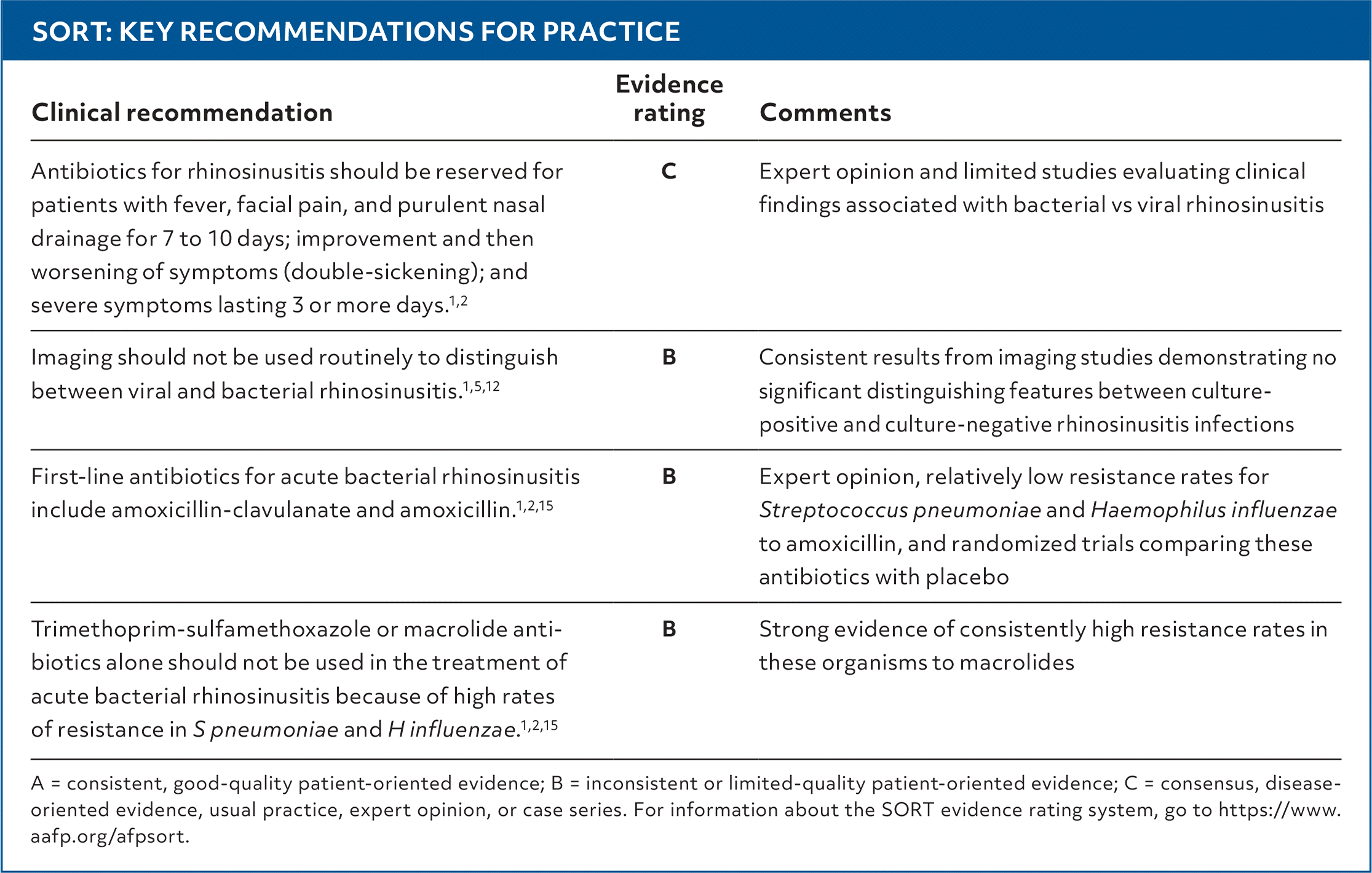
Clinical recommendation Evidence rating Comments
Antibiotics for rhinosinusitis should be reserved for patients with fever, facial pain, and purulent nasal drainage for 7 to 10 days; improvement and then worsening of symptoms (double-sickening); and severe symptoms lasting 3 or more days.1,2 C Expert opinion and limited studies evaluating clinical findings associated with bacterial vs viral rhinosinusitis
Imaging should not be used routinely to distinguish between viral and bacterial rhinosinusitis.1,5,12 B Consistent results from imaging studies demonstrating no significant distinguishing features between culture-positive and culture-negative rhinosinusitis infections
First-line antibiotics for acute bacterial rhinosinusitis include amoxicillin-clavulanate and amoxicillin.1,2,15 B Expert opinion, relatively low resistance rates for Streptococcus pneumoniae and Haemophilus influenzae to amoxicillin, and randomized trials comparing these antibiotics with placebo
Trimethoprim-sulfamethoxazole or macrolide antibiotics alone should not be used in the treatment of acute bacterial rhinosinusitis because of high rates of resistance in S pneumoniae and H influenzae.1,2,15 B Strong evidence of consistently high resistance rates in these organisms to macrolides

A = consistent, good-quality patient-oriented evidence; B = inconsistent or limited-quality patient-oriented evidence; C = consensus, disease-oriented evidence, usual practice, expert opinion, or case series. For information about the SORT evidence rating system, go to https://www.aafp.org/afpsort.

FAITH M. BUTLER, MD, FAAFP, is an assistant professor in the Department of Family Medicine and Community Health at the University of Kansas Medical Center, Kansas City.

DEBORAH RIVERA HERNANDEZ, MD, is a resident in the Department of Family Medicine and Community Health at the University of Kansas Medical Center.

Address correspondence to Faith M. Butler, MD, FAAFP, at fbutler@kumc.edu.

Author disclosure: No relevant financial relationships.

  1. 1.Chow AW, Benninger MS, Brook I, et al. IDSA clinical practice guideline for acute bacterial rhinosinusitis in children and adults. Clin Infect Dis. 2012;54(8):e72-e112.
  2. 2.Rosenfeld RM, Piccirillo JF, Chandrasekhar SS, et al. Clinical practice guideline (update): adult sinusitis. Otolaryngol Head Neck Surg. 2015;152(2 suppl):S1-S39.
  3. 3.U.S. Department of Health and Human Services; Centers for Disease Control and Prevention; National Center for Health Statistics. Summary health statistics: National Health interview survey, 2018. Accessed August 23, 2024. https://ftp.cdc.gov/pub/Health_Statistics/NCHS/NHIS/SHS/2018_SHS_Table_A-2.pdf
  4. 4.Ebell MH, McKay B, Dale A, et al. Accuracy of signs and symptoms for the diagnosis of acute rhinosinusitis and acute bacterial rhinosinusitis. Ann Fam Med. 2019;17(2):164-172.
  5. 5.Harris AM, Hicks LA, Qaseem A. Appropriate antibiotic use for acute respiratory tract infection in adults: advice for high-value care from the American College of Physicians and the Centers for Disease Control and Prevention. Ann Intern Med. 2016;164(6):425-434.
  6. 6.Dekker AR, Verheij TJM, van der Velden AW. Inappropriate antibiotic prescription for respiratory tract indications: most prominent in adult patients. Fam Pract. 2015;32(4):401-407.
  7. 7.Lee GC, Reveles KR, Attridge RT, et al. Outpatient antibiotic prescribing in the United States: 2000 to 2010. BMC Med. 2014;12:96.
  8. 8.Smith SS, Kern RC, Chandra RK, et al. Variations in antibiotic prescribing of acute rhinosinusitis in United States ambulatory settings. Otolaryngol Head Neck Surg. 2013;148(5):852-859.
  9. 9.DeMuri GP, Eickhoff JC, Gern JC, et al. Clinical and virological characteristics of acute sinusitis in children. Clin Infect Dis. 2019;69(10):1764-1770.
  10. 10.Osur SL. Viral respiratory infections in association with asthma and sinusitis: a review. Ann Allergy Asthma Immunol. 2002;89(6):553-560.
  11. 11.Smith SS, Caliendo A, Cheng BT, et al. Patient perspectives on the drivers and deterrents of antibiotic treatment of acute rhinosinusitis: a qualitative study. J Gen Intern Med. 2023;38(3):683-690.
  12. 12.Ebell MH, Hansen JG. Proposed clinical decision rules to diagnose acute rhinosinusitis among adults in primary care. Ann Fam Med. 2017;15(4):347-354.
  13. 13.Nettleton WD, Thornton FR. Guiding prescription of antibiotics in people with acute respiratory infections: biomarkers as point-of-care tests. Am Fam Physician. 2023;108(1):24-25.
  14. 14.Tierney DM, Becker JS, Post BD, et al. Point-of-care sinus ultrasound: impact within a large internal medicine clinic and review of technique. South Med J. 2018;111(7):411-417.
  15. 15.Wald ER, Applegate KE, Bordley C, et al.; American Academy of Pediatrics. Clinical practice guideline for the diagnosis and management of acute bacterial sinusitis in children aged 1 to 18 years. Pediatrics. 2013;132(1):e262-e280.
  16. 16.Cho SH, Ledford D, Lockey RF. Medical management strategies in acute and chronic rhinosinusitis. J Allergy Clin Immunol Pract. 2020;8(5):1559-1564.
  17. 17.Trestioreanu AZ, Yaphe J. Intranasal steroids for acute sinusitis. Cochrane Database Syst Rev. 2013(12):CD005149.
  18. 18.Venekamp RP, Thompson MJ, Hayward G, et al. Systemic corticosteroids for acute sinusitis. Cochrane Database Syst Rev. 2014(3):CD008115.
  19. 19.Hayward G, Heneghan C, Perera R, et al. Intranasal corticosteroids in management of acute sinusitis: a systematic review and meta-analysis. Ann Fam Med. 2012;10(3):241-249.
  20. 20.Perić A, Gaćeša D, Barać A, et al. Herbal drug EPs 7630 versus amoxicillin in patients with uncomplicated acute bacterial rhinosinusitis: a randomized, open-label study. Ann Otol Rhinol Laryngol. 2020;129(10):969-976.
  21. 21.Franck N, Zehtabchi S. Antibiotics for acute rhinosinusitis in adults. Am Fam Physician. 2019;100(7):od1.
  22. 22.Lemiengre MB, van Driel ML, Merenstein D, et al. Antibiotics for acute rhinosinusitis in adults. Cochrane Database Syst Rev. 2018(9):CD006089.
  23. 23.Saguil A. Interventions to improve antibiotic prescribing for uncomplicated acute RTIs. Am Fam Physician. 2016;94(11):918-920.
  24. 24.Hughes PR, Hungerford CH, Jensen KN. Acute rhinosinusitis: when to prescribe an antibiotic. J Fam Pract. 2020;69(5):244-250.
  25. 25.El Mograbi A, Ritter A, Najjar E, et al. Orbital complications of rhinosinusitis in the adult population: analysis of cases presenting to a tertiary medical center over a 13-year period. Ann Otol Rhinol Laryngol. 2019;128(6):563-568.
  26. 26.Hansen FS, Hoffmans R, Georgalas C, et al. Complications of acute rhinosinusitis in the Netherlands. Fam Pract. 2012;29(2):147-153.
  27. 27.Aring AM, Chan MM. Current concepts in adult acute rhinosinusitis. Am Fam Physician. 2016;94(2):97-105.
  28. 28.Aring AM, Chan MM. Acute rhinosinusitis in adults. Am Fam Physician. 2011;83(9):1057-1063.
  29. 29.Scheid DC, Hamm RM. Acute bacterial rhinosinusitis in adults: part I. Evaluation. Am Fam Physician. 2004;70(9):1685-1692.
  30. 30.Scheid DC, Hamm RM. Acute bacterial rhinosinusitis in adults: part II. Treatment. Am Fam Physician. 2004;70(9):1697-1704.

Copyright © 2026 by the American Academy of Family Physicians.

This content is owned by the AAFP. A person viewing it online may make one printout of the material and may use that printout only for his or her personal, non-commercial reference. This material may not otherwise be downloaded, copied, printed, stored, transmitted or reproduced in any medium, whether now known or later invented, except as authorized in writing by the AAFP. See permissions for copyright questions and/or permission requests.
