Dysuria: Evaluation and Differential Diagnosis in Adults

Ariel Hoffman, MD, MPH
Katelyn A. Dolezal, MD
Rob Powell, DO

American Family Physician. 2025;111(1):37-46.

Author disclosure: No relevant financial relationships.

This clinical content conforms to AAFP criteria for CME.

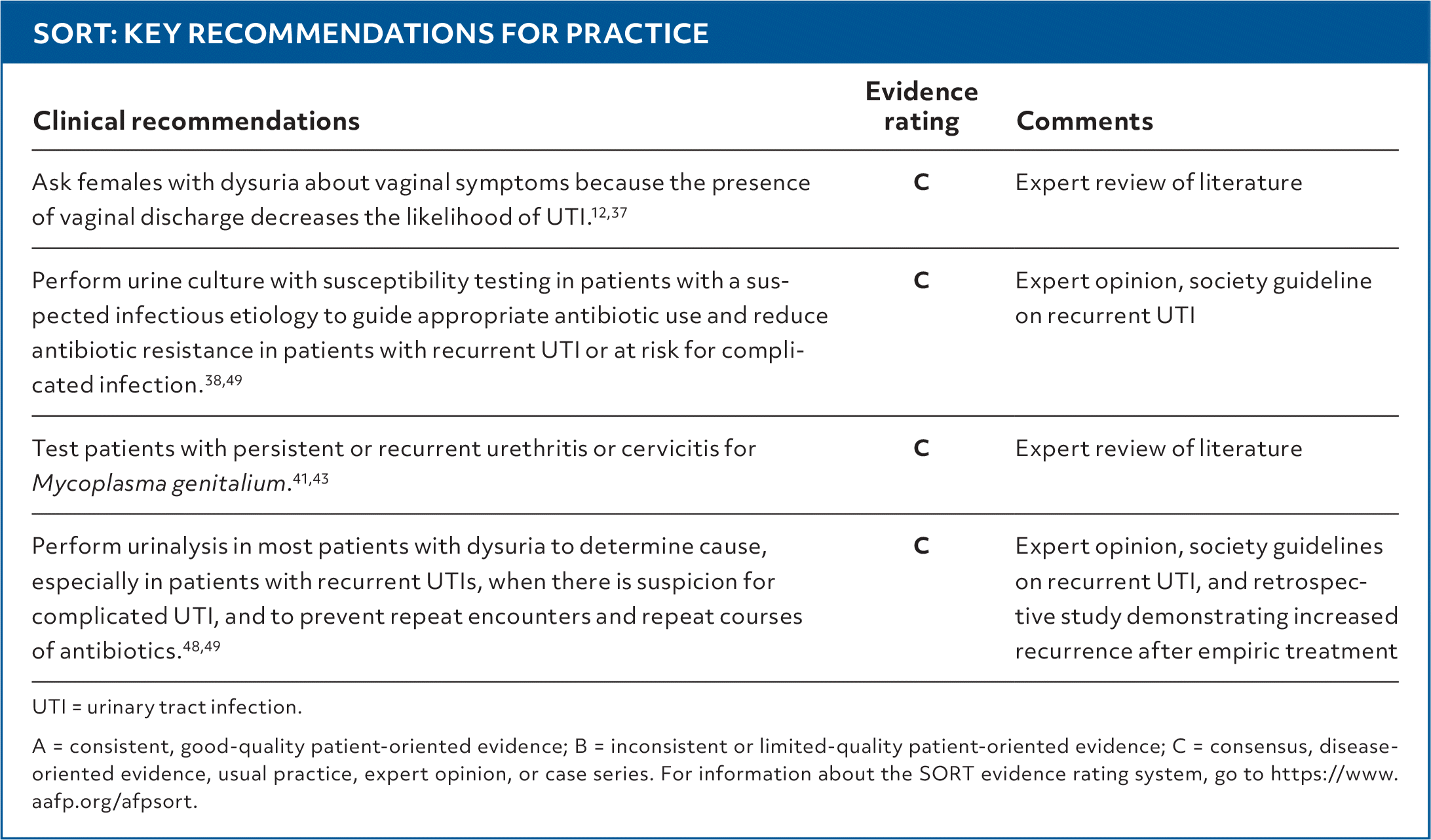
Dysuria, a feeling of pain or discomfort during urination, is often caused by urinary tract infection but can also be due to sexually transmitted infection, bladder irritants, skin lesions, and some chronic pain conditions. History is most often useful for finding signs of sexually transmitted infection, complicated infections, lower urinary symptoms in males, and noninfectious causes. Most patients presenting with dysuria should have a urinalysis performed. Urine culture should be performed for infection to guide appropriate antibiotic use, especially for recurrent or suspected complicated urinary tract infection. Vaginal discharge decreases the likelihood of urinary tract infection, and other causes of dysuria, including cervicitis, should be investigated. If a patient has persistent urethritis or cervicitis with negative initial testing, Mycoplasma genitalium testing is recommended. Clinical decision rules may increase the accuracy of diagnosis with and without laboratory analysis. Evaluation and treatment of dysuria through a virtual encounter without laboratory testing may increase recurrent symptoms and antibiotic courses. Persistent symptoms after initial evaluation and treatment require further workup for infectious and noninfectious causes.

ARIEL HOFFMAN, MD, MPH, is residency faculty at Martin Army Community Hospital, Fort Moore, Georgia, and an assistant professor in the Department of Family Medicine at the Uniformed Services University of the Health Sciences School of Medicine, Bethesda, Maryland.

KATELYN A. DOLEZAL, MD, is the associate program director at Madigan Army Medical Center Family Medicine Residency Program, Tacoma, Washington.

ROB POWELL, DO, is residency faculty at Martin Army Community Hospital, Fort Moore, Georgia.

Address correspondence to Ariel Hoffman, MD, MPH, at arielhoffman716@gmail.com.

Author disclosure: No relevant financial relationships.

  1. 1.Saeb-Parsey K, Lee E. Evaluation of dysuria. BMJ Best Practice. October 26, 2023. Accessed November 11, 2023. https://bestpractice.bmj.com/topics/en-us/299
  2. 2.Cairns C, Kang K. National Hospital Ambulatory Medical Care Survey: 2021 Emergency Department Summary Tables. National Center for Health Statistics; 2021: 1–38. Accessed November 11, 2023. https://www.cdc.gov/nchs/data/nhamcs/web_tables/2021-nhamcs-ed-web-tables-508.pdf
  3. 3.Santo L, Kang K. National Hospital Ambulatory Medical Care Survey: 2019 National Summary Tables. National Center for Health Statistics; 2023: 1–41. Accessed November 13, 2023. https://www.cdc.gov/nchs/data/ahcd/namcs_summary/2019-namcs-web-tables-508.pdf
  4. 4.Clemens JQ. Basic bladder neurophysiology. Urol Clin North Am. 2010;37(4):487-494.
  5. 5.Birder LA, Ruggieri M, Takeda M, et al. How does the urothelium affect bladder function in health and disease? ICI-RS 2011. Neurourol Urodyn. 2012;31(3):293-299.
  6. 6.Wyndaele JJ, De Wachter S. The sensory bladder (1): an update on the different sensations described in the lower urinary tract and the physiological mechanisms behind them. Neurourol Urodyn. 2008;27(4):274-278.
  7. 7.Elsamra SE. Evaluation of the urologic patient. In: Partin AW, Dmochowski RR, Kavoussi LR, et al., eds. Campbell-Walsh-Wein Urology. 12th ed. Elsevier; 2021: 1–13.e1.
  8. 8.Mazloomdoost D, Westermann LB, Mutema G, et al. Histologic anatomy of the anterior vagina and urethra. Female Pelvic Med Reconstr Surg. 2017;23(5):329-335.
  9. 9.Abelson B, Sun D, Que L, et al. Sex differences in lower urinary tract biology and physiology. Biol Sex Differ. 2018;9(1):45.
  10. 10.Sell J, Nasir M, Courchesne C. Urethritis: rapid evidence review. Am Fam Physician. 2021;103(9):553-558.
  11. 11.Gupta K, Grigoryan L, Trautner B. Urinary tract infection. Ann Intern Med. 2017;167(7):ITC49-ITC64.
  12. 12.Bent S, Nallamothu BK, Simel DL, et al. Does this woman have an acute uncomplicated urinary tract infection? JAMA. 2002;287(20):2701-2710.
  13. 13.Guralnick ML, O'Connor RC, See WA. Assessment and management of irritative voiding symptoms. Med Clin North Am. 2011;95(1):121-127.
  14. 14.Gabriel B, Nassif J, Trompoukis P, et al. Prevalence and management of urinary tract endometriosis: a clinical case series. Urology. 2011;78(6):1269-1274.
  15. 15.Kaunitz AM, Manson JE. Management of menopausal symptoms. Obstet Gynecol. 2015;126(4):859-876.
  16. 16.Nuss GR, Granieri MA, Zhao LC, et al. Presenting symptoms of anterior urethral stricture disease: a disease specific, patient reported questionnaire to measure outcomes. J Urol. 2012;187(2):559-562.
  17. 17.Shephard EA, Stapley S, Neal RD, et al. Clinical features of bladder cancer in primary care. Br J Gen Pract. 2012;62(602):e598-e604.
  18. 18.Sarma AV, Wei JT. Clinical practice. Benign prostatic hyperplasia and lower urinary tract symptoms. N Engl J Med. 2012;367(3):248-257.
  19. 19.Hanno P, Dmochowski R. Status of international consensus on interstitial cystitis/bladder pain syndrome/painful bladder syndrome: 2008 snapshot. Neurourol Urodyn. 2009;28(4):274-286.
  20. 20.Clemens JQ, Erickson DR, Varela NP, et al. Diagnosis and treatment of interstitial cystitis/bladder pain syndrome. J Urol. 2022;208(1):34-42.
  21. 21.Barocas DA, Boorjian SA, Alvarez RD, et al. Microhematuria: AUA/SUFU guideline. J Urol. 2020;204(4):778-786.
  22. 22.Esteban-Jiménez O, Navarro-Pemán C, Urieta-González L. Safety of SGLT2 inhibitors. A review of the adverse drug reactions registered in a national database [Spanish]. Semergen. 2018;44(1):23-29.
  23. 23.Portman DJ, Gass ML; Vulvovaginal Atrophy Terminology Consensus Conference Panel. Genitourinary syndrome of menopause: new terminology for vulvovaginal atrophy from the International Society for the Study of Women's Sexual Health and the North American Menopause Society. J Sex Med. 2014;11(12):2865-2872.
  24. 24.Capapé-Poves V, Pérez-Arbej JA, Palomera-Bernal L, et al. Dysuria and acute urinary retencion as initial presentation of primary vaginal lymphoma. Case report and bibliographic review. Arch Esp Urol. 2014;67(9):775-779.
  25. 25.Venyo AK. Lymphoma of the urinary bladder. Adv Urol. 2014;2014:327917.
  26. 26.Chien CW, Lee CK, Wang PN, et al. Urethral large B-cell urethral lymphoma: a case report and literature review. Taiwan J Obstet Gynecol. 2021;60(5):920-923.
  27. 27.Yasuoka S, Kimura G, Toyama Y, et al. A case of primary malignant lymphoma of the prostate gland presenting as right lower back pain and dysuria. J Nippon Med Sch. 2018;85(4):236-240.
  28. 28.Hooton TM. Clinical practice. Uncomplicated urinary tract infection. N Engl J Med. 2012;366(11):1028-1037.
  29. 29.Anderson MR, Klink K, Cohrssen A. Evaluation of vaginal complaints. JAMA. 2004;291(11):1368-1379.
  30. 30.Guralnick ML, O'Connor RC, See WA. Assessment and management of irritative voiding symptoms. Med Clin North Am. 2011;95(1):121-127.
  31. 31.Jarman A, Janes JL, Shorter B, et al. Food sensitivities in a diverse nationwide cohort of veterans with interstitial cystitis/bladder pain syndrome. J Urol. 2023;209(1):216-224.
  32. 32.Saint S, Trautner BW, Fowler KE, et al. A multicenter study of patient-reported infectious and noninfectious complications associated with indwelling urethral catheters. JAMA Intern Med. 2018;178(8):1078-1085.
  33. 33.Nabi G, Cook J, N'Dow J, et al. Outcomes of stenting after uncomplicated ureteroscopy: systematic review and meta-analysis. BMJ. 2007;334(7593):572.
  34. 34.Heliövaara-Peippo S, Halmesmäki K, Hurskainen R, et al. The effect of hysterectomy or levonorgestrel-releasing intrauterine system on lower urinary tract symptoms: a 10-year follow-up study of a randomised trial. BJOG. 2010;117(5):602-609.
  35. 35.Thuener JE. Urologic malignancies. Prim Care. 2019;46(2):275-285.
  36. 36.Aspera AM, Rackley RR, Vasavada SP. Contemporary evaluation and management of the female urethral diverticulum. Urol Clin North Am. 2002;29(3):617-624.
  37. 37.Chu CM, Lowder JL. Diagnosis and treatment of urinary tract infections across age groups. Am J Obstet Gynecol. 2018;219(1):40-51.
  38. 38.Kurotschka PK, Gágyor I, Ebell MH. Acute uncomplicated UTIs in adults: rapid evidence review. Am Fam Physician. 2024;109(2):167-174.
  39. 39.Peterson LM, Reed HS. Hematuria. Prim Care. 2019;46(2):265-273.
  40. 40.Hitzeman N, Greer D, Carpio E. Office-based urinalysis: a comprehensive review. Am Fam Physician. 2022;106(1):27-35B.
  41. 41.Centers for Disease Control and Prevention. Sexually transmitted infections treatment guidelines, 2021. Urethritis and cervicitis. September 21, 2022. Accessed July 15, 2024. https://www.cdc.gov/std/treatment-guidelines/urethritis-and-cervicitis.htm
  42. 42.Clebak KT, Sell JK, Koontz A. Aptima assay for detection of Mycoplasma genitalium infection. Am Fam Physician. 2021;104(5):517-518.
  43. 43.Centers for Disease Control and Prevention. Sexually transmitted infections treatment guidelines, 2021. Mycoplasma genitalium. July 14, 2021. Accessed November 10, 2023. https://www.cdc.gov/std/treatment-guidelines/mycoplasmagenitalium.htm
  44. 44.Workowski KA, Bachmann LH, Chan PA, et al. Sexually transmitted infections treatment guidelines, 2021. MMWR Recomm Rep. 2021;70(4):1-187.
  45. 45.American College of Radiology. ACR Diagnostic Appropriateness Criteria. Urologic. Accessed October 8, 2023. https://acsearch.acr.org/list
  46. 46.Knottnerus BJ, Geerlings SE, Moll van Charante EP, et al. Toward a simple diagnostic index for acute uncomplicated urinary tract infections. Ann Fam Med. 2013;11(5):442-451.
  47. 47.Ebell MH, Gagyor I. Diagnosis of urinary tract infection in women. Am Fam Physician. 2022;106(3):335-336.
  48. 48.DeWitt-Foy ME, Albersheim J, Grove S, et al. Impact of virtual care on outpatient urinary tract infection management. Urology. 2023;182:40-47.
  49. 49.Bixler BR, Anger JT. Updates to recurrent uncomplicated urinary tract infections in women: AUA/CUA/SUFU guideline. J Urol. 2022;208(4):754-756.
  50. 50.Barry K, Ceccarelli R. BD Max Vaginal Panel for the detection of vaginitis. Am Fam Physician. 2023;108(3):309-310.
  51. 51.Centers for Disease Control and Prevention. Recommendations for the laboratory-based detection of Chlamydia trachomatis and Neisseria gonorrhoeae—2014. MMWR Recomm Rep. 2014;63(RR-02):1-19.
  52. 52.National Institute for Health and Care Excellence (NICE). Lower urinary tract symptoms in men: management: NICE clinical guidelines, no. 97. 2015. Accessed November 15, 2023. https://www.ncbi.nlm.nih.gov/books/NBK553261/
  53. 53.Abele-Horn M, Wolff C, Dressel P, et al. Polymerase chain reaction versus culture for detection of Ureaplasma urealyticum and Mycoplasma hominis in the urogenital tract of adults and the respiratory tract of newborns. Eur J Clin Microbiol Infect Dis. 1996;15(7):595-598.
  54. 54.Lai HH, Vetter J, Song J, et al. Management of symptom flares and patient-reported flare triggers in interstitial cystitis/bladder pain syndrome (IC/BPS)-findings from one site of the MAPP Research Network. Urology. 2019;126:24-33.
  55. 55.Romanzi LJ, Groutz A, Blaivas JG. Urethral diverticulum in women: diverse presentations resulting in diagnostic delay and mismanagement. J Urol. 2000;164(2):428-433.
  56. 56.Sherman AK, MacLachlan LS. A review of urinary tract endometriosis. Curr Urol Rep. 2022;23(10):219-223.
  57. 57.Michels TC, Sands JE. Dysuria: evaluation and differential diagnosis in adults. Am Fam Physician. 2015;92(9):778-786.
  58. 58.Bremnor JD, Sadovsky R. Evaluation of dysuria in adults. Am Fam Physician. 2002;65(8):1589-1596.
  59. 59.Roberts RG, Hartlaub PP. Evaluation of dysuria in men. Am Fam Physician. 1999;60(3):865-872.
  60. 60.Kurowski K. The women with dysuria. Am Fam Physician. 1998;57(9):2155-2164.

Copyright © 2026 by the American Academy of Family Physicians.

This content is owned by the AAFP. A person viewing it online may make one printout of the material and may use that printout only for his or her personal, non-commercial reference. This material may not otherwise be downloaded, copied, printed, stored, transmitted or reproduced in any medium, whether now known or later invented, except as authorized in writing by the AAFP. See permissions for copyright questions and/or permission requests.