

CLINICAL QUESTION
Is nonoperative antibiotic therapy a practical option compared with operative treatment for uncomplicated acute appendicitis in children?
EVIDENCE-BASED ANSWER
Nonoperative treatment with antibiotics for uncomplicated acute appendicitis in children is an option but leads to higher numbers of hospital readmissions and subsequent surgeries. (Strength of Recommendation [SOR]: A, meta-analysis of randomized controlled trials [RCTs] and cohort studies.) The nonoperative approach has a treatment failure rate of approximately 20%, with most occurring in the first 2 days. (SOR: B, RCT and large cohort study.) The presence of an appendicolith visualized with ultrasonography is strongly associated with early failure of nonoperative treatment. (SOR: B, single RCT.)
EVIDENCE SUMMARY
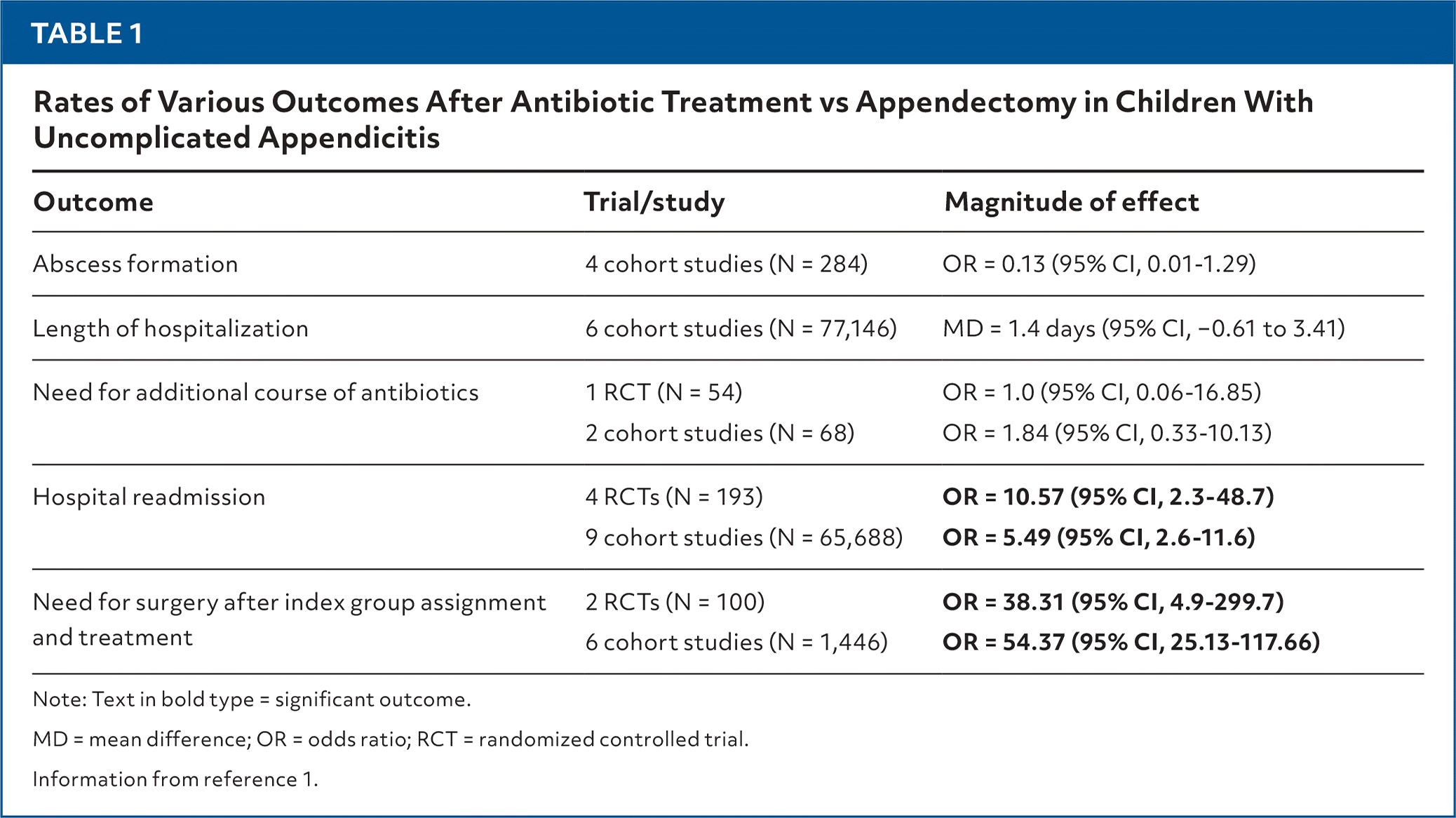
A 2023 systematic review and meta-analysis composed of four RCTs and 13 observational studies assessed various outcomes in children with uncomplicated acute appendicitis who were treated with appendectomy or nonoperatively with antibiotics.1 Meta-analyses were performed separately on the RCTs and cohort studies for various outcomes (Table 11). Each analysis found an increased number of hospital readmissions in the nonoperative antibiotic treatment group. Also in the nonoperative antibiotic therapy group, there was an increased need for surgery beyond index assignment, and treatment occurred more often. The cohort studies analysis showed no significant differences in abscess formation, length of hospitalization, or need for an additional course of antibiotics between the two groups.
TABLE 1. Rates of Various Outcomes After Antibiotic Treatment vs Appendectomy in Children With Uncomplicated Appendicitis
| Outcome | Trial/study | Magnitude of effect |
|---|---|---|
| Abscess formation | 4 cohort studies (N = 284) | OR = 0.13 (95% CI, 0.01–1.29) |
| Length of hospitalization | 6 cohort studies (N = 77,146) | MD = 1.4 days (95% CI, −0.61 to 3.41) |
| Need for additional course of antibiotics | 1 RCT (N = 54) 2 cohort studies (N = 68) | OR = 1.0 (95% CI, 0.06–16.85) OR = 1.84 (95% CI, 0.33–10.13) |
| Hospital readmission | 4 RCTs (N = 193) 9 cohort studies (N = 65,688) | OR = 10.57 (95% CI, 2.3–48.7) OR = 5.49 (95% CI, 2.6–11.6) |
| Need for surgery after index group assignment and treatment | 2 RCTs (N = 100) 6 cohort studies (N = 1,446) | OR = 38.31 (95% CI, 4.9–299.7) OR = 54.37 (95% CI, 25.13–117.66) |
Note: Text in bold type = significant outcome.
MD = mean difference; OR = odds ratio; RCT = randomized controlled trial.
Information from reference 1.
A 2021 RCT (N = 180) in Pakistan compared nonoperative treatment with appendectomy in children presenting with uncomplicated acute appendicitis.2 Children and adolescents between ages 5 and 15 years were included in the trial; 68% were male. Patients in the nonoperative group received broad-spectrum intravenous antibiotics for a minimum of 48 hours and then were transitioned to oral antibiotics for an additional 8 days. Patients in the other group underwent open appendectomy with perioperative antibiotics. The criteria used to determine failure of nonoperative treatment were need for surgery within 48 hours due to worsening symptoms, abscess formation or fluid collection as noted with ultrasonography, or recurrence of appendicitis within 6 months.
Read the full article
Get immediate access, anytime, anywhere.
Choose a single article, issue, or full-access subscription.
Earn up to 14 CME credits per issue.
