

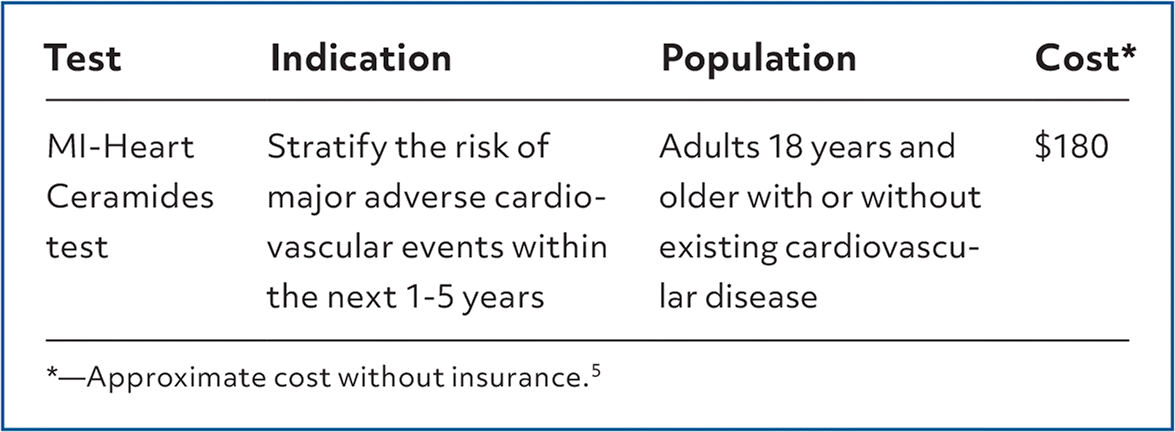
The MI-Heart Ceramides test is used to determine the risk of adverse cardiovascular events. It assesses various plasma ceramides, a type of complex lipid. There are many different types of ceramides in the body resulting from unstable atherosclerotic plaques. When elevated, ceramides are associated with major adverse cardiovascular events (MACE). The MI-Heart Ceramides test has not been approved by the US Food and Drug Administration.
ACCURACY
The MI-Heart Ceramides test results are used to stratify a patient's absolute 5-year risk for adverse cardiovascular events on a 12-point scale.1 Scoring is determined by stratification of results into quartiles for three individual blood ceramide levels: Cer(16:0), Cer(18:0), and Cer(24:1), and three individual blood ceramide ratios: Cer(16:0)/Cer(24:0), Cer(18:0)/Cer(24:0), and Cer(24:1)/Cer(24:0). Zero points are given for values in the first or second quartile, 1 point for values in the third quartile, and 2 points for values in the fourth quartile, to make a summative score of up to 12 points.
A 2020 development and validation study created a risk score based on ceramide levels.2 A total of 3,789 patients were enrolled in the development cohort. Two validation cohorts included 5,991 patients and 1,023 patients, respectively.3 The 12-point ceramide risk score predicted cardiovascular disease mortality with multi-adjusted hazard ratios of 1.44 (1.28 to 1.63) in the development study and 1.47 (1.34 to 1.61) and 1.69 (1.31 to 2.17) in the validation cohorts.2,3
In a 2018 retrospective observational study, 495 patients aged 18 to 75 years had ceramide testing before nonurgent coronary angiography to evaluate whether elevated ceramide levels can help predict death in the next 18 years or the risk of a MACE in the next 4 years, or whether coronary artery disease (CAD) was diagnosed on angiography (defined as greater than 50% stenosis in one or more coronary arteries).3 Eighteen years was used as a milestone because this was when national death records were reexamined. CAD was identified in 54% of patients, and higher ceramide levels were not associated with an increased risk of CAD. After adjusting for risk factors such as age, sex, body mass index, hypertension, smoking, cholesterol, glucose, and family history of CAD, elevated ceramides were associated with a higher 4-year risk of MACE (adjusted hazard ratio = 1.42 to 1.58) and 18-year risk of death (adjusted hazard ratio = 1.14 to 1.36) compared with normal ceramide levels (Table 1).3 Absolute risk was not reported in this study.
TABLE 1. Adjusted Hazard Ratios for MACE and Death for Different Plasma Ceramide Concentrations
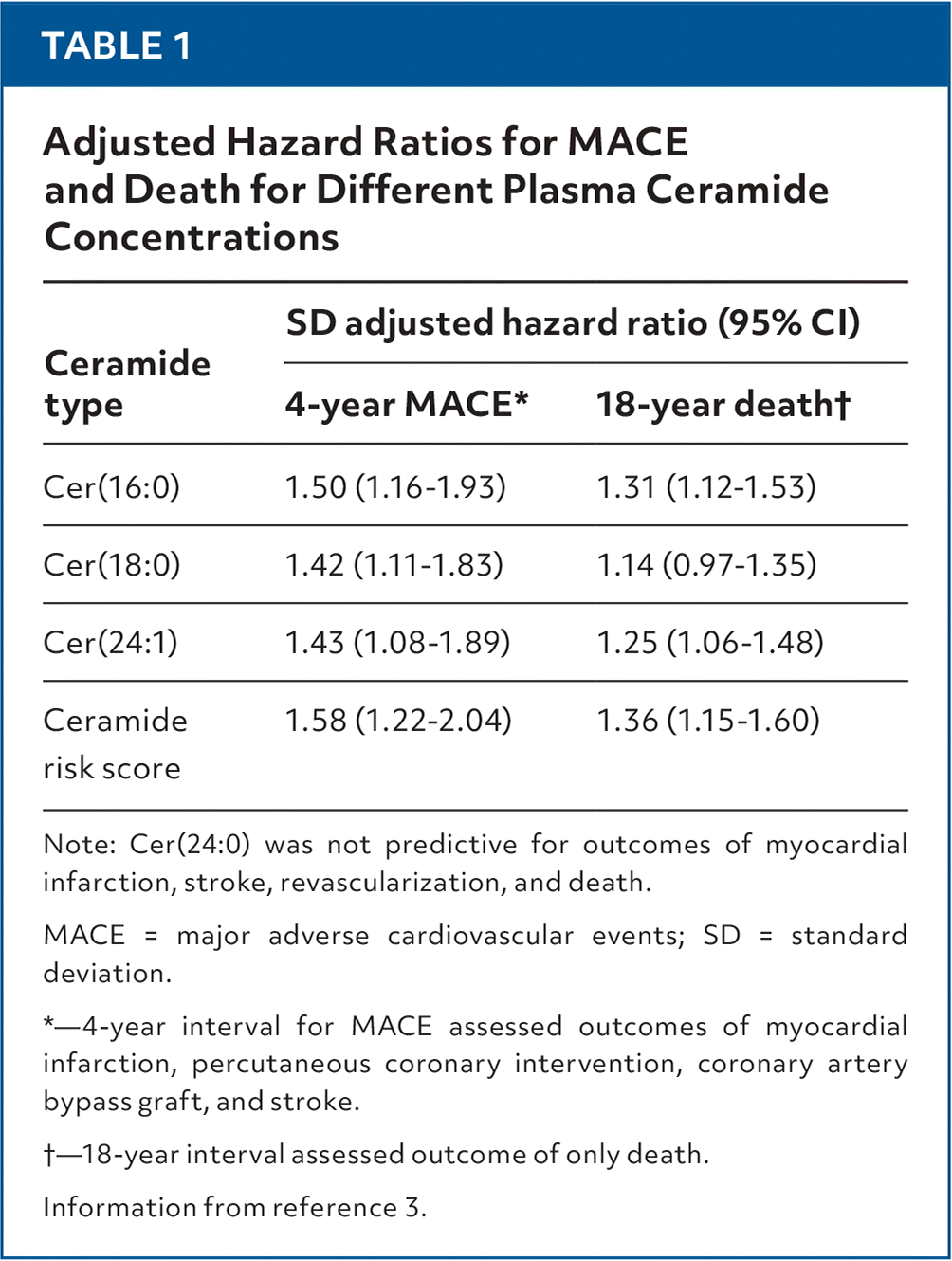
| Ceramide type | SD adjusted hazard ratio (95% CI) | |
|---|---|---|
| 4-year MACE* | 18-year death† | |
| Cer(16: 0) | 1.50 (1.16–1.93) | 1.31 (1.12–1.53) |
| Cer(18: 0) | 1.42 (1.11–1.83) | 1.14 (0.97–1.35) |
| Cer(24 :1) | 1.43 (1.08–1.89) | 1.25 (1.06–1.48) |
| Ceramide risk score | 1.58 (1.22–2.04) | 1.36 (1.15–1.60) |
Note: Cer(24: 0) was not predictive for outcomes of myocardial infarction, stroke, revascularization, and death.
MACE = major adverse cardiovascular events; SD = standard deviation.
*—4-year interval for MACE assessed outcomes of myocardial infarction, percutaneous coronary intervention, coronary artery bypass graft, and stroke.
†—18-year interval assessed outcome of only death.
Information from reference 3.
Read the full article
Get immediate access, anytime, anywhere.
Choose a single article, issue, or full-access subscription.
Earn up to 14 CME credits per issue.
