

CLINICAL QUESTION
How effective is the gamma-aminobutyric acid type A (GABA-A) receptor modulator zuranolone (Zurzuvae) for treatment of severe postpartum depression in adults?
EVIDENCE-BASED ANSWER
Zuranolone is an effective treatment for adults with severe postpartum depression. (Strength of Recommendation: A, meta-analysis of randomized controlled trials [RCTs].)
EVIDENCE SUMMARY
A 2023 systematic review and meta-analysis evaluated nine double-blind RCTs assessing the effectiveness and safety of GABA-A receptor modulators such as zuranolone in female patients with major depressive disorder or postpartum depression (defined as major depression with onset within 4 weeks of delivery).1 Of the nine studies, two assessed zuranolone for postpartum depression (N = 346). The studies examined changes in the Hamilton Depression Rating Scale (HAM-D) score (scoring range = 0–54; higher score indicates more severe depression) with a 14-day course of zuranolone. Secondary outcomes included a more than 50% reduction in HAM-D score (response) or HAM-D score ≤ 7 (remission) and were measured up to day 45.
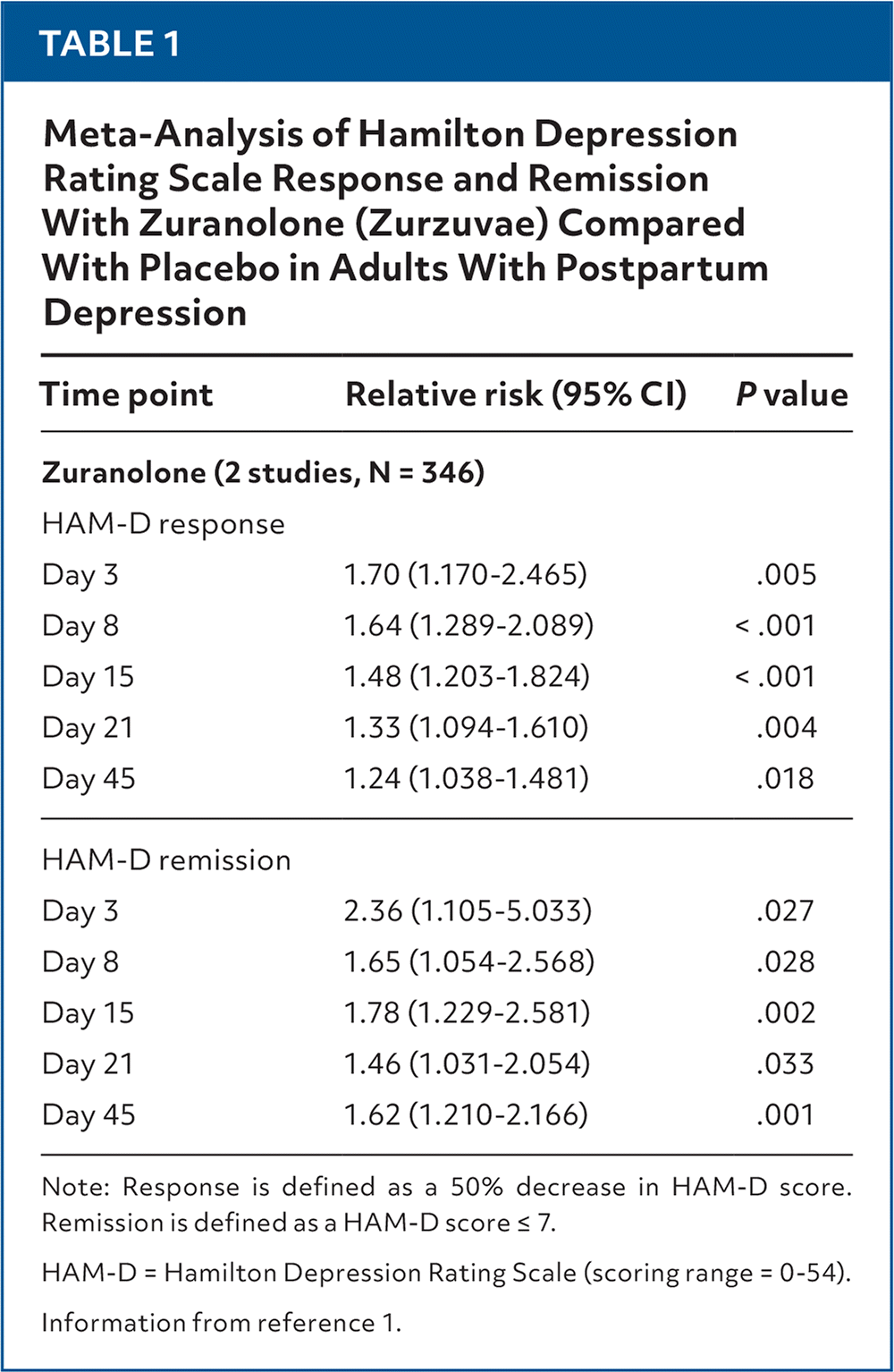
In patients with postpartum depression, treatment with oral zuranolone for 14 days improved depression scores compared with placebo. HAM-D scores were approximately 4 points lower with zuranolone vs placebo at day 15 (least squares mean difference = 4.2; 95% CI, 1.5–6.9; P = .003 and least squares mean difference = 4.0; 95% CI, 1.7–6.3; P < .001, respectively).2,3 The least squares mean difference is that between the predicted average values of the two groups. Patients taking zuranolone are more likely to achieve remission as defined by HAM-D score at day 15 compared with patients taking placebo. Postpartum depression response and remission rates were greater in the zuranolone group compared with the placebo group at all time points (Table 1).1
TABLE 1. Meta-Analysis of Hamilton Depression Rating Scale Response and Remission With Zuranolone (Zurzuvae) Compared With Placebo in Adults With Postpartum Depression
| Time point | Relative risk (95% CI) | P value |
|---|---|---|
| Zuranolone (2 studies, N = 346) | ||
| HAM-D response | ||
| Day 3 | 1.70 (1.170–2.465) | .005 |
| Day 8 | 1.64 (1.289–2.089) | < .001 |
| Day 15 | 1.48 (1.203–1.824) | < .001 |
| Day 21 | 1.33 (1.094–1.610) | .004 |
| Day 45 | 1.24 (1.038–1.481) | .018 |
| HAM-D remission | ||
| Day 3 | 2.36 (1.105–5.033) | .027 |
| Day 8 | 1.65 (1.054–2.568) | .028 |
| Day 15 | 1.78 (1.229–2.581) | .002 |
| Day 21 | 1.46 (1.031–2.054) | .033 |
| Day 45 | 1.62 (1.210–2.166) | .001 |
Note: Response is defined as a 50% decrease in HAM-D score. Remission is defined as a HAM-D score ≤ 7.
HAM-D = Hamilton Depression Rating Scale (scoring range = 0–54).
Information from reference 1.
Zuranolone was associated with an increased risk of adverse effects (relative risk [RR] = 1.19; 95% CI, 1.07–1.31; P = .001), particularly somnolence (RR = 2.82; 95% CI, 1.79–4.44; P < .001), dizziness (RR = 3.02; 95% CI, 1.83–4.98; P < .001), and sedation (RR = 2.14; 95% CI, 1.03–4.44; P = .042).1
Read the full article
Get immediate access, anytime, anywhere.
Choose a single article, issue, or full-access subscription.
Earn up to 14 CME credits per issue.
