

DETAILS FOR THIS REVIEW
Study Population: 27,235 individuals who actively smoke tobacco from 88 studies, including 47 randomized controlled trials (RCTs)
Efficacy End Points: Smoking cessation at least 6 months after the start of the intervention
Harm End Points: Any adverse events or serious adverse events at least 1 week after the start of the intervention
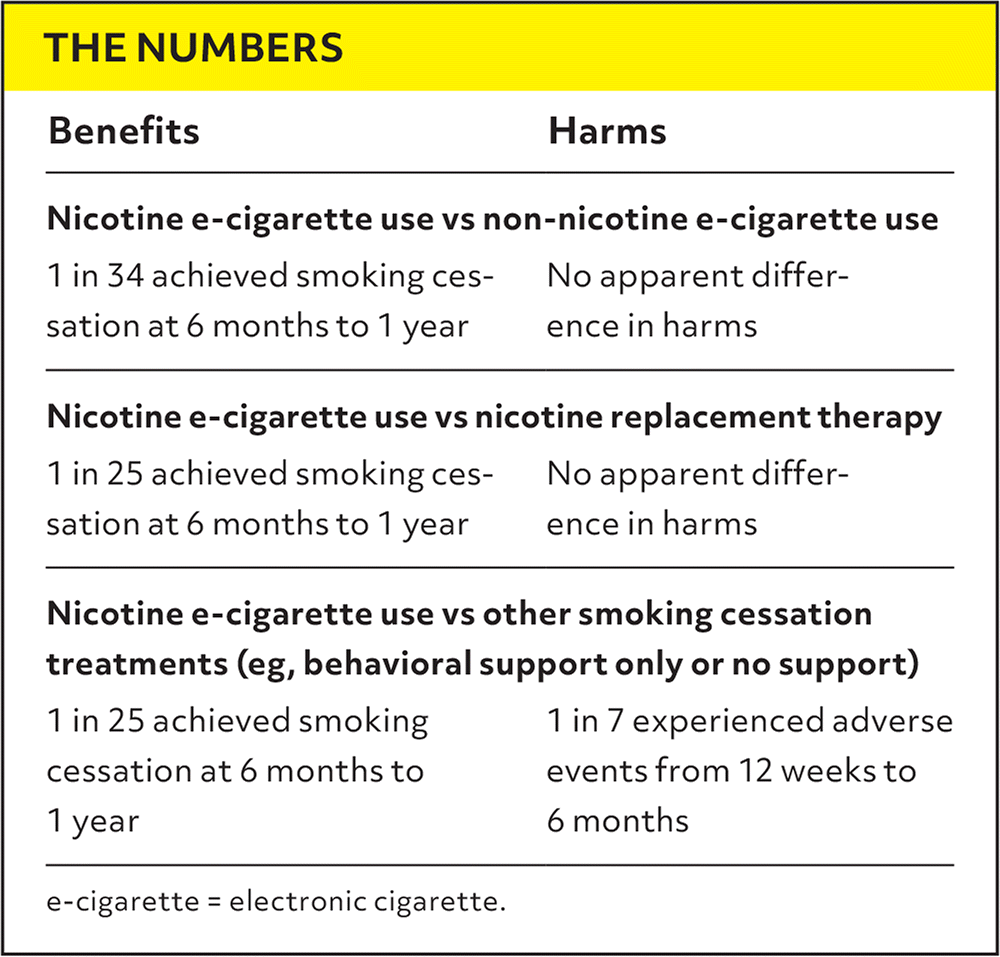
THE NUMBERS
| Benefits | Harms |
|---|---|
| Nicotine e-cigarette use vs non-nicotine e-cigarette use | |
| 1 in 34 achieved smoking cessation at 6 months to 1 year | No apparent difference in harms |
| Nicotine e-cigarette use vs nicotine replacement therapy | |
| 1 in 25 achieved smoking cessation at 6 months to 1 year | No apparent difference in harms |
| Nicotine e-cigarette use vs other smoking cessation treatments (eg, behavioral support only or no support) | |
| 1 in 25 achieved smoking cessation at 6 months to 1 year | 1 in 7 experienced adverse events from 12 weeks to 6 months |
e-cigarette = electronic cigarette.
Narrative: Smoking cigarettes is the leading cause of premature death and preventable disease worldwide and dramatically increases the risk for cancer and cardiovascular and pulmonary diseases. Smoking cessation is challenging because of nicotine dependence, with an approximate 3% success rate in those who attempt to quit.1 Nicotine induces pleasure, reduces stress and anxiety, and precipitates withdrawal symptoms on cessation (eg, irritability, depressed mood, restlessness, anxiety).1 Electronic cigarettes (e-cigarettes) are battery-powered, handheld, devices that produce an aerosol mist by heating a liquid that may contain flavorings and nicotine. e-Cigarettes are thought to mimic the behavioral experience of smoking a real cigarette (eg, taste, throat sensation, vapor cloud production).2 e-Cigarettes may potentially reduce tobacco harms and smoking relapse.3
The Cochrane review considered here examined the safety, tolerability, and effectiveness of using nicotine-containing e-cigarettes to help people who smoke tobacco achieve long-term abstinence, as compared with non-nicotine e-cigarettes, other smoking cessation treatments (eg, behavioral support), and no treatment.4 In the review, 88 studies were included, with a total of 27,235 participants. Of the 88 studies, 47 were RCTs in which smokers were randomized to e-cigarettes or control, and the remainder were uncontrolled studies; 38 studies were completed in the United States.4
High-certainty evidence showed that nicotine e-cigarettes increased smoking cessation at 6 months to 1 year compared with nicotine replacement therapy (risk ratio [RR] = 1.59; 95% CI, 1.29–1.93; absolute risk difference [ARD] = 4%; number needed to treat [NNT] = 25; seven RCTs; n = 2,544). Moderate-certainty evidence demonstrated that nicotine e-cigarettes increased cessation at 6 months compared with non-nicotine e-cigarettes (RR = 1.46; 95% CI, 1.09–1.96; ARD = 3%; NNT = 34; six RCTs; n = 1,613). Low-certainty evidence showed that nicotine e-cigarettes increased cessation at 6 months compared with other cessation treatments (eg, behavioral support only or no support; RR = 1.88; 95% CI, 1.56–2.25; ARD = 4%; NNT = 25; nine RCTs; n = 5,024).4
Moderate-certainty evidence showed no apparent difference in any adverse events at 12 weeks to 6 months between nicotine e-cigarettes and nicotine replacement therapy or between nicotine e-cigarettes and non-nicotine e-cigarettes. Low-certainty evidence demonstrated that the risk of any adverse events at 12 weeks to 6 months was higher with nicotine e-cigarettes than with other cessation treatments (eg, behavioral support only or no support; RR = 1.22; 95% CI, 1.12–1.32; ARD = 14%; number needed to harm = 7; four RCTs; n = 765).4
Read the full article
Get immediate access, anytime, anywhere.
Choose a single article, issue, or full-access subscription.
Earn up to 14 CME credits per issue.
