Symptoms of female sexual dysfunction are common, affecting 40% to 50% of women. Most patients would like their physician to actively inquire about sexual dysfunction. When symptoms of female sexual dysfunction are chronic and cause the patient distress, they can be diagnosed as female sexual disorders. This clinical diagnosis is based on a thorough history and physical examination; understanding the patient’s symptoms and associated distress is essential. The condition is further categorized into disorders of sexual desire and arousal, orgasmic disorders, and genito-pelvic pain disorders. The Female Sexual Function Index and the Female Sexual Distress Scale–Revised are validated tools that can aid in diagnosis. Treatment should be directed to each patient’s symptoms and depends on the presence of comorbid medical or mental health conditions and any concerns discovered during the interview or physical examination. Evidence supports the use of vaginal lubricants and topical estrogen for genito-pelvic pain related to menopause, and pelvic floor physical therapy remains the first-line treatment for other genito-pelvic pain disorders. Cognitive behavior therapy is first-line treatment for disorders of sexual desire and arousal. Orgasmic disorders are treated with cognitive behavior therapy and sex therapy.
The prevalence of sexual dysfunction among women is high, estimated to be 40% to 50% regardless of age.1 When these symptoms are chronic and distressing, they can be described as female sexual disorders (FSD). Family physicians are well-equipped to assess and treat FSD2 by addressing commonly associated mental health conditions and physiologic life states, including social, cultural, and interpersonal factors.3,4 This article provides evidence-based answers to common questions about the evaluation and management of FSD in cisgender women and other people assigned female sex at birth. Information specific to managing FSD in transgender and gender-diverse groups is beyond the scope of this article.
WHAT’S NEW ON THIS TOPIC
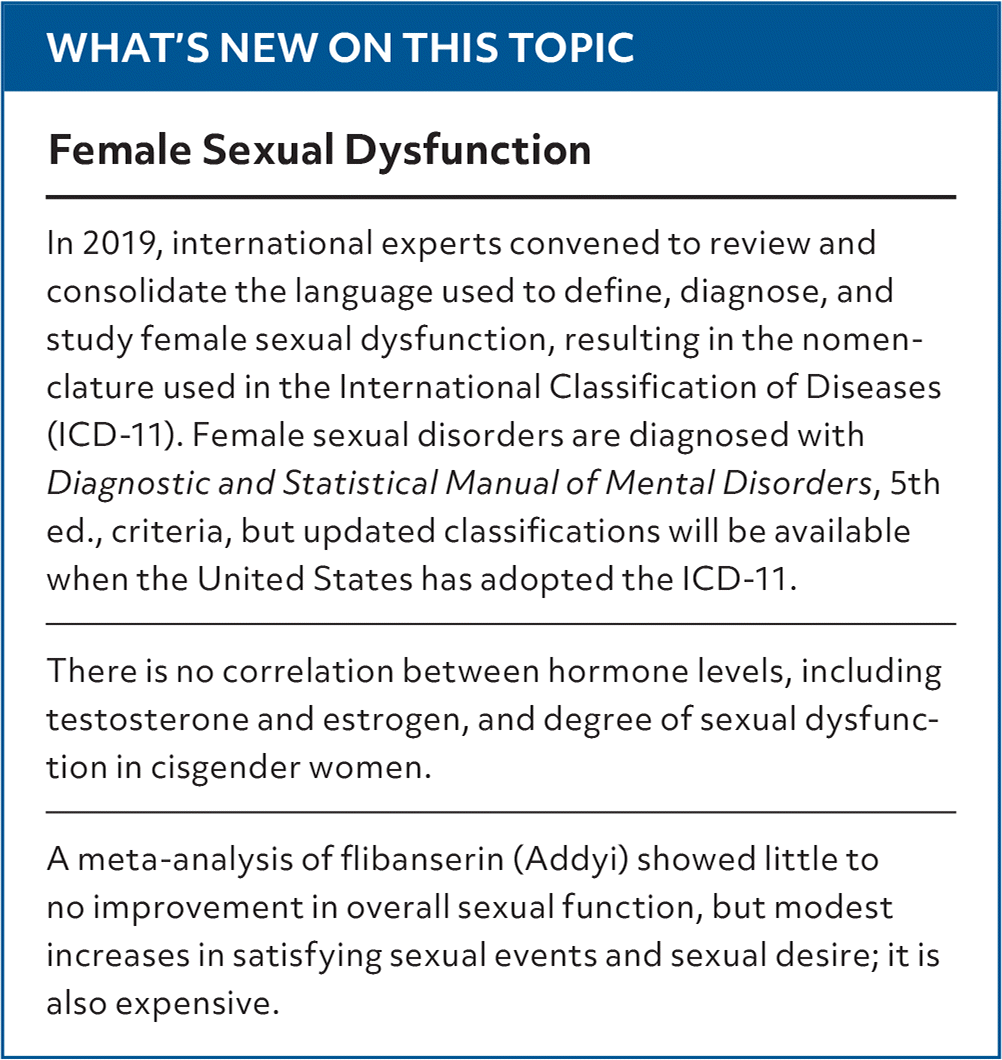
| In 2019, international experts convened to review and consolidate the language used to define, diagnose, and study female sexual dysfunction, resulting in the nomenclature used in the International Classification of Diseases (ICD-11). Female sexual disorders are diagnosed with Diagnostic and Statistical Manual of Mental Disorders, 5th ed., criteria, but updated classifications will be available when the United States has adopted the ICD-11. |
| There is no correlation between hormone levels, including testosterone and estrogen, and degree of sexual dysfunction in cisgender women. |
| A meta-analysis of flibanserin (Addyi) showed little to no improvement in overall sexual function, but modest increases in satisfying sexual events and sexual desire; it is also expensive. |
SORT: KEY RECOMMENDATIONS FOR PRACTICE
| Clinical recommendation | Evidence rating | Comments |
|---|---|---|
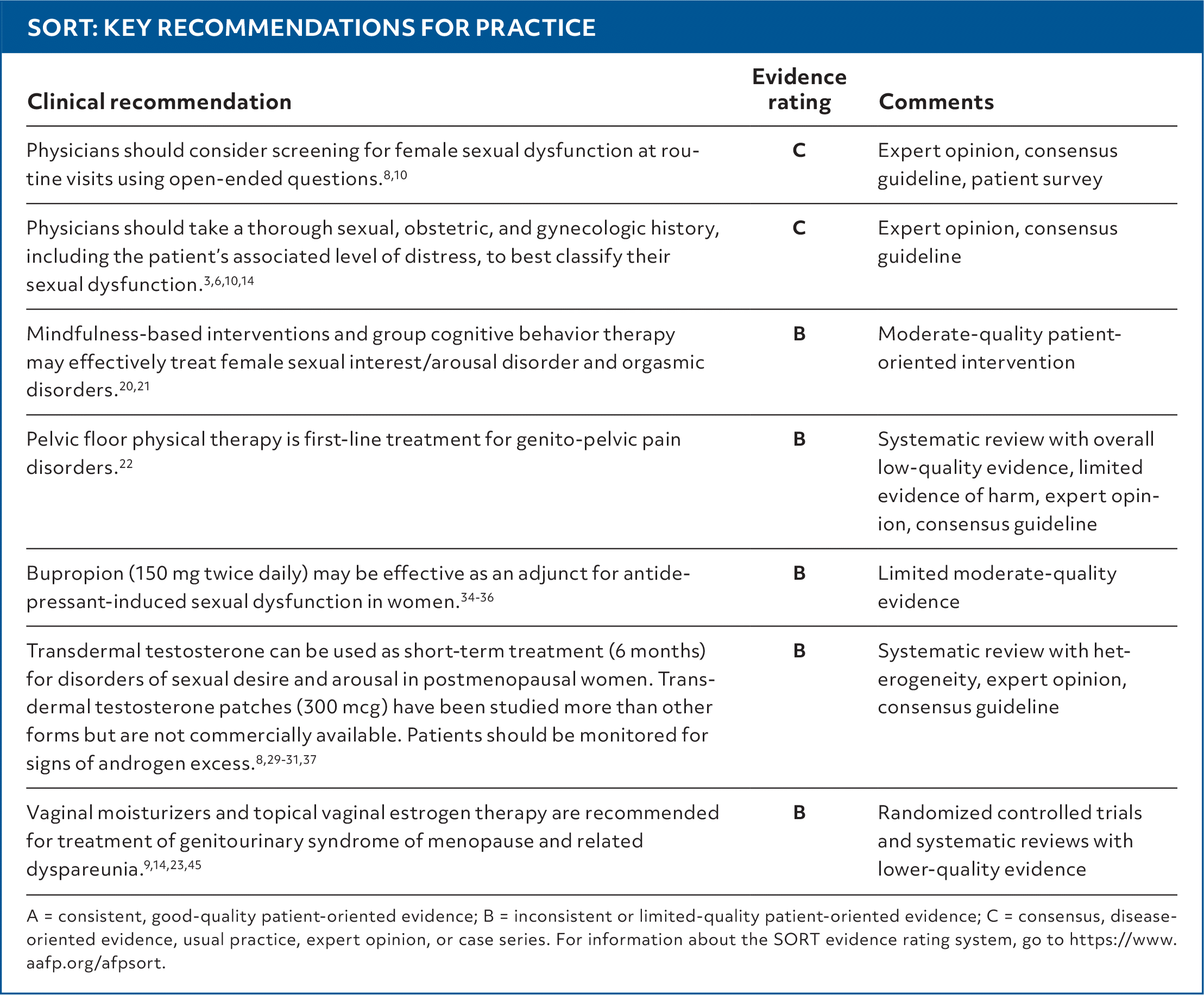
| Physicians should consider screening for female sexual dysfunction at routine visits using open-ended questions.8,10 | C | Expert opinion, consensus guideline, patient survey |
| Physicians should take a thorough sexual, obstetric, and gynecologic history, including the patient’s associated level of distress, to best classify their sexual dysfunction.3,6,10,14 | C | Expert opinion, consensus guideline |
| Mindfulness-based interventions and group cognitive behavior therapy may effectively treat female sexual interest/arousal disorder and orgasmic disorders.20,21 | B | Moderate-quality patient-oriented intervention |
| Pelvic floor physical therapy is first-line treatment for genito-pelvic pain disorders.22 | B | Systematic review with overall low-quality evidence, limited evidence of harm, expert opinion, consensus guideline |
| Bupropion (150 mg twice daily) may be effective as an adjunct for antidepressant-induced sexual dysfunction in women.34–36 | B | Limited moderate-quality evidence |
| Transdermal testosterone can be used as short-term treatment (6 months) for disorders of sexual desire and arousal in postmenopausal women. Trans-dermal testosterone patches (300 mcg) have been studied more than other forms but are not commercially available. Patients should be monitored for signs of androgen excess.8,29–31,37 | B | Systematic review with heterogeneity, expert opinion, consensus guideline |
| Vaginal moisturizers and topical vaginal estrogen therapy are recommended for treatment of genitourinary syndrome of menopause and related dyspareunia.9,14,23,45 | B | Randomized controlled trials and systematic reviews with lower-quality evidence |
A = consistent, good-quality patient-oriented evidence; B = inconsistent or limited-quality patient-oriented evidence; C = consensus, disease-oriented evidence, usual practice, expert opinion, or case series. For information about the SORT evidence rating system, go to https://www.aafp.org/afpsort.
Read the full article
Get immediate access, anytime, anywhere.
Choose a single article, issue, or full-access subscription.
Earn up to 14 CME credits per issue.