

Lecanemab (Leqembi) is labeled for the treatment of Alzheimer disease in adults with mild cognitive impairment or who are in the mild dementia stage of Alzheimer disease (eg, have a Mini-Mental State Examination [MMSE] score of 20–28 points) with confirmed amyloid beta pathology. Lecanemab is a humanized monoclonal antibody that targets and reduces accumulations of amyloid beta plaques, which can be found in those diagnosed with Alzheimer disease.
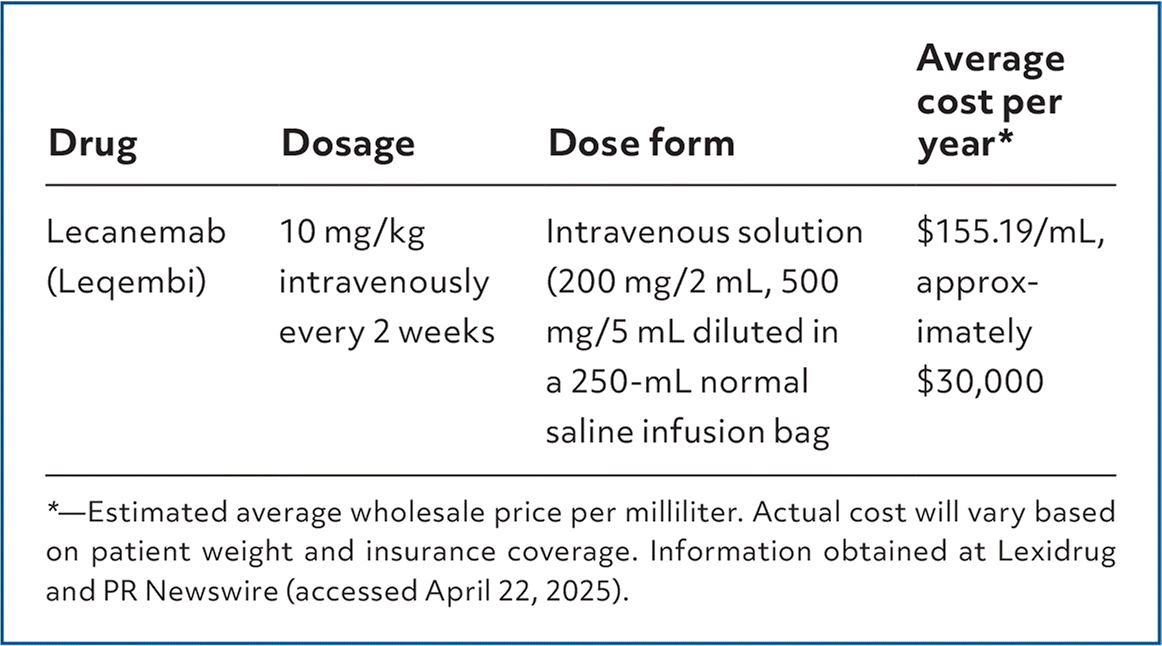
| Drug | Dosage | Dose form | Average cost per year* |
|---|---|---|---|
| Lecanemab (Leqembi) | 10 mg/kg intravenously every 2 weeks | Intravenous solution (200 mg/2 mL, 500 mg/5 mL diluted in a 250-mL normal saline infusion bag | $155.19/mL, approximately $30,000 |
*—Estimated average wholesale price per milliliter. Actual cost will vary based on patient weight and insurance coverage. Information obtained at Lexidrug and PR Newswire (accessed April 22, 2025).
SAFETY
Magnetic resonance imaging (MRI) is required before starting lecanemab and is used periodically throughout therapy. Amyloid-related imaging abnormalities detected on brain MRI can occur. Up to 20% of patients receiving lecanemab have these abnormalities compared with 2% to 9% of patients treated with placebo.1
Amyloid-related imaging abnormalities changes usually develop early in treatment. They can result in symptoms such as headaches, mental status changes, confusion, tremor, and gait disturbances in 3% of patients (number needed to harm = 36). Serious symptoms such as seizure and status epilepticus occur in 0.7% of patients receiving lecanemab. Imaging changes eventually resolve over time in most patients after treatment is discontinued.1
The risk of amyloid-related imaging abnormalities is increased in patients homozygous for APOE-4, who comprise about 15% of all patients with Alzheimer disease. The manufacturer of lecanemab recommends that patients being considered for treatment be tested for APOE-4 status before therapy initiation to assess their risk. However, testing is not widely available. Patients may not be tested and can still begin treatment based on patient-physician discussion of risks and benefits.1
Intracerebral hemorrhage, including fatal hemorrhage, has been reported in less than 1% of treated patients. Lecanemab may enhance the effects of anticoagulants, thrombolytic agents, or both, increasing the risk of intracerebral hemorrhage.1 No specific medication changes are recommended due to this interaction, but prescribers are encouraged to regularly ask patients about signs and symptoms of bleeding at routine follow-up appointments and at the time of therapy administration.
TOLERABILITY
Infusion-related reactions, which manifest with fever, chills, headache, and rash, are the most common adverse effects. These have been reported in more than 20% of patients. Most reactions are mild to moderate in severity. In premarketing trials, 7% of patients (vs 3% of those receiving placebo) stopped treatment due to one or more adverse reactions.1
EFFECTIVENESS
Lecanemab has been evaluated in two studies that included 2,651 patients. All participants had amyloid pathology and mild cognitive impairment or mild dementia due to stage 3 or 4 Alzheimer disease. All patients had an MMSE score between 22 and 30 points (of 30 points possible) and objective impairment in episodic memory. The studies assessed the effectiveness of lecanemab in slowing Alzheimer disease progression using several measures of cognitive and functional decline.
Read the full article
Get immediate access, anytime, anywhere.
Choose a single article, issue, or full-access subscription.
Earn up to 14 CME credits per issue.
