Lymphadenopathy: Evaluation and Differential Diagnosis

Nathan Falk, MD, MBA
Rosa Joseph, DO, MPH
Marvin Dieujuste, MD

American Family Physician. 2025;112(3):286-293.

Author disclosure: No relevant financial relationships.

This clinical content conforms to AAFP criteria for CME.

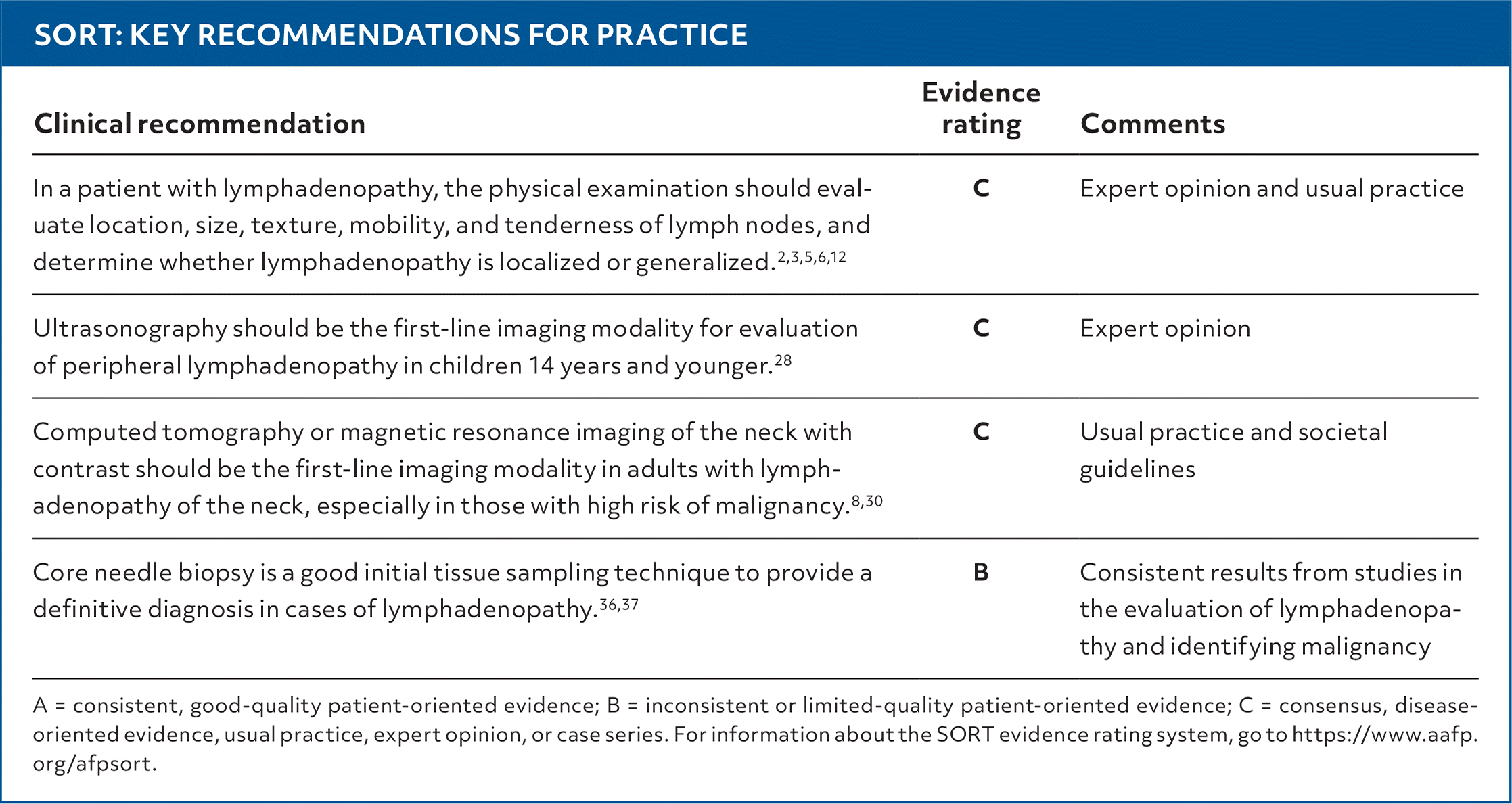
Lymphadenopathy occurs in 0.6% of the population annually, usually from a benign cause. History should focus on lymph node location, duration of lymphadenopathy, associated symptoms (particularly fever, night sweats, and unintentional weight loss), past and current medical conditions, occupation, travel history, animal exposures, medication use, recent vaccine history, drug use, sexual history, and family history. Physical examination should first differentiate localized from generalized lymphadenopathy. Generalized lymphadenopathy is usually caused by underlying systemic disease. Although usually benign, localized lymphadenopathy may represent infection or malignancy, particularly if epitrochlear or supraclavicular nodes are affected. Lymph nodes that are larger than 2 cm, hard, or matted/fused to surrounding structures may indicate malignancy or granulomatous diseases, especially in children. When lymphadenopathy persists beyond four weeks or is accompanied by systemic symptoms, imaging and appropriate laboratory studies (eg, complete blood cell count, C-reactive protein, erythrocyte sedimentation rate, tuberculosis testing) should be obtained. Biopsy may be performed through fine-needle aspiration, core needle biopsy, or excisional biopsy. Antibiotics may be considered if a benign or self-limiting etiology (eg, bacterial lymphadenitis) is suspected. Corticosteroids should be avoided because they can mask the histologic diagnosis of lymphoma or other malignancy.

NATHAN FALK, MD, MBA, FAAFP, is assistant dean for graduate medical education, residency program director, and professor of family medicine and rural health at Florida State University College of Medicine, Winter Haven, Florida.

ROSA JOSEPH, DO, MPH, is a clinical assistant professor in the Florida State University College of Medicine's Bay-Care Family Medicine Residency Program, Winter Haven, Florida.

MARVIN DIEUJUSTE, MD, is a clinical assistant professor in the Florida State University College of Medicine's BayCare Family Medicine Residency Program.

Address correspondence to Nathan Falk, MD, MBA, at nfalk@fsu.edu.

Author disclosure: No relevant financial relationships.

  1. 1.Rosenberg TL, Nolder AR. Pediatric cervical lymphadenopathy. Otolaryngol Clin North Am. 2014;47(5):721-731.
  2. 2.Fijten GH, Blijham GH. Unexplained lymphadenopathy in family practice: an evaluation of the probability of malignant causes and the effectiveness of physicians' workup. J Fam Pract. 1988;27(4):373-376.
  3. 3.Salzman BE, Lamb K, Olszewski RF, et al. Diagnosing cancer in the symptomatic patient. Prim Care. 2009;36(4):651-670.
  4. 4.Rajasekaran K, Krakovitz P. Enlarged neck lymph nodes in children. Pediatr Clin North Am. 2013;60(4):923-936.
  5. 5.Motyckova G, Steensma DP. Why does my patient have lymphadenopathy or splenomegaly? Hematol Oncol Clin North Am. 2012;26(2):395-408.
  6. 6.Gaddey HL, Riegel AM. Unexplained lymphadenopathy: evaluation and differential diagnosis. Am Fam Physician. 2016;94(11):896-903.
  7. 7.Celenk F, Gulsen S, Baysal E, et al. Predictive factors for malignancy in patients with persistent cervical lymphadenopathy. Eur Arch Otorhinolaryngol. 2016;273(1):251-256.
  8. 8.Pynnonen MA, Gillespie MB, Roman B, et al. Clinical practice guideline: evaluation of the neck mass in adults. Otolaryngol Head Neck Surg. 2017;157(suppl 2):S1-S30.
  9. 9.Ali M, Elhatw A, Hegazy M, et al. The evaluation of lymphadenopathy in a resource-limited setting. Cureus. 2022;14(10):e30623.
  10. 10.Marshall GS, Edwards KM, Butler J, et al. Syndrome of periodic fever, pharyngitis, and aphthous stomatitis. J Pediatr. 1987;110(1):43-46.
  11. 11.Rodolfi S, Della-Torre E, Bongiovanni L, et al. Lymphadenopathy in the rheumatology practice: a pragmatic approach. Rheumatology (Oxford). 2024:1484-1493.
  12. 12.Weinstock MS, Patel NA, Smith LP. Pediatric cervical lymphadenopathy. Pediatr Rev. 2018;39(9):433-443.
  13. 13.Oguz A, Karadeniz C, Temel EA, et al. Evaluation of peripheral lymphadenopathy in children. Pediatr Hematol Oncol. 2006;23(7):549-561.
  14. 14.Mohseni S, Shojaiefard A, Khorgami Z, et al. Peripheral lymphadenopathy: approach and diagnostic tools. Iran J Med Sci. 2014;39(suppl 2):158-170.
  15. 15.Raab CP, Gartner JC. Diagnosis of childhood cancer. Prim Care. 2009;36(4):671-684.
  16. 16.High-risk sexual behaviour. HealthLink BC. August 2, 2022. Accessed December 12, 2024. https://www.healthlinkbc.ca/healthwise/high-risk-sexual-behaviour
  17. 17.Fernández-Prada M, Rivero-Calle I, Calvache-González A, et al. Acute onset supraclavicular lymphadenopathy coinciding with intramuscular mRNA vaccination against COVID-19 may be related to vaccine injection technique, Spain, January and February 2021. Euro Surveill. 2021;26(10):2100193.
  18. 18.Bazemore AW, Smucker DR. Lymphadenopathy and malignancy. Am Fam Physician. 2002;66(11):2103-2110.
  19. 19.Soldes OS, Younger JG, Hirschl RB. Predictors of malignancy in childhood peripheral lymphadenopathy. J Pediatr Surg. 1999;34(10):1447-1452.
  20. 20.Edirisooriya M, Jack W, Twelves D, et al. Diagnostic accuracy of core biopsy in patients presenting with axillary lymphadenopathy and suspected non-breast malignancy. Eur J Surg Oncol. 2021;47(7):1575-1580.
  21. 21.Wang J, Pei G, Yan J, et al. Unexplained cervical lymphadenopathy in children: predictive factors for malignancy. J Pediatr Surg. 2010;45(4):784-788.
  22. 22.Calgüneri M, Oztürk MA, Ozbalkan Z, et al. Frequency of lymphadenopathy in rheumatoid arthritis and systemic lupus erythematosus. J Int Med Res. 2003;31(4):345-349.
  23. 23.Richner S, Laifer G. Peripheral lymphadenopathy in immunocompetent adults. Swiss Med Wkly. 2010;140(7–8):98-104.
  24. 24.Kojima M, Hosomura Y, Itoh H, et al. Reactive proliferative lesions in lymph nodes from rheumatoid arthritis patients: a clinicopathological and immunohistological study. Acta Pathol Jpn. 1990;40(4):249-254.
  25. 25.Cruickshank B. Lesions of lymph nodes in rheumatoid disease and in disseminated lupus erythematosus. Scott Med J. 1958;3(3):110-119.
  26. 26.Deveci HS, Kule M, Kule ZA, et al. Diagnostic challenges in cervical tuberculous lymphadenitis: a review. North Clin Istanb. 2016;3(2):150-155.
  27. 27.Kamiya N, Ishikawa Y, Takeshima T, et al. Usefulness of lactate dehydrogenase in differentiating abnormal cervical lymphadenopathy. J Gen Fam Med. 2020;22(2):75-80.
  28. 28.Stern JS, Ginat DT, Nicholas JL, et al. Imaging of pediatric head and neck masses. Otolaryngol Clin North Am. 2015;48(1):225-246.
  29. 29.Loh Z, Hawkes EA, Chionh F, et al. Use of ultrasonography facilitates noninvasive evaluation of lymphadenopathy in a lymph node diagnostic clinic. Clin Lymphoma Myeloma Leuk. 2021;21(2):e179-e184.
  30. 30.American College of Radiology. ACR Appropriateness Criteria: neck masses/adenopathy. 2018. Accessed April 12, 2024. https://acsearch.acr.org/docs/69504/Narrative/
  31. 31.Pecora F, Abate L, Scavone S, et al. Management of infectious lymphadenitis in children. Children (Basel). 2021;8(10):860.
  32. 32.Sahai S. Lymphadenopathy. Pediatr Rev. 2013;34(5):216-227.
  33. 33.Patel SA, Pierko K, Franco-Sadud R. Ultrasound-guided bedside core needle biopsy: a hospitalist procedure team's experience. Cureus. 2019;11(1):e3817.
  34. 34.Ganott MA, Zuley ML, Abrams GS, et al. Ultrasound guided core biopsy versus fine needle aspiration for evaluation of axillary lymphadenopathy in patients with breast cancer.. ISRN Oncol. 2014:703160.
  35. 35.Mu WN, Li JH, Liu Y, et al. Comparative study of core needle biopsy and fine needle aspiration in the treatment of metastatic lymph nodes guided by contrast-enhanced ultrasound. Pak J Med Sci. 2022;38(6):1477-1482.
  36. 36.Lachar WA, Shahab I, Saad AJ. Accuracy and cost-effectiveness of core needle biopsy in the evaluation of suspected lymphoma: a study of 101 cases. Arch Pathol Lab Med. 2007;131(7):1033-1039.
  37. 37.Allin D, David S, Jacob A, et al. Use of core biopsy in diagnosing cervical lymphadenopathy: a viable alternative to surgical excisional biopsy of lymph nodes? Ann R Coll Surg Engl. 2017;99(3):242-244.
  38. 38.Howard-Jones AR, Al Abdali K, Britton PN. Acute bacterial lymphadenitis in children: a retrospective, cross-sectional study. Eur J Pediatr. 2023;182(5):2325-2333.
  39. 39.Liu C, Bayer A, Cosgrove SE, et al. Clinical practice guidelines by the Infectious Diseases Society of America for the treatment of methicillin-resistant Staphylococcus aureus infections in adults and children: executive summary. Clin Infect Dis. 2011;52(3):285-292.
  40. 40.Ferrer R. Lymphadenopathy: differential diagnosis and evaluation. Am Fam Physician. 1998;58(6):1313-1320.

Copyright © 2026 by the American Academy of Family Physicians.

This content is owned by the AAFP. A person viewing it online may make one printout of the material and may use that printout only for his or her personal, non-commercial reference. This material may not otherwise be downloaded, copied, printed, stored, transmitted or reproduced in any medium, whether now known or later invented, except as authorized in writing by the AAFP. See permissions for copyright questions and/or permission requests.