CLINICAL QUESTION
Which patients with acute abdominal pain and elevated lipase levels have acute pancreatitis?
EVIDENCE SUMMARY
Typical symptoms of acute pancreatitis include upper abdominal pain that radiates to the back and nausea and vomiting. Signs may include abdominal tenderness to palpation, guarding, and distension with hypoactive bowel sounds1; however, individual signs and symptoms have not been well studied for their accuracy.
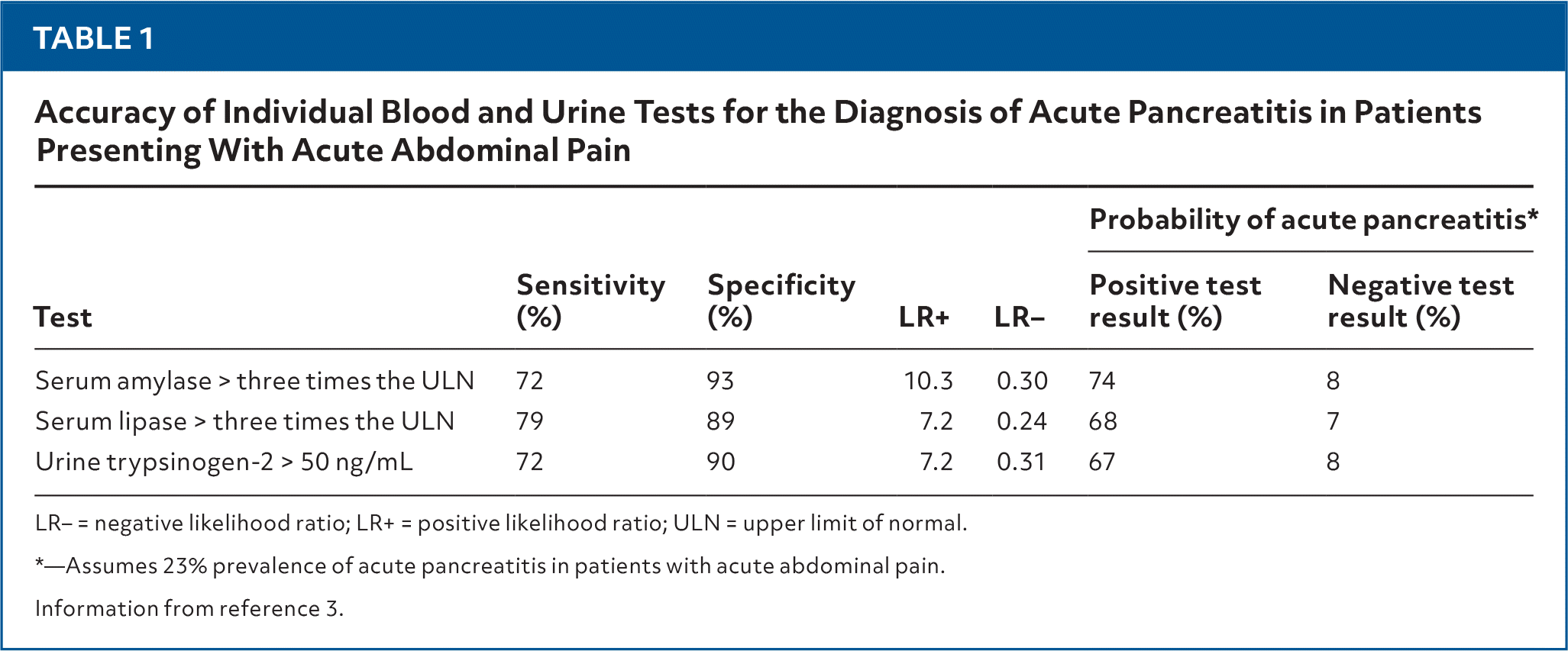
The diagnostic accuracy of individual laboratory tests for the diagnosis of acute pancreatitis is well studied.2 A Cochrane review of 10 studies with 5,096 participants evaluated the accuracy of serum amylase, serum lipase, and urinary trypsinogen.3 Table 1 summarizes these results.3 All tests had similar accuracy; however, other studies have found that approximately one-half of patients with a serum lipase level above three times the upper limit of normal (ULN) do not have acute pancreatitis.4,5 Other conditions, such as small bowel obstruction, gastroenteritis, biliary tract disease, hepatitis, kidney failure, and alcohol intoxication, can also cause significant elevation in serum lipase levels.4
TABLE 1. Accuracy of Individual Blood and Urine Tests for the Diagnosis of Acute Pancreatitis in Patients Presenting With Acute Abdominal Pain
| Test | Sensitivity (%) | Specificity (%) | LR+ | LR− | Probability of acute pancreatitis* | |
|---|---|---|---|---|---|---|
| Positive test result (%) | Negative test result (%) | |||||
| Serum amylase > three times the ULN | 72 | 93 | 10.3 | 0.30 | 74 | 8 |
| Serum lipase > three times the ULN | 79 | 89 | 7.2 | 0.24 | 68 | 7 |
| Urine trypsinogen-2 > 50 ng/mL | 72 | 90 | 7.2 | 0.31 | 67 | 8 |
LR– = negative likelihood ratio; LR+ = positive likelihood ratio; ULN = upper limit of normal.
*—Assumes 23% prevalence of acute pancreatitis in patients with acute abdominal pain.
Information from reference 3.
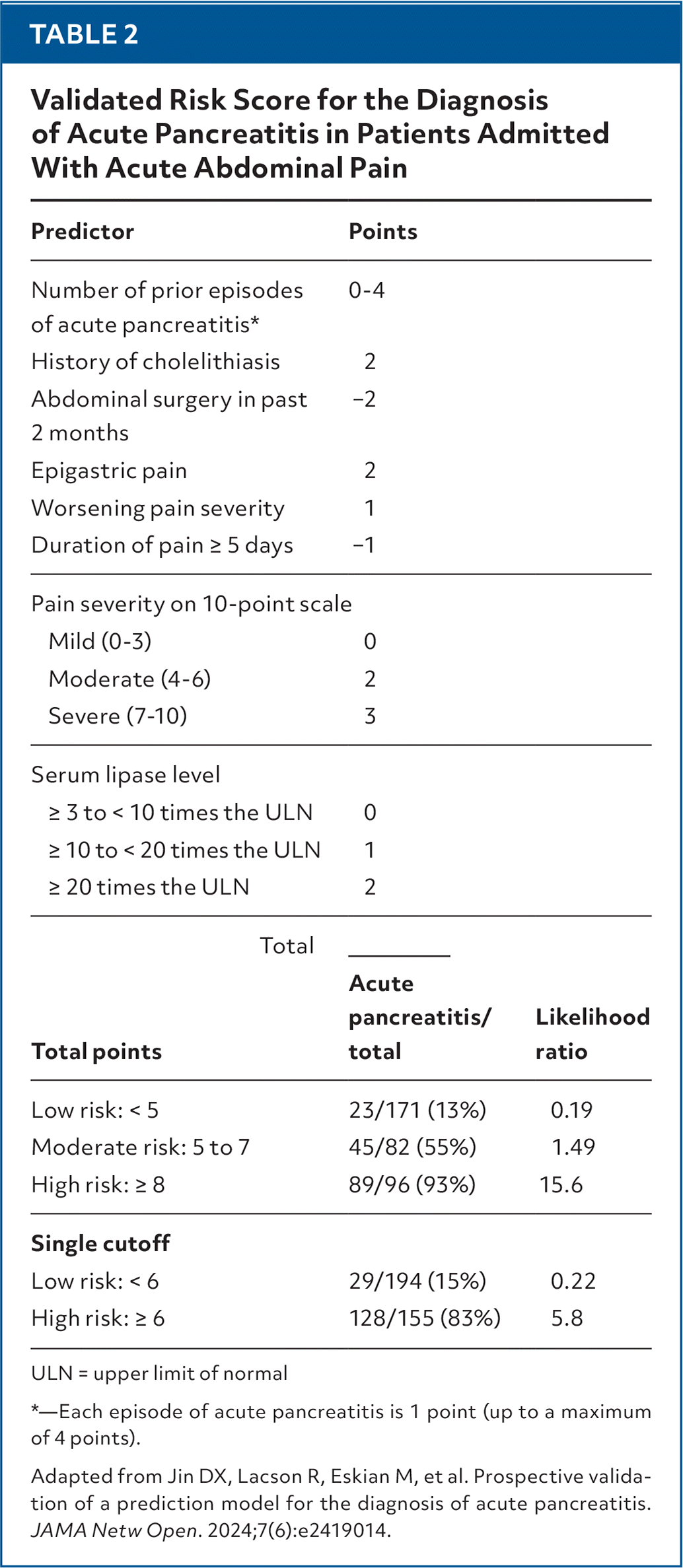
A simple risk score for the diagnosis of acute pancreatitis was developed from a 2018 study that included 318 patients with serum lipase levels three times the ULN and used the serum lipase levels and elements from the patients' history (acute pancreatitis, cholelithiasis, recent abdominal surgery, epigastric pain, pain severity and whether it is worsening, and pain for 5 or more days) extracted from electronic health records5 (Table 2). Ultimately, 182 (57%) patients were diagnosed with acute pancreatitis based on expert review of hospital records, including imaging and laboratory studies, as the reference standard. However, retrospective data abstraction from a health record can be subject to a range of reporting biases. For example, was a sign or symptom not present or simply not recorded? Therefore, it is especially important that this risk score be prospectively validated in a new population.
TABLE 2. Validated Risk Score for the Diagnosis of Acute Pancreatitis in Patients Admitted With Acute Abdominal Pain
| Predictor | Points | |
|---|---|---|
| Number of prior episodes of acute pancreatitis* | 0–4 | |
| History of cholelithiasis | 2 | |
| Abdominal surgery in past 2 months | −2 | |
| Epigastric pain | 2 | |
| Worsening pain severity | 1 | |
| Duration of pain ≥ 5 days | −1 | |
| Pain severity on 10-point scale | ||
| Mild (0–3) | 0 | |
| Moderate (4–6) | 2 | |
| Severe (7–10) | 3 | |
| Serum lipase level | ||
| ≥ 3 to < 10 times the ULN | 0 | |
| ≥ 10 to < 20 times the ULN | 1 | |
| ≥ 20 times the ULN | 2 | |
| Total | __________ | |
| Total points | Acute pancreatitis/total | Likelihood ratio |
| Low risk: < 5 | 23/171 (13%) | 0.19 |
| Moderate risk: 5 to 7 | 45/82 (55%) | 1.49 |
| High risk: ≥ 8 | 89/96 (93%) | 15.6 |
| Single cutoff | ||
| Low risk: < 6 | 29/194 (15%) | 0.22 |
| High risk: ≥ 6 | 128/155 (83%) | 5.8 |
ULN = upper limit of normal
*—Each episode of acute pancreatitis is 1 point (up to a maximum of 4 points).
Adapted from Jin DX, Lacson R, Eskian M, et al. Prospective validation of a prediction model for the diagnosis of acute pancreatitis. JAMA Netw Open. 2024;7(6):e2419014.
Read the full article
Get immediate access, anytime, anywhere.
Choose a single article, issue, or full-access subscription.
Earn up to 14 CME credits per issue.