

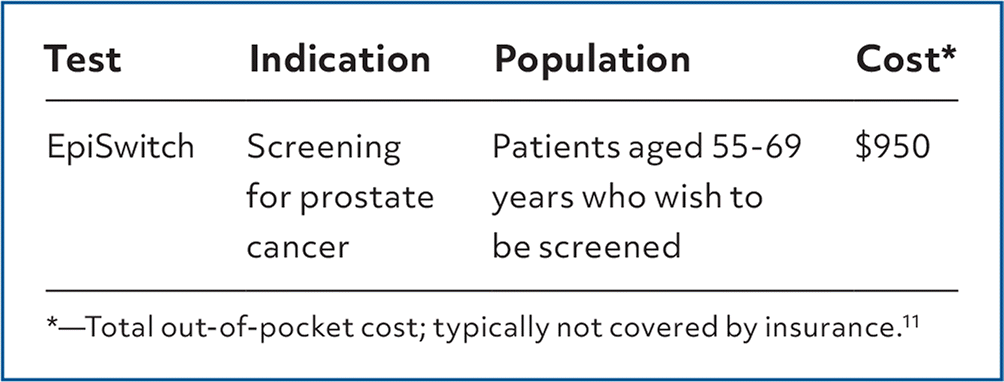
The prostate-specific antigen (PSA) test is the most widely used tool for prostate cancer screening. However, potential harms of this test include false-positive results, biopsy complications, overdiagnosis, psychological harms, and treatment harms.1–6 The US Preventive Services Task Force recommends shared decision-making for PSA-based prostate cancer screening in men aged 55 to 69 years and recommends against PSA-based screening in men 70 years and older.7
The EpiSwitch prostate screening (PSE) test combines PSA measurement with polymerase chain reaction (PCR) evaluation of five DNA regulatory markers associated with high-risk prostate cancer (ie, DAPK1, HSD3B2, SRD5A3, MMP1, and miRNA98).8,9 The test produces a binary result of “high likelihood” or “low likelihood” for prostate cancer. The PSE is a newer test not approved by the US Food and Drug Administration.
ACCURACY
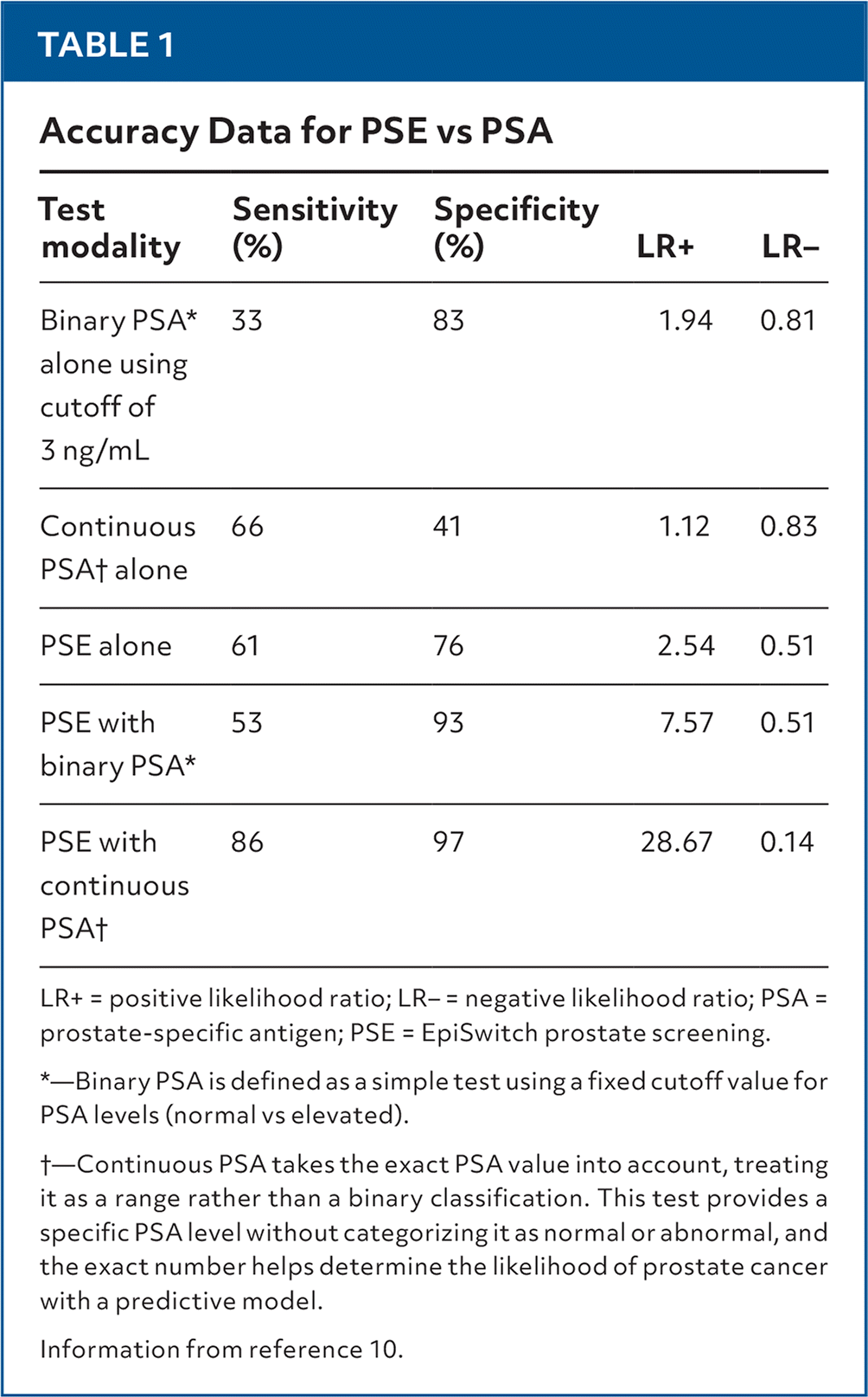
No randomized controlled trials evaluated PSE as a screening tool for prostate cancer that report clinical, patient-oriented outcomes such as disease-specific mortality rates. A retrospective case-control study used 109 whole blood samples from men aged 50 to 69 years to analyze the accuracy of combining PSA levels with PSE DNA regulatory markers compared with PSA levels alone.10 Of the 109 samples, 88 were negative for cancer (control group) and 21 had confirmed prostate cancer (13 of which were moderately aggressive disease and 8 were less aggressive disease). The prevalence of prostate cancer in this mixed cohort was 34%, which is comparable to a hospital referral population with suspected prostate cancer. However, screening cohorts typically have a much lower prostate cancer prevalence of 3% to 4%. Overall, PSE with continuous PSA measurement was the most effective combination (Table 1).10 The study's small sample size and diagnostic case-control design are likely to overestimate accuracy with broad CIs.
TABLE 1. Accuracy Data for PSE vs PSA
| Test modality | Sensitivity (%) | Specificity (%) | LR+ | LR− |
|---|---|---|---|---|
| Binary PSA* alone using cutoff of 3 ng/mL | 33 | 83 | 1.94 | 0.81 |
| Continuous PSA† alone | 66 | 41 | 1.12 | 0.83 |
| PSE alone | 61 | 76 | 2.54 | 0.51 |
| PSE with binary PSA* | 53 | 93 | 7.57 | 0.51 |
| PSE with continuous PSA† | 86 | 97 | 28.67 | 0.14 |
LR+ = positive likelihood ratio; LR– = negative likelihood ratio; PSA = prostate-specific antigen; PSE = EpiSwitch prostate screening.
*—Binary PSA is defined as a simple test using a fixed cutoff value for PSA levels (normal vs elevated).
†—Continuous PSA takes the exact PSA value into account, treating it as a range rather than a binary classification. This test provides a specific PSA level without categorizing it as normal or abnormal, and the exact number helps determine the likelihood of prostate cancer with a predictive model.
Information from reference 10.
Read the full article
Get immediate access, anytime, anywhere.
Choose a single article, issue, or full-access subscription.
Earn up to 14 CME credits per issue.
