

| Drug | Dosage | Dose form | Cost of full course per year* |
|---|---|---|---|
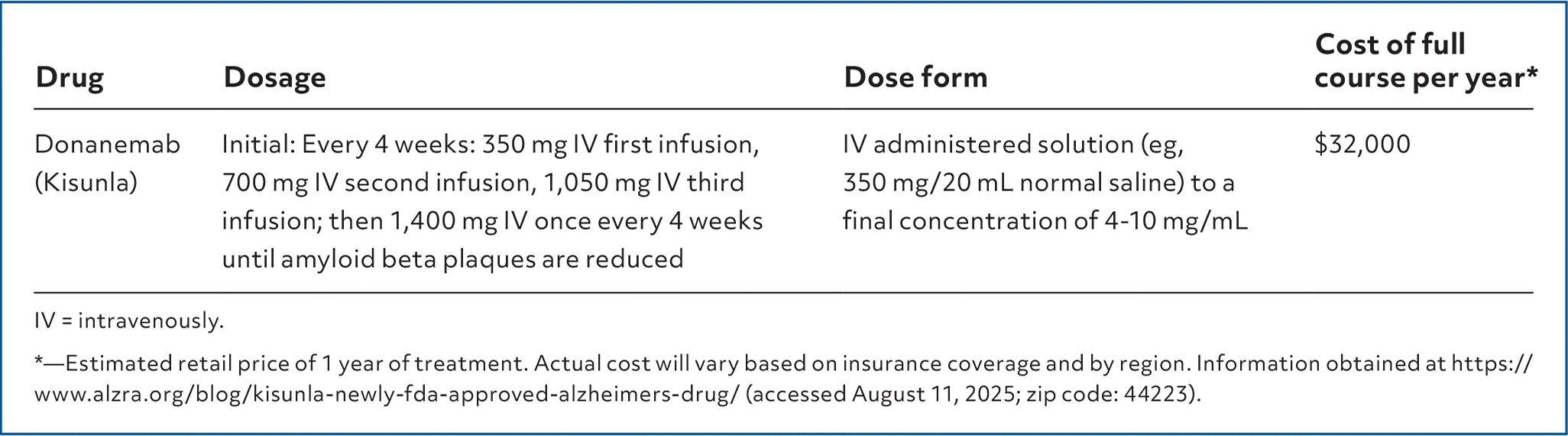
| Donanemab (Kisunla) | Initial: Every 4 weeks: 350 mg IV first infusion, 700 mg IV second infusion, 1,050 mg IV third infusion; then 1,400 mg IV once every 4 weeks until amyloid beta plaques are reduced | IV administered solution (eg, 350 mg/20 mL normal saline) to a final concentration of 4–10 mg/mL | $32,000 |
IV = intravenously.
*—Estimated retail price of 1 year of treatment. Actual cost will vary based on insurance coverage and by region. Information obtained at https://www.alzra.org/blog/kisunla-newly-fda-approved-alzheimers-drug/ (accessed August 11, 2025; zip code: 44223).
Donanemab (Kisunla) is labeled for the treatment of Alzheimer disease in patients with mild cognitive impairment or who are in the mild stage of dementia (eg, have a Mini-Mental State Examination score of 20–28 of 30) with confirmed amyloid beta pathology. Donanemab is a humanized monoclonal antibody that targets and reduces accumulations of amyloid beta plaques, which can be found in patients diagnosed with Alzheimer disease.1
SAFETY
The most significant safety issue with donanemab is a large increase in the risk of amyloid-related imaging abnormalities, which are magnetic resonance imaging (MRI) findings that can occur in patients with Alzheimer disease. Given this risk, MRI is required before treatment initiation and recommended before the second, third, fourth, and seventh infusions.1
Donanemab may produce symptomatic amyloid-related imaging abnormalities in up to 6% of patients vs 0.1% with placebo. The number needed to harm is 16 over 1.5 years. Asymptomatic amyloid-related imaging abnormalities occur in up to 36% (number needed to harm = 4) of treated patients.1 This rate is higher than that reported with lecanemab (Leqembi).2 The manufacturer suggests that lower initial doses may decrease this risk.1
Amyloid-related imaging abnormalities usually develop in the first 24 weeks of treatment, although they can occur at any time. (This may be an artifact caused by early discontinuation.) They can result in symptoms such as headache, confusion, vision changes, dizziness, nausea, and gait difficulty. These symptoms will resolve in approximately 85% of patients.1 However, amyloid-related imaging abnormalities can cause serious outcomes, including death and hospitalization, in 1.6% of patients receiving donanemab.3 If a patient develops symptoms, a clinical evaluation should be performed, including an MRI if warranted.
The manufacturer advises testing for APOE-4 status before initiating treatment because patients with the allele have a higher incidence of symptomatic amyloid-related imaging abnormalities.1 However, testing is not widely available; therefore, patients may not undergo testing and can still start treatment based on a patient-physician discussion of the risks and benefits.
Intracerebral hemorrhage, including fatal hemorrhage, has been reported in 0.5% of treated patients (vs 0.2% of patients receiving placebo; number needed to harm = 333 over 1.5 years). The risk may be increased with concurrent use of an antiplatelet and/or thrombolytic.1
TOLERABILITY
Headache is the most common adverse effect reported in patients prescribed donanemab (13% vs 10% receiving placebo). Infusion-related reactions include chills, erythema, nausea, vomiting, sweating, and elevated blood pressure. These occur in up to 9% of patients and lead 4% to discontinue therapy.1 In premarketing studies, 13% of patients receiving donanemab (vs 4% of patients receiving placebo) discontinued therapy due to an adverse drug reaction.3
Read the full article
Get immediate access, anytime, anywhere.
Choose a single article, issue, or full-access subscription.
Earn up to 14 CME credits per issue.
