

Academic centers have been the central training location for residency programs since the 1910 Flexner Report. Despite the continued shortage of primary care physicians, the graduate medical education system is resistant to change. Only 11.7% of graduating resident physicians entered the outpatient primary care workforce between 2016 and 2021 compared with 34% of total physicians currently working in outpatient primary care.1
Many residents from primary care specialties other than family medicine will go on to subspecialize or become hospitalists, including almost 90% of internal medicine graduates.1 The current system is not built to solve the primary care crisis, with few residents training in community settings where most primary care is being delivered.
Residents who train in community-based settings are the most likely to work in these and underserved settings. One form of this training occurs at Teaching Health Centers. Established in 2011 as part of an Affordable Care Act expansion initiative, Teaching Health Centers aim to provide community-based primary care residency training located within Federally Qualified Health Centers or similar sites. Teaching Health Center graduates are significantly more likely than other residency graduates to practice within 5 miles of their residency program (18.9% vs 12.9%) and to care for medically underserved populations (35.2% vs 18.6%).2
Community-based training can be defined narrowly or broadly:
- Narrow definition: Any primary care resident (ie, family medicine, internal medicine, pediatrics, or geriatrics) who trained in a Teaching Health Center or rural training track.
- Broad definition: Any primary care resident who completed training in a program primarily located outside of a hospital or large academic center.
The percentage of primary care residents whose training met these definitions was characterized by analyzing data from the Accreditation Council for Graduate Medical Education, the FREIDA American Medical Association Residency and Fellowship Program Database, the rural residency program list from the Rural Medical Training Collaborative, and the Health Resources and Services Administration Teaching Health Center graduate medical education program dashboards.
Between 2013 and 2021, narrowly defined community-based training increased from 2.2% to 4.6% of primary care residents, while by the broad definition, this number increased from 9% to 15%. Community-based training varies greatly from state to state; Tennessee and Minnesota train less than 6% of primary care residents in community-based settings compared with more than 50% in Wyoming and Montana (Figure 1).1
FIGURE 1.
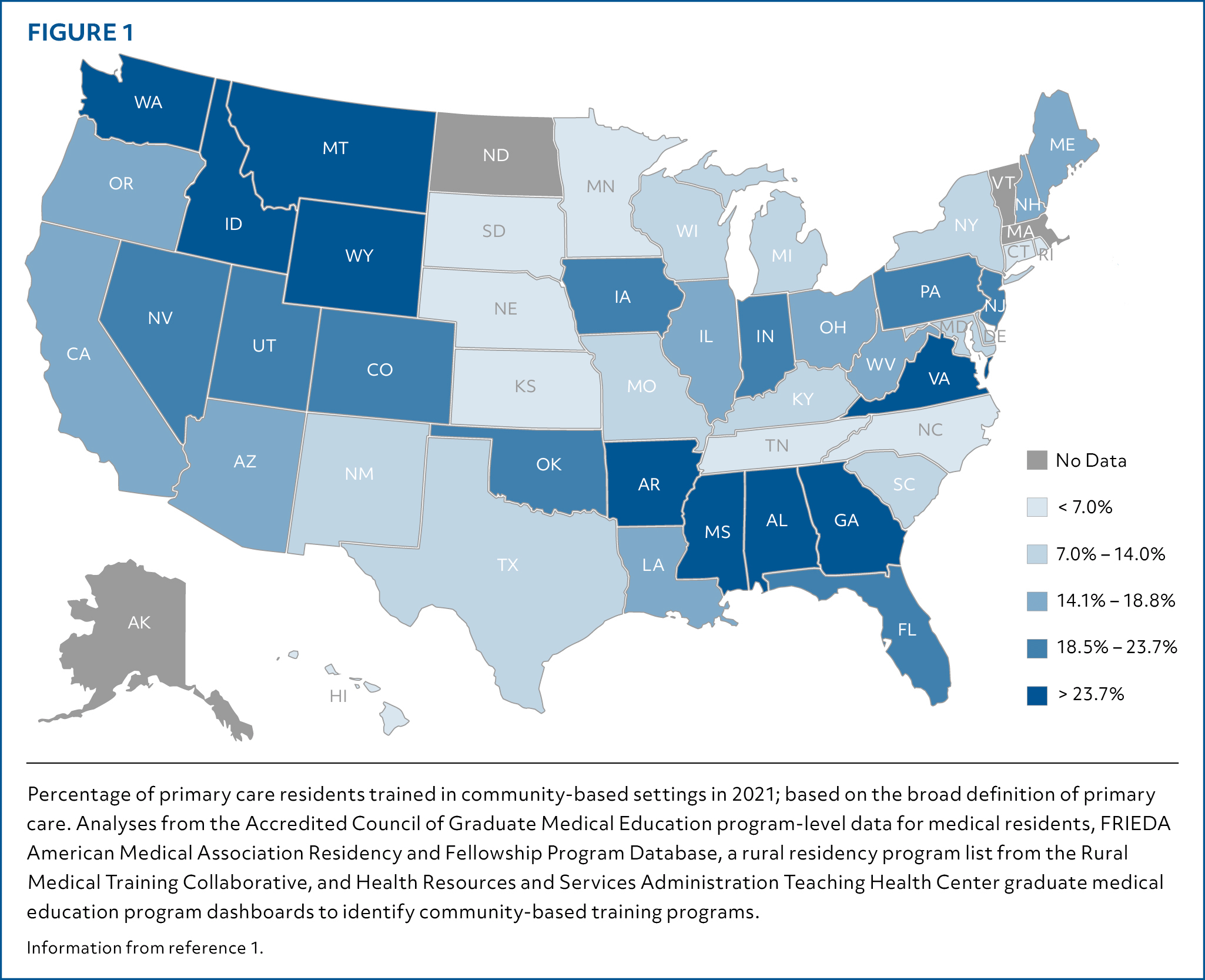
Percentage of primary care residents trained in community-based settings in 2021; based on the broad definition of primary care. Analyses from the Accredited Council of Graduate Medical Education program-level data for medical residents, FRIEDA American Medical Association Residency and Fellowship Program Database, a rural residency program list from the Rural Medical Training Collaborative, and Health Resources and Services Administration Teaching Health Center graduate medical education program dashboards to identify community-based training programs.
Information from reference 1.
In 2022, Congress allocated $174 million to Teaching Health Center programs. Although substantial, this amount pales in comparison to the $16 billion allocated to hospital-based programs annually. Reliance on continued special authorization leaves funding for Teaching Health Centers vulnerable to political changes and economic pressures, disincentivizing wider program adoption.3 Long-term, stable federal funding is vital for the continued success and growth of Teaching Health Centers.
There are other ways the United States can support community-based and rural training. States should allocate Medicaid funds to residency training and shift the emphasis from historically heavy hospital training to community-based training.4,5 By choosing to support community-based and rural programs, states can positively impact health outcomes through preventive services, chronic disease management, and early detection and treatment of diseases. States may also allocate non-Medicaid funding to residency programs. One such example is the Song-Brown program in California that provided $71.8 million to primary care programs from 2023 to 2024.6,7 Approximately 48% of graduates supported by the Song-Brown program have gone on to provide health care in areas of unmet need.7
Training in community locations is slowly increasing and provides benefits for US communities. Substantial public and private investment in primary care training outside of academic hospital-based centers is needed to sustain the primary care workforce and improve population health.
