

CLINICAL QUESTION
Is colonoscopy or fecal immunochemical testing (FIT) a more effective strategy for colorectal cancer (CRC) screening?
BOTTOM LINE
COLONPREV, a trial conducted in Spain, is the first among the large colonoscopy vs FIT studies, and its results raise as many questions as it answers. At a population level and with the study's adherence levels, the tests had similar results. Comparison with nonparticipants is difficult due to healthy volunteer bias, but it seems likely that both tests reduce CRC mortality and incidence, with colonoscopy perhaps better than FIT. (Level of Evidence = 1b−)
SYNOPSIS
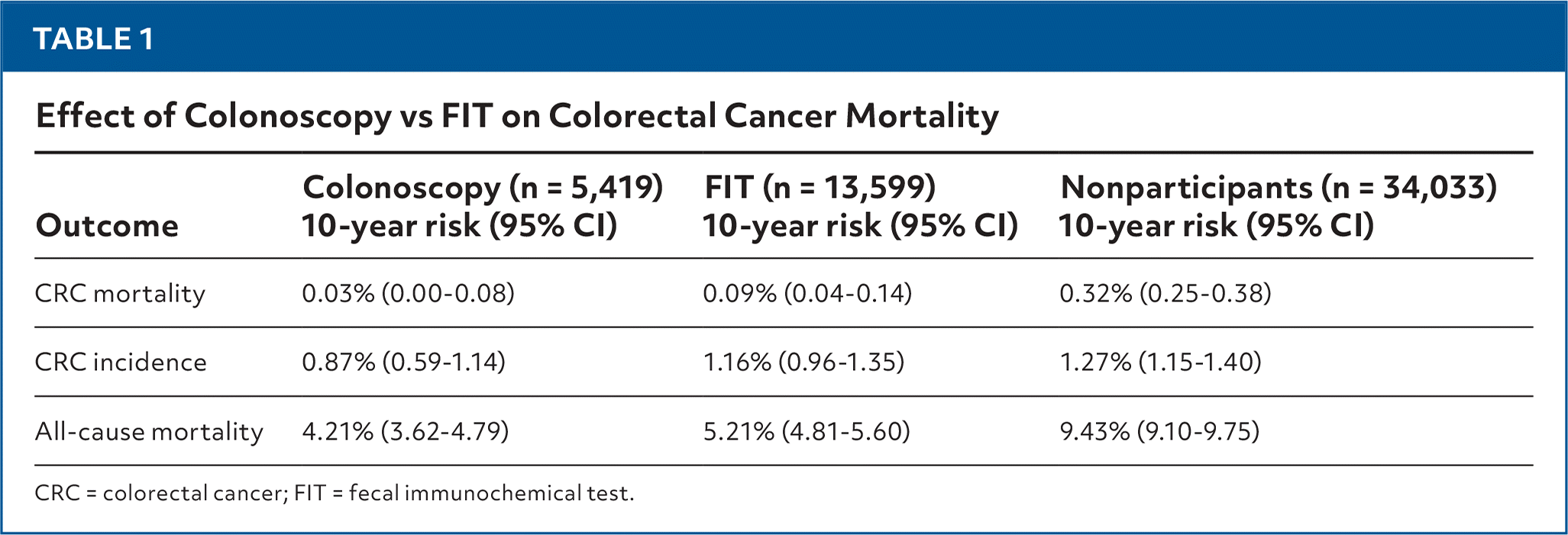
This is the first report from one of three randomized trials that are underway worldwide that compare FIT with primary colonoscopy for CRC screening. The Spanish researchers identified 57,404 adults aged 50 to 69 years without bowel symptoms, risk factors for CRC, or a history of adenomas or CRC. The patients were randomized to receive an invitation to a single screening with colonoscopy or biennial FIT for 10 years. The study began in 2009, and the 10-year follow-up ended in 2021. At baseline, the average age in each group was 59 years, and 53% were female. In each group, between 2,000 and 2,500 people died, could not be found, or were excluded based on a disqualifying condition. Of the 26,332 patients that were assigned to colonoscopy, only 5,293 (20%) underwent colonoscopy and 3,074 (12%) crossed over to the FIT group. Of the 26,719 who were assigned to FIT, 10,525 underwent FIT (39%) and only 126 crossed over to colonoscopy. The primary analysis took a population-level perspective and compared the two groups as randomized (intention-to-screen analysis) with 26,332 in the colonoscopy group and 26,719 in the FIT group. In this analysis, the 10-year risk of CRC mortality (0.22% in the colonoscopy group vs 0.24% in the FIT group), CRC incidence (1.13% vs 1.22%), and all-cause mortality (7.64% vs 7.68%) at a population level were not significantly different. The uptake of screening was much higher for FIT than for colonoscopy (39% vs 20%). The results are shown in Table 1.
TABLE 1. Effect of Colonoscopy vs FIT on Colorectal Cancer Mortality
| Outcome | Colonoscopy (n = 5,419) 10-year risk (95% CI) | FIT (n = 13,599) 10-year risk (95% CI) | Nonparticipants (n = 34,033) 10-year risk (95% CI) |
|---|---|---|---|
| CRC mortality | 0.03% (0.00–0.08) | 0.09% (0.04–0.14) | 0.32% (0.25–0.38) |
| CRC incidence | 0.87% (0.59–1.14) | 1.16% (0.96–1.35) | 1.27% (1.15–1.40) |
| All-cause mortality | 4.21% (3.62–4.79) | 5.21% (4.81–5.60) | 9.43% (9.10–9.75) |
CRC = colorectal cancer; FIT = fecal immunochemical test.
The all-cause mortality of nonparticipants was much higher than in the colonoscopy group or FIT group, indicating a large dose of healthy volunteer bias. The only semivalid comparison is colonoscopy vs FIT, with colonoscopy having somewhat lower mortality and incidence rates (although the CIs overlap). The reduction in CRC mortality between screened and nonscreened participants (0.03%–0.09% vs 0.32%) and an even greater difference in all-cause mortality between them also suggest a strong healthy participant bias. In an analysis adjusted for age, sex, and research site, colonoscopy and FIT significantly reduced CRC mortality compared with nonparticipation. In the as-screened analysis, 82.9% of patients in the colonoscopy group had Stage I or II cancer compared with 67.6% in the FIT group; the difference in stages was not statistically significant due to the small overall number of cancers (N = 237).
Read the full article
Get immediate access, anytime, anywhere.
Choose a single article, issue, or full-access subscription.
Earn up to 14 CME credits per issue.
