The Age-Friendly Geriatric Assessment

Carrie Rubenstein, MD, AGSF
Laura Blinkhorn, MD
Barry D. Weiss, MD

American Family Physician. 2026;113(1):24-33.

Author disclosure: No relevant financial relationships.

This clinical content conforms to AAFP criteria for CME.

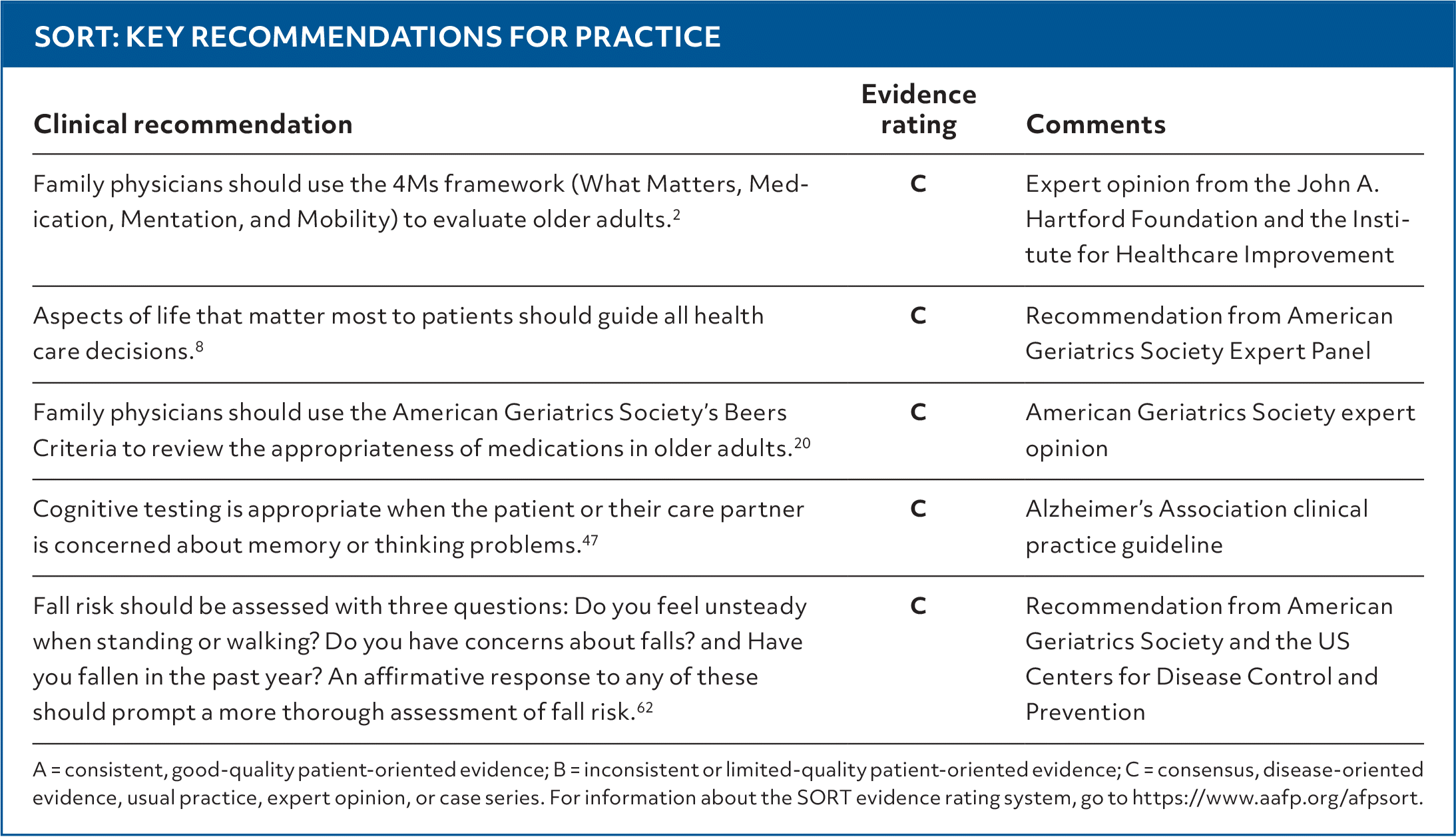
As a significant portion of the US population ages, family physicians are seeing more adults older than 65. A recommended framework for geriatric assessment is the 4Ms: What Matters, Medication, Mentation, and Mobility. Clinicians should speak with patients and their families about what matters to them most in daily life and in their medical care. Clinicians should review medications to identify inappropriate drugs for discontinuation. They should also check for necessary medications that are missing or used incorrectly. For mentation, tools such as the Mini-Cog should be used for assessment when cognition is a concern. Abnormal results should prompt an evaluation for modifiable causes, mild cognitive impairment, and dementia. Mentation should also be addressed with screening for depression and factors that might predispose the patient to delirium. For mobility, clinicians should screen for fall risk with the Stopping Elderly Accidents, Deaths, and Injuries tool. Patients with positive results should be evaluated further and be instructed to begin exercise interventions, including physical therapy.

CARRIE RUBENSTEIN, MD, AGSF, is the geriatric medicine fellowship director at Providence Swedish Medical Center, Seattle, Washington, and a clinical associate professor in the Department of Family Medicine at the University of Washington, Seattle.

LAURA BLINKHORN, MD, is a family physician and geriatrician at Mary's Center, Silver Spring, Maryland.

BARRY D. WEISS, MD, is a professor in the Department of Family and Community Medicine at the University of Arizona College of Medicine, Tucson.

Address correspondence to Carrie Rubenstein, MD, AGSF, at carrie.rubenstein@swedish.org.

Author disclosure: No relevant financial relationships.

  1. 1.Santo L, Kang K. National ambulatory medical care survey: 2019 national summary tables. National Center for Health Statistics, 2023. January 20, 2023. Accessed October 2025. https://stacks.cdc.gov/view/cdc/123251/cdc_123251_DS1.pdf
  2. 2.Fulmer T, Mate KS, Berman A. The age-friendly health system imperative. J Am Geriatr Soc. 2018;66(1):22-24.
  3. 3.Institute for Healthcare Improvement. Age-friendly health systems. Accessed December 10, 2025. https://www.ihi.org/partner/initiatives/age-friendly-health-systems#4ms-framework
  4. 4.Tinetti M, Huang A, Molnar F. The geriatrics 5M's: a new way of communicating what we do [Letter to the Editor]. J Am Geriatr Soc. 2017;65(9):2115.
  5. 5.Briggs R, McDonough A, Ellis G, et al. Comprehensive Geriatric Assessment for community-dwelling, high-risk, frail, older people. Cochrane Database Syst Rev. 2022(5):CD012705.
  6. 6.Tatum PE, Talebreza S, Ross JS. Geriatric assessment: an office-based approach. Am Fam Physician. 2018;97(12):776-784.
  7. 7.Butler JM, Farrell TW, Puckett M, et al. The Age-Friendly Learning Healthcare System: replicating electronic health record based documentation metrics for 4Ms care. J Am Geriatr Soc. 2025;73(3):707-716.
  8. 8.American Geriatrics Society Expert Panel on Person-Centered Care. Person-centered care: a definition and essential elements. J Am Geriatr Soc. 2016;64(1):15-18.
  9. 9.Tinetti ME, Bogardus ST, Agostini JV. Potential pitfalls of disease-specific guidelines for patients with multiple conditions. N Engl J Med. 2004;351(27):2870-2874.
  10. 10.Morrison RS, Meier DE, Arnold RM. What's wrong with advance care planning? JAMA. 2021;326(16):1575-1576.
  11. 11.Sudore RL, Schillinger D, Katen MT, et al. Engaging diverse English- and Spanish-speaking older adults in advance care planning: the PREPARE randomized clinical trial. JAMA Intern Med. 2018;178(12):1616-1625.
  12. 12.Bernacki R, Paladino J, Neville BA, et al. Effect of the Serious Illness Care Program in outpatient oncology: a cluster randomized clinical trial. JAMA Intern Med. 2019;179(6):751-759.
  13. 13.Tinetti ME, Naik AD, Dindo L, et al. Association of patient priorities– aligned decision-making with patient outcomes and ambulatory health care burden among older adults with multiple chronic conditions: a nonrandomized clinical trial. JAMA Intern Med. 2019;179(12):1688-1697.
  14. 14.Bernacki RE, Block SD; American College of Physicians High Value Care Task Force. Communication about serious illness care goals: a review and synthesis of best practices. JAMA Intern Med. 2014;174(12):1994-2003.
  15. 15.Vital talk iPhone app. J Palliat Med. 2013;16(10):1317-1318. https://www.liebertpub.com/doi/abs/10.1089/jpm.2013.9472?journalCode=jpm
  16. 16.Halter JB, Ouslander JG, Studenski S, et al. Hazzard's Geriatric Medicine and Gerontology. 8th ed. McGraw Hill; 2022.
  17. 17.Young EH, Pan S, Yap AG, et al. Polypharmacy prevalence in older adults seen in United States physician offices from 2009 to 2016. PLoS One. 2021;16(8):e0255642.
  18. 18.Wastesson JW, Morin L, Tan ECK, et al. An update on the clinical consequences of polypharmacy in older adults: a narrative review. Expert Opin Drug Saf. 2018;17(12):1185-1196.
  19. 19.Chock YL, Wee YL, Gan SL, et al. How willing are patients or their caregivers to deprescribe: a systematic review and meta-analysis. J Gen Intern Med. 2021;36(12):3830-3840.
  20. 20.2023 American Geriatrics Society Beers Criteria Update Expert Panel. American Geriatrics Society 2023 updated AGS Beers Criteria for potentially inappropriate medication use in older adults. J Am Geriatr Soc. 2023;71(7):2052-2081.
  21. 21.O'Mahony D, Cherubini A, Guiteras AR, et al. STOPP/START criteria for potentially inappropriate prescribing in older people: version 3. Eur Geriatr Med. 2023;14(4):625-632.
  22. 22.Gray SL, Anderson ML, Dublin S, et al. Cumulative use of strong anticholinergics and incident dementia: a prospective cohort study. JAMA Intern Med. 2015;175(3):401-407.
  23. 23.Al Rihani SB, Deodhar M, Darakjian LI, et al. Quantifying anticholinergic burden and sedative load in older adults with polypharmacy: a systematic review of risk scales and models. Drugs Aging. 2021;38(11):977-994.
  24. 24.Davidson KW, Barry MJ, Mangione CM, et al. Aspirin use to prevent cardiovascular disease: US Preventive Services Task Force recommendation statement. JAMA. 2022;327(16):1577-1584.
  25. 25.Johansen ME. Gabapentinoid use in the United States 2002 through 2015. JAMA Intern Med. 2018;178(2):292-294.
  26. 26.Read SH, Giannakeas V, Pop P, et al. Evidence of a gabapentinoid and diuretic prescribing cascade among older adults with lower back pain. J Am Geriatr Soc. 2021;69(10):2842-2850.
  27. 27.Growdon ME, Jing B, Morris EJ, et al. Which older adults are at highest risk of prescribing cascades? A national study of the gabapentinoid-loop diuretic cascade. J Am Geriatr Soc. 2024;72(6):1728-1740.
  28. 28.American Diabetes Association Professional Practice Committee. 13. Older adults: standards of care in diabetes—2024. Diabetes Care. 2024;47(suppl 1):S244-S257.
  29. 29.Deardorff WJ, Cenzer I, Nguyen B, et al. Time to benefit of bisphosphonate therapy for the prevention of fractures among postmenopausal women with osteoporosis: a meta-analysis of randomized clinical trials. JAMA Intern Med. 2022;182(1):33-41.
  30. 30.Yourman LC, Cenzer IS, Boscardin WJ, et al. Evaluation of time to benefit of statins for the primary prevention of cardiovascular events in adults aged 50 to 75 years: a meta-analysis. JAMA Intern Med. 2021;181(2):179-185.
  31. 31.Chou R, Cantor A, Dana T, et al. Statin use for the primary prevention of cardiovascular disease in adults: updated evidence report and systematic review for the US Preventive Services Task Force. JAMA. 2022;328(8):754-771.
  32. 32.Chang CP, Huang WH, You CH, et al. Factors correlated with smoking cessation success in older adults: a retrospective cohort study in Taiwan. Int J Environ Res Public Health. 2019;16(18):3462.
  33. 33.Chipalkatti N, Barnes GD, Bashaw L, et al. Guideline concordance of aspirin use for primary prevention in adult outpatients. Blood Adv. 2024;8(24):6207-6214.
  34. 34.University of California San Francisco. ePrognosis. Accessed July 4, 2025. https://eprognosis.ucsf.edu/
  35. 35.Chen T, Shao F, Chen K, et al. Time to clinical benefit of intensive blood pressure lowering in patients 60 years and older with hypertension: a secondary analysis of randomized clinical trials. JAMA Intern Med. 2022;182(6):660-667.
  36. 36.Qaseem A, Wilt TJ, Rich R, et al. Pharmacologic treatment of hypertension in adults aged 60 years or older to higher versus lower blood pressure targets: a clinical practice guideline from the American College of Physicians and the American Academy of Family Physicians. Ann Intern Med. 2017;166(6):430-437.
  37. 37.Lee SJ, Kim CM. Individualizing prevention for older adults. J Am Geriatr Soc. 2018;66(2):229-234.
  38. 38.Pitkälä KH, Suominen MH, Bell JS, et al. Herbal medications and other dietary supplements. A clinical review for physicians caring for older people. Ann Med. 2016;48(8):586-602.
  39. 39.Liu SK, Munson JC, Bell JE, et al. Quality of osteoporosis care of older Medicare recipients with fragility fractures: 2006 to 2010. J Am Geriatr Soc. 2013;61(11):1855-1862.
  40. 40.Troy AL, Herzig SJ, Trivedi S, et al. Initiation of oral anti coagulation in US older adults newly diagnosed with atrial fibrillation during hospitalization. J Am Geriatr Soc. 2023;71(9):2748-2758.
  41. 41.Rajan KB, Weuve J, Barnes LL, et al. Population estimate of people with clinical Alzheimer's disease and mild cognitive impairment in the United States (2020–2060). Alzheimers Dement. 2021;17(12):1966-1975.
  42. 42.Day GS. Diagnosing Alzheimer disease. Continuum (Minneap Minn). 2024;30(6):1584-1613.
  43. 43.Amjad H, Roth DL, Sheehan OC, et al. Underdiagnosis of dementia: an observational study of patterns in diagnosis and awareness in US older adults. J Gen Intern Med. 2018;33(7):1131-1138.
  44. 44.Livingston G, Huntley J, Liu KY, et al. Dementia prevention, intervention, and care: 2024 report of the Lancet Standing Commission. Lancet. 2024;404(10452):572-628.
  45. 45.Owens DK, Davidson KW, Krist AH, et al. Screening for cognitive impairment in older adults: US Preventive Services Task Force recommendation statement. JAMA. 2020;323(8):757-763.
  46. 46.Falk N, Cole A, Meredith TJ. Evaluation of suspected dementia. Am Fam Physician. 2018;97(6):398-405.
  47. 47.Atri A, Dickerson BC, Clevenger C, et al. Alzheimer's Association clinical practice guideline for the diagnostic evaluation, testing, counseling, and disclosure of suspected Alzheimer's disease and related disorders (DETeCD-ADRD): executive summary of recommendations for primary care. Alzheimers Dement. 2025;21(6):e14333.
  48. 48.Morris GM, Holden TR, Weng H, et al. Comparative performance and neuropathologic validation of the AD8 dementia screening instrument. Alzheimer Dis Assoc Disord. 2020;34(2):112-117.
  49. 49.Abayomi SN, Sritharan P, Yan E, et al. The diagnostic accuracy of the Mini-Cog screening tool for the detection of cognitive impairment—a systematic review and meta-analysis. PLoS One. 2024;19(3):e0298686.
  50. 50.Kotwal AA, Cenzer IS, Waite LJ, et al. The epidemiology of social isolation and loneliness among older adults during the last years of life. J Am Geriatr Soc. 2021;69(11):3081-3091.
  51. 51.Kramer ES, Johnson MN, Winslow B. Evaluation of suspected dementia. Am Fam Physician. 2025;112(6):657-667.
  52. 52.Kaufman BG, Grant M. GUIDE dementia model: opportunities for serious illness care. J Am Geriatr Soc. 2024;72(6):1935-1938.
  53. 53.Barry MJ, Nicholson WK, Silverstein M, et al. Screening for depression and suicide risk in adults: US Preventive Services Task Force recommendation statement. JAMA. 2023;329(23):2057-2067.
  54. 54.Park SH, Kwak MJ. Performance of the Geriatric Depression Scale-15 with older adults aged over 65 years: an updated review 2000–2019. Clin Gerontol. 2021;44(2):83-96.
  55. 55.Taylor WD. Clinical practice. Depression in the elderly. N Engl J Med. 2014;371(13):1228-1236.
  56. 56.Wong JS, Breslau H, McSorley VE, et al. The social relationship context of elder mistreatment. Gerontologist. 2020;60(6):1029-1039.
  57. 57.Lahlou RM, Daaleman TP. Addressing loneliness and social isolation in older adults [Curbside Consultation]. Am Fam Physician. 2021;104(1):85-87.
  58. 58.Jaqua EE, Nguyen VTN, Chin E. Delirium in older persons: prevention, evaluation, and management. Am Fam Physician. 2023;108(3):278-287.
  59. 59.Oberhaus J, Wang W, Mickle AM, et al. Evaluation of the 3-Minute Diagnostic Confusion Assessment Method for identification of postoperative delirium in older patients. JAMA Netw Open. 2021;4(12):e2137267.
  60. 60.Motyl CM, Ngo L, Zhou W, et al. Comparative accuracy and efficiency of four delirium screening protocols. J Am Geriatr Soc. 2020;68(11):2572-2578.
  61. 61.Kakara R, Bergen G, Burns E, et al. Nonfatal and fatal falls among adults aged ≥65 years—United States, 2020–2021. MMWR Morb Mortal Wkly Rep. 2023;72(35):938-943.
  62. 62.Johnson TM, Vincenzo JL, De Lima B, et al. Updating STEADI for primary care: recommendations from the American Geriatrics Society Workgroup. J Am Geriatr Soc. 2025;73(7):2019-2028.
  63. 63.Coulter JS, Randazzo J, Kary EE, et al. Falls in older adults: approach and prevention. Am Fam Physician. 2024;109(5):447-456.
  64. 64.Nicholson WK, Silverstein M, Wong JB, et al. Interventions to prevent falls in community-dwelling older adults: US Preventive Services Task force recommendation Statement. JAMA. 2024;332(1):51-57.
  65. 65.Lee R. The CDC's STEADI initiative: promoting older adult health and independence through fall prevention [editorial]. Am Fam Physician. 2017;96(4):220-221.
  66. 66.Sehgal M, Jacobs J, Biggs WS. Mobility assistive device use in older adults. Am Fam Physician. 2021;103(12):737-744.
  67. 67.Elsawy B, Higgins KE. The geriatric assessment. Am Fam Physician. 2011;83(1):48-56.
  68. 68.Miller KE, Zylstra RG, Standridge JB. The geriatric patient: a systematic approach to maintaining health. Am Fam Physician. 2000;61(4):1089-1104.

Copyright © 2026 by the American Academy of Family Physicians.

This content is owned by the AAFP. A person viewing it online may make one printout of the material and may use that printout only for his or her personal, non-commercial reference. This material may not otherwise be downloaded, copied, printed, stored, transmitted or reproduced in any medium, whether now known or later invented, except as authorized in writing by the AAFP. See permissions for copyright questions and/or permission requests.