

DETAILS FOR THIS REVIEW
Study Population: 15 studies conducted in Asia, Europe, and North America with a total of 2,348 women with normogonadotropic anovulation or polycystic ovary syndrome (PCOS) and clomiphene resistance or failure
Efficacy End Points: Live birth rate per woman; clinical pregnancy rate per woman
Harm End Points: Rates of multiple pregnancy, miscarriage, ectopic pregnancy, and ovarian hyperstimulation syndrome per woman
THE NUMBERS
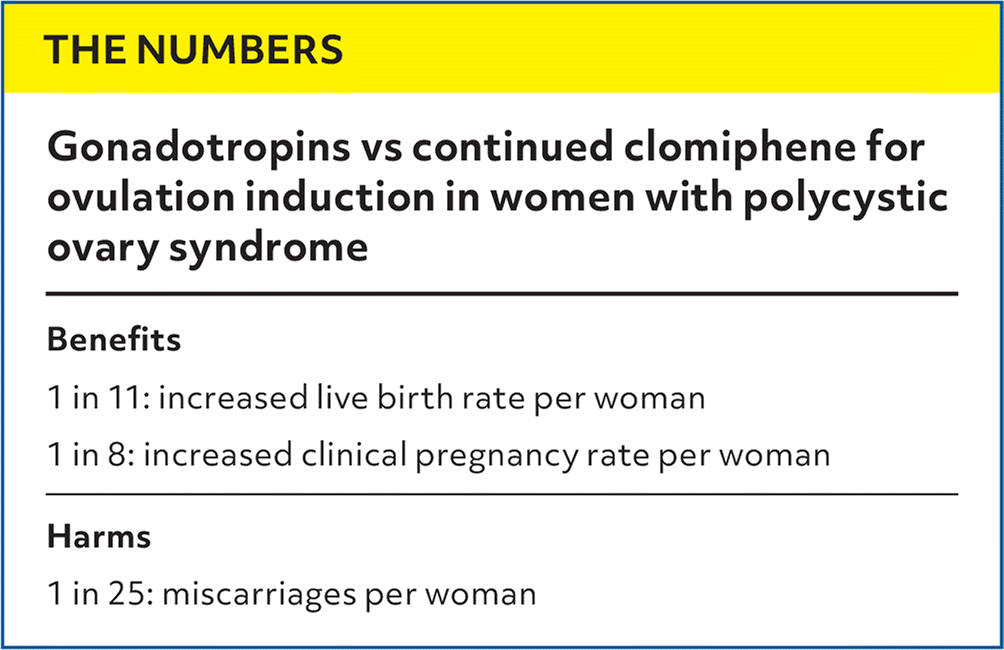
| Benefits |
| 1 in 11: increased live birth rate per woman |
| 1 in 8: increased clinical pregnancy rate per woman |
| Harms |
| 1 in 25: miscarriages per woman |
Narrative: In women with PCOS who are trying to conceive, clomiphene has often been used as a first-line agent to induce ovulation.1,2 Clomiphene induces or restores ovulation in approximately 75% of women, but only approximately one-half of those women conceive after 6 months of treatment.3,4
The Cochrane review discussed here identified 15 studies, with 2,348 participants, examining gonadotropins for ovulation stimulation. The review includes 10 studies comparing recombinant follicle-stimulating hormone (FSH) and urinary-derived gonadotropins, three comparing human menopausal gonadotropin and purified urinary FSH, one comparing highly purified urinary FSH with purified urinary FSH, and one comparing gonadotropins with continued clomiphene.5
Core outcomes included rates of live birth, clinical pregnancy, multiple pregnancies, miscarriage, and ectopic pregnancy and incidence of ovarian hyperstimulation syndrome. The authors of the review defined clomiphene resistance as the inability to ovulate despite receiving dosages of at least 100 mg/day for a minimum of 5 days and clomiphene failure as the inability to conceive after three cycles of confirmed ovulation induction with clomiphene therapy.5
Gonadotropins likely increased live births compared with continued clomiphene (risk ratio [RR] = 1.24; 95% CI, 1.05–1.46; absolute risk reduction [ARR] = 9.9%; number needed to treat = 11; one randomized controlled trial [RCT]; n = 661; moderate-certainty evidence) and clinical pregnancies (RR = 1.31; 95% CI, 1.13–1.52; ARR = 13.8%; number needed to treat = 8; one RCT; n = 661; moderate-certainty evidence) with no apparent difference in the rate of multiple pregnancies (low-certainty evidence). Gonadotropins may, however, result in more miscarriages than clomiphene (RR = 2.23; 95% CI, 1.11–4.47; ARR = 4.0%; number needed to harm = 25; one RCT; n = 661; low-certainty evidence). There was little to no difference in ectopic pregnancy rates between gonadotropins and clomiphene (very low-certainty evidence), and no cases of ovarian hyperstimulation syndrome were reported in the study.5
The systematic review and meta-analysis showed that there may be little to no difference in rates of live birth, multiple pregnancies per woman, clinical pregnancy, or miscarriage between purified urinary-derived gonadotropins and recombinant FSH, human menopausal gonadotropin and urinary FSH, and highly purified urinary FSH and purified urinary FSH (low to very low-certainty evidence).
Caveats: Limitations of this Cochrane review included the small number of relevant studies comparing different types of gonadotropins, low power, heterogeneous risk of bias in individual trials, and low to nonexistent rates of more rare conditions (eg, ectopic pregnancy, ovarian hyperstimulation syndrome). Most studies included patients with PCOS who had not conceived or failed to respond to clomiphene. The study comparing gonadotropins with continued clomiphene therapy, however, specifically included patients who had previously ovulated while taking clomiphene but were unable to conceive, highlighting differences in patient selection across trials.6 Included studies were conducted in socioeconomically advantaged countries, limiting generalizability.
Read the full article
Get immediate access, anytime, anywhere.
Choose a single article, issue, or full-access subscription.
Earn up to 14 CME credits per issue.
